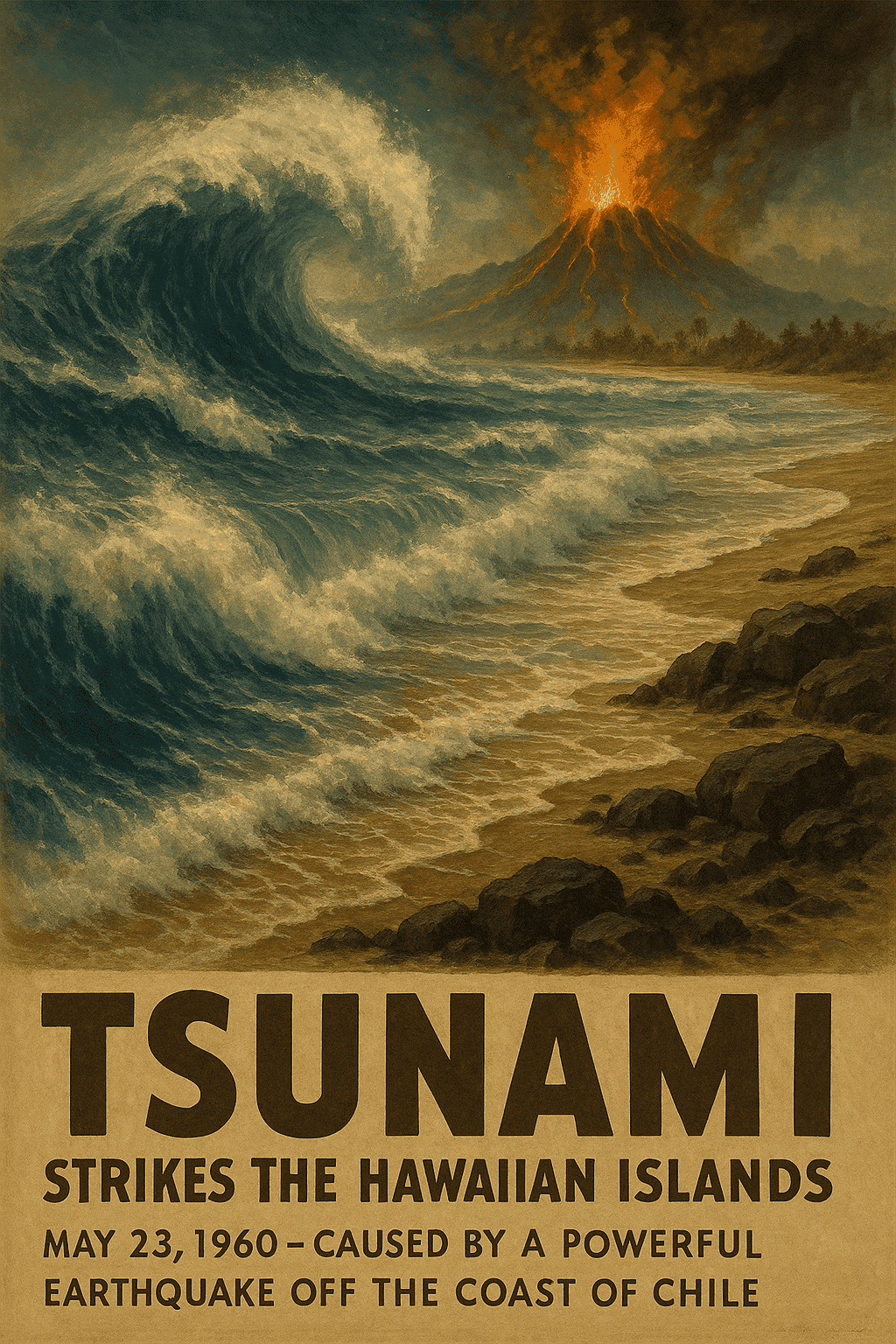
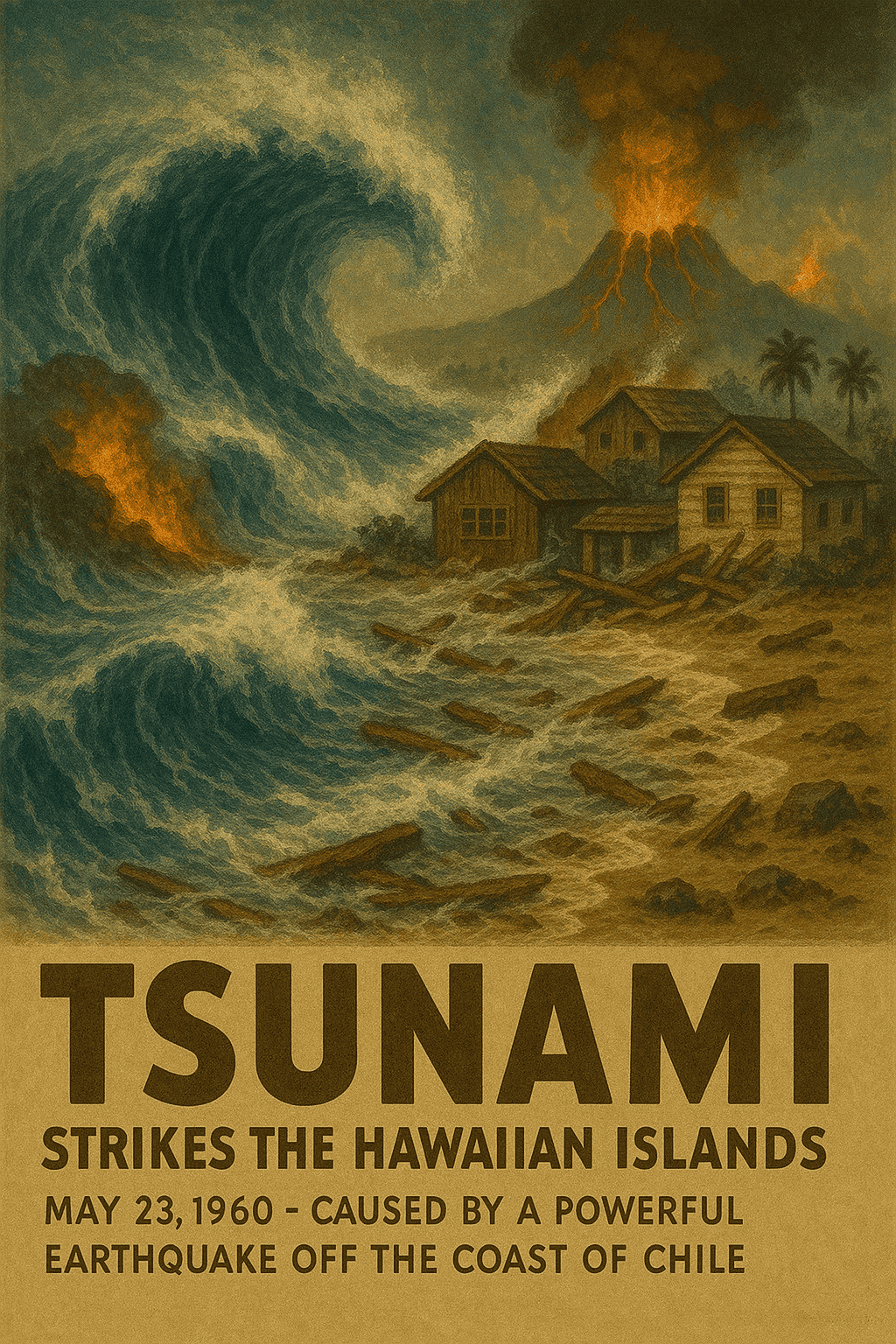
On May 23, 1960, the Hawaiian Islands were struck by a devastating tsunami generated by a powerful 9.5-magnitude earthquake off the coast of Chile—the strongest earthquake ever recorded. Traveling across the Pacific Ocean at hundreds of miles per hour, the tsunami reached Hawaii approximately 15 hours after the quake, unleashing a wall of water that caused widespread destruction and claimed 61 lives in the Hilo area alone.
This tragedy not only underscored the deadly reach of seismic events occurring far from the islands, but also became a turning point in global efforts to develop effective tsunami warning and response systems.

The Long Reach of a Distant Quake
The earthquake that struck southern Chile on May 22, 1960, was catastrophic in its own right, killing thousands and displacing millions. However, its seismic energy didn’t stop at the South American coastline. It sent massive waves rippling across the Pacific, impacting regions thousands of miles away, including the Philippines, Japan, New Zealand, and most notably, Hawaii.
Hilo, located on the Big Island, bore the brunt of the impact. The tsunami waves reached heights of up to 35 feet in the bay, destroying homes, businesses, and infrastructure. In addition to the 61 fatalities, hundreds were injured, and the town was left with millions of dollars in damages.
A Wake-Up Call for Preparedness
Though some warning had been issued by the Pacific Tsunami Warning Center (established after the 1946 tsunami), the level of awareness and communication in 1960 was not sufficient to prevent tragedy. Many residents in low-lying areas failed to evacuate, either due to skepticism or lack of understanding about the danger of tsunamis generated from distant earthquakes.
The disaster exposed critical gaps in preparedness and response, particularly in the speed and clarity of public alerts. In the years that followed, efforts were made to improve tsunami forecasting, expand educational outreach, and develop more sophisticated early warning systems.
Legacy of Resilience and Innovation
The 1960 Hawaii tsunami became a defining moment in the evolution of tsunami science and safety. It accelerated the growth of the Pacific Tsunami Warning Center and inspired international cooperation on disaster monitoring and response. It also raised public consciousness about the threat of tsunamis and the importance of early evacuation and planning.
Today, Hawaii and other Pacific Rim nations are far better equipped to detect and respond to tsunamis, thanks in large part to the lessons learned from this deadly event.
Remembering May 23, 1960
The tsunami that struck Hawaii on May 23, 1960, remains a solemn reminder of nature’s power and the importance of vigilance. It also stands as a testament to the strength and resilience of communities who rebuild in the face of tragedy—and a call to continually improve the systems that keep people safe when the sea turns violent.