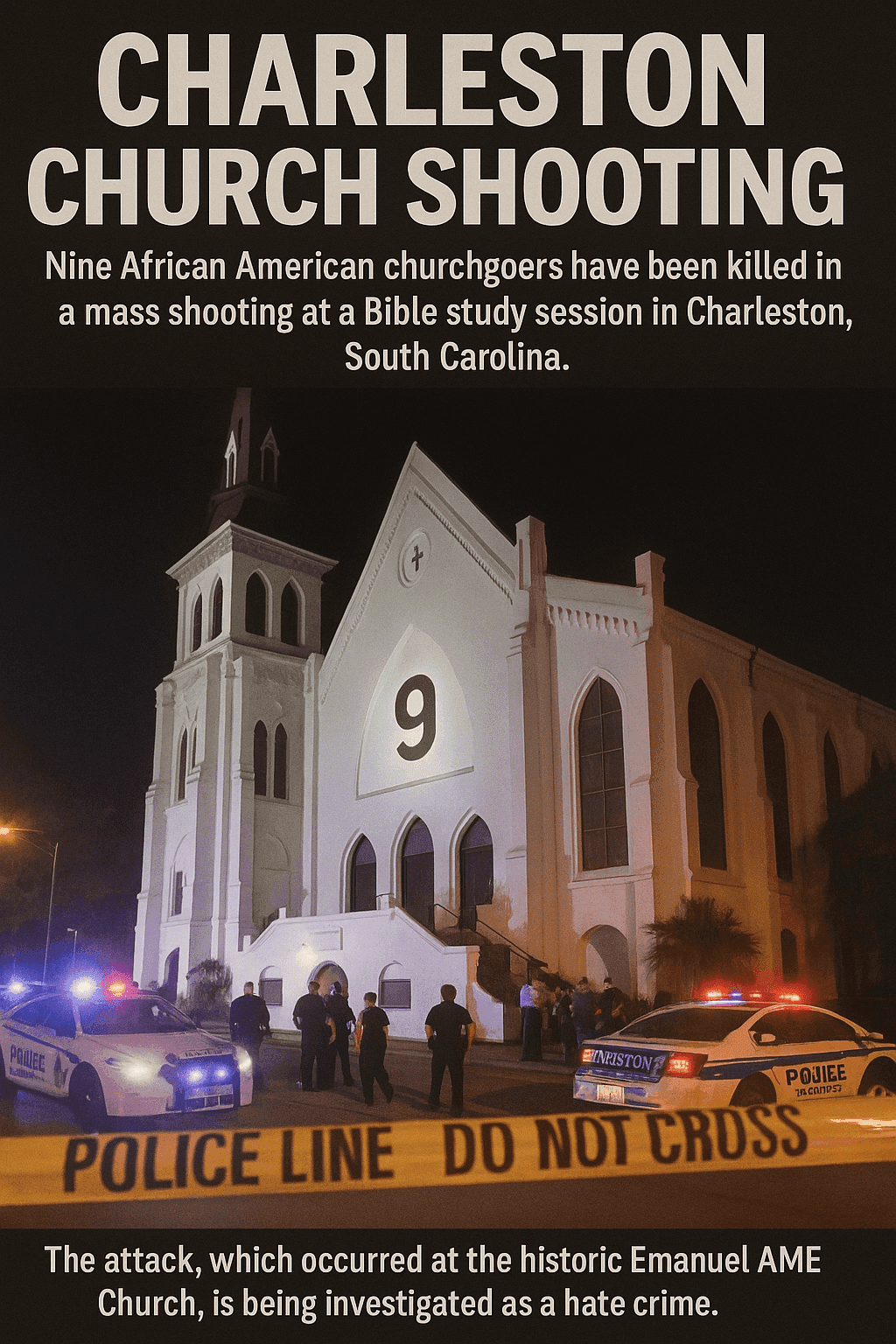
On the evening of June 17, 2015, the Emanuel African Methodist Episcopal Church in Charleston, South Carolina—a symbol of African American resilience and faith—became the scene of one of the deadliest racially motivated attacks in recent U.S. history. A young white supremacist joined a Bible study session and, after sitting with the group for nearly an hour, opened fire, killing nine parishioners. Among the victims was the church’s senior pastor, Clementa C. Pinckney, who also served as a South Carolina state senator.
The attack sent shockwaves across the country and beyond, not only because of its brutality, but because it was carried out in a sacred space deeply rooted in the history of Black liberation in America.
A Nation Confronts Its Pain
The massacre at “Mother Emanuel,” as the church is known, prompted immediate mourning but also a broader reckoning with America’s ongoing struggles with racism, gun violence, and white supremacy. The survivors and victims' families displayed extraordinary grace by publicly offering forgiveness to the shooter, a response that inspired many and underscored the strength of the community’s faith and resolve.
National leaders, including President Barack Obama, addressed the tragedy in emotional terms, with the president delivering a eulogy for Senator Pinckney in which he famously led the congregation in singing “Amazing Grace.”
A Catalyst for Change
Beyond the emotional toll, the Charleston church shooting reignited fierce debates about gun control, hate crime legislation, and the continued presence of Confederate symbols in public spaces. In the days and weeks following the attack, pressure mounted on South Carolina officials to remove the Confederate battle flag from the grounds of the state capitol. The flag was ultimately taken down on July 10, 2015, a move many saw as long overdue.
The tragedy also led to a renewed commitment to examining the roots of racial hatred and extremism in the U.S., and to honoring the memory of those lost by striving for a more just and inclusive society.
Remembering the Emanuel Nine
The events of June 17, 2015, are now commemorated annually to honor the nine lives lost and to reflect on the broader implications for American society. Memorials, educational initiatives, and acts of solidarity continue to keep the memory of the Emanuel Nine alive.
This tragic day remains a solemn reminder of the enduring impact of racial violence and the ongoing need for healing, justice, and meaningful action.