On May 10, 1869, a ceremonial golden spike was driven into the ground at Promontory Summit, Utah, marking the completion of the first Transcontinental Railroad in the United States. This momentous achievement connected the Central Pacific Railroad from the west with the Union Pacific Railroad from the east, linking the Atlantic and Pacific coasts by rail for the first time in American history. It was a feat of engineering, labor, and ambition that transformed the nation's economy, mobility, and identity.
Uniting East and West
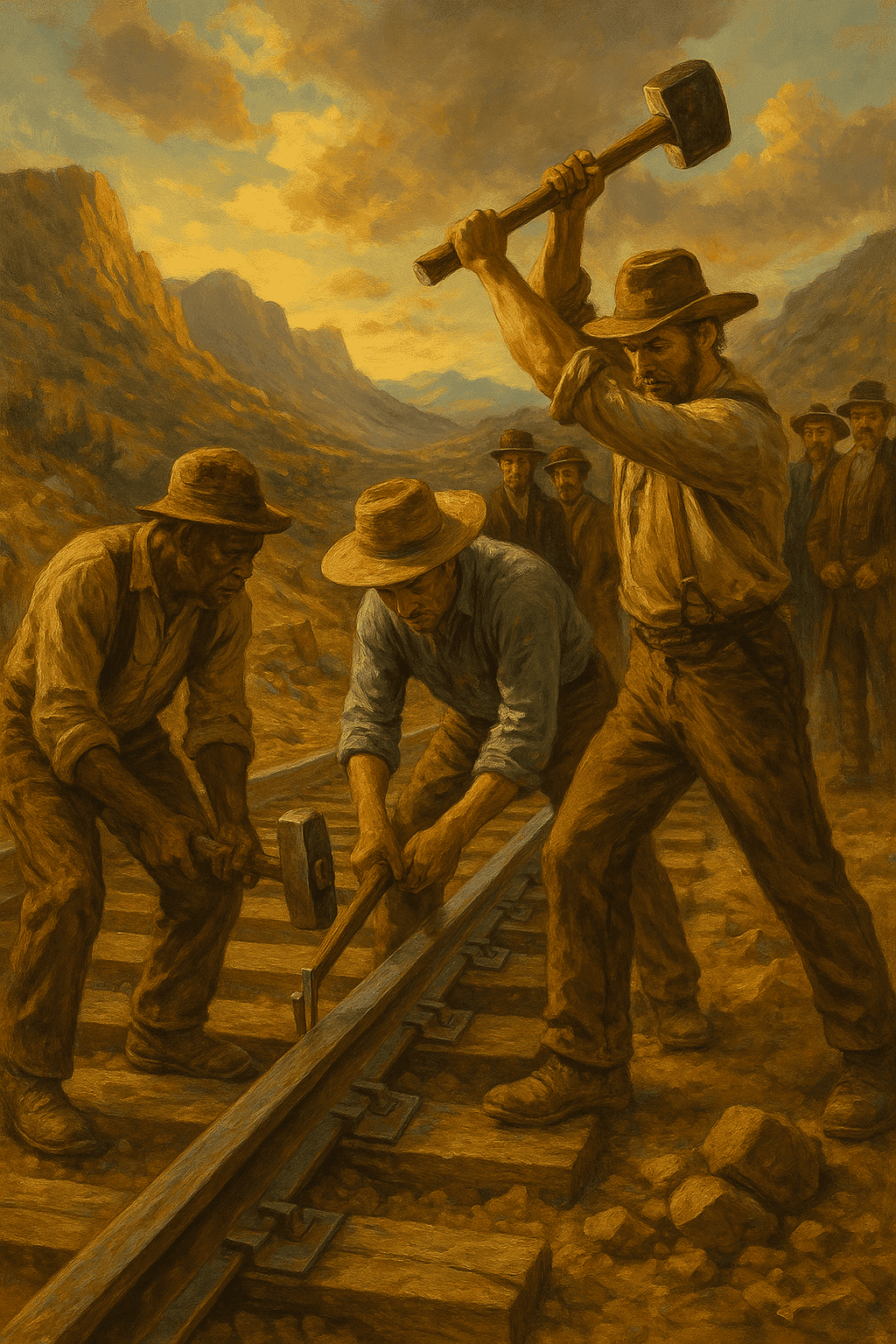
The idea of a transcontinental railroad had been discussed for decades, but construction didn’t begin in earnest until the 1860s, spurred by the Pacific Railway Acts and a growing national desire for unity after the Civil War. The Central Pacific built eastward from Sacramento, California, while the Union Pacific laid tracks westward from Omaha, Nebraska.
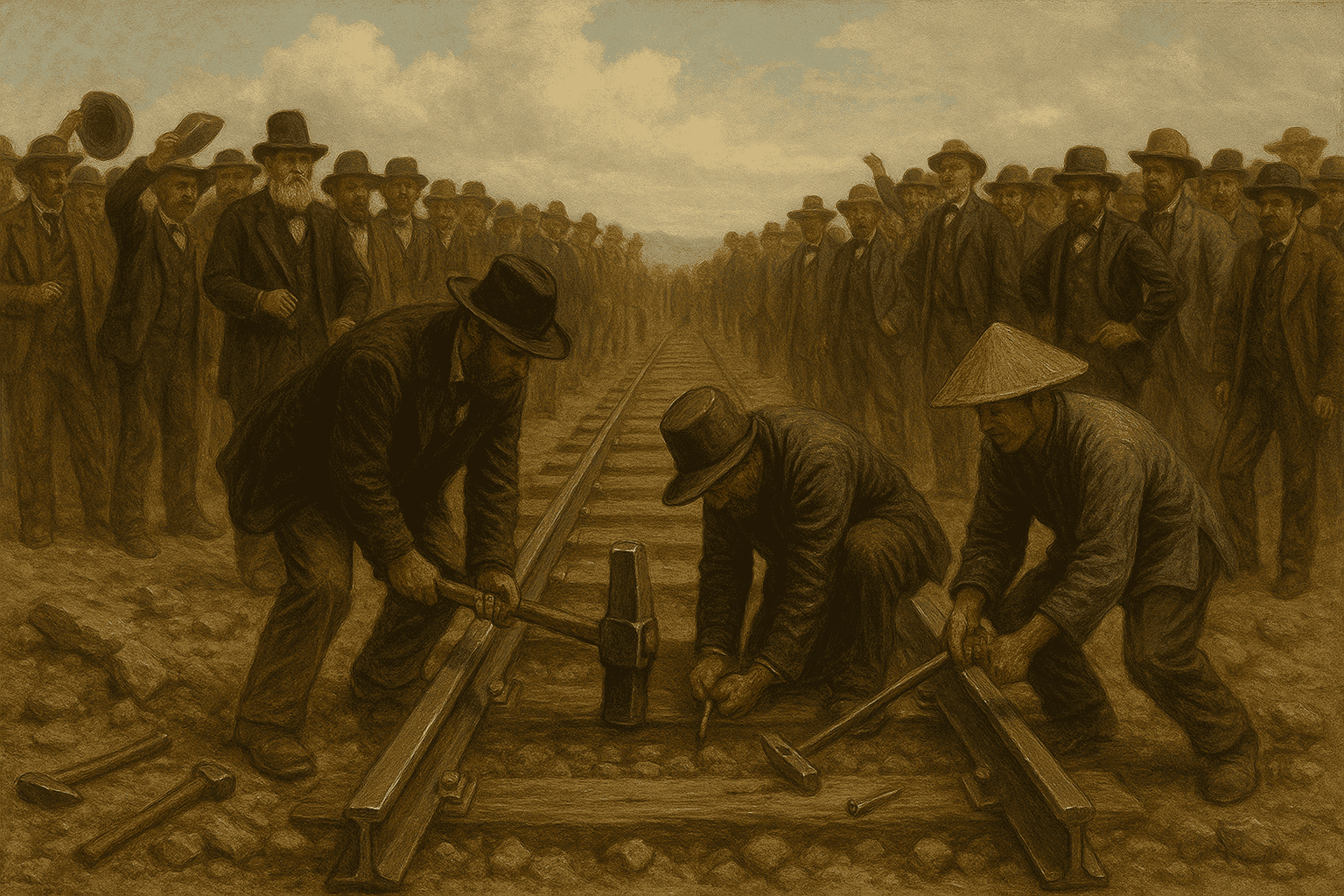
The two companies overcame formidable natural obstacles—mountains, deserts, and harsh weather—thanks to the efforts of tens of thousands of laborers. Among them were thousands of Chinese immigrants, Irish workers, Civil War veterans, and former enslaved people, whose grueling work under dangerous conditions made the railroad a reality.
A New Era of American Expansion
The completion of the Transcontinental Railroad reduced coast-to-coast travel from several months to just one week. It revolutionized commerce, making it possible to move goods and people faster, farther, and more affordably than ever before. Towns sprang up along the route, and markets expanded across the country, helping to knit together a rapidly industrializing nation.
The railroad also played a critical role in encouraging westward expansion. It allowed settlers to move west more easily, accelerating the growth of the American frontier. For many, it symbolized progress, opportunity, and national unity in a post-Civil War era defined by reconstruction and renewal.
A Complex Legacy
While the Transcontinental Railroad is often celebrated as a triumph of ingenuity and perseverance, its legacy is not without controversy. The project had devastating effects on Native American communities whose lands were traversed and disrupted. The expansion of rail lines led to the displacement of tribes, the destruction of natural habitats, and the erosion of traditional ways of life.
Additionally, the contributions of immigrant laborers, particularly Chinese workers, were largely overlooked and underappreciated at the time. Only in recent years have these workers begun to receive the recognition they deserve for their vital role in completing one of the most ambitious infrastructure projects in American history.
Driving a New Future
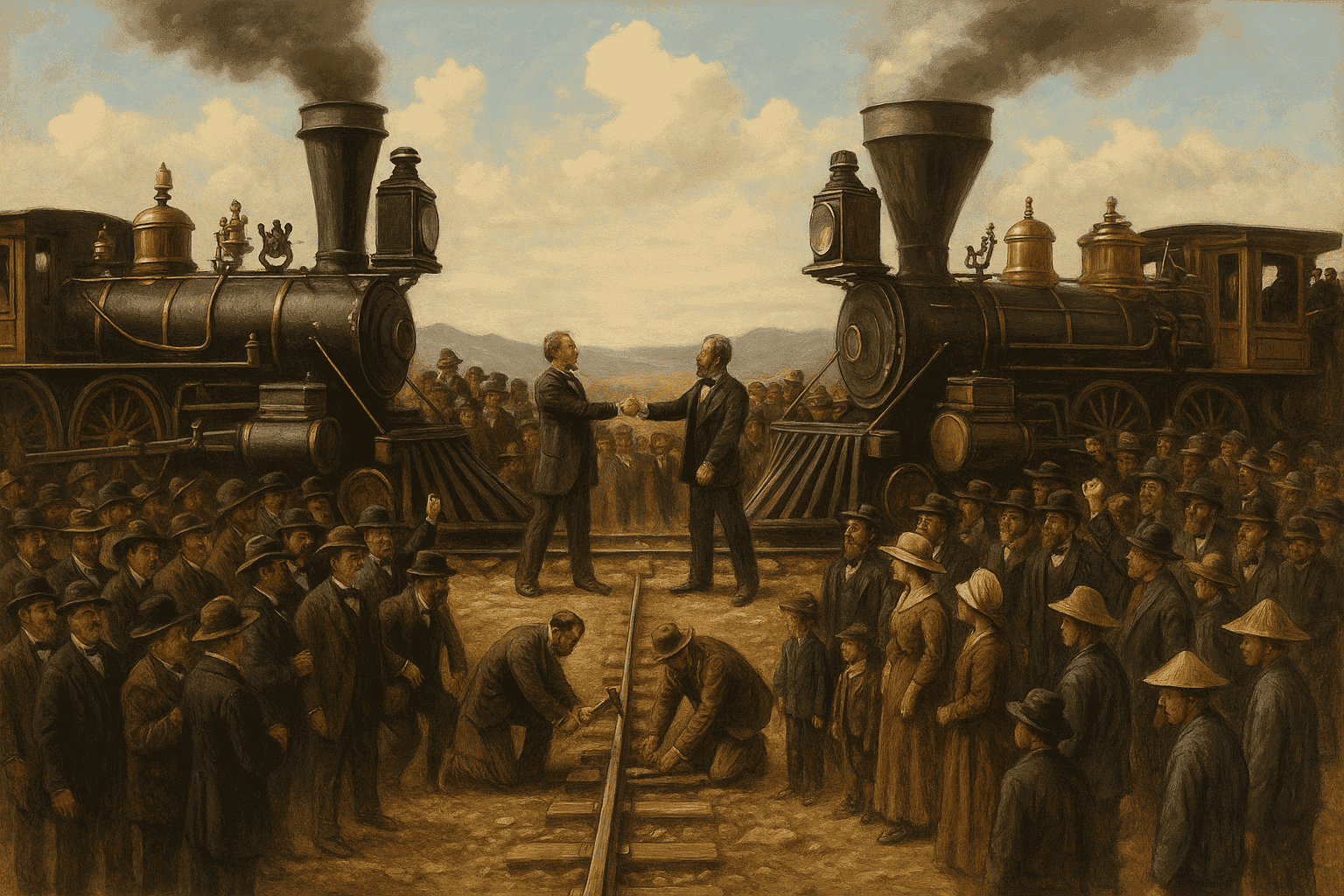
The driving of the Golden Spike on May 10, 1869, was more than a symbolic act—it marked the birth of a new era in American life. The railroad bound the country together with steel and steam, ushering in an age of innovation, expansion, and transformation.
Today, the site at Promontory Summit is commemorated as the Golden Spike National Historical Park, where visitors can reflect on both the promise and the price of progress. The Transcontinental Railroad remains a landmark achievement that reshaped the landscape of a nation and the trajectory of its people.