On May 23, 1934, one of the most infamous chapters in American criminal history came to a violent end when Bonnie Parker and Clyde Barrow were ambushed and killed by law enforcement officers near Sailes, Bienville Parish, Louisiana. The notorious duo, romantically linked and ruthlessly dangerous, had spent two years on the run, leaving a trail of bank robberies, stolen cars, and bloodshed across the American South and Midwest during the depths of the Great Depression.
Their deaths brought closure to a sensational saga that had captured national headlines, symbolizing not only the downfall of two legendary outlaws but also a pivotal moment in the evolution of modern policing.
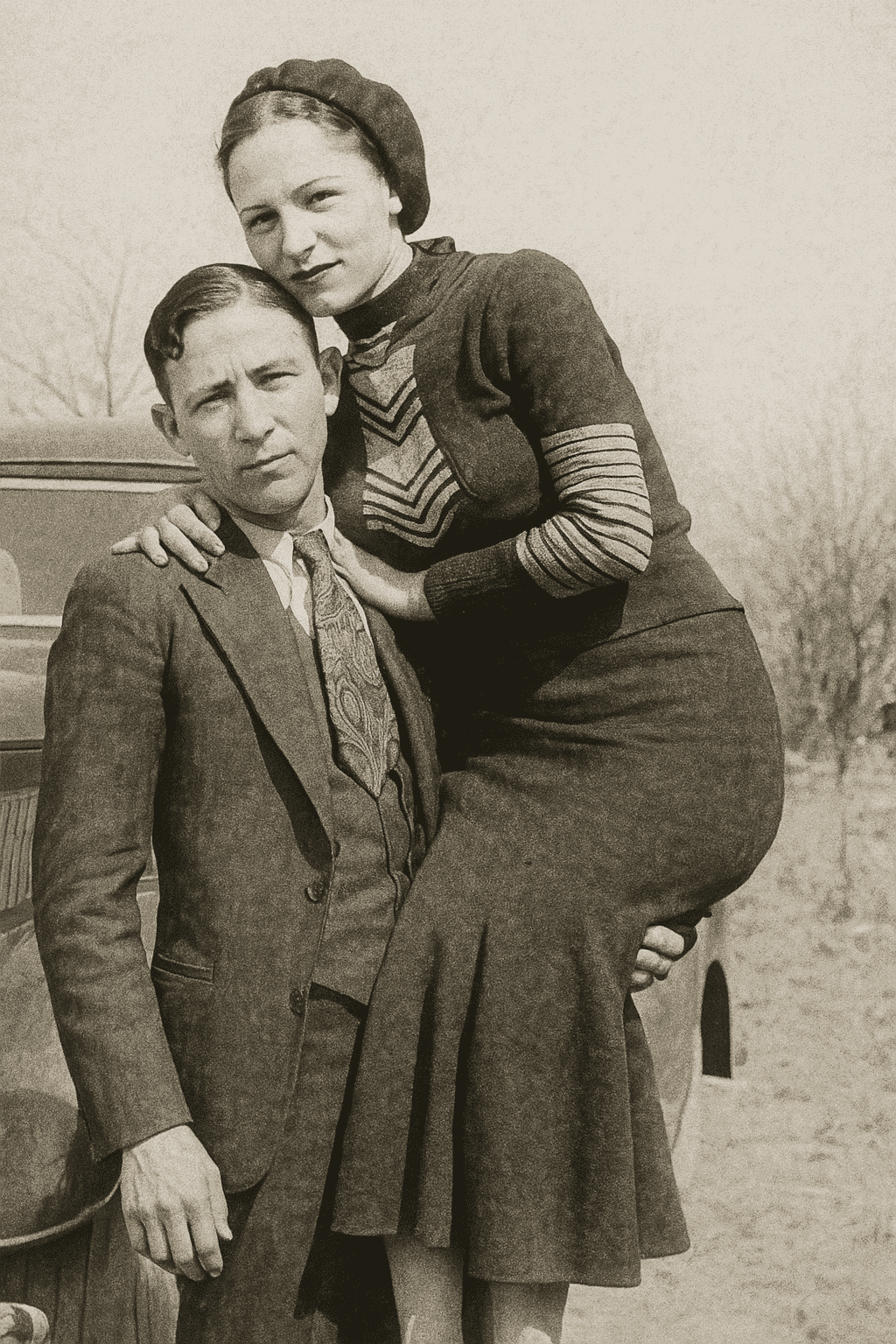
A Crime Spree that Captivated the Nation
Bonnie and Clyde rose to national notoriety in the early 1930s as part of the Barrow Gang, which included Clyde’s brother Buck and other rotating members. Their crimes—targeting small banks, gas stations, and stores—were punctuated by violent encounters with police, resulting in multiple deaths. The pair gained a mythic status in the public imagination, fueled by sensational newspaper coverage and photographs of Bonnie posing with pistols and cigarettes, which gave them a glamorous, rebellious image.
In reality, their exploits were anything but romantic. They were hardened criminals, and their escalating violence led to a focused effort by law enforcement to bring them down.
The Ambush at Sailes
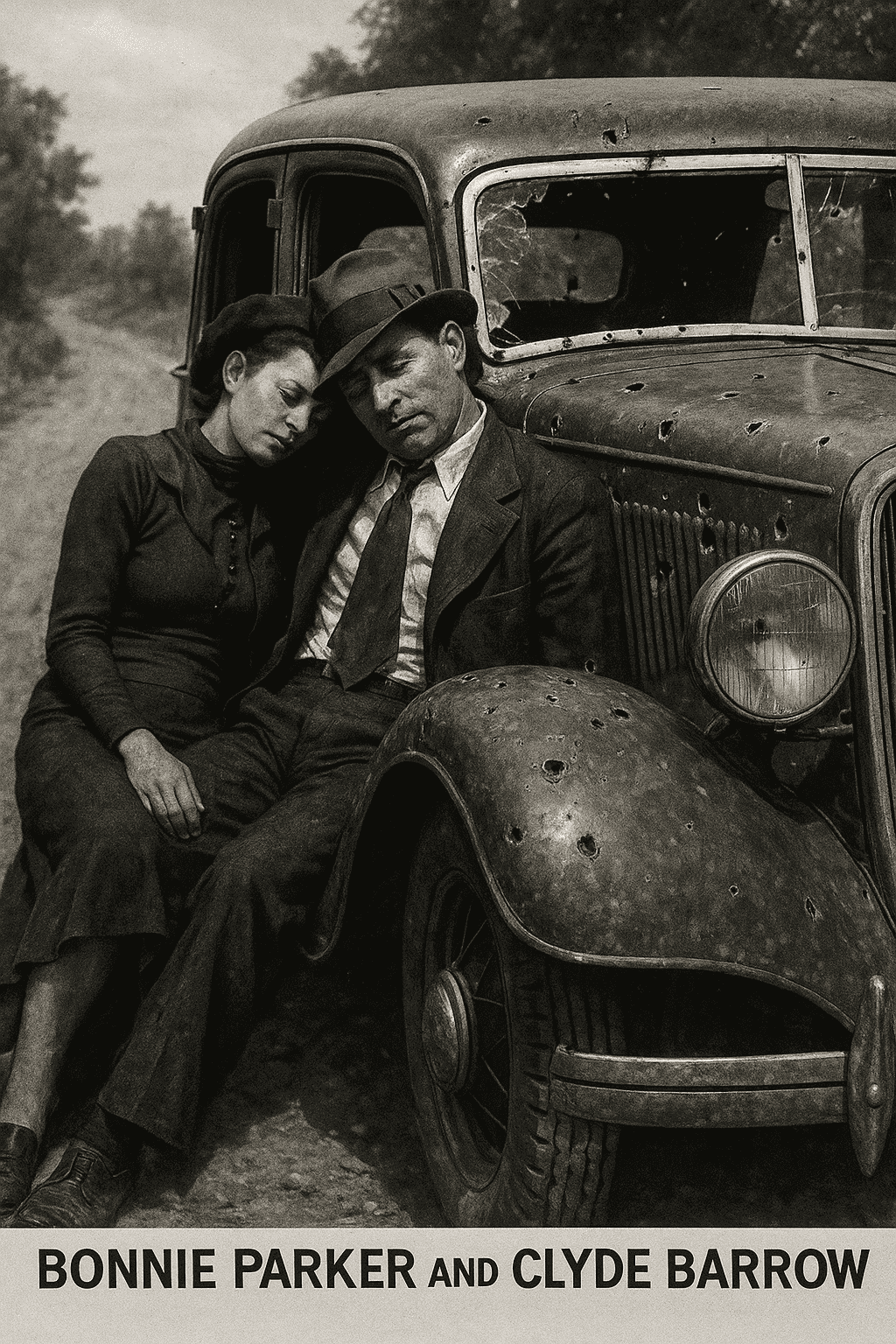
After months of careful tracking, a posse of six lawmen—led by former Texas Ranger Frank Hamer—set a trap for Bonnie and Clyde. Tipped off by an informant, they waited along a rural road in Louisiana where the couple was expected to pass. At approximately 9:15 a.m., Bonnie and Clyde’s stolen Ford V8 appeared. Without warning or an attempt to arrest, the officers opened fire, unleashing a hail of bullets that killed both instantly.
Their bullet-riddled car and bodies became macabre public spectacles, drawing crowds and solidifying the mythos of their outlaw legacy.
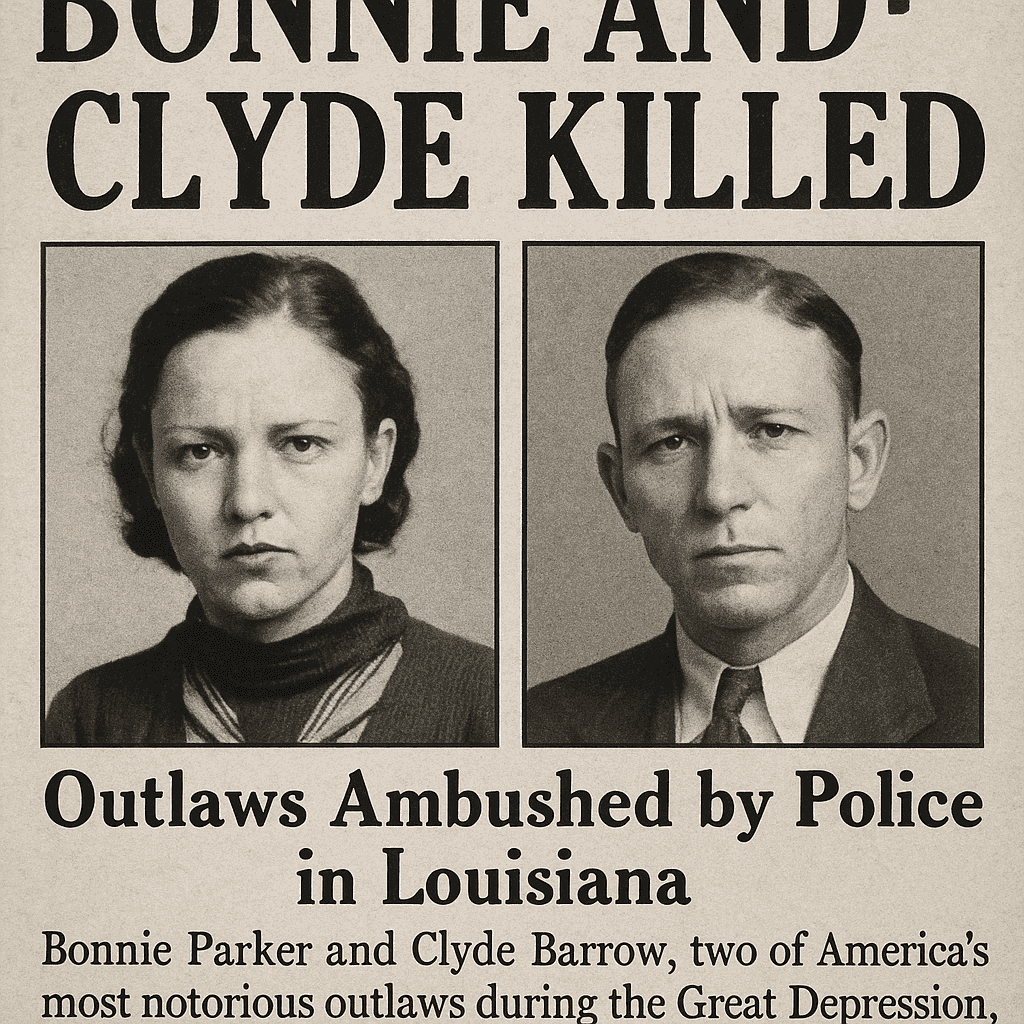
A Turning Point in Law Enforcement
The killing of Bonnie and Clyde marked a shift in how law enforcement dealt with high-profile criminals. Their deaths underscored the increasing willingness of police to use deadly force in confronting dangerous fugitives and highlighted the growing role of interstate cooperation and forensic investigation in major cases.
It also reflected the changing relationship between crime, the media, and public perception. While the Depression-era public had initially romanticized outlaws like Bonnie and Clyde as rebellious figures striking against a broken system, the brutal nature of their crimes—and their dramatic end—helped turn the tide of opinion and validated the tough stance taken by authorities.
Legacy of Infamy and Fascination
Though Bonnie and Clyde’s reign ended nearly a century ago, their legend continues to loom large in American culture. Their story has been retold in books, music, and film—notably in the 1967 movie Bonnie and Clyde, which redefined them as tragic anti-heroes.
May 23, 1934, remains a key moment in the history of American crime and law enforcement—a day when bullets ended a bloody spree and when myth collided with the harsh reality of justice. Their tale endures as a complex reflection of desperation, defiance, and the deadly allure of outlaw fame.