On July 2, 1937, pioneering aviator Amelia Earhart disappeared over the central Pacific Ocean near Howland Island, a tiny speck of land she never reached. Earhart, accompanied by navigator Fred Noonan, was attempting to become the first woman to fly around the world. After nearly six weeks in the air and more than 20,000 miles covered, her twin-engine Lockheed Electra lost contact with the U.S. Coast Guard cutter Itasca—stationed to assist with her landing. Despite one of the most extensive search efforts in history at the time, no conclusive trace of Earhart, Noonan, or their aircraft was ever found.
Her disappearance gripped the world and sparked widespread speculation. Though presumed lost at sea, Earhart’s fate has remained one of the most enduring mysteries of the 20th century, fueling decades of investigation and intrigue.

A Life of Firsts
Amelia Earhart had already secured her place in history long before her final flight. She was the first woman to fly solo across the Atlantic Ocean in 1932 and set numerous speed and altitude records throughout her career. Her charisma, intelligence, and cool composure under pressure made her not just a respected pilot but a beloved national figure.
Beyond her feats in aviation, Earhart was a staunch advocate for women’s rights. She challenged the gender norms of her time, encouraging women to pursue careers and passions beyond traditional roles. As a lecturer, author, and role model, Earhart used her platform to promote the empowerment of women, particularly in science and aviation.

Theories and Investigations
Earhart’s disappearance has spawned countless theories—some grounded in science, others veering into the conspiratorial. The most widely accepted explanation is that she and Noonan ran out of fuel and crashed into the ocean near Howland Island. However, other hypotheses include that they landed on the remote island of Nikumaroro (formerly Gardner Island) and perished there. Human remains and artifacts found on the island in the 1940s and 2000s have been linked by some to Earhart, though no evidence has definitively proven this.
Other more controversial theories suggest Earhart was captured by the Japanese or assumed a secret identity after the war. None have been substantiated, but each adds to the mystique surrounding her fate. Multiple expeditions, including those led by The International Group for Historic Aircraft Recovery (TIGHAR), continue to explore possible crash and landing sites to this day.
A Legacy That Soars
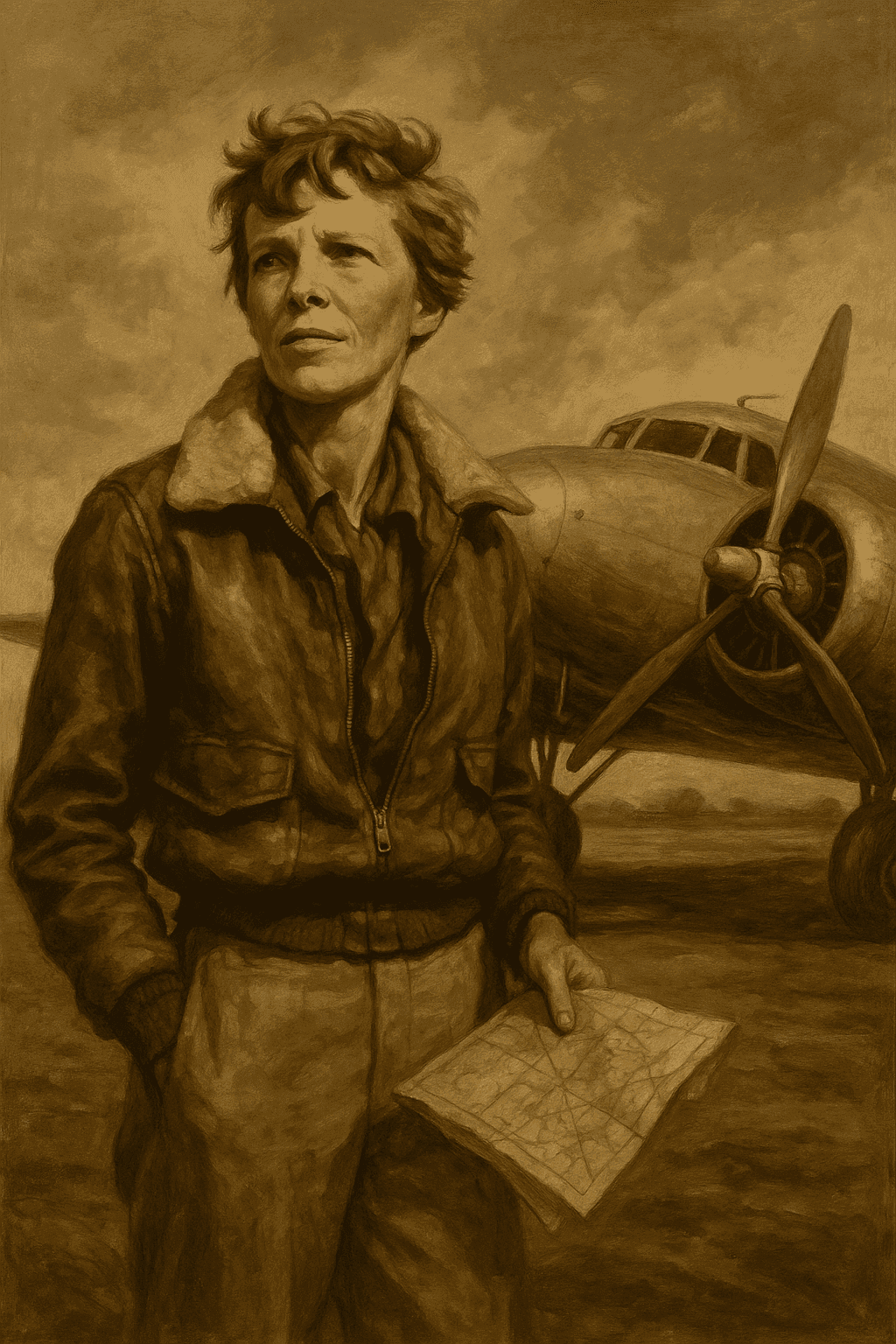
Amelia Earhart’s legacy transcends her disappearance. Her life exemplifies determination, courage, and a commitment to pushing beyond boundaries. Schools, scholarships, airports, and even a lunar crater bear her name. Her story continues to inspire generations of young people—especially girls—to pursue their dreams in aviation, science, and beyond.
Though her final moments remain unknown, Amelia Earhart’s story lives on. In many ways, her greatest journey wasn’t just in miles traveled, but in the barriers she broke and the imaginations she ignited around the world.