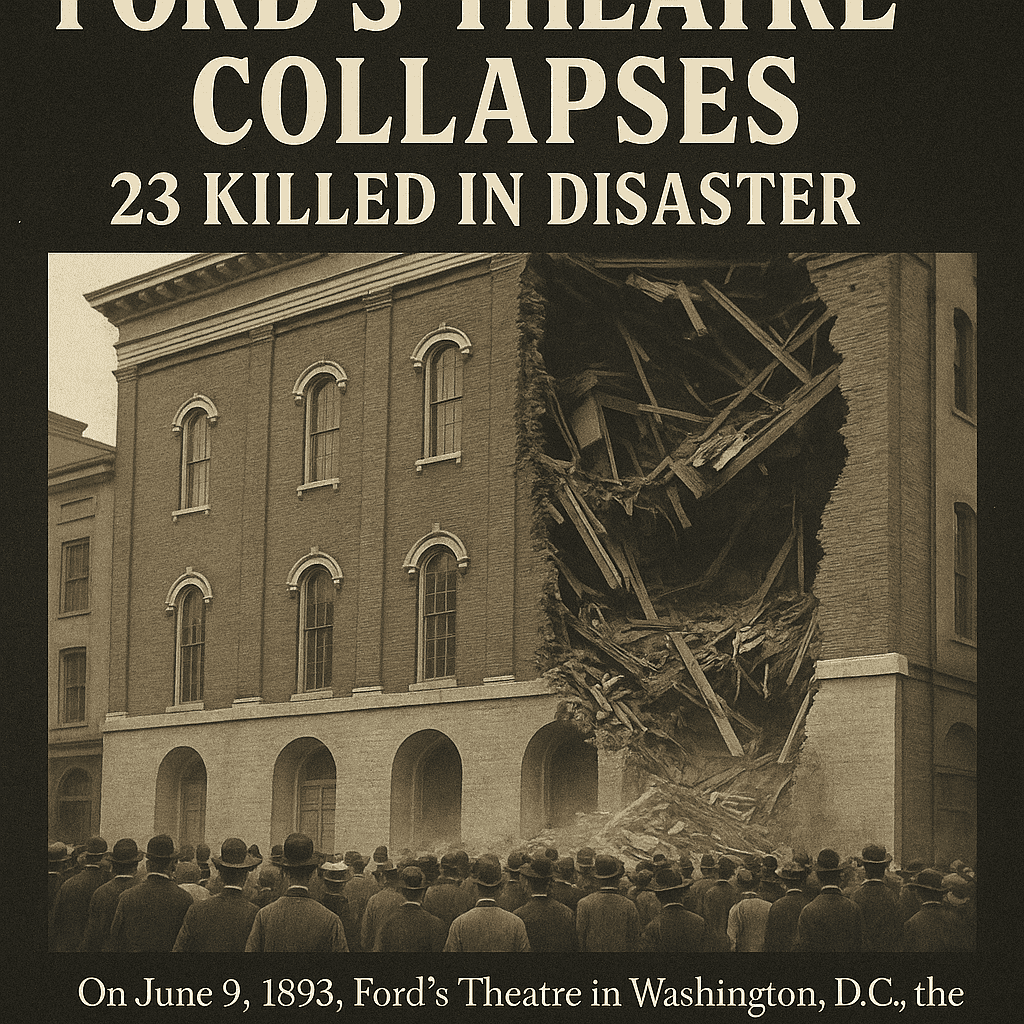
On June 9, 1893, Ford’s Theatre in Washington, D.C., was the site of another deadly tragedy, nearly three decades after it had become infamous for the assassination of President Abraham Lincoln. While being used as a federal government office building, the historic structure suffered a catastrophic collapse, killing 23 people and injuring many others. The incident revealed serious shortcomings in building maintenance and added a new layer of sorrow to a location already deeply etched in the nation’s collective memory.
From National Landmark to Government Office
Following the assassination of President Lincoln in 1865, Ford’s Theatre was permanently closed as a venue for performances. The U.S. government soon acquired the building and converted it for use by the War Department as a records storage facility and office space. By the 1890s, the building was occupied by clerks and staff who performed routine administrative duties amidst towering stacks of documents and ledgers.
Despite its official use, the building had not been significantly reinforced or structurally adapted for its new function. Heavy storage loads, aging timber supports, and a lack of proper inspection created a dangerous situation that was invisible until it was too late.
A Sudden and Shocking Collapse
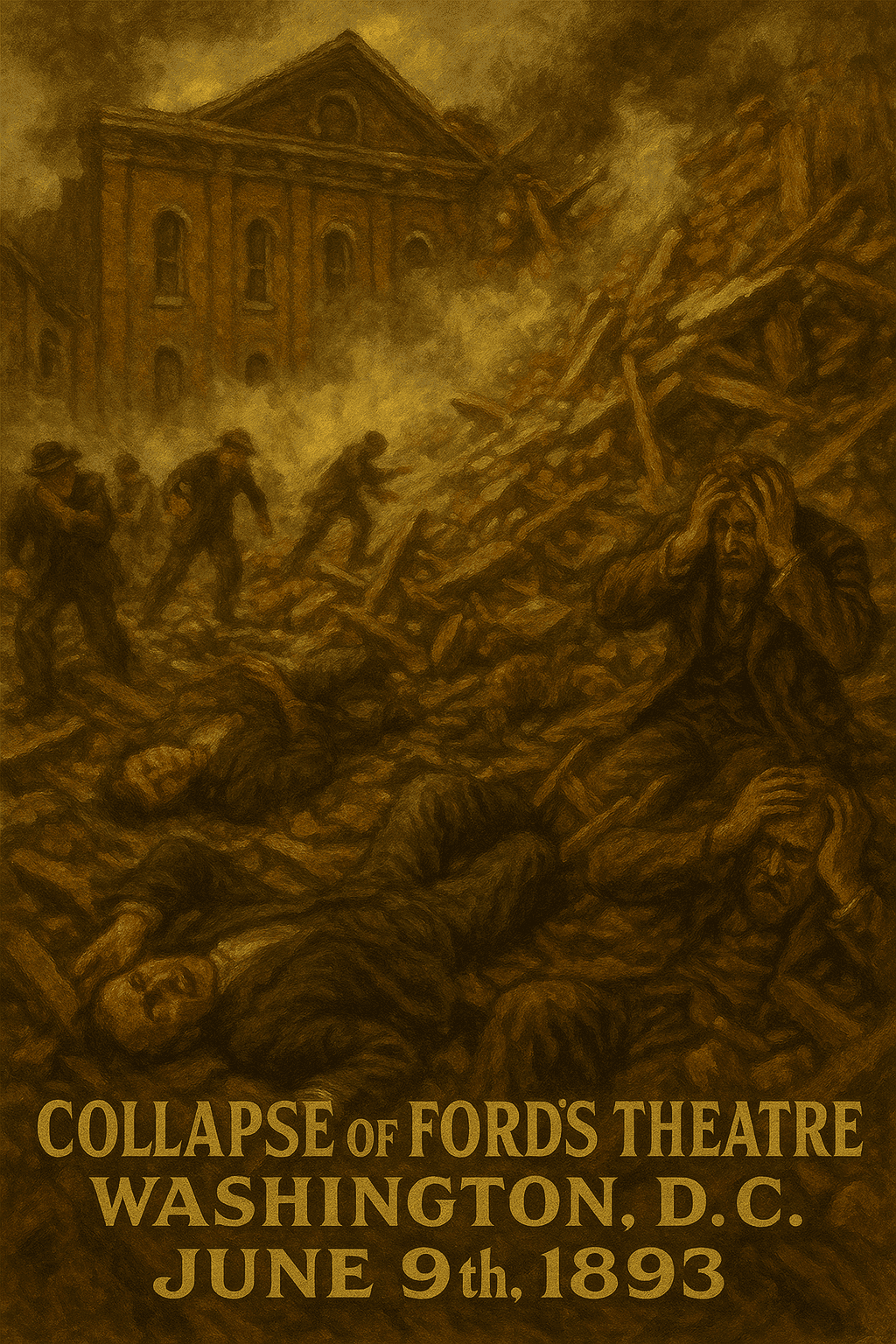
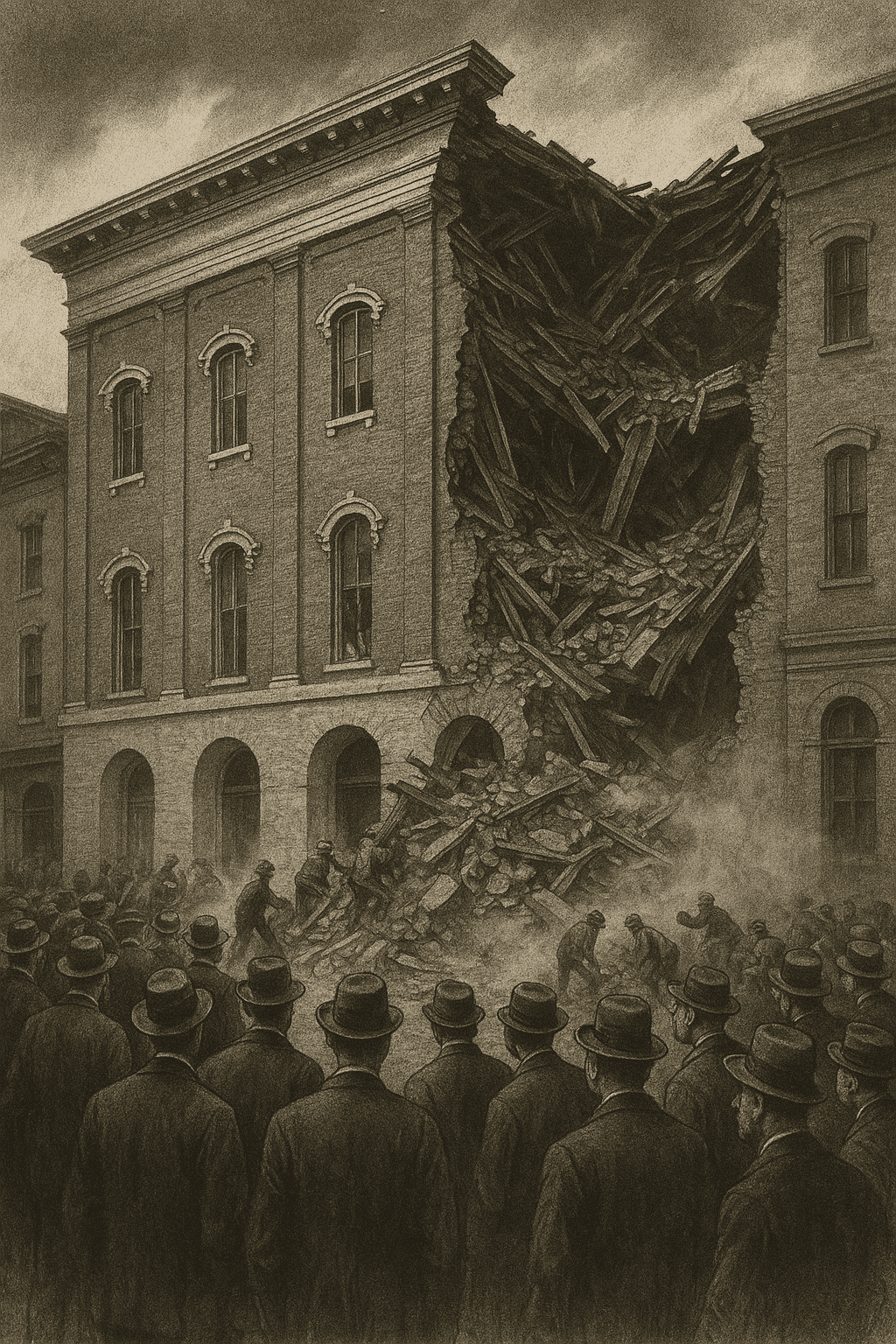
Just after the workday began on the morning of June 9, 1893, the upper floors of Ford’s Theatre gave way. Massive quantities of stored records and files came crashing down, bringing floors with them and trapping dozens of workers beneath rubble and debris. The collapse occurred without warning and in a matter of moments, turning the ordinary workday into a scene of horror.
Emergency responders and bystanders quickly assembled to help, digging through the wreckage in a desperate attempt to rescue survivors. Despite their efforts, 23 federal workers lost their lives in the collapse. Many others were injured, and the nation was once again left mourning lives lost at a place already burdened by tragedy.
Public Reaction and Calls for Reform
The collapse of Ford’s Theatre shocked the American public and ignited widespread discussion about the need for rigorous building inspections and safety protocols, particularly in government-owned properties. Investigations revealed that the structural integrity of the building had been compromised by the storage of excessive weight and by decades of neglect.
This second tragedy at Ford’s Theatre served as a wake-up call for the federal government to adopt better standards for workplace safety and historical preservation. The building, already a monument to the consequences of violence, now also symbolized the dangers of inattention to physical infrastructure.
A Legacy of Tragedy and Preservation
In the years following the collapse, the U.S. government repaired and eventually closed the building to public use. It was not until the mid-20th century that Ford’s Theatre was restored as a historic site and reopened to the public as both a museum and a working performance venue. Today, it stands as a place of education and reflection, commemorating both Lincoln’s legacy and the lives lost in the 1893 collapse.
The disaster that unfolded on June 9, 1893, remains a lesser-known but profoundly tragic chapter in the story of Ford’s Theatre. It reminds us that history often lives on not just in triumphs and legacies, but also in the moments when negligence and tragedy intertwine in the most unexpected places.