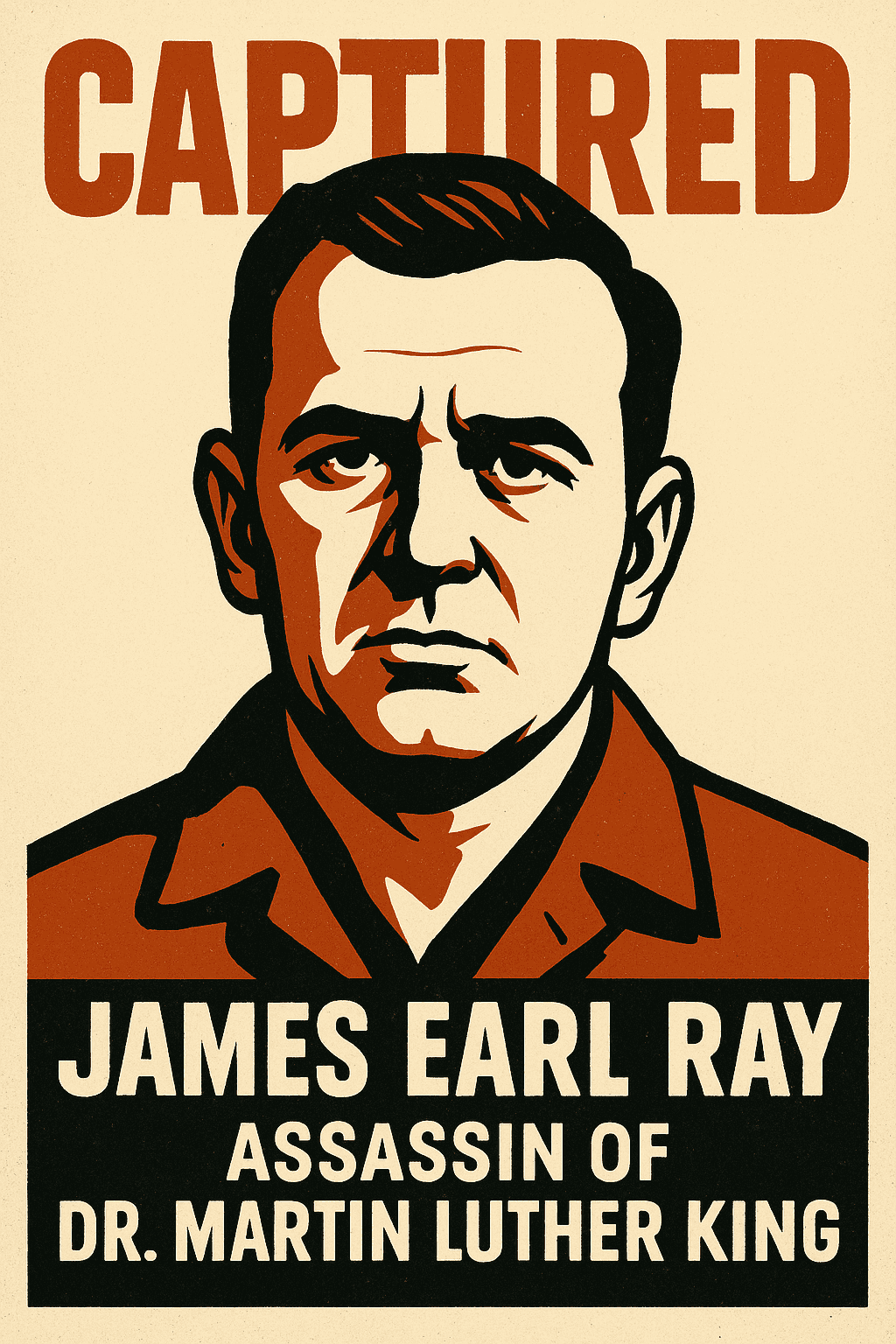
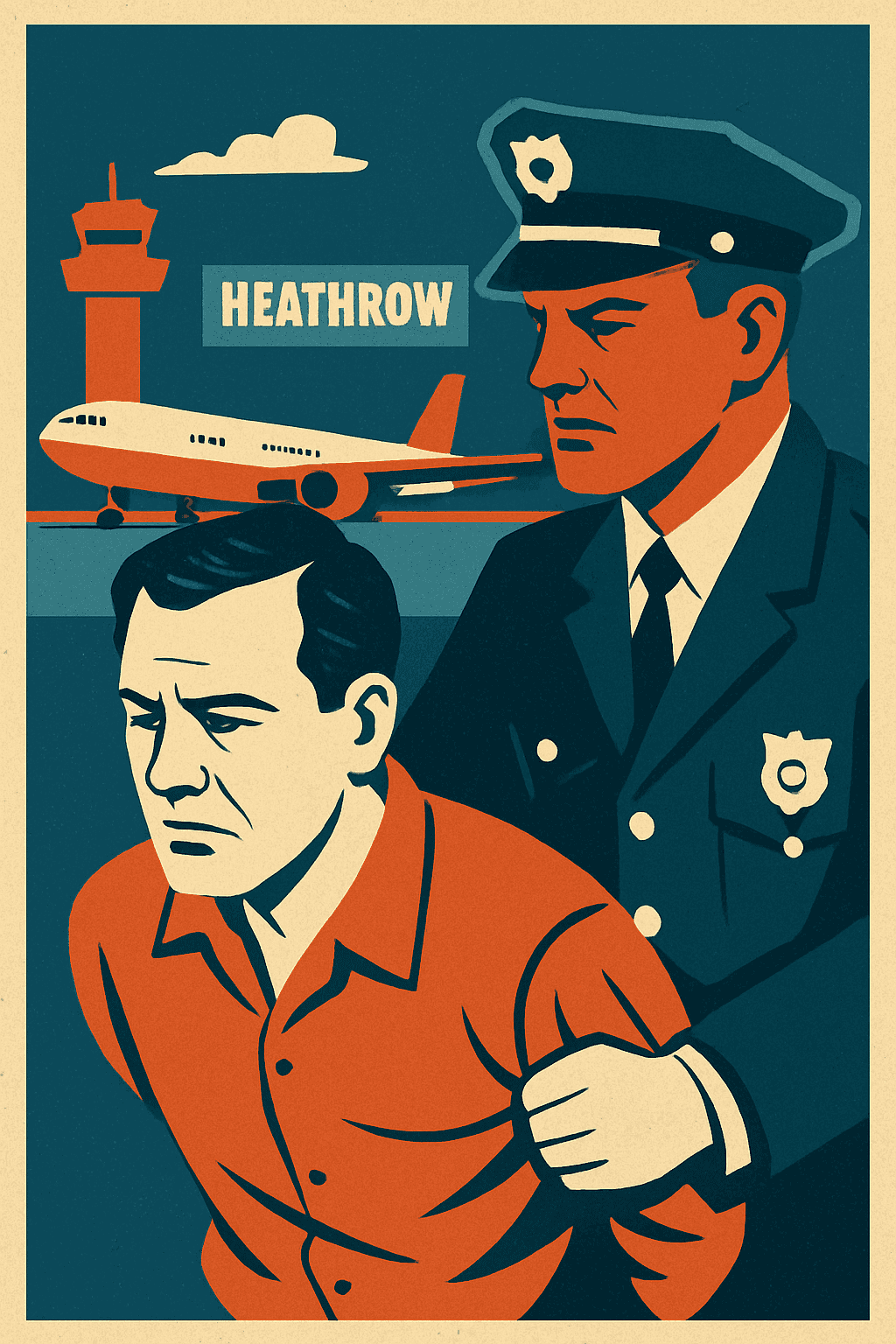
On June 8, 1968, James Earl Ray, the man accused of assassinating civil rights leader Dr. Martin Luther King Jr., was arrested at London’s Heathrow Airport, bringing a dramatic end to one of the most intensive manhunts in U.S. history. His capture, two months after the killing of King in Memphis, Tennessee, marked a major development in the pursuit of justice following one of the most devastating moments in American civil rights history.

A Nation in Mourning and on Alert
Dr. Martin Luther King Jr. was fatally shot on April 4, 1968, while standing on the balcony of the Lorraine Motel in Memphis. The assassination of the Nobel Peace Prize–winning leader, who had come to symbolize the nonviolent struggle for civil rights and racial equality, sent shockwaves through the country and sparked unrest in more than 100 cities.
Almost immediately, law enforcement agencies launched an international search for King’s killer. Evidence quickly pointed to James Earl Ray, an escaped convict with a criminal record. Ray had used a series of aliases and false identities to evade capture, moving across multiple countries in a desperate attempt to disappear.
Arrested Abroad and Returned to the U.S.
Ray’s run ended at Heathrow Airport, where British immigration officials became suspicious of his fake Canadian passport. He was detained while attempting to board a flight to Brussels, and soon after, U.S. authorities confirmed his identity and secured his extradition.
Ray was returned to the United States and indicted for King’s murder. In March 1969, he pleaded guilty to the charge and was sentenced to 99 years in prison, avoiding a jury trial. His guilty plea closed the legal chapter swiftly, but it opened the door to decades of speculation and controversy.
Questions That Persist
Despite his admission of guilt, James Earl Ray later recanted his confession and claimed he was part of a larger conspiracy, a claim that sparked widespread debate and numerous investigations. Members of Dr. King’s family, including his son Dexter King, later expressed doubts about Ray’s sole responsibility in the assassination and even supported calls for a new trial.
Multiple government inquiries, including one by the House Select Committee on Assassinations in the late 1970s, acknowledged the possibility of a broader conspiracy but ultimately concluded that Ray was the likely assassin. Still, the full circumstances surrounding King’s death remain a source of mystery and continued historical scrutiny.
A Lasting Impact
James Earl Ray’s arrest on June 8, 1968, brought a temporary sense of closure in a time of national anguish. Yet the assassination of Dr. Martin Luther King Jr. continues to resonate as a defining moment in American history—one that galvanized the civil rights movement, highlighted the persistence of racial injustice, and underscored the fragility of progress.
Ray's capture and the questions that followed serve as a reminder of the complexities of justice and the enduring legacy of a man who dreamed of equality, peace, and unity in a deeply divided nation.