On May 24, 1883, the Brooklyn Bridge officially opened to the public, forever changing the landscape and connectivity of New York City. Spanning the East River to link Manhattan and Brooklyn, the bridge was hailed as an engineering marvel and an enduring symbol of American innovation and ambition. At the time of its completion, it boasted the longest suspension span in the world and quickly became a powerful icon of the modern age.
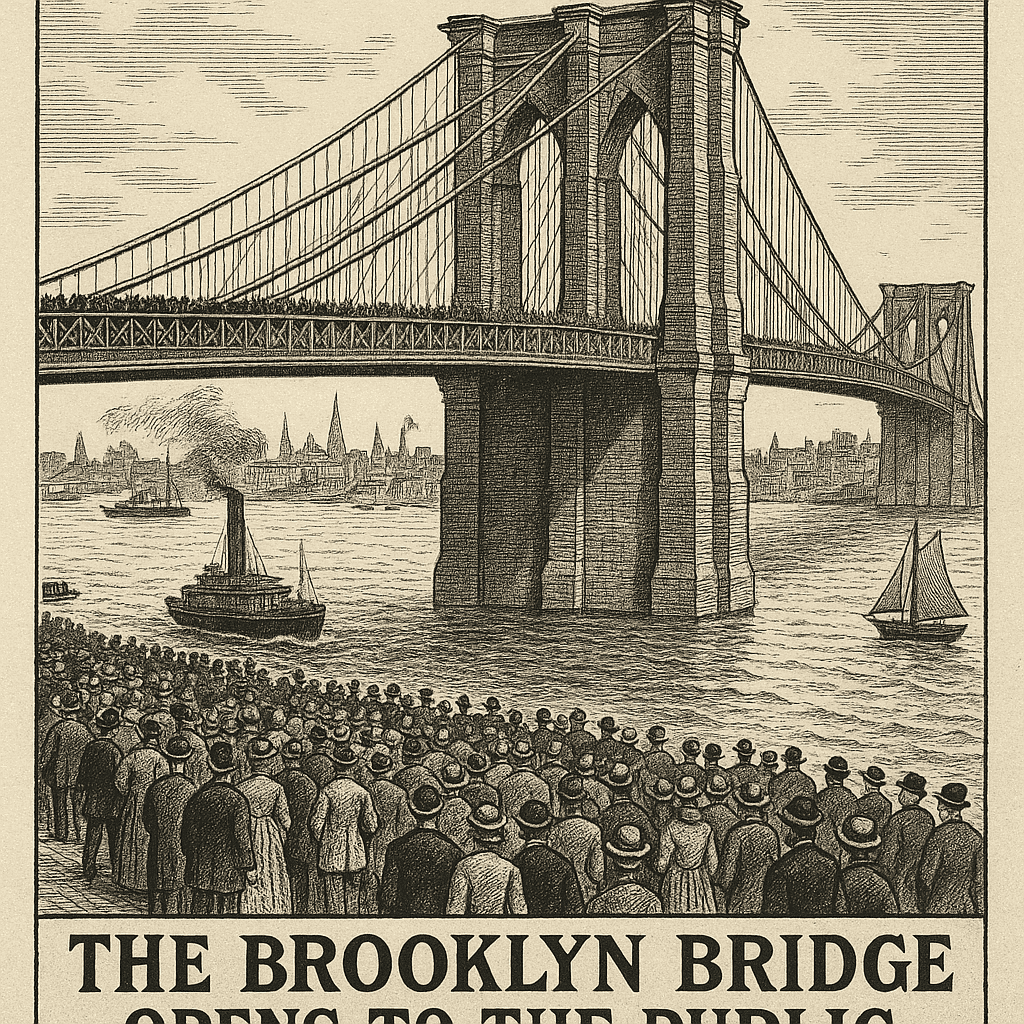
A Vision Realized Through Sacrifice
The vision for the Brooklyn Bridge was conceived by German-born engineer John A. Roebling, who designed the project with groundbreaking use of steel-wire cables. Tragically, Roebling died of tetanus following an on-site accident before construction began. His son, Washington Roebling, took over as chief engineer, overseeing the ambitious project through over a decade of construction.
Washington Roebling faced his own trial during the process, suffering from decompression sickness—then known as “caisson disease”—caused by working in the pressurized underwater chambers that formed the bridge’s foundation. Despite becoming largely bedridden, Roebling continued to direct the construction from his home with the help of his wife, Emily Warren Roebling, who played a crucial, often overlooked role in communicating his instructions and managing key aspects of the project.
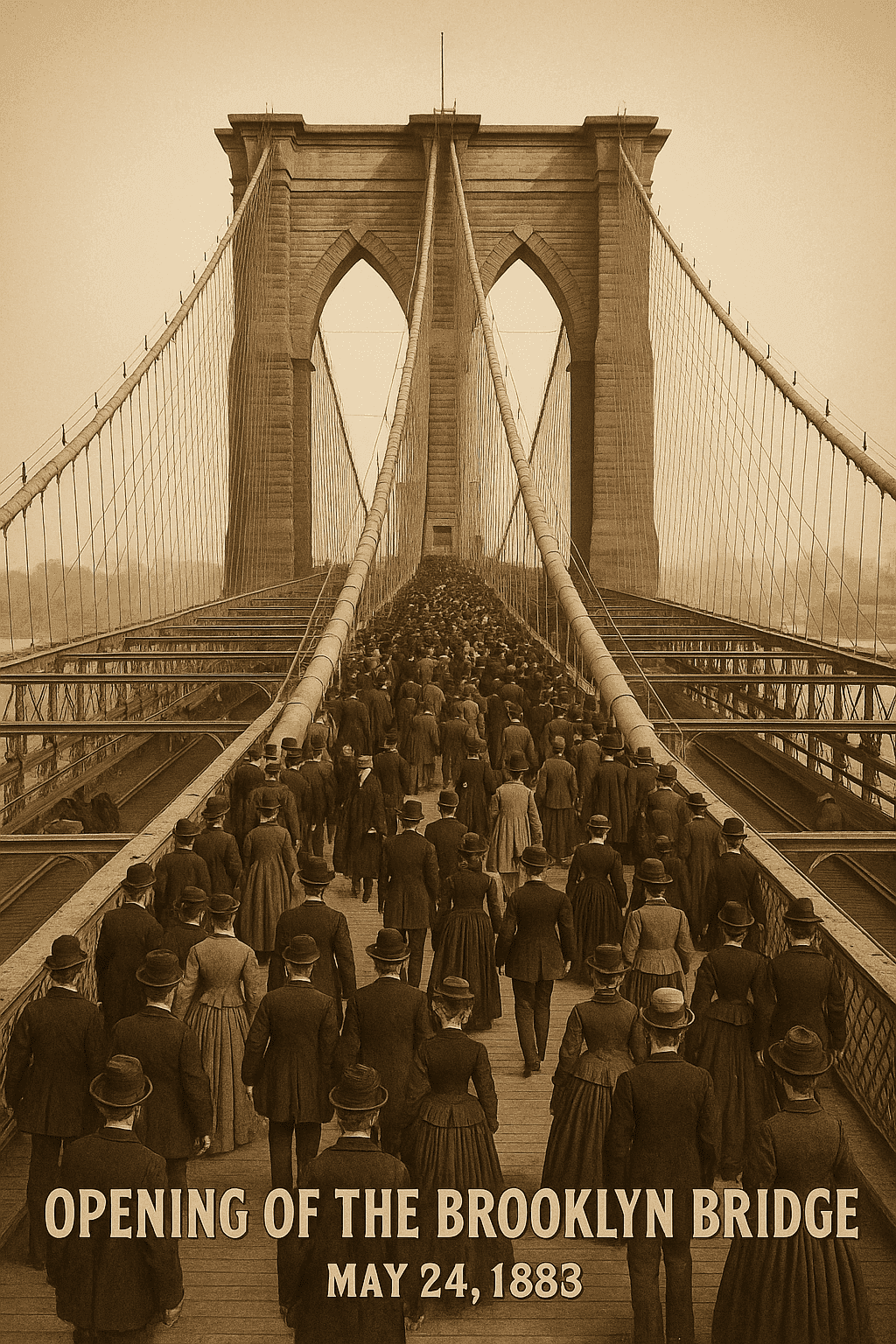
A Grand Opening for a New Era
The bridge’s grand opening was a cause for citywide celebration. Tens of thousands of people crossed on foot and by carriage during the first day, and President Chester A. Arthur and New York Governor Grover Cleveland attended the festivities. The Brooklyn Bridge was not just a physical connection between two boroughs—it was a triumph of human ingenuity and an emblem of progress during America’s Gilded Age.
Built with stone towers and sweeping steel cables, it combined architectural elegance with industrial strength, setting a new standard for infrastructure projects around the world.
Legacy and Cultural Impact
The Brooklyn Bridge quickly became a defining element of New York City’s skyline and remains one of the most recognizable structures in the United States. It facilitated the integration of Brooklyn and Manhattan, contributing to the growth of Greater New York and helping shape the city into a global metropolis.
Over time, it has also become a cultural symbol, referenced in literature, film, art, and photography. Its construction story—full of vision, hardship, and perseverance—continues to inspire and remind us of what can be achieved through determination and collaboration.
A Lasting Tribute to the American Spirit
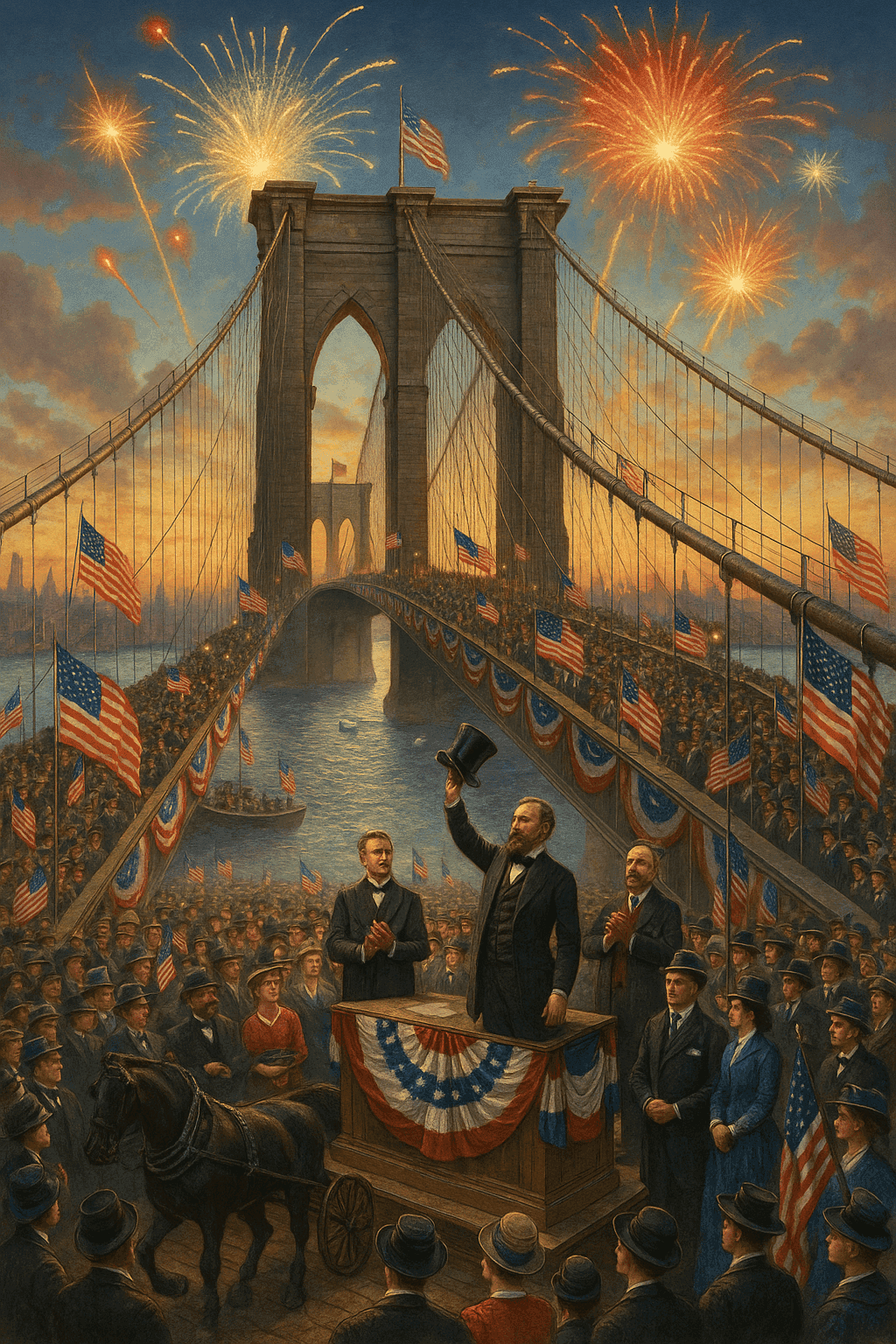
The opening of the Brooklyn Bridge on May 24, 1883, marked more than just the completion of a structure—it was a celebration of engineering prowess, the triumph of perseverance over adversity, and a lasting monument to the Roebling family's legacy. More than 140 years later, the bridge still carries thousands of vehicles and pedestrians daily, a living testament to its creators’ vision and to the enduring strength of the American spirit.