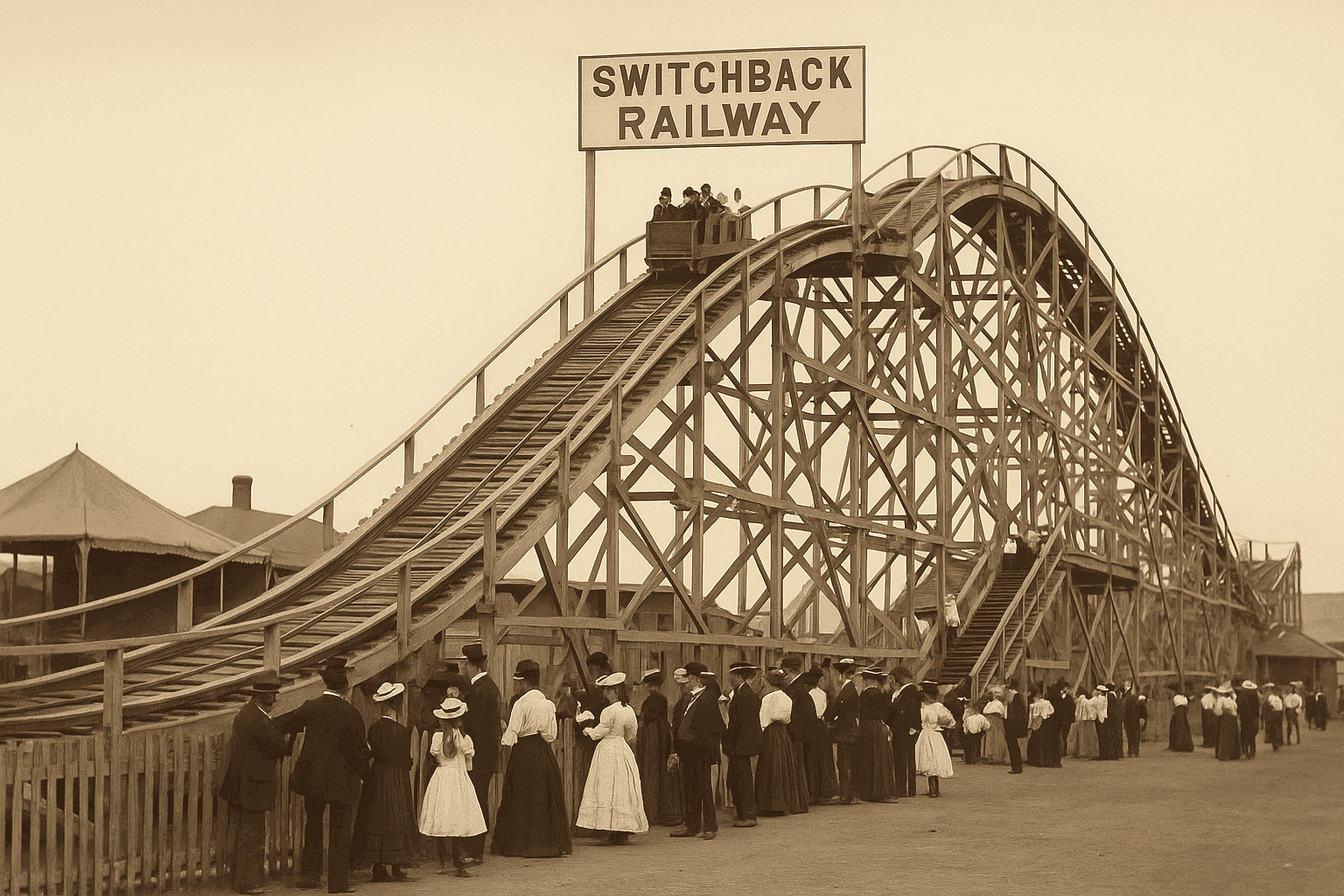
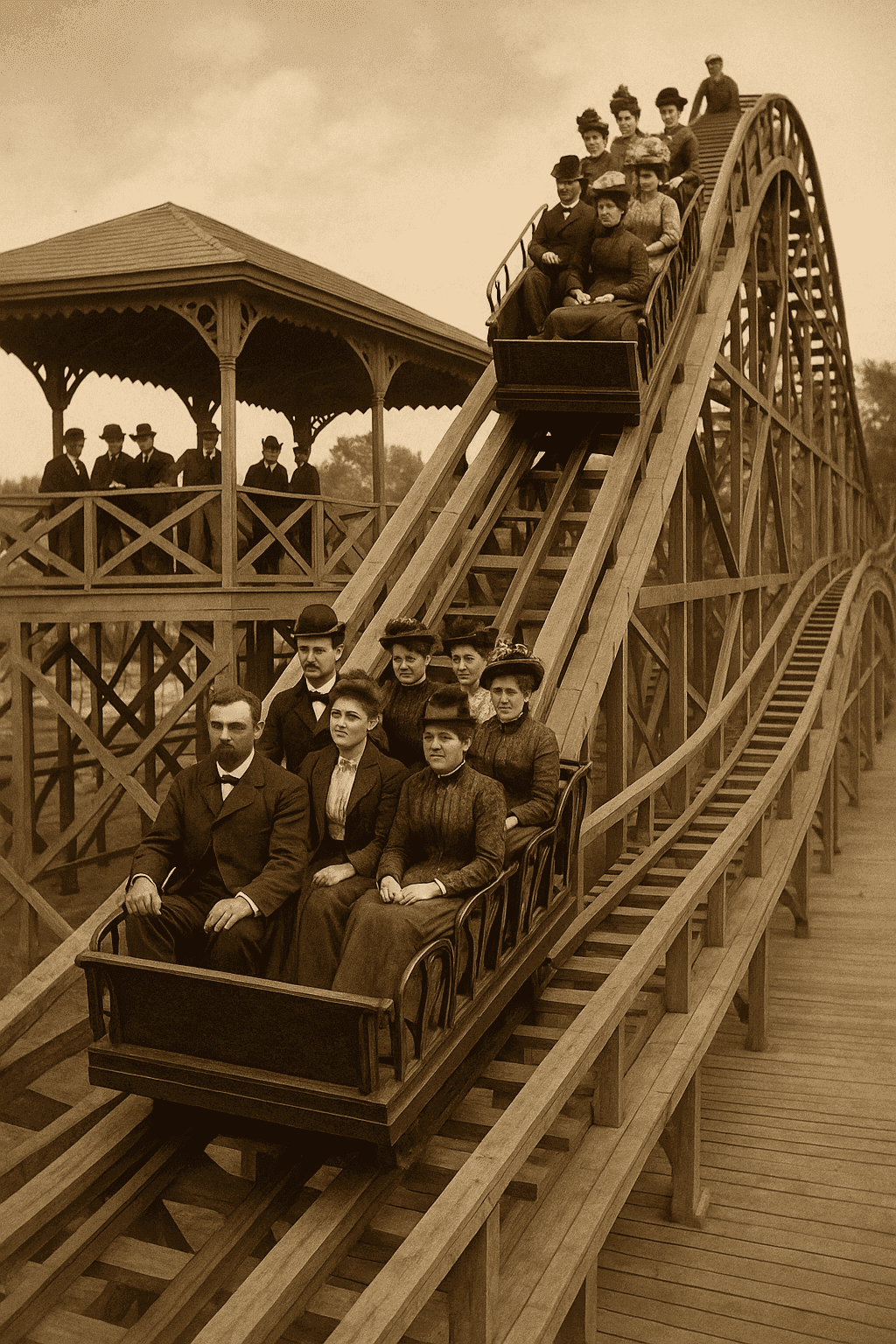
On June 16, 1884, a new kind of excitement was introduced to the American public when the first commercial roller coaster, the Switchback Railway, opened at Coney Island in Brooklyn, New York. Designed by LaMarcus Adna Thompson, the ride was a simple gravity-powered coaster that offered a scenic and slightly thrilling descent at a top speed of just six miles per hour.
Despite its modest pace, the Switchback Railway was an immediate sensation. For just five cents, riders could experience the gentle dips and turns of a wooden track stretching 600 feet, a novelty that marked the beginning of a new form of entertainment.
A Revolution in Leisure
The opening of the Switchback Railway signaled the start of a roller coaster craze that would soon sweep across the United States. Amusement parks sprang up around the country, each attempting to outdo the last with faster, taller, and more elaborate rides. What began as a relatively tame attraction quickly evolved into a booming industry, blending engineering innovation with showmanship.
Coney Island became a hub of this new amusement culture, serving as both an inspiration and a proving ground for thrill rides that delighted millions and pushed the boundaries of mechanical entertainment.
The Legacy of LaMarcus Thompson
LaMarcus Adna Thompson, often referred to as the "father of the American roller coaster," envisioned his creation as more than just an amusement. He saw it as a wholesome alternative to what he considered the corrupting influences of urban life. His invention would become the blueprint for future developments in ride design, setting the stage for decades of innovation in theme park attractions.
Thompson’s success with the Switchback Railway launched a career that included multiple patents and contributions to roller coaster design, solidifying his place in the history of American leisure.
Enduring Impact

The influence of the Switchback Railway continues to be felt today. From the adrenaline-pumping steel giants of modern amusement parks to the nostalgic charm of wooden coasters, the spirit of that first ride lives on. Roller coasters have become cultural icons—symbols of thrill, fun, and summertime adventure.
Coney Island’s modest switchback may seem quaint by today’s standards, but it launched a national love affair with high-speed amusement that still draws crowds more than a century later.