On April 22, 1978, Bob Marley returned to his home country of Jamaica to perform at the One Love Peace Concert—a historic event that rare and powerfully brought together music and politics. With Kingston gripped by political violence and fear, Marley’s performance was not only a musical triumph but a symbolic effort to inspire national healing through unity, peace, and love.
A Nation in Crisis
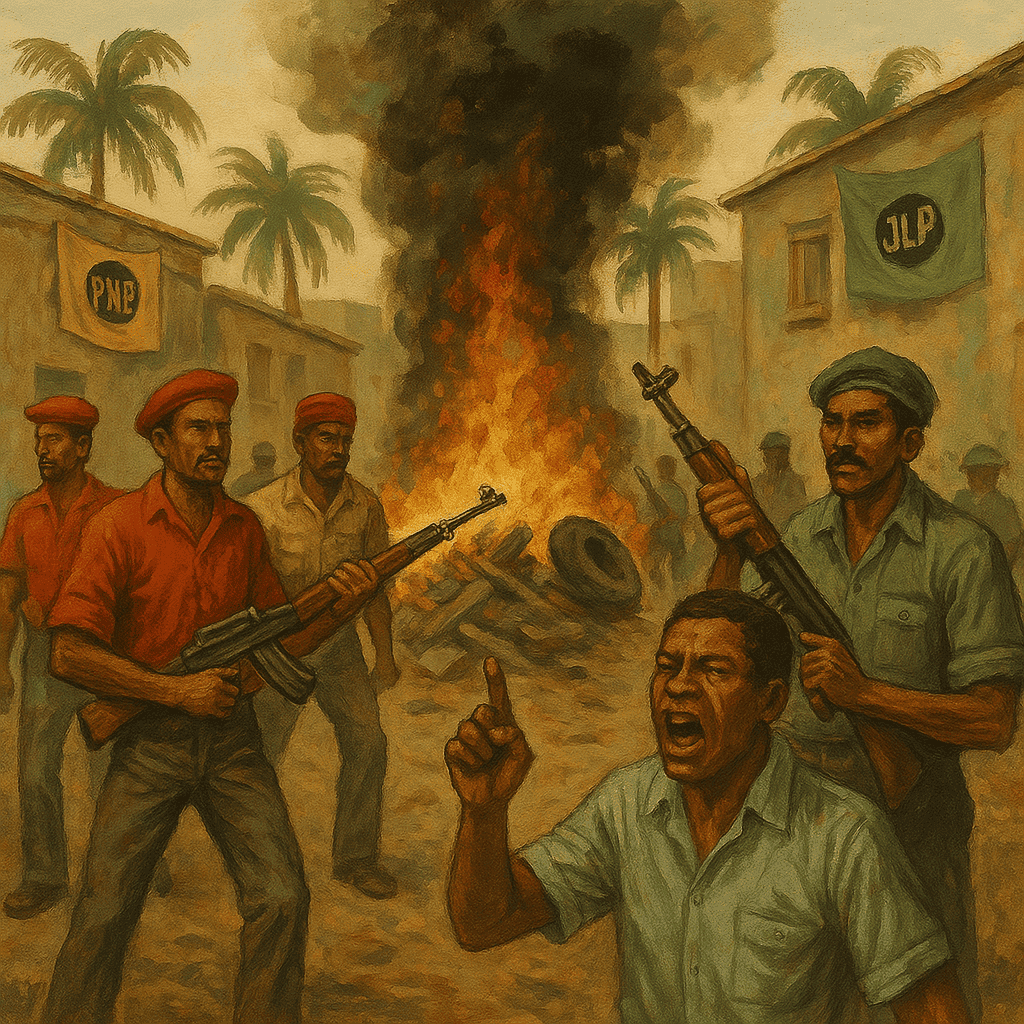
Jamaica in the 1970s was deeply divided. Political rivalry between the ruling People’s National Party (PNP) and the opposition Jamaica Labour Party (JLP) had spiraled into violence, with armed gangs enforcing partisan control in many neighborhoods. The country teetered on the edge of civil conflict. Marley, who had been shot during a politically motivated attack two years earlier, had spent time in exile in London. His decision to return and headline the concert was both courageous and strategic—he hoped to use his voice to mend a fractured nation.
The Night That Changed Everything
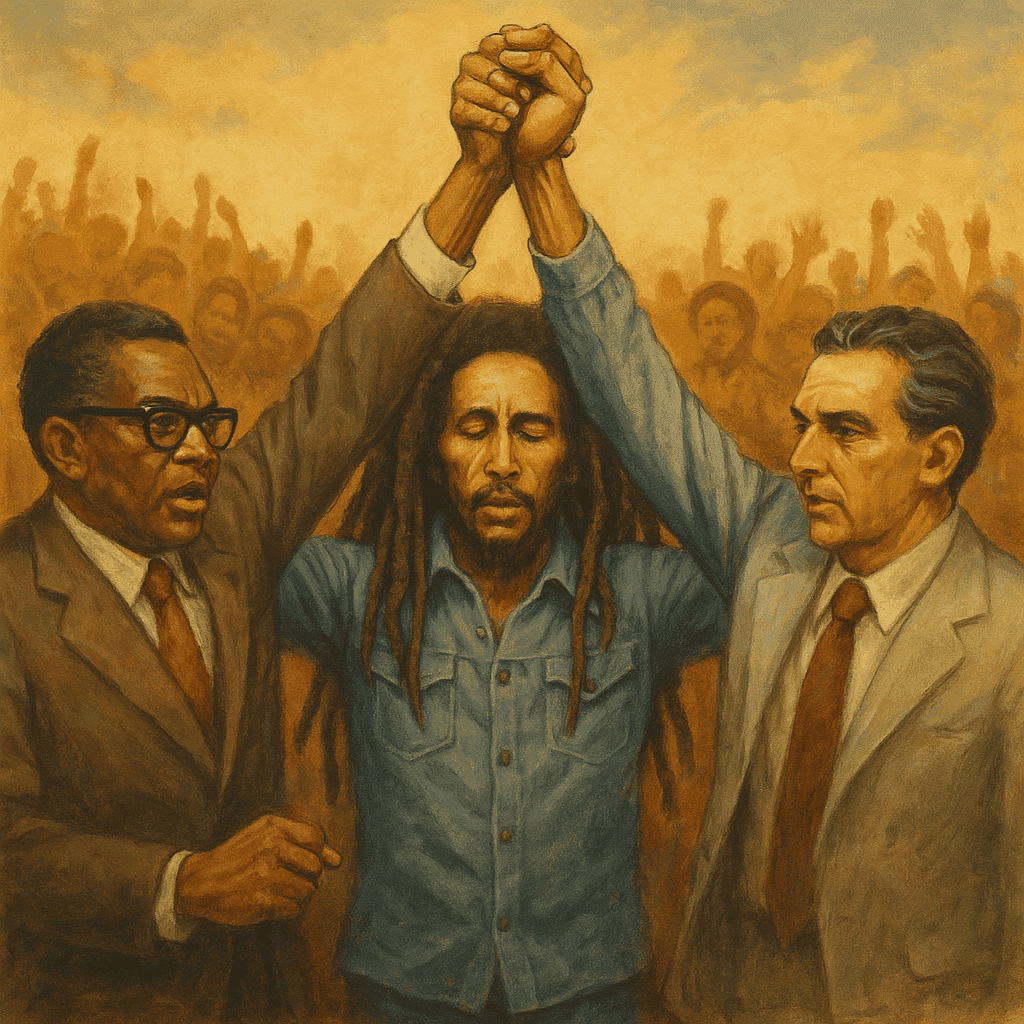
The One Love Peace Concert featured many of reggae’s biggest stars, but Marley’s performance became immortalized. As he played “Jammin’,” he paused mid-song to call the two political leaders—Prime Minister Michael Manley and opposition leader Edward Seaga—onto the stage. Marley joined their hands in a spontaneous and unforgettable act and raised them high above their heads. The crowd erupted. The gesture was brief but powerful, offering a glimpse of unity amid ongoing conflict.
Though the act did not lead to immediate political peace, it was a seismic cultural moment. It showed that even in the face of deep hostility, a single shared gesture—backed by the universal language of music—could ignite hope. Marley didn’t preach neutrality; he advocated for harmony. His courage in facilitating that moment underscored his belief that artists had a responsibility that extended beyond entertainment.
A Legacy of Unity
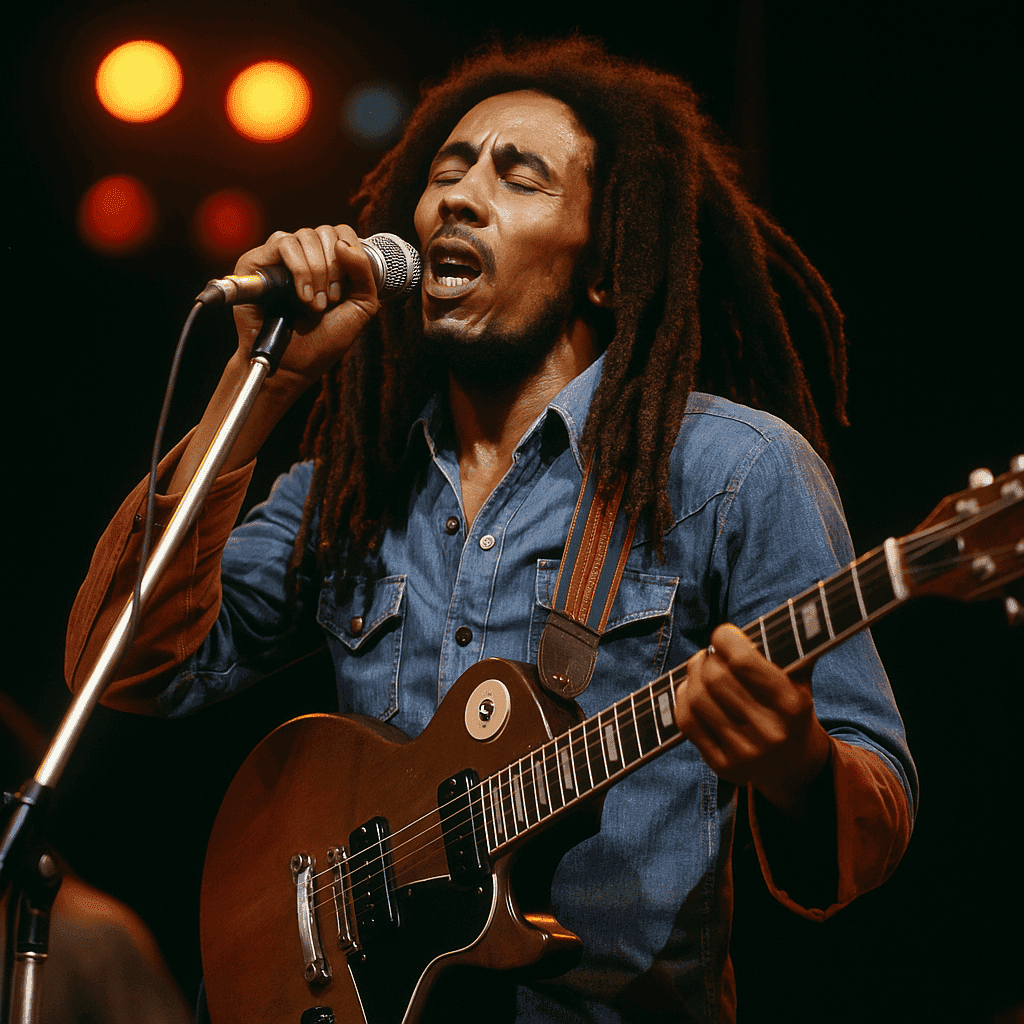
The concert’s impact extended far beyond Jamaica’s borders. The image of Marley raising the hands of two political enemies became a defining symbol of reconciliation. For many, it solidified Marley not just as a musician, but as a global voice for peace and justice. His music, steeped in messages of love and resistance, continues to inspire movements around the world.
Today, the One Love Peace Concert is remembered as more than just a concert—it was a moment when art met activism on the world stage. Marley’s actions on that night proved that even in the darkest times, a call for peace can echo louder than violence.