May 8: Born to Lead, The Day the Guns Went Silent, Betty White's Greatest Role
History arranges its coincidences with occasional flair. May 8 is a date that offers one of the most striking: the man born in Lamar, Missouri, on this day in 1884 would grow up to be the president who announced to the world, on this same date sixty-one years later, that the war in Europe was over. Harry Truman's birthday and V-E Day share a calendar square in a way that the historical record does not always manage to make so tidy. The third story May 8 carries is tidier still — an eighty-eight-year-old comedian who showed up on a Saturday night in New York and reminded the television industry, with characteristic understatement, that she was still the best in the room.
The Man from Lamar
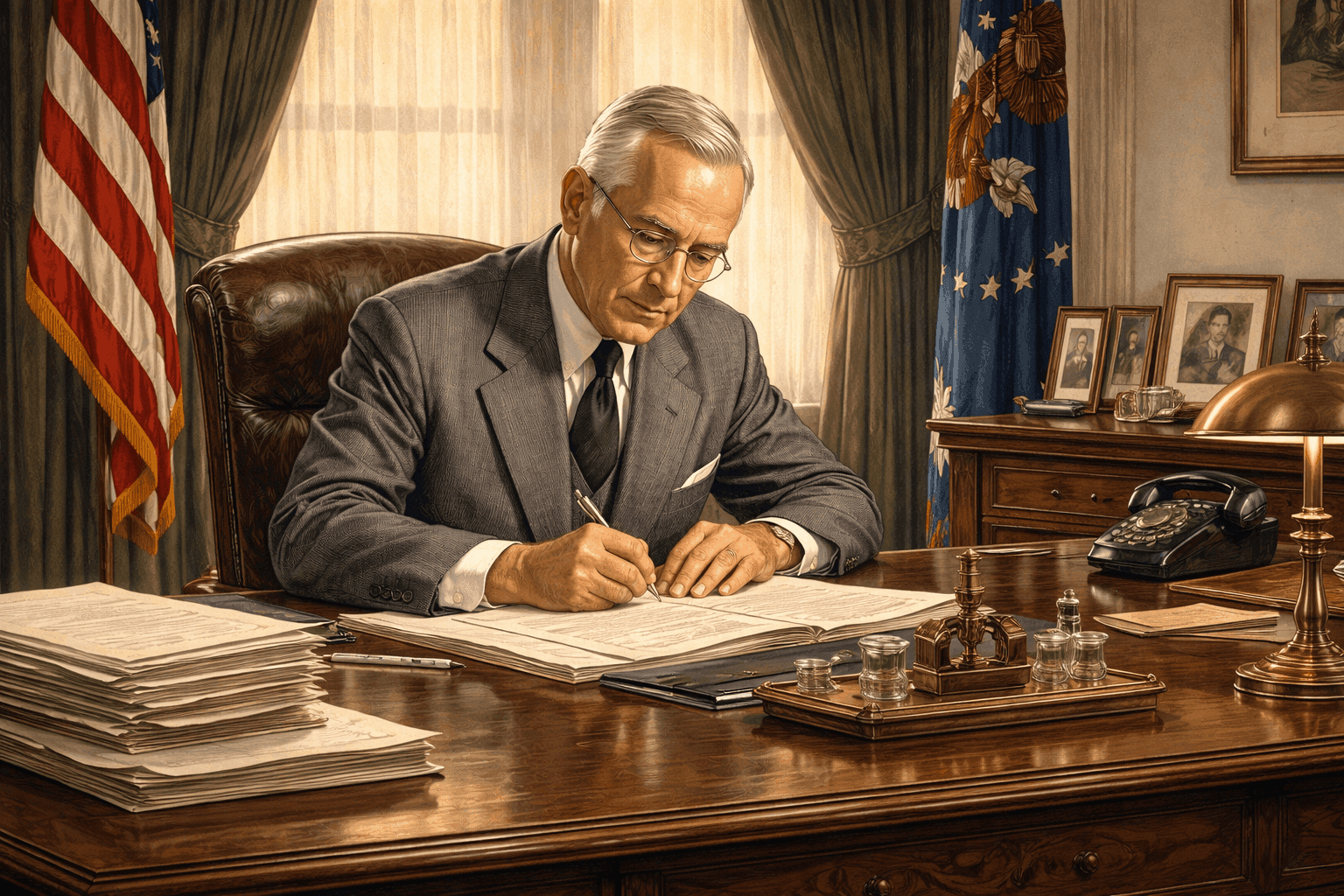
On May 8, 1884, Harry S. Truman was born in a small frame house in Lamar, Missouri — a town of fewer than a thousand people in the southwestern corner of the state. His father was a mule trader and farmer; his mother was a woman of strong opinions and stronger will whose influence on her son was evident in his directness, his stubbornness, and his lifelong indifference to the opinions of people he had decided were wrong. Truman did not attend college, a distinction that makes him one of only a handful of twentieth-century presidents without a university degree. He failed at farming and at haberdashery before entering Missouri politics through the Kansas City machine of Tom Pendergast, a patron whose corruption was eventually his undoing and whose support was the vehicle through which Truman reached the United States Senate. He arrived in Washington in 1934 widely dismissed as a machine politician of no particular distinction. By 1944, he had earned sufficient respect to be chosen as Franklin Roosevelt's running mate.
Roosevelt died on April 12, 1945 — eighty-two days into his fourth term — and Truman became president without having been meaningfully included in the administration's most consequential decisions. He had not been told about the Manhattan Project. He had not been fully briefed on the diplomatic arrangements with Stalin. He inherited the final months of the most destructive war in human history and the opening of the Cold War that followed it, and he navigated both with a decisiveness that surprised those who had underestimated him. The decision to use atomic bombs on Hiroshima and Nagasaki — among the most consequential and most debated choices any president has ever made — was his within months of taking office. The Marshall Plan, NATO, the Berlin Airlift, the recognition of Israel, the integration of the armed forces by executive order — each was a Truman initiative, executed with the matter-of-fact resolve of a man who had decided that the job required decisions and that the job was his. He left office in January 1953 widely unpopular and died in 1972 having been substantially rehabilitated by history. The sign on his desk — "The Buck Stops Here" — was not a boast. It was a description.
V-E Day
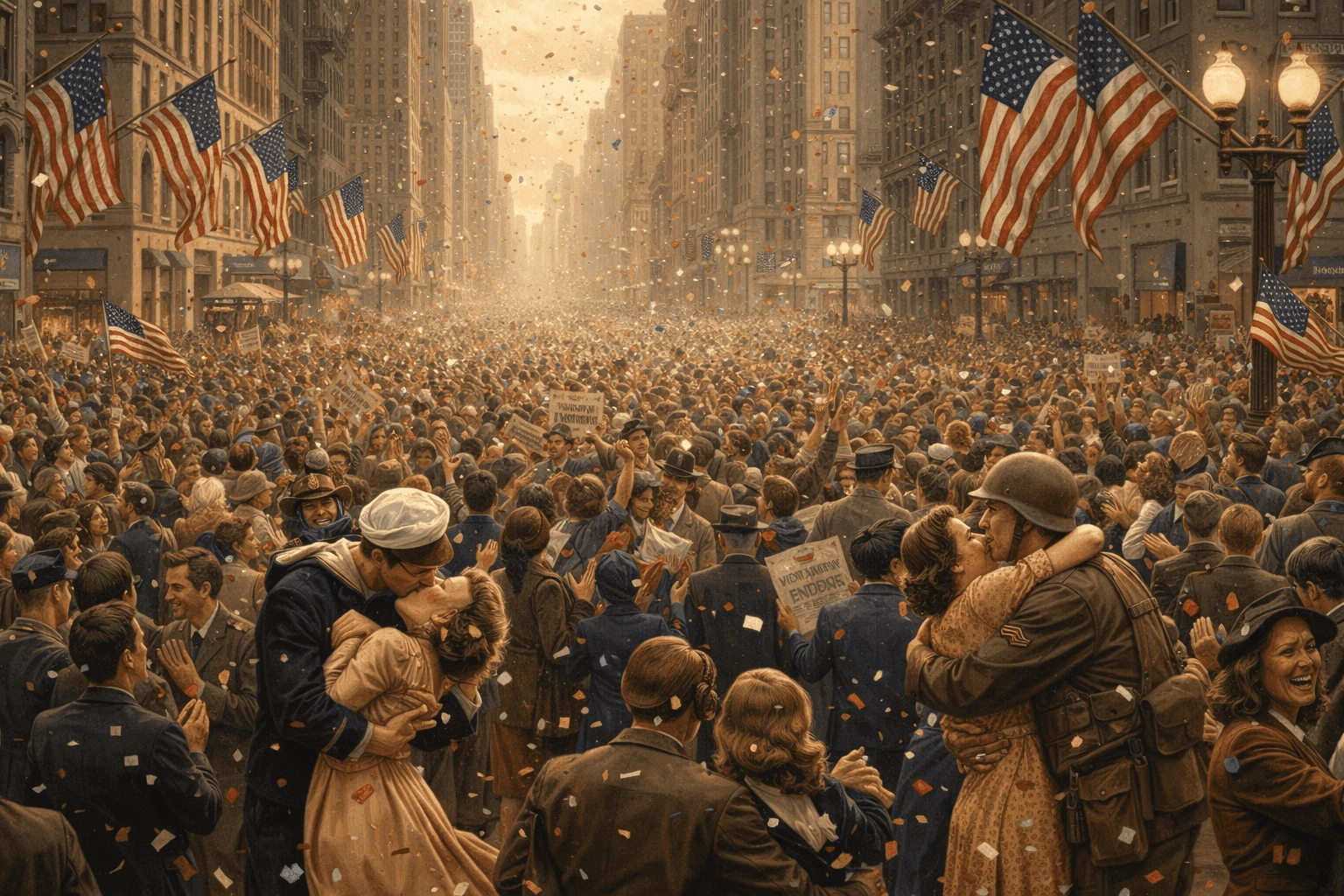
On May 8, 1945 — Harry Truman's sixty-first birthday — the president announced to the nation and the world that Germany had surrendered unconditionally, ending nearly six years of war in Europe. The formal surrender had been signed in Reims, France, in the early morning hours of May 7; the announcement was coordinated with the Allied governments and timed to coincide with celebrations in London, Washington, and Moscow. In cities across the Allied world, people poured into the streets in a spontaneous outpouring of relief that witnesses described as unlike anything they had seen in their lives — not the frenzied celebrations of a victory won, exactly, but the exhale of people who had been holding their breath for years and had finally been told they could stop. In London, crowds gathered outside Buckingham Palace; in New York, Times Square filled with strangers embracing; in Paris, the boulevards that had been occupied by German soldiers for four years were suddenly full of French citizens who had survived to see them liberated.
For Truman, the day carried a personal dimension that he acknowledged in his diary: it was his birthday, and the gift the date brought him — the end of the European war — was one he shared with the survivors of a conflict that had killed an estimated 70 to 85 million people. But V-E Day was not the end of the war. Japan had not surrendered; the Pacific theater continued, and the decisions about how to end it — including the use of atomic weapons — still lay ahead. Truman's birthday joy was real and genuine, and it was also partial: the president who received the news of Germany's surrender on May 8 knew that the war he had inherited from Roosevelt would require more of him before it was truly over. The guns had gone silent in Europe. In the Pacific, they had not.
Still Here
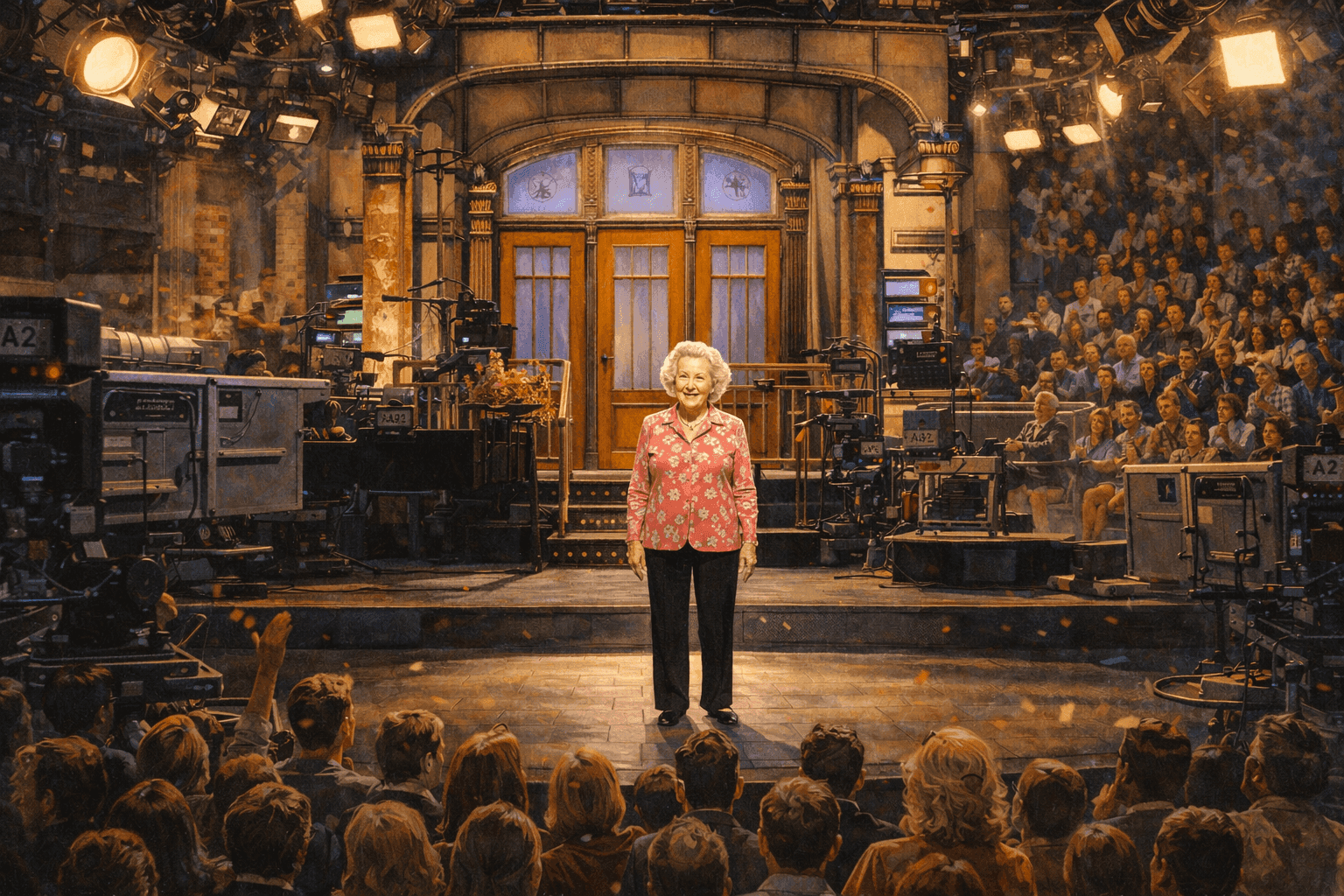
On May 8, 2010, Betty White hosted Saturday Night Live at the age of eighty-eight, becoming the oldest person ever to host the program and delivering what many critics considered one of its finest episodes in years. White had not volunteered for the assignment; the hosting gig had been generated by a Facebook campaign organized by fans who had gathered more than half a million signatures demanding that NBC give her the job. The network complied, the writers delivered material calibrated to White's particular genius for the deadpan subversion of her own wholesome image, and White — who had been a working entertainer since the 1940s and had won Emmy Awards across six decades — arrived at Studio 8H and performed as though she had been waiting for the invitation her whole career. Her monologue, her sketches, her timing: all of it was that of a comedian at the height of her powers, in a medium she had been navigating since before most of the show's writers were born.
The May 8, 2010 episode was both a cultural event and a kind of rebuke to the entertainment industry's assumptions about age and relevance. White had spent decades being celebrated as a beloved figure — which is a way of being sidelined with kindness — and the SNL hosting appearance, followed by a starring role in the film The Proposal and a new sitcom, Hot in Cleveland, constituted one of the more remarkable late-career resurrections in American entertainment. She had been a television pioneer since the early days of the medium, a game show panelist of legendary wit, a sitcom actress of two iconic characters — Sue Ann Nivens on The Mary Tyler Moore Show and Rose Nylund on The Golden Girls — and a public personality whose warmth and comic timing had remained essentially undimmed across seven decades of professional life. She died on December 31, 2021, eighteen days before what would have been her hundredth birthday. The Facebook campaign that put her on SNL at eighty-eight was correct in its essential assessment: Betty White was exactly as good as advertised, and the television industry had not been paying sufficient attention.