May 7: The Fisherman Who Bridged Two Worlds, 1,198 Lives Lost at Sea, The Scream Comes Home
May 7 is a date that understands how dramatically the world can change in a single moment — a wave that carries a fisherman to a shore he never imagined, a torpedo that sends 1,198 people into the sea and a nation toward a war it had been resisting, a phone tip that leads investigators to a recovered painting wrapped in a blanket in a seaside town in Norway. Each story is about the sudden, irreversible nature of certain events — the kind that arrive without warning and leave everything permanently rearranged. And each carries within it a human drama that the event itself, however large, is ultimately about: a young man learning to navigate two cultures, the faces behind a casualty count, and the particular anxiety of a world that briefly contemplated life without one of its most recognizable images.
Manjiro
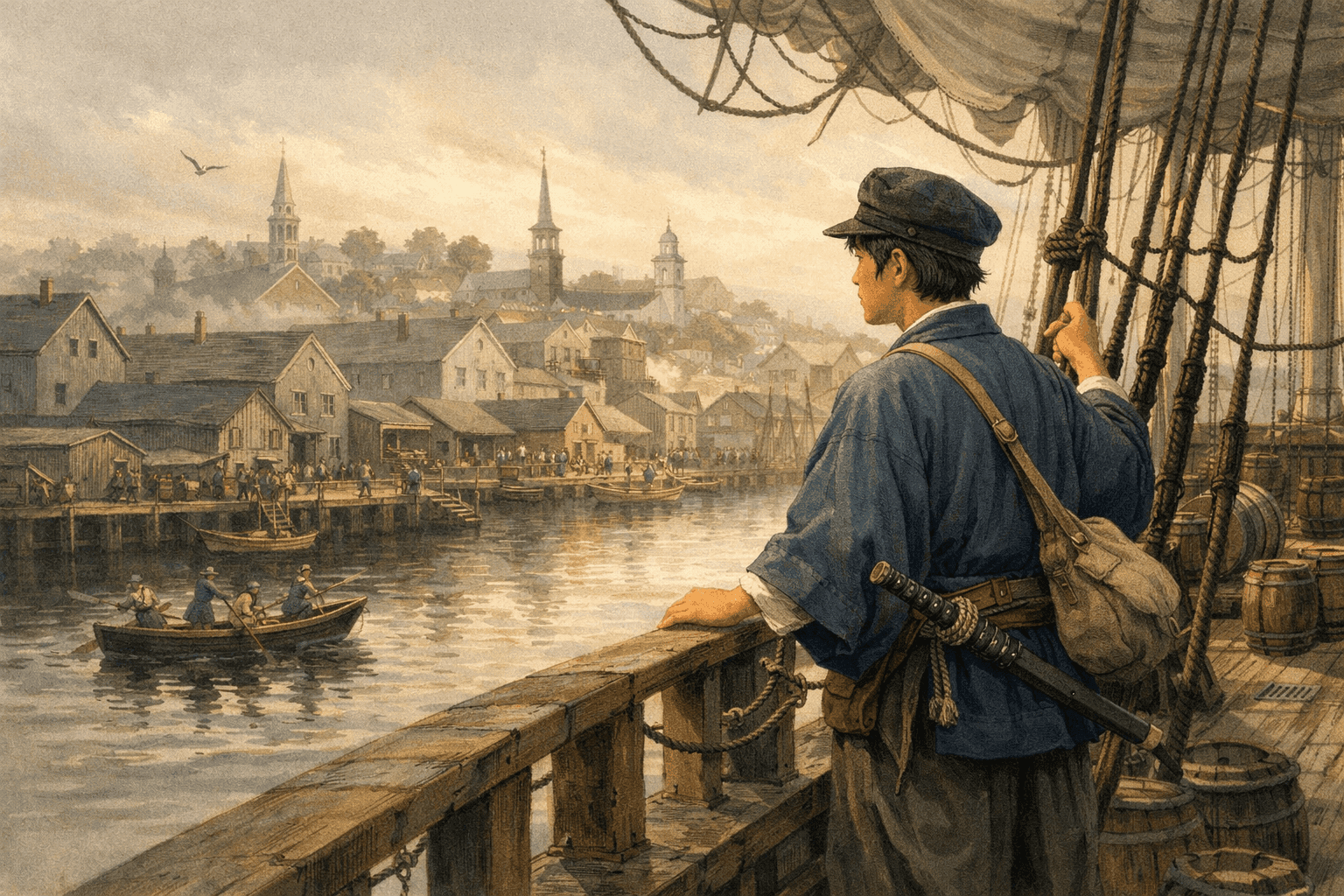
In January 1841, a fourteen-year-old Japanese fisherman named Manjiro Nakahama was caught in a storm with four companions while fishing off the coast of Shikoku, Japan. Their boat capsized and they drifted for days before washing ashore on the uninhabited volcanic island of Torishima, where they survived for months on birds and rainwater until they were rescued by the American whaling ship John Howland, captained by William Whitfield. Whitfield took a liking to the resourceful young Manjiro, and when the ship's journey eventually brought it back to New Bedford, Massachusetts, in May 1843, Whitfield brought Manjiro with him — making him the first recorded Japanese person to set foot on American soil. Japan at the time enforced a policy of near-total isolation from the outside world; for a Japanese subject to live abroad was illegal, and return was punishable by death.
Manjiro — who took the American name John Mung and later John Manjiro — spent the following years in Fairhaven, Massachusetts, where Captain Whitfield enrolled him in school, and subsequently as a whaler and gold rush prospector in California. He learned English, navigation, and surveying, and in 1851 he risked his life to return to Japan, where he was imprisoned and interrogated before being released and eventually employed by the Tokugawa shogunate as a translator and adviser. His knowledge of America — its language, its customs, its geography — proved invaluable when Commodore Perry's fleet arrived in Japan in 1853 demanding the opening of trade relations. Manjiro served as one of Japan's key interpreters in those negotiations and became a professor at what would become Tokyo University. The fisherman who had been pulled from a volcanic island by an American whaling ship spent the rest of his life as one of the most important human bridges between Japan and the United States during one of history's most consequential periods of international realignment. His story did not make him famous in his own time. It is impossible to tell the history of the American-Japanese relationship without it.
The Lusitania
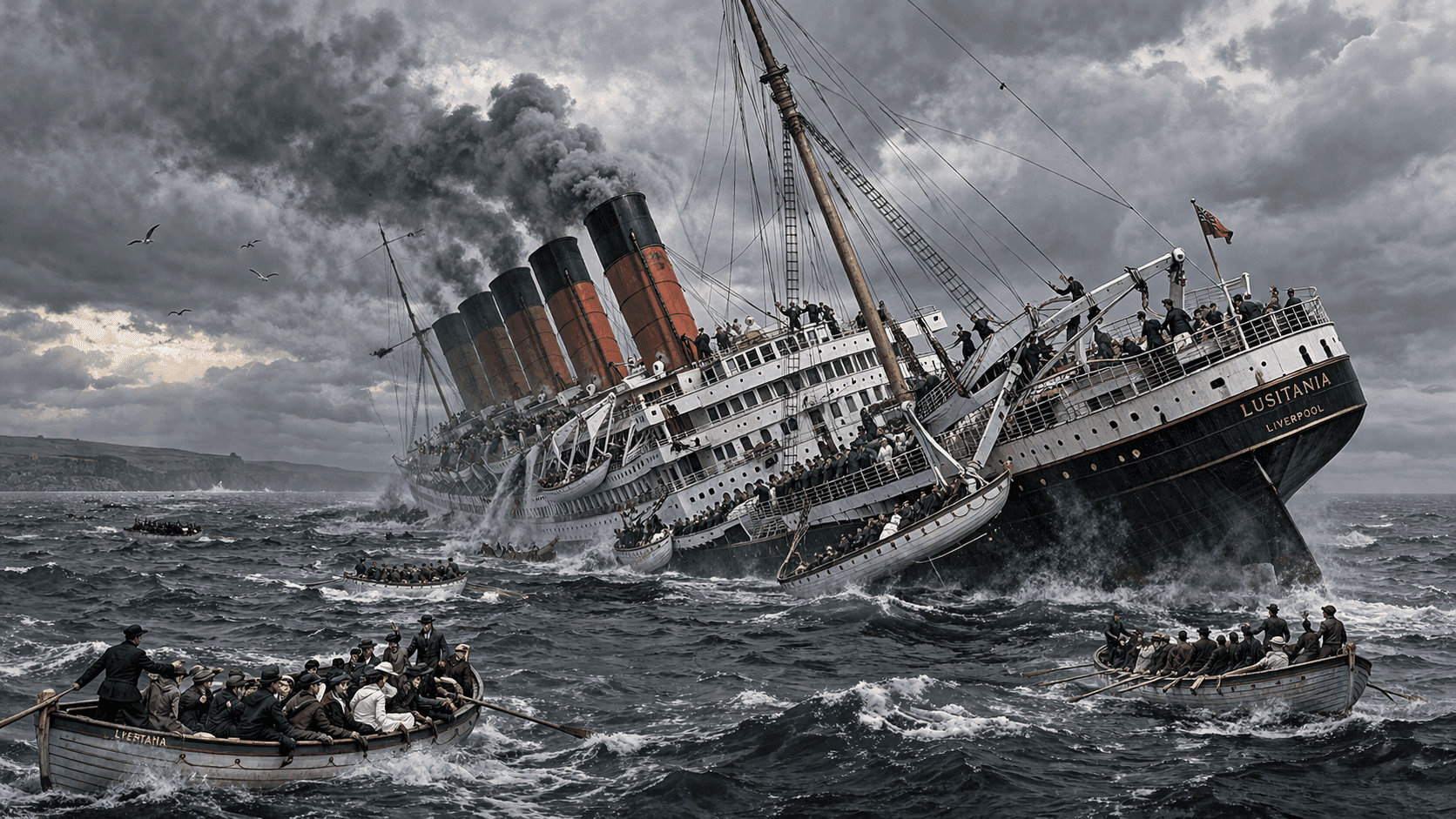
On May 7, 1915, at 2:10 in the afternoon, a torpedo fired by the German submarine U-20 struck the RMS Lusitania — the largest and fastest ocean liner in service at the time — off the Old Head of Kinsale on the southern coast of Ireland. The ship sank in eighteen minutes, taking 1,198 people with it, including 128 American citizens. The speed of the sinking — faster than any previous major maritime disaster — prevented the orderly launching of lifeboats and turned what might have been a survivable emergency into a catastrophe. The Lusitania had been warned before departure that German submarines were operating in the waters around Britain; Germany had placed advertisements in American newspapers advising travelers that ships flying Allied flags were subject to attack. The warnings were widely dismissed. The ship had seemed too large, too fast, and too famous to be a plausible target.
The outrage that followed the sinking was immediate and international. "Remember the Lusitania" became a recruiting slogan in Britain; in the United States, the deaths of 128 Americans in an attack on a civilian vessel produced a sharp shift in public opinion that the Wilson administration — committed to neutrality — struggled to contain. Germany temporarily suspended unrestricted submarine warfare in response to American pressure, but resumed it in 1917 — the event that, combined with the Zimmermann Telegram, finally drove the United States into the war. The sinking of the Lusitania is sometimes described as the event that made American entry into World War I inevitable; historians debate that claim, but there is no question that it fundamentally altered the emotional landscape of a country that had been watching the European war from a distance and had not yet decided it was also theirs. A secondary debate — about whether the ship was carrying munitions that contributed to the secondary explosion that sank her so quickly — has never been fully resolved and has kept the Lusitania's story alive in the literature of maritime tragedy for more than a century.
Found
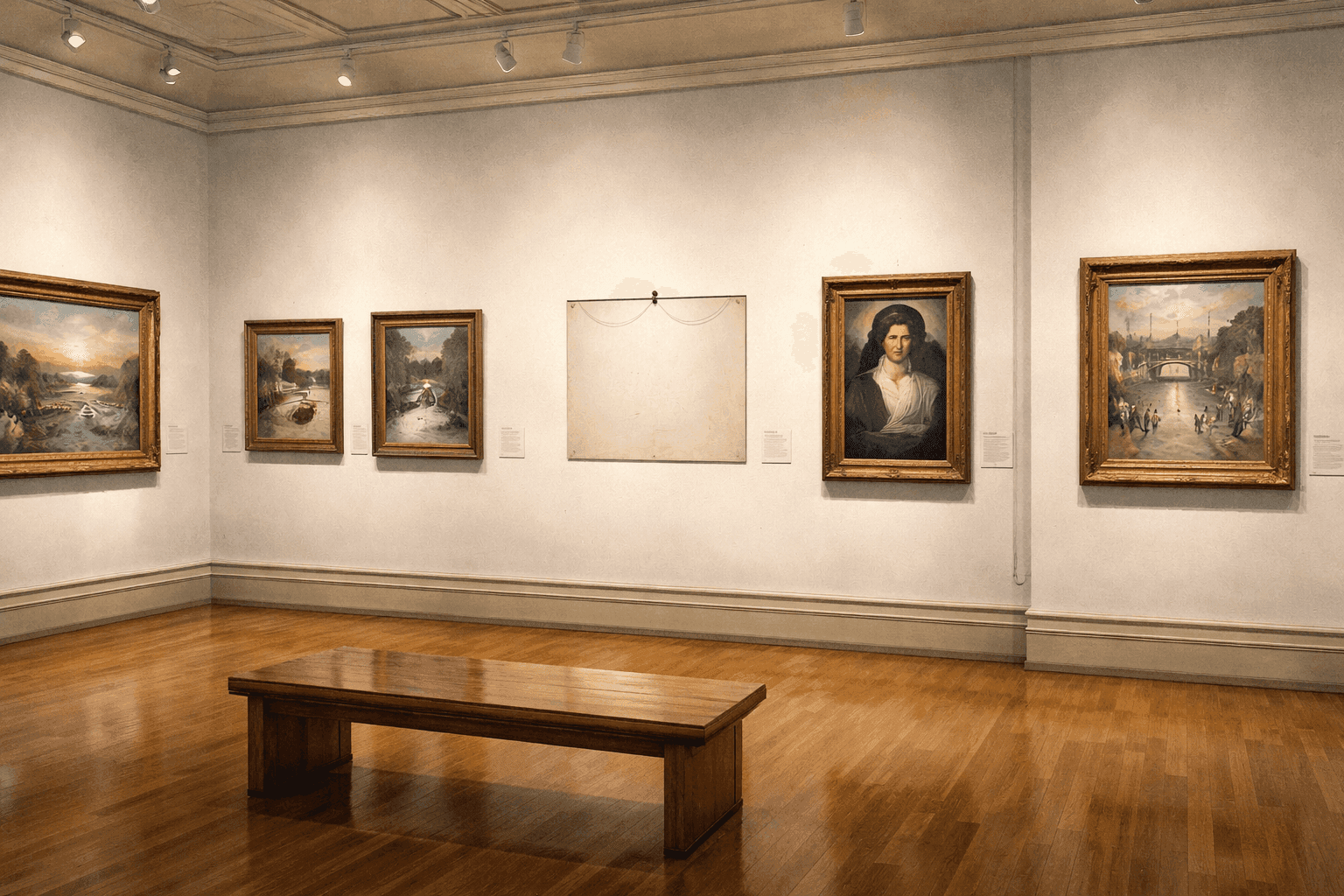
On May 7, 1994, Norwegian police acting on a tip recovered Edvard Munch's The Scream from a hotel in Åsgårdstrand, on the western shore of the Oslo Fjord — eighty-seven days after it had been stolen from the National Gallery in Oslo in a theft of almost theatrical boldness. On February 12, 1994, the opening day of the Lillehammer Winter Olympics, two men had entered the National Gallery through a window, removed the painting from the wall in less than fifty seconds, left a note reading "Thanks for the poor security," and walked out the same way they had come in. The theft coincided with the world's attention being focused on Norway for the Games, which some investigators believed was deliberate. The painting — one of four versions Munch made of the image, and the most famous — had left the museum in a frame, undamaged, into the Norwegian night.
The Scream is among the most recognized images in the history of Western art — a figure on a bridge, beneath a turbulent orange sky, with hands pressed to the sides of an agonized face, expressing something that Munch described in his diary as a sense of infinite anxiety pervading nature. Its theft in 1994 provoked an international reaction that went beyond the usual concern for a stolen artwork, because the image itself had become so deeply embedded in popular culture — reproduced on everything from posters to coffee mugs to Halloween masks — that its physical absence from its wall felt like something more than a museum's misfortune. The recovery on May 7 was greeted with something close to collective relief. Four men were ultimately convicted in connection with the theft. The painting returned to public display and has since been moved to the Munch Museum in Oslo, where it remains — behind considerably improved security.