May 6: The Four-Minute Mile, A Lawsuit That Shook a Presidency, The Last Night at Central Perk
Some limits exist only until someone decides to test them — and the moment they fall, it becomes almost impossible to remember why they seemed so permanent. May 6 offers three very different versions of that dynamic: a medical student who trained in stolen hours between hospital shifts to break a barrier that physiologists had decided was insurmountable; a lawsuit filed by a former state employee that began as an individual complaint and ended as a constitutional crisis; and a television finale that drew fifty-two million viewers to say goodbye to six characters who had, over ten seasons, quietly become part of the furniture of American life. A track in Oxford, a courthouse in Arkansas, and a coffee shop on a soundstage — three places where something that had seemed permanent turned out not to be.
3:59.4
On May 6, 1954, Roger Bannister — a twenty-five-year-old British medical student who trained by running during his lunch breaks at St. Mary's Hospital in London — arrived at the Iffley Road track in Oxford for an Amateur Athletic Association meet and, with the help of two pacemakers, ran the mile in 3 minutes, 59.4 seconds. The attempt had nearly been called off: the wind that afternoon was strong enough that Bannister had considered waiting for a better day. His pacemakers, Chris Chataway and Chris Brasher, talked him out of caution. The world record that Bannister set had been approached for years — the existing mark, set by Sweden's Gunder Hägg in 1945, stood at 4:01.3 — but the four-minute barrier had accumulated around it the particular psychological weight of a limit that was simultaneously arbitrary and absolute. Physicians had written papers suggesting the human heart might not survive the attempt. Runners who had come close had sometimes seemed to confirm the theory by collapsing at the finish.
What happened after Bannister broke the barrier is in some ways more interesting than the breaking itself. Within forty-six days, Australian runner John Landy had run the mile in 3:57.9 — faster than Bannister's record. Within three years, several runners had broken four minutes. Today, more than 1,600 athletes have run a sub-four-minute mile; the current world record, set by Hicham El Guerrouj of Morocco in 1999, stands at 3:43.13. The barrier, once crossed, essentially ceased to exist — which is precisely the lesson Bannister had understood before he ran. He had approached the problem as a physician and a scientist, studying the physiology of exertion and designing a specific training and pacing strategy to achieve a time that he believed was physiologically possible. The psychological barrier, he argued, was the real obstacle — and once removed, it removed itself permanently. He went on to become a distinguished neurologist, was knighted in 1975, and died in 2018. He ran his record-breaking mile on a windy Thursday afternoon in Oxford in between his hospital shifts, and the world has been running faster ever since.

Jones v. Clinton
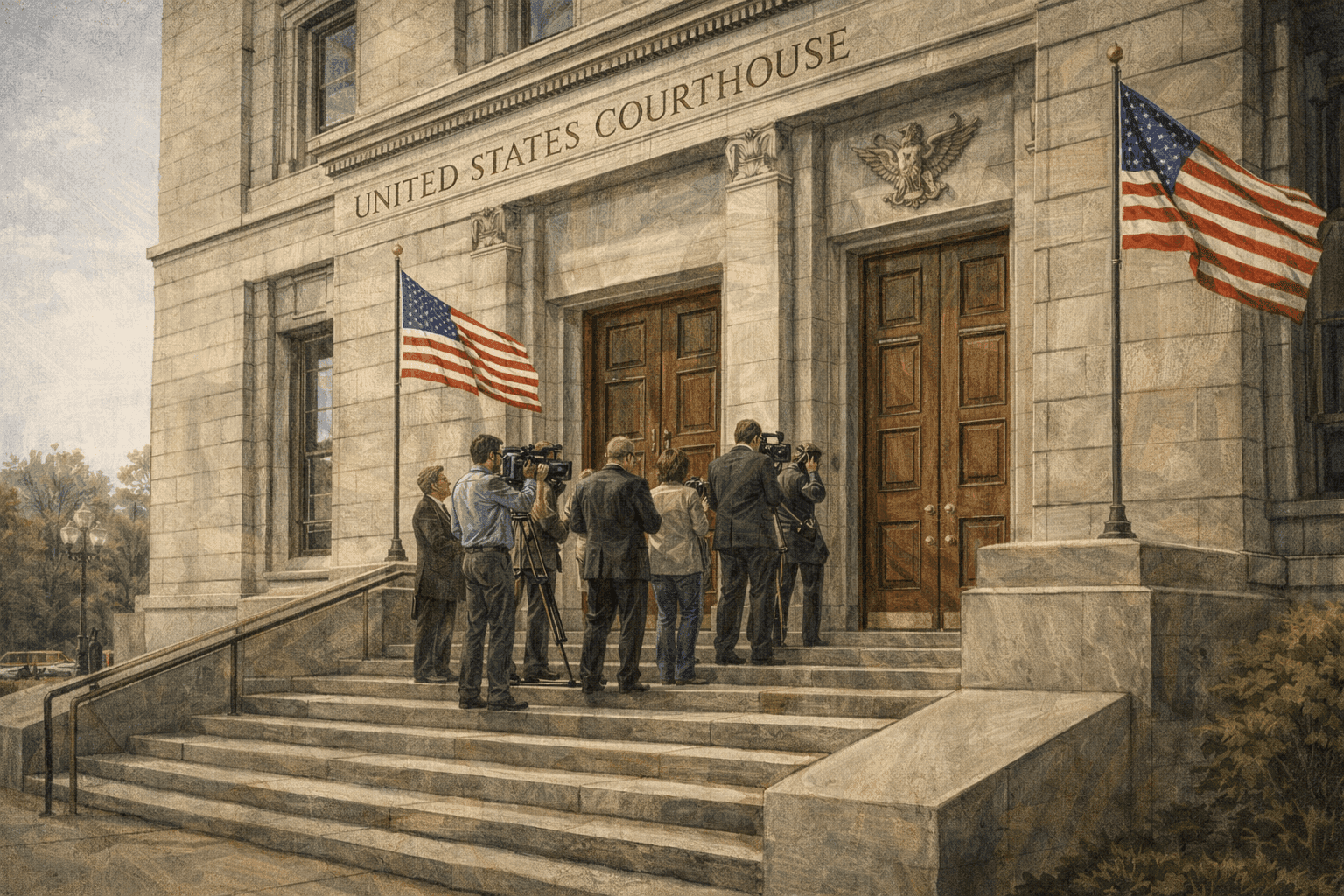
On May 6, 1994, Paula Jones — a former Arkansas state employee — filed a civil lawsuit against President Bill Clinton in federal court, alleging that Clinton, while governor of Arkansas in 1991, had a state trooper escort her to a Little Rock hotel room where he made unwanted sexual advances. The lawsuit was filed just before the statute of limitations expired, and it immediately became one of the most politically charged legal proceedings in American history. Clinton's legal team argued that a sitting president could not be subject to civil litigation while in office — a claim that the Supreme Court rejected unanimously in Clinton v. Jones (1997), ruling that the president had no immunity from civil suits for conduct predating his presidency. That ruling forced the case forward and required Clinton to submit to a deposition.
It was in that deposition, in January 1998, that Clinton was asked about his relationship with White House intern Monica Lewinsky — questions that arose because Jones's legal team was seeking to establish a pattern of behavior. Clinton denied the relationship under oath. That denial became the basis for the perjury and obstruction of justice charges that the House of Representatives voted to impeach him on in December 1998. The Jones lawsuit itself was settled in November 1998 for $850,000, with no admission of wrongdoing by Clinton. The chain of events it set in motion, however — the Supreme Court ruling on presidential immunity, the Starr investigation, the impeachment — reshaped the legal and political landscape in ways that extended far beyond the original complaint. Paula Jones filed her lawsuit as an individual seeking redress for a personal injury. What it became was a constitutional test case that established the principle that the presidency does not confer legal immunity, and a flashpoint in the national reckoning with workplace power and accountability that would continue, in new forms, for decades.
The Last One
On May 6, 2004, the final episode of Friends aired on NBC, drawing 52.5 million viewers — the fourth-largest audience in television history to that point, behind only the finales of M*A*S*H, Cheers, and Seinfeld. The episode, titled "The Last One," resolved the central will-they-won't-they of Ross and Rachel, sent the six characters out of Monica and Chandler's apartment and into their post-show lives, and brought to a close ten seasons of a series that had premiered in September 1994 and spent most of its run as the most watched comedy on American television. Advertising rates for the finale reached $2 million per thirty-second spot. Viewing parties were held across the country. Bars and restaurants that had aired the show on their screens for a decade were, for one night, genuinely full of people who cared how it ended.
Friends was, at its core, a show about the constructed family — the group of people who, in young adulthood, become your primary community, who see you through the early failures and tentative successes that precede whatever comes next. That premise, rendered with enough wit and warmth and casting chemistry, proved to have a durability that no one in 1994 had fully anticipated. The show has never not been in syndication somewhere in the world; its availability on streaming platforms in the 2010s introduced it to a generation of viewers who had not been alive when it premiered. Twenty years after its finale, Friends remains one of the most watched television series in history. The apartment above the coffee shop, the orange couch, the fountain — images that meant nothing in 1994 — became, over ten seasons and 236 episodes, the visual shorthand for a particular kind of belonging that fifty-two million people were not quite ready to say goodbye to on May 6, 2004.