May 5: A Patent That Broke Barriers, Freedom 7 Clears the Atmosphere, Two Scoops and a Dream
Invention requires two things in equal measure: the idea itself and the conviction that you have the right to pursue it. May 5 belongs to three people who had both, in very different circumstances: a Black woman in Reconstruction-era Virginia who submitted a patent application in a country that had only recently recognized her full humanity; an astronaut from New Hampshire who strapped himself into a metal capsule on top of a rocket fifteen days after the Soviets had beaten America to space and went anyway; and two childhood friends in Vermont who took a correspondence course in ice cream making, leased a gas station, and built a brand that the world eventually came to associate not just with flavor, but with the idea that a business could have a conscience. Three inventions — agricultural, aeronautical, and frozen — and the same stubborn human insistence on making something new.
The Patent
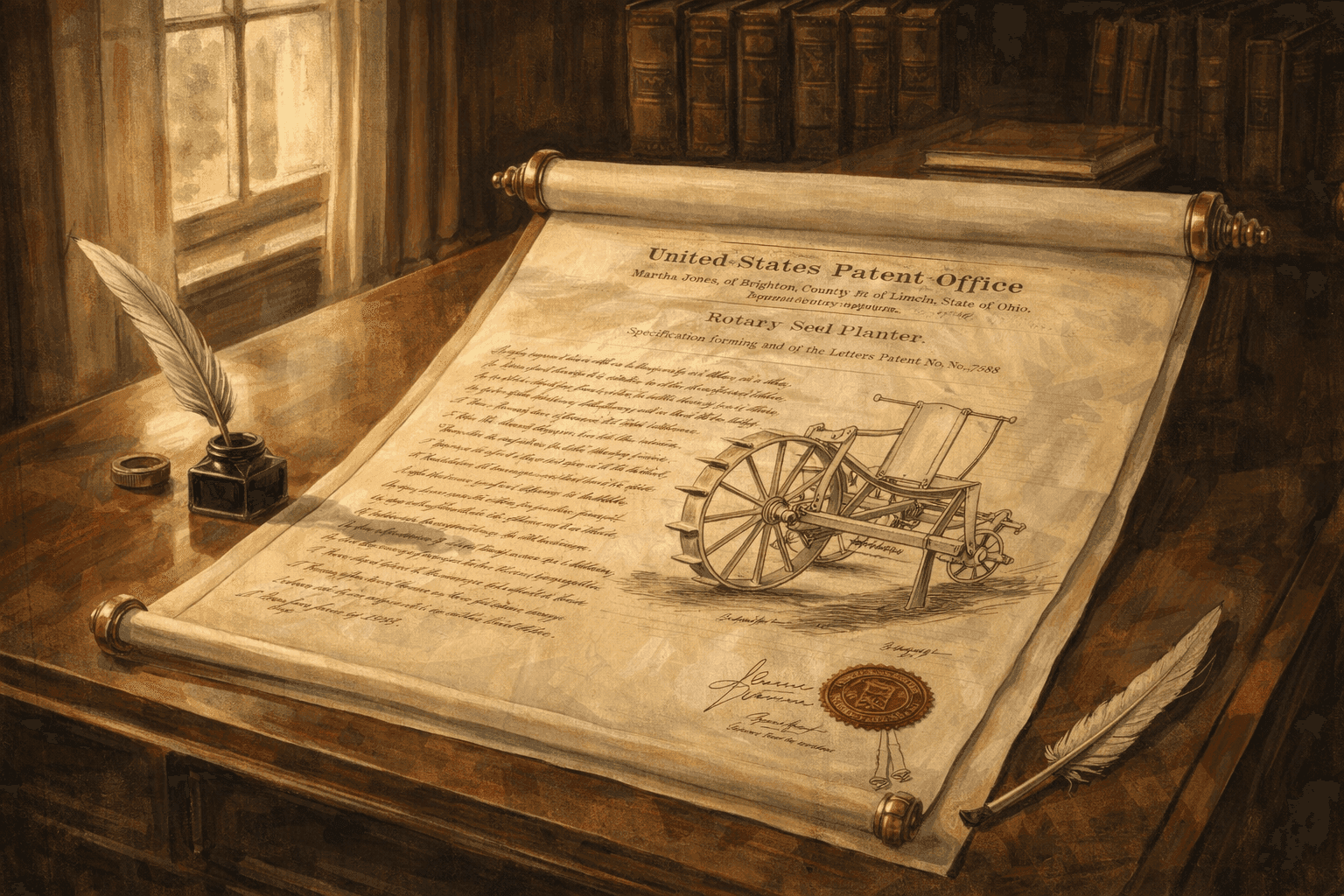
On May 5, 1868, Martha Jones of Amelia County, Virginia, received a United States patent for an improvement to the corn husker and sheller — a practical agricultural device designed to make the labor of processing corn faster and more efficient. That a Black woman in the American South was awarded a federal patent just three years after the end of the Civil War and the formal abolition of slavery makes the achievement extraordinary on its face. The legal and social landscape of Reconstruction-era Virginia remained deeply hostile to Black advancement in nearly every domain; the fact that the patent system — a federal mechanism requiring formal application, documentation, and official recognition — yielded an award to Jones speaks both to her ingenuity and to her determination to navigate a system that had not been designed with her in mind. Her invention addressed the daily realities of agricultural life in rural Virginia with the directness of a person who understood the work from the inside.
The broader history of Black inventors and patent holders in nineteenth-century America is one of systematic underdocumentation — records were inconsistently kept, racial identifications were often omitted, and the contributions of Black innovators to American agricultural and industrial life have been reconstructed largely through painstaking archival work conducted in the decades since. Martha Jones occupies a place in that history whose significance grows as more of the record is reclaimed. Her invention was practical: a corn husker and sheller that served real needs in the communities where corn was a staple crop. Her act of filing for and receiving that patent was something more. In a country that had only just, and only legally, recognized her right to own the product of her own labor, she claimed ownership of the product of her own mind. The United States Patent Office, whatever its limitations, stamped it approved.
Freedom 7
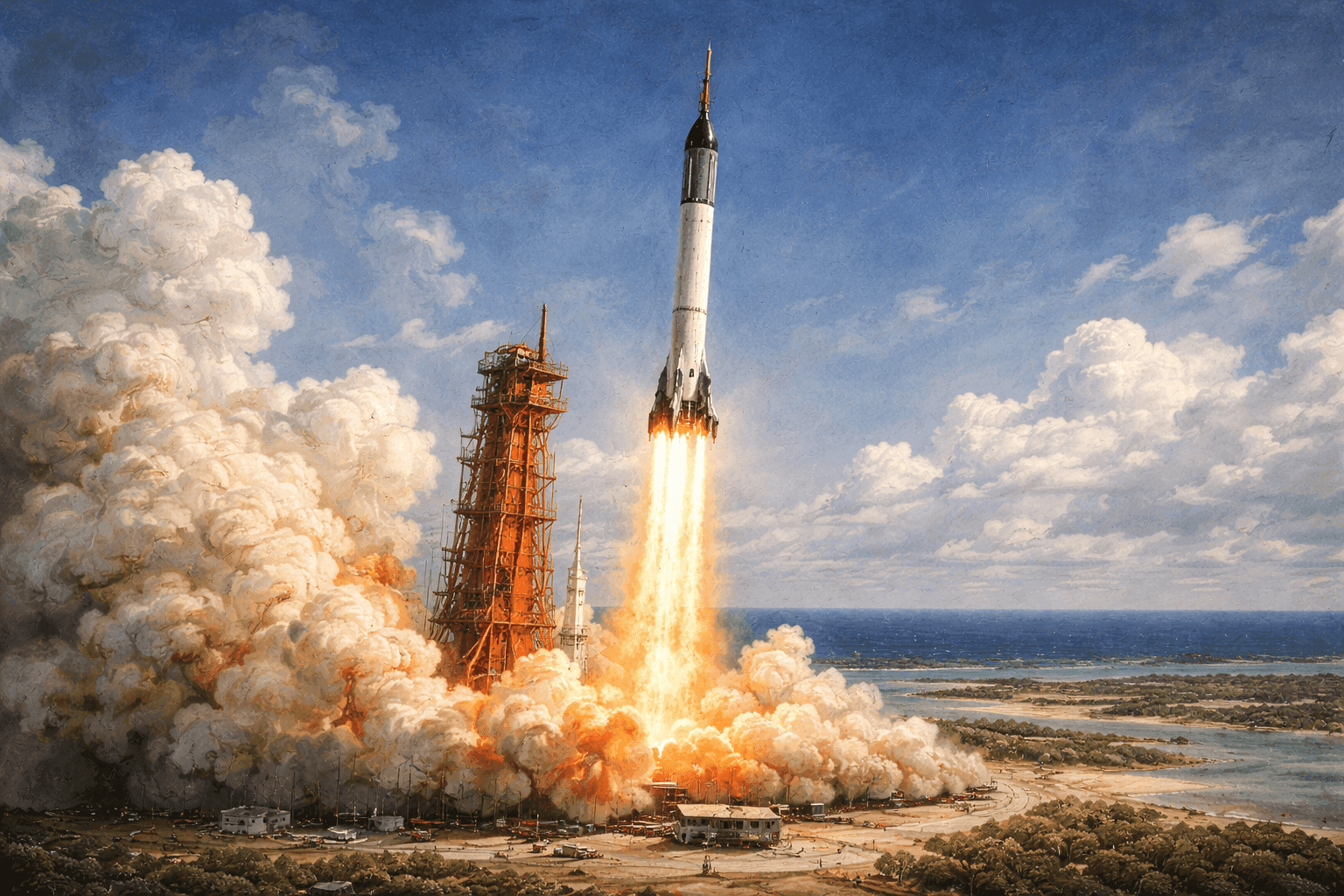
On May 5, 1961, at 9:34 a.m. Eastern time, a Redstone rocket carrying astronaut Alan Bartlett Shepard Jr. in the Mercury capsule Freedom 7 lifted off from Cape Canaveral and carried him to an altitude of 116 miles before arcing back into the Atlantic Ocean fifteen minutes and twenty-two seconds later. Shepard had waited in his capsule for more than four hours before launch due to a series of technical holds, during which he reportedly requested permission to relieve himself in his suit when the delays extended beyond his pre-launch preparation. He was the second human in space — Soviet cosmonaut Yuri Gagarin had completed a full orbital flight on April 12, 1961 — and his flight was suborbital rather than orbital, a distinction that the Soviet press was not slow to make. None of that diminished what the moment meant to the millions of Americans who watched the launch live on television.
Shepard's flight was brief but consequential. It demonstrated that American rocket technology could place a human being in space and return him safely, provided an immediate answer to the national demoralization that Gagarin's flight had produced, and gave President Kennedy the confidence to stand before Congress three weeks later and commit the United States to landing a man on the Moon before the end of the decade. Shepard himself became one of the most decorated and most admired figures of the Mercury program — the test pilot's test pilot, chosen from a field of finalists who included John Glenn and Gus Grissom. He would go on to command the Apollo 14 mission in 1971, becoming the fifth person to walk on the Moon and, famously, the only person to hit a golf ball on it. The fifteen minutes he spent above the atmosphere on May 5, 1961, were enough to change the direction of the Space Race — and to establish, for the first time, that an American had gone to space and come back to say what it was like.
The Gas Station on St. Paul Street
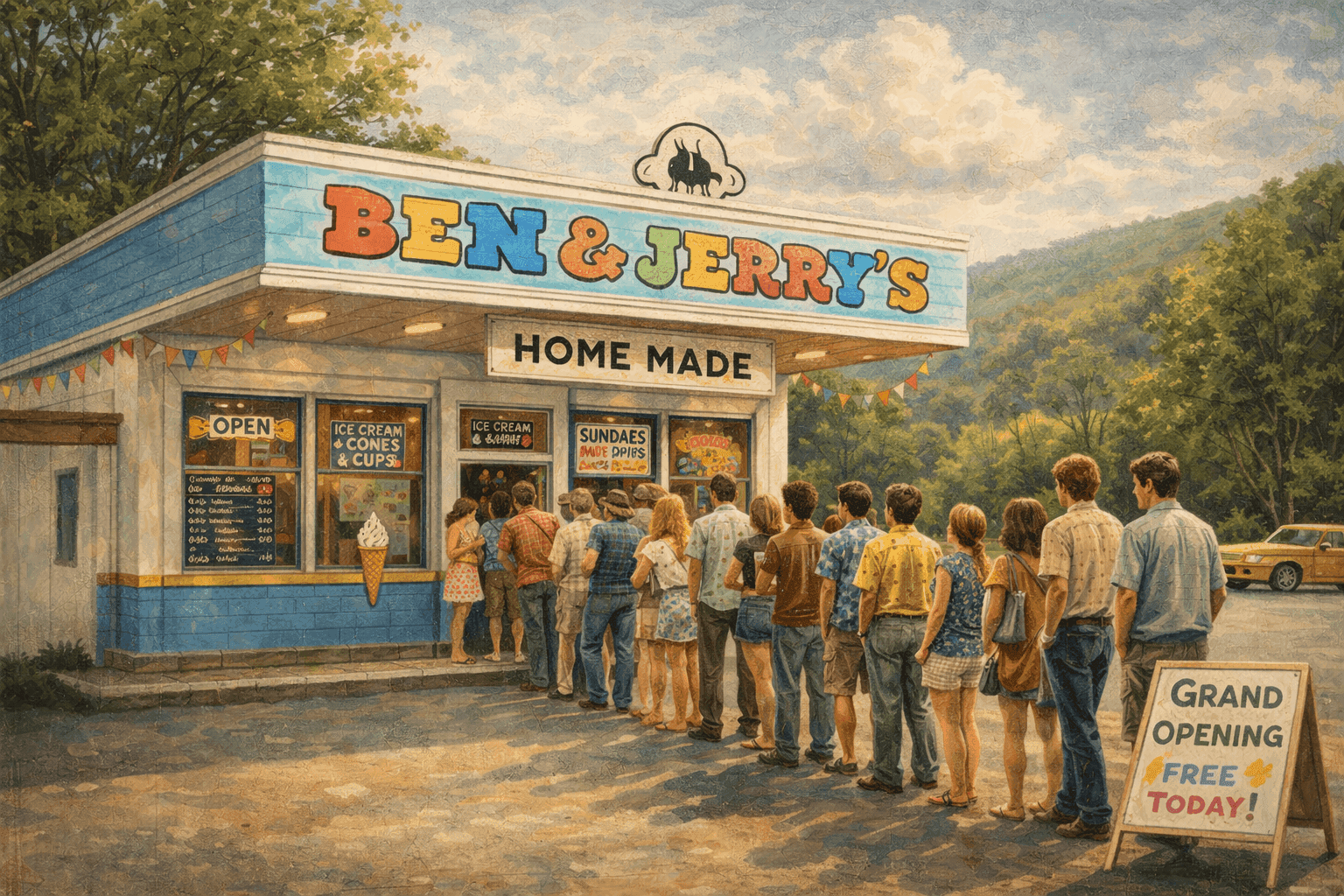
On May 5, 1978, Ben Cohen and Jerry Greenfield opened Ben & Jerry's Homemade Ice Cream in a renovated gas station at 169 St. Paul Street in Burlington, Vermont, having completed a five-dollar correspondence course in ice cream making from Penn State University. Their startup capital was $12,000 — $4,000 of it borrowed — and their competitive advantage was a combination of unusually generous chunk sizes, flavor names that reflected their personalities, and a genuine warmth toward their Burlington neighborhood that expressed itself in free cone days, community events, and a business philosophy that treated social responsibility not as a marketing strategy but as a founding principle. Vermont was cold enough in winter that the ice cream business was seasonal; they supplemented income with crêpes. They considered franchising a bagel operation instead. They did not, by any ordinary business metric, look like the founders of a global brand.
What they had, beyond the ice cream itself, was a sensibility that proved unexpectedly durable. Ben & Jerry's grew through the 1980s on the strength of flavors with personalities — Cherry Garcia, Chunky Monkey, Phish Food — and a corporate culture that donated a percentage of profits to social causes, paid its lowest-paid employees at a ratio to its highest-paid that was designed to limit inequality within the company, and took positions on political and social issues that consumer brands typically avoided. The company was sold to Unilever in 2000 for $326 million, a transaction that many of its most committed customers viewed with ambivalence and that Cohen and Greenfield themselves negotiated with the explicit aim of preserving the brand's social mission through contractual protections. Ben & Jerry's has continued to operate with a degree of independence unusual for a subsidiary of a multinational conglomerate, taking public positions on issues from racial justice to climate change that have periodically put it at odds with its corporate parent. The gas station on St. Paul Street is now a tourist destination. The five-dollar ice cream course turned out to be worth every penny.