May 4: Ella Makes History, Riding Into the Fire, Four Dead in Ohio
May 4 traces the arc of a single, stubborn American argument across three very different settings. In a Los Angeles hotel ballroom in 1959, a Black woman whose voice had redefined jazz received awards that an industry built partly on the theft of Black music had taken too long to give her. On the highways and in the terminals of the Deep South in 1961, a group of integrated riders tested whether the Supreme Court's rulings meant anything when the men with billy clubs disagreed. And on a university campus in Ohio in 1970, the argument about what Americans were allowed to say out loud about their government ended, for thirteen seconds, in gunfire. Three different decades, three different expressions of the same national tension — and the persistent, costly work of a country trying to close the gap between what it promises and what it delivers.
The First Time
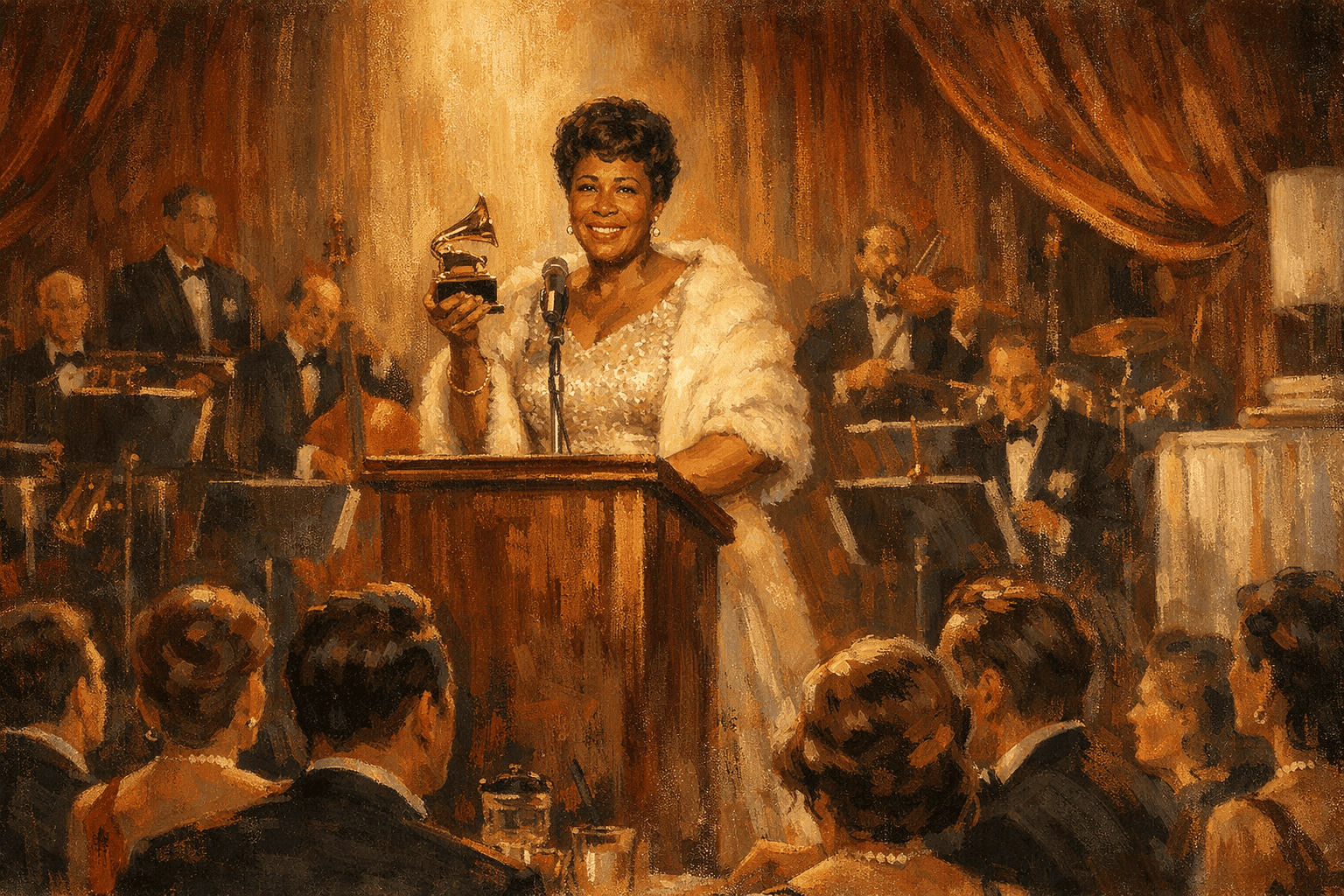
On May 4, 1959, at the inaugural Grammy Awards ceremony held at the Beverly Hilton Hotel in Los Angeles, Ella Fitzgerald won Best Jazz Performance, Individual, for her album Ella Fitzgerald Sings the Duke Ellington Song Book and Best Female Pop Vocal Performance for Ella Fitzgerald Sings the Irving Berlin Song Book — becoming the first Black woman to win a Grammy Award in the process. The Grammys were themselves new, created by the Recording Academy that year as a response to the music industry's alarm at the rise of rock and roll and the payola scandal that had engulfed its promotion machinery. The awards were, in their first iteration, oriented toward the established, adult-oriented pop and jazz that the industry's old guard preferred — which meant that Fitzgerald, already a towering figure in American music, was positioned to win. That she was the first Black woman to do so was a reflection of both her extraordinary talent and the industry's long, systematic underrecognition of the artists, overwhelmingly Black, on whose creativity it had been built.
We have already met Ella Fitzgerald in this series — her birthday on April 25 introduced her three-octave range, her pioneering scat singing, and the Apollo Theater amateur contest that launched her career. The Grammy wins of May 4, 1959, represent a different chapter of the same story: the moment that the music industry's formal recognition structures, however belatedly, acknowledged what audiences had understood for two decades. Fitzgerald would go on to win thirteen Grammys in total, a record for a female jazz artist that stood for years. But the first two — awarded on this date, at the first ceremony the Recording Academy ever held — carry a particular weight, both as personal milestones and as a small, significant marker of what was changing, and what still needed to change, in American cultural life at the end of the 1950s.
The Freedom Riders
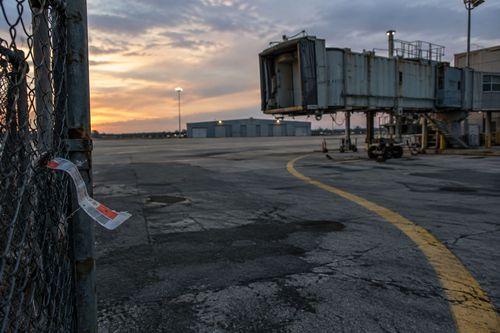
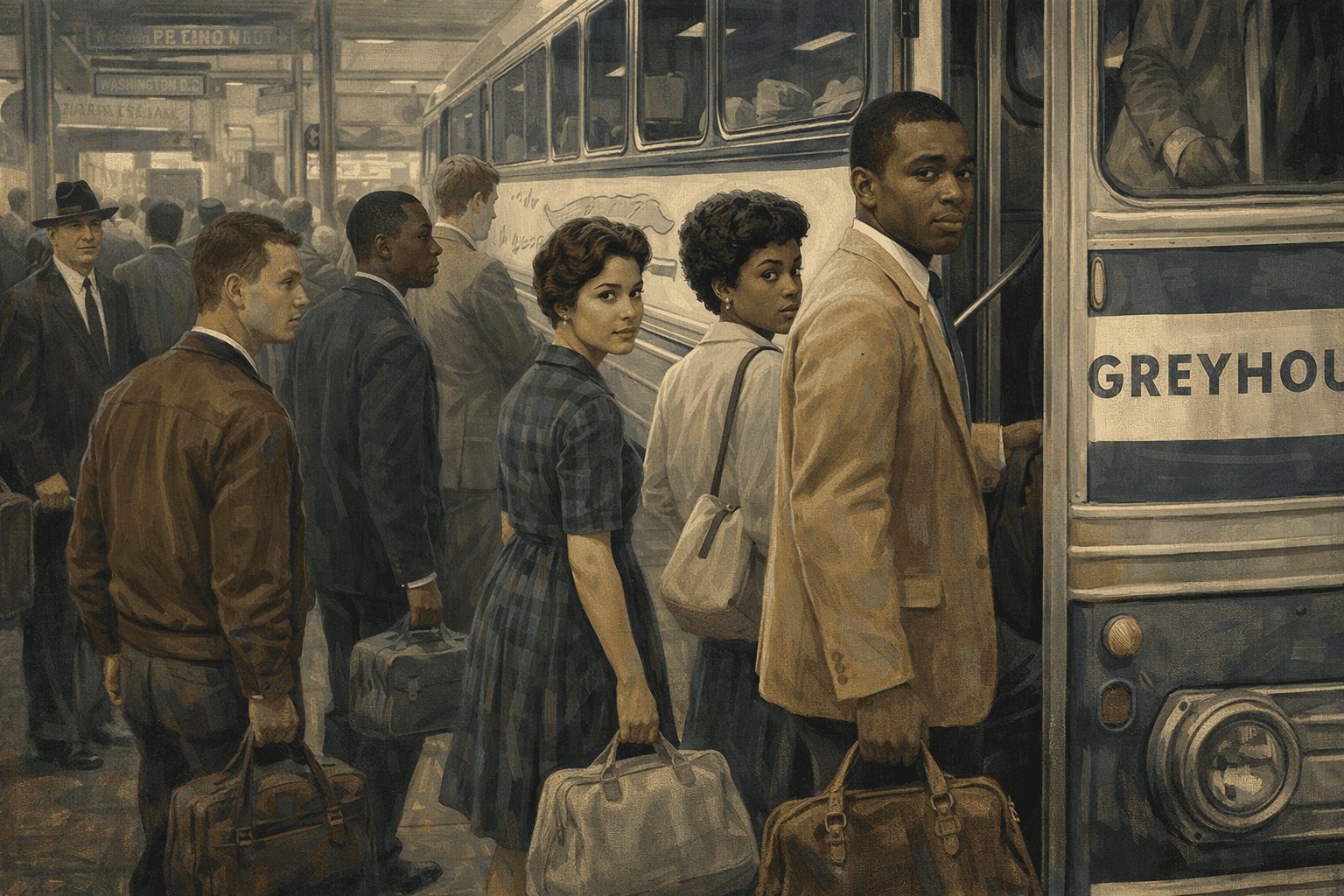
On May 4, 1961, thirteen civil rights activists — seven Black, six white — boarded Greyhound and Trailways buses in Washington, D.C., and headed south into Alabama, Georgia, and Mississippi. They were Freedom Riders, organized by the Congress of Racial Equality under the leadership of James Farmer, and their purpose was to directly test the Supreme Court's rulings in Boynton v. Virginia (1960) and Morgan v. Virginia (1946), which had declared segregation in interstate bus terminals and on interstate buses unconstitutional. Those rulings existed on paper. In the terminals of the Deep South, they did not exist at all — the waiting rooms, lunch counters, and restrooms remained rigidly segregated, and local law enforcement had no intention of enforcing federal court orders that the white political establishment regarded as an imposition. The Freedom Riders intended to sit where the law said they had the right to sit, and to keep sitting there until the law meant something.
What met them in Alabama was organized violence. In Anniston, a Greyhound bus was firebombed by a white mob and the riders who escaped the burning vehicle were beaten. In Birmingham, a mob attacked riders at the terminal while local police, tipped off in advance, deliberately absented themselves for fifteen minutes. In Montgomery, the violence continued. Attorney General Robert Kennedy negotiated a compromise that allowed the rides to continue with a degree of federal protection, but the riders who arrived in Jackson, Mississippi, were arrested for using "white" facilities and sentenced to sixty days in Parchman Farm, the state penitentiary. More than four hundred people ultimately participated in Freedom Rides that summer. The Interstate Commerce Commission issued regulations in September 1961 mandating the desegregation of interstate travel facilities — regulations that, this time, were enforced. The Freedom Riders had boarded their buses on May 4 knowing that the law was on their side and that the people who disagreed with the law would meet them with fists and fire. They boarded anyway.
May 4, 1970
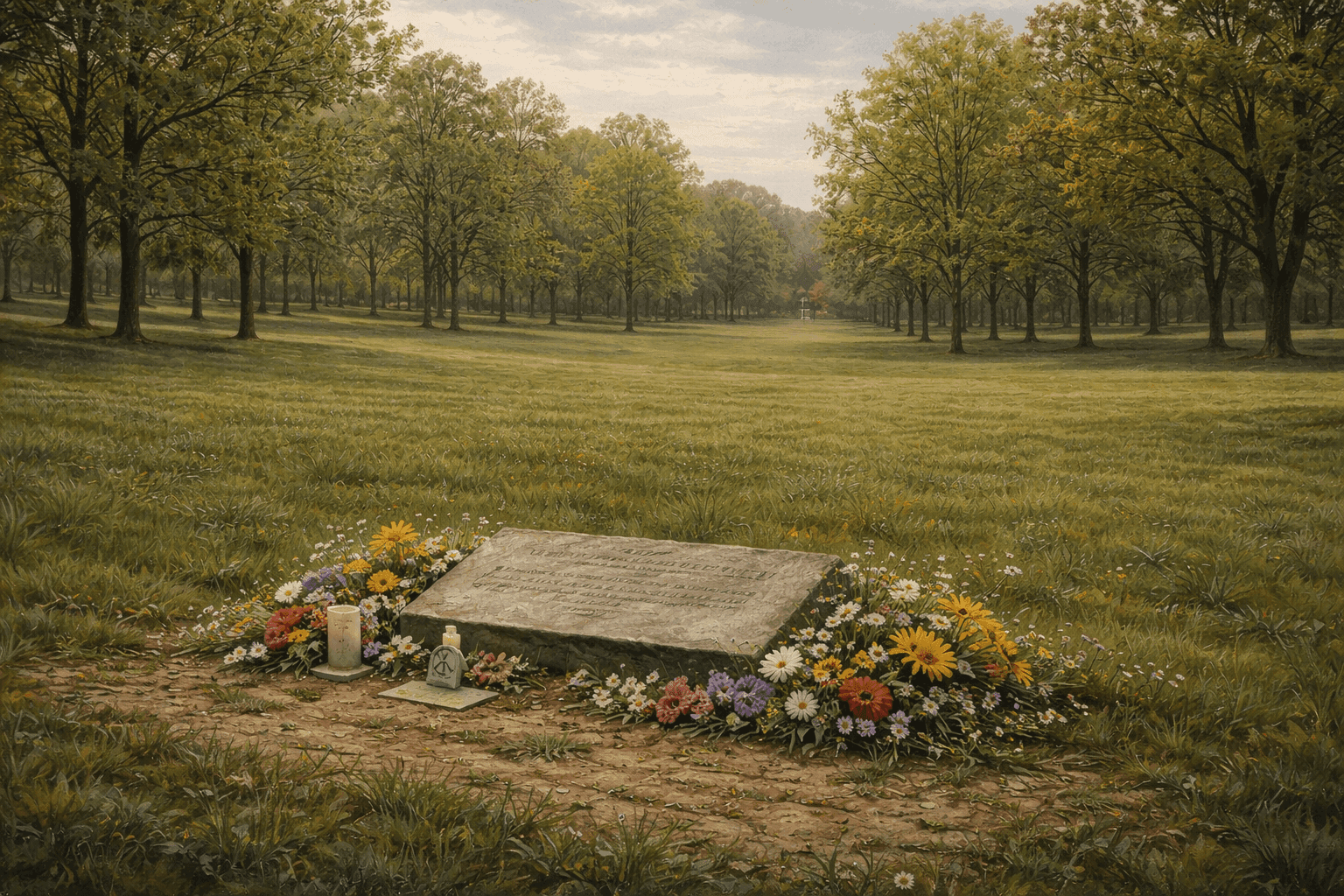
On May 4, 1970, at approximately 12:24 p.m., members of the Ohio National Guard opened fire on a crowd of students at Kent State University, killing four and wounding nine others. The shooting lasted thirteen seconds. The students who died — Allison Krause, Jeffrey Miller, Sandra Scheuer, and William Knox Schroeder — ranged in age from nineteen to twenty. Two of the four, Scheuer and Schroeder, had not been participating in the protest; they were students walking between classes. The nearest victim fell sixty feet from the Guard line; the farthest was nearly three hundred feet away. The protests that had preceded the shooting had been triggered by President Nixon's announcement four days earlier that American forces had entered Cambodia — an expansion of the Vietnam War that had sent campuses across the country into eruption. At Kent State, the ROTC building had been burned on May 2, and the governor of Ohio had called in the National Guard.
The photograph taken by student John Filo of fourteen-year-old Mary Ann Vecchio kneeling over the body of Jeffrey Miller became one of the most reproduced images of the Vietnam era, winning the Pulitzer Prize and crystallizing, in a single frame, the horror of that afternoon. A student strike involving more than four million participants shut down hundreds of universities and colleges across the country in the days that followed — the largest student strike in American history. A federal grand jury declined to indict any of the guardsmen. A civil lawsuit was eventually settled in 1979, with the state of Ohio paying $675,000 to the wounded students and the families of those killed. No one was ever held criminally responsible for the deaths of Allison Krause, Jeffrey Miller, Sandra Scheuer, and William Knox Schroeder. Their names belong to the permanent record of what happens when a government turns its weapons on the citizens whose rights it exists to protect.