May 27: The Bridge That Became a Symbol, A Ship Turned Away, The Treaty That Slowed the Arms Race
May 27 offers three different measurements of human capacity — its capacity for beauty and engineering ambition, its capacity for indifference in the face of mortal need, and its capacity, when pressed by the most extreme circumstances imaginable, to sit across a table from its adversary and agree to limits. The Golden Gate Bridge opened its towers to the Bay Area sky two years before the St. Louis arrived in Havana with 937 people who needed somewhere to go. The SALT I treaty was signed thirty-three years after those same 937 people were turned away by the United States. History keeps its distances and its proximities with no regard for our comfort. May 27 is a date on which all three of these things happened, and they do not resolve into a single lesson. They are simply what happened.
International Orange
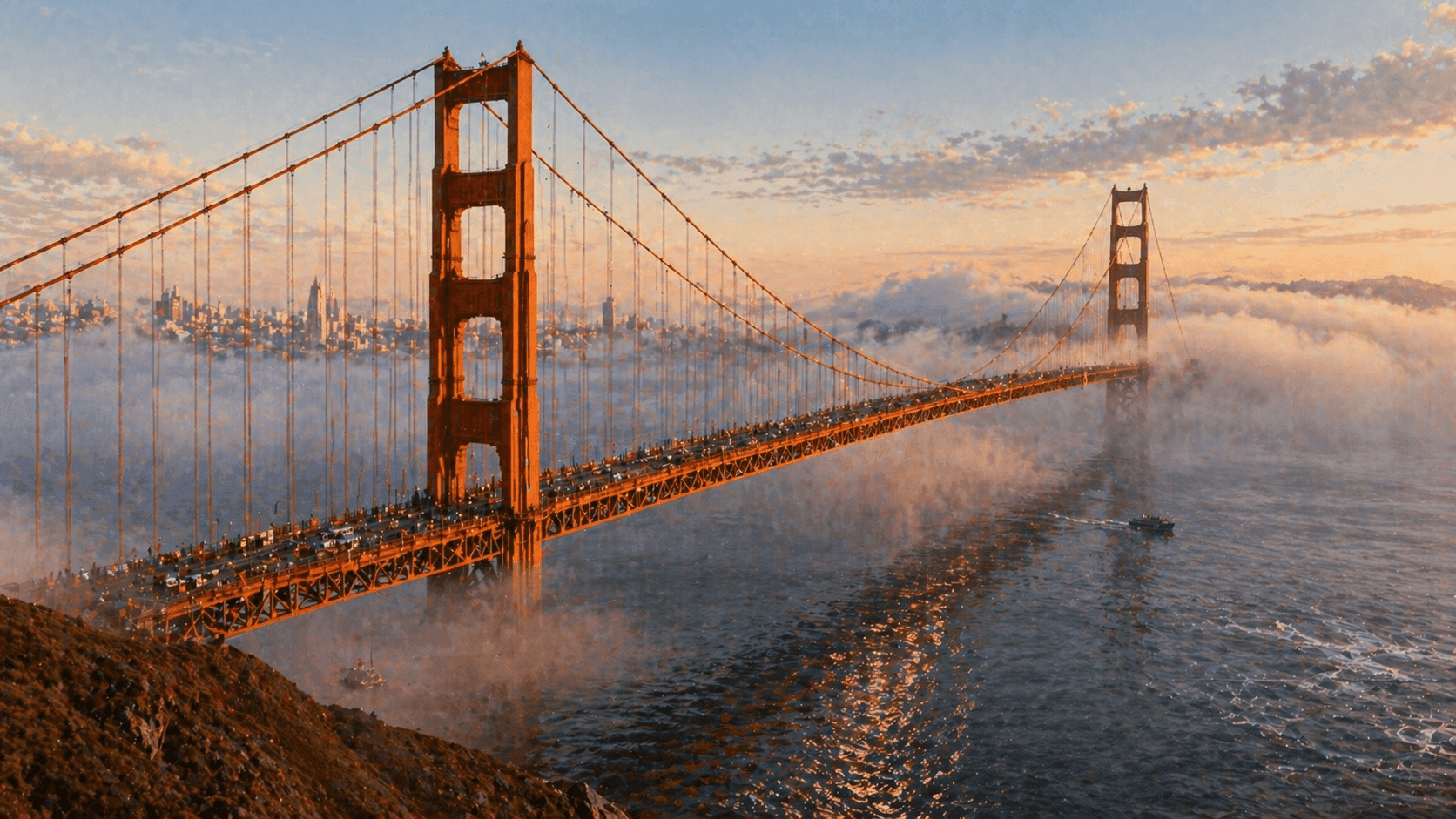
On May 27, 1937, the Golden Gate Bridge opened to pedestrians — a day before it opened to vehicles — and approximately 200,000 people walked across it in the hours that followed, many of them residents of San Francisco who had watched its construction from the city's hills for four years and were experiencing for the first time the simple pleasure of standing at the center of the strait that separates the Bay from the Pacific and looking back at the city they lived in. The bridge had taken four years and four months to build, at a cost of $35 million during the depths of the Great Depression, and it had employed an average of 1,000 workers per day at a time when employment was desperately scarce. Eleven men died during construction — a relatively low number for a project of this scale, attributable in part to the novel use of a safety net suspended beneath the work area, which saved the lives of nineteen workers who became known as the Halfway to Hell Club.
Chief engineer Joseph Strauss had designed the bridge, but the distinctive towers, Art Deco detailing, and the color — International Orange, chosen by consulting architect Irving Morrow to complement the bridge's natural surroundings and contrast with the frequent fog — gave it the visual identity that has made it, arguably, the most photographed bridge in the world. At its opening, the Golden Gate had the longest suspension span ever built — 4,200 feet — a record it held until the construction of the Mackinac Bridge in Michigan in 1957. It has since been surpassed by several others, but no bridge has surpassed it as an image: the orange towers rising from the fog, the cables descending in their perfect catenary curve, the water of the strait far below — a structure so precisely suited to its location that it is now impossible to imagine the Bay without it. More than ten million people cross it each year. It remains, eighty-seven years after opening, what it was on the first day: a marvel.
Voyage of the Damned
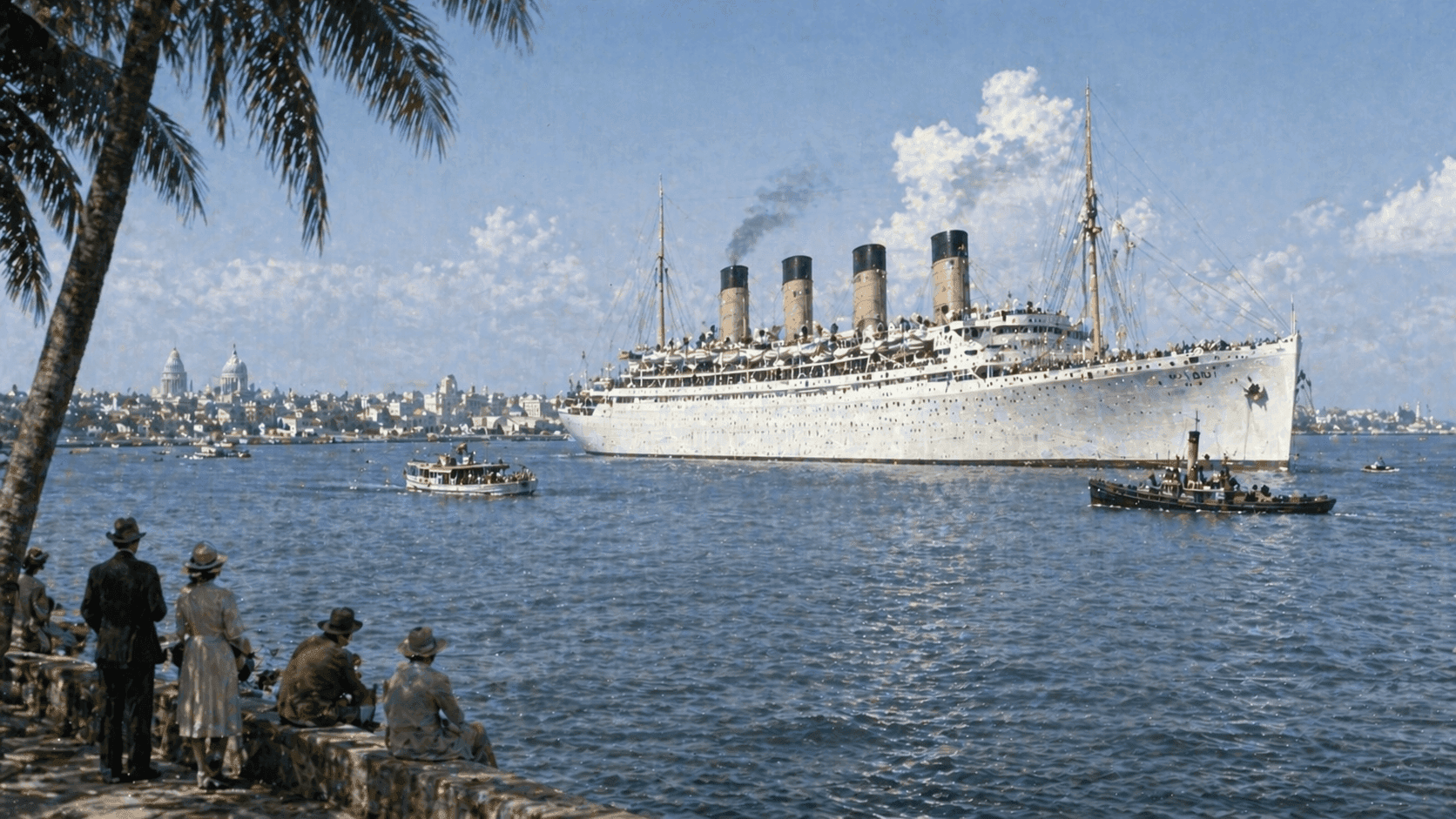
On May 27, 1939, the German ocean liner SS St. Louis, carrying 937 Jewish refugees who had fled Nazi Germany with landing certificates purchased from corrupt Cuban officials, arrived in the harbor at Havana and was refused permission to dock. The Cuban government had invalidated the landing certificates before the ship arrived; only a handful of passengers with alternative documentation were permitted ashore. The ship's captain, Gustav Schröder — a German who treated his Jewish passengers with dignity and was determined to find them safe harbor — waited in Cuban waters for days while diplomats and advocacy groups attempted to negotiate. The Cuban government refused to relent. On June 2, the St. Louis sailed north toward Florida.
As the St. Louis moved along the Florida coast close enough that passengers reported being able to see the lights of Miami, the Roosevelt administration declined to intervene. The State Department's response to appeals from Jewish advocacy organizations cited immigration quota laws; the political calculus of the moment did not favor accommodation. Canada also turned the ship away. Captain Schröder, who later said he had contemplated running the ship aground on the British or French coast rather than return his passengers to Nazi Germany, eventually negotiated with Jewish advocacy organizations in Europe to arrange the admission of all 937 passengers into four European countries — Britain, France, Belgium, and the Netherlands — in late June 1939. Britain's 288 passengers survived the war. Of those admitted to France, Belgium, and the Netherlands, an estimated 254 were eventually murdered by the Nazis after Germany occupied those countries following the fall of France in 1940. The United States Holocaust Memorial Museum has documented the fates of 709 of the original passengers; of those, 254 are confirmed to have been killed in the Holocaust. In 2012, Secretary of State Hillary Clinton formally apologized to the survivors and their families for the United States' refusal to admit the ship. The apology came seventy-three years too late for those who needed it most.
SALT
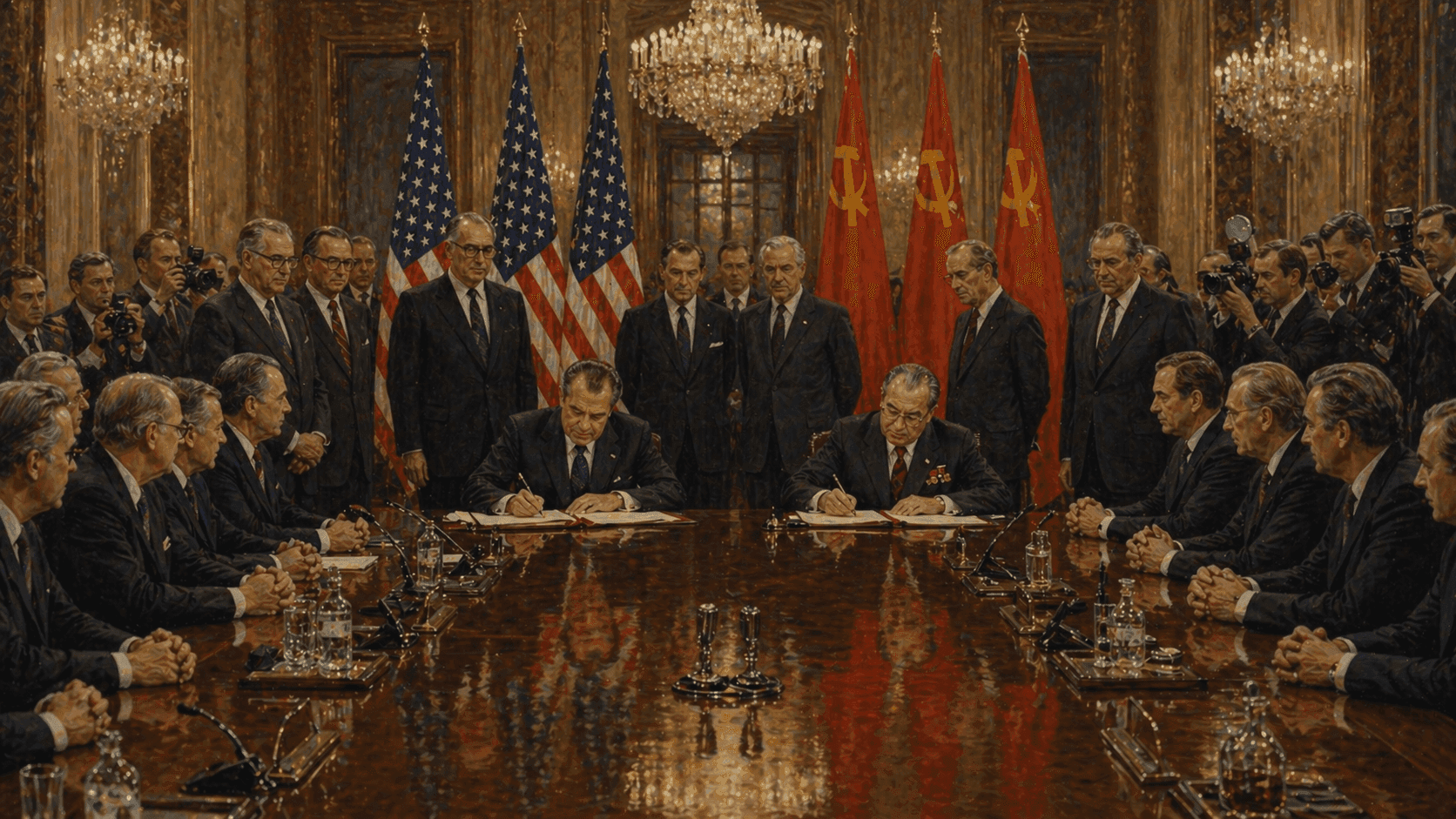
On May 27, 1972, at the conclusion of the Moscow Summit we covered on May 22, President Nixon and Soviet General Secretary Brezhnev signed the Strategic Arms Limitation Treaty — SALT I — along with the Anti-Ballistic Missile Treaty, the two most significant arms control agreements between the superpowers since the Nuclear Test Ban Treaty of 1963. The SALT I interim agreement froze the number of intercontinental ballistic missile launchers and submarine-launched ballistic missiles at existing levels for five years — it did not reduce the arsenals, which by 1972 contained enough nuclear warheads to destroy the world many times over, but it stopped their growth in the specific categories covered and established the principle that the United States and the Soviet Union could negotiate binding constraints on their most destructive weapons. The ABM Treaty, which limited both countries to two anti-ballistic missile defense sites, addressed a related danger: the possibility that either side, believing it could intercept the other's missiles, might be tempted to strike first.
The treaties signed on May 27, 1972, were neither the beginning nor the end of the arms control process — they were a middle chapter in a longer story whose arc bent, slowly and unevenly, toward the deeper reductions that would come with SALT II, START, and the New START treaties that followed over the next five decades. They were also politically important in ways that extended beyond their specific provisions: they demonstrated, for the first time, that the two superpowers could negotiate arms agreements in good faith, could verify compliance through "national technical means" — satellite surveillance, primarily — without requiring on-site inspection, and could communicate directly about the most sensitive categories of their military capabilities without the conversation becoming a crisis. The Cold War was not ended by SALT I. But the world on May 28, 1972, was marginally less likely to end in nuclear fire than it had been on May 26 — and that, in the vocabulary of the nuclear age, was a meaningful achievement.