May 26: The Fire That Opened a War, One Vote and a Presidency Saved, The Count Rises
May 26 is a date that spans the full range of what history asks of its readers: to look without flinching at a pre-dawn massacre in a Connecticut village where hundreds of people were burned alive; to follow the single vote that preserved an institution that was also, in that moment, failing the people Reconstruction had promised to protect; and to open a novel that a modest Irish theater manager had written in his spare time and find inside it the architecture of a genre that would haunt the imagination of every culture it touched. Witness, accountability, and the particular darkness that a good story can illuminate — three very different ways that a single date has asked something of the world.
Mystic, 1637
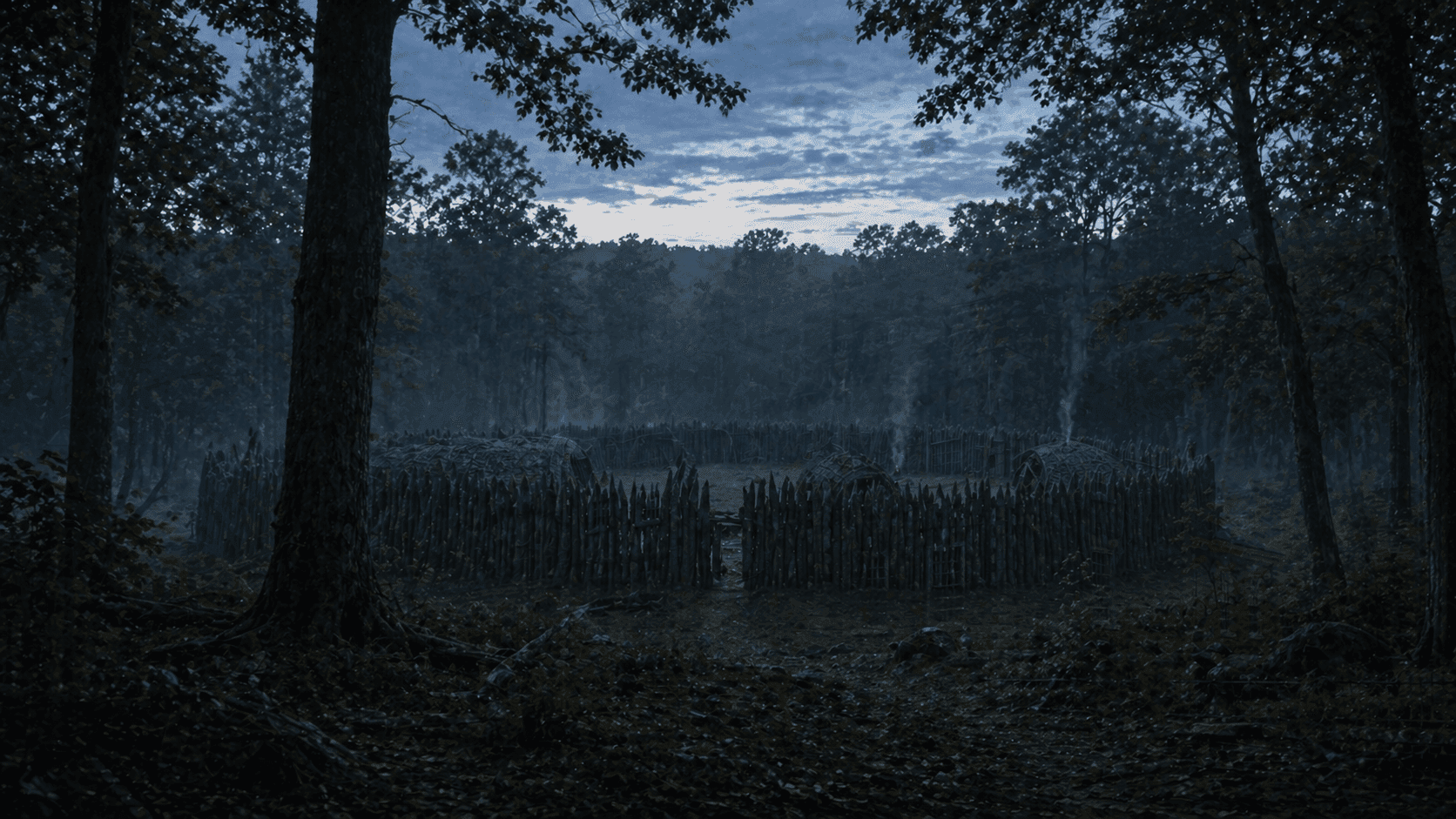
In the early hours of May 26, 1637, a force of approximately ninety English soldiers from the Massachusetts Bay and Plymouth colonies, accompanied by several hundred Mohegan and Narragansett warriors, surrounded a fortified Pequot village on the Mystic River in present-day Connecticut and set it on fire. The village contained an estimated four to seven hundred people, most of them non-combatants — women, children, and elderly — whose warriors were largely absent at another settlement nearby. As the village burned, those who fled through the palisade's openings were cut down by the English soldiers and their allies stationed around the perimeter. Those who did not flee burned. The entire assault lasted less than an hour. Estimates of Pequot deaths range from four hundred to seven hundred. The English lost two men; their Narragansett and Mohegan allies were reported to have been horrified by the scale and method of the killing, which violated the conventions of Indigenous warfare.
The Mystic Massacre effectively ended the Pequot War, a conflict that had begun with the murder of an English trader in 1636 and escalated through a cycle of raids and reprisals that the English had consistently escalated beyond what their Puritan ideology officially sanctioned and their Indigenous allies expected. The Pequot nation, already weakened by epidemic disease, was shattered as a political entity: survivors were enslaved and distributed among colonial households or sold to the West Indies, and the Puritans formally declared the Pequot name and people extinct — an early and explicit instance of the erasure that has characterized so much of the relationship between European colonizers and Indigenous peoples in North America. The Mystic Massacre has received increasing scholarly attention in recent decades as historians have worked to document the experience of the Pequot from their own records and oral traditions. The Mashantucket Pequot Tribal Nation, recognized by the federal government in 1983, has survived the erasure the Puritans declared permanent. The village on the Mystic River has not been forgotten by those whose ancestors burned in it.
The Vote That Wasn't Cast
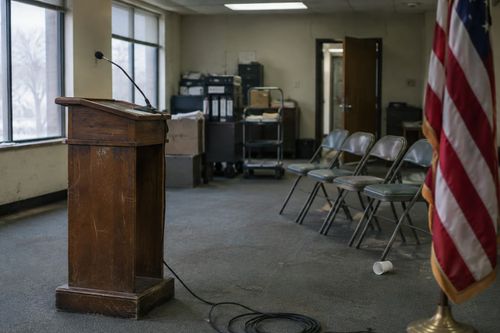
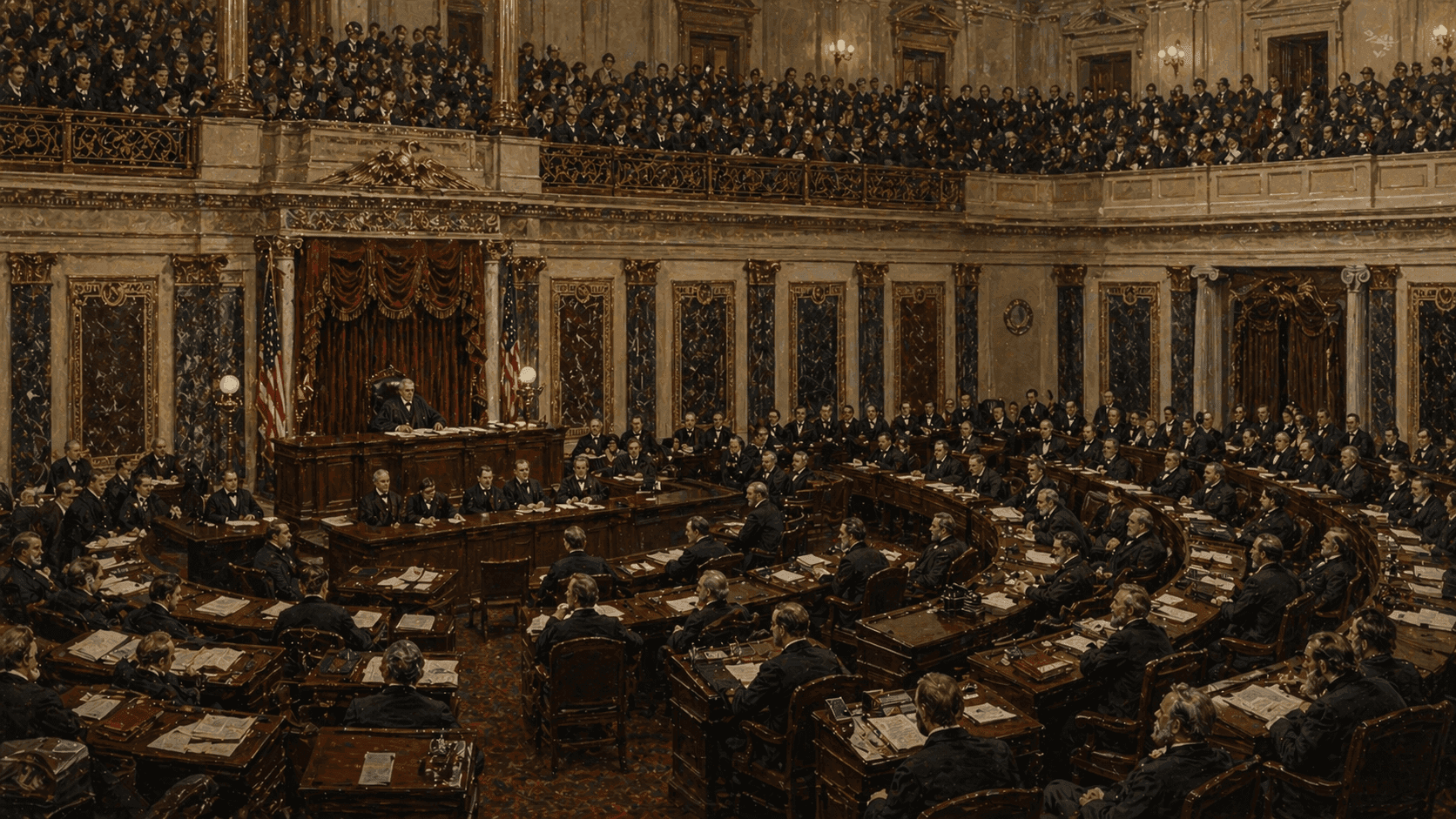
On May 26, 1868, the United States Senate voted 35 to 19 on the first article of impeachment against President Andrew Johnson — one vote short of the two-thirds majority required to convict and remove him from office. Johnson had been impeached by the House in February 1868 primarily for violating the Tenure of Office Act by attempting to remove Secretary of War Edwin Stanton without Senate approval, a conflict that was proximate and largely procedural but whose deeper context was the fierce struggle between the president and the Radical Republicans in Congress over the shape and pace of Reconstruction. Johnson — a Democrat from Tennessee who had been placed on Lincoln's 1864 unity ticket — had used his presidential authority to obstruct the enforcement of the Reconstruction Acts, restore the voting rights and property of former Confederate leaders, and resist the constitutional amendments designed to protect the rights of formerly enslaved people. The Radical Republicans who controlled Congress had finally found a legal basis to remove him.
The seven Republican senators who voted against conviction — among them Edmund Ross of Kansas, whose vote became the most famous — did so for a mixture of motives: genuine constitutional principle, concern about the precedent of removing a president for political disagreement, personal relationships, and in some cases financial inducements that later historians have examined with skepticism. The vote's consequences were significant: Johnson served out his term but was politically finished; the Radical Republicans lost the lever they had intended to use to drive Reconstruction policy; and the precedent of a failed impeachment was established for the century and a half of American political history that followed. The senate's failure to convict Johnson in 1868 has been reassessed by subsequent historians less as a triumph of constitutional principle than as a missed opportunity to hold accountable a president who had actively worked to undermine the civil rights protections that the war had been fought to secure. Edmund Ross, lionized in John F. Kennedy's Profiles in Courage, has received a considerably more complicated historical verdict in the decades since.
Dracula
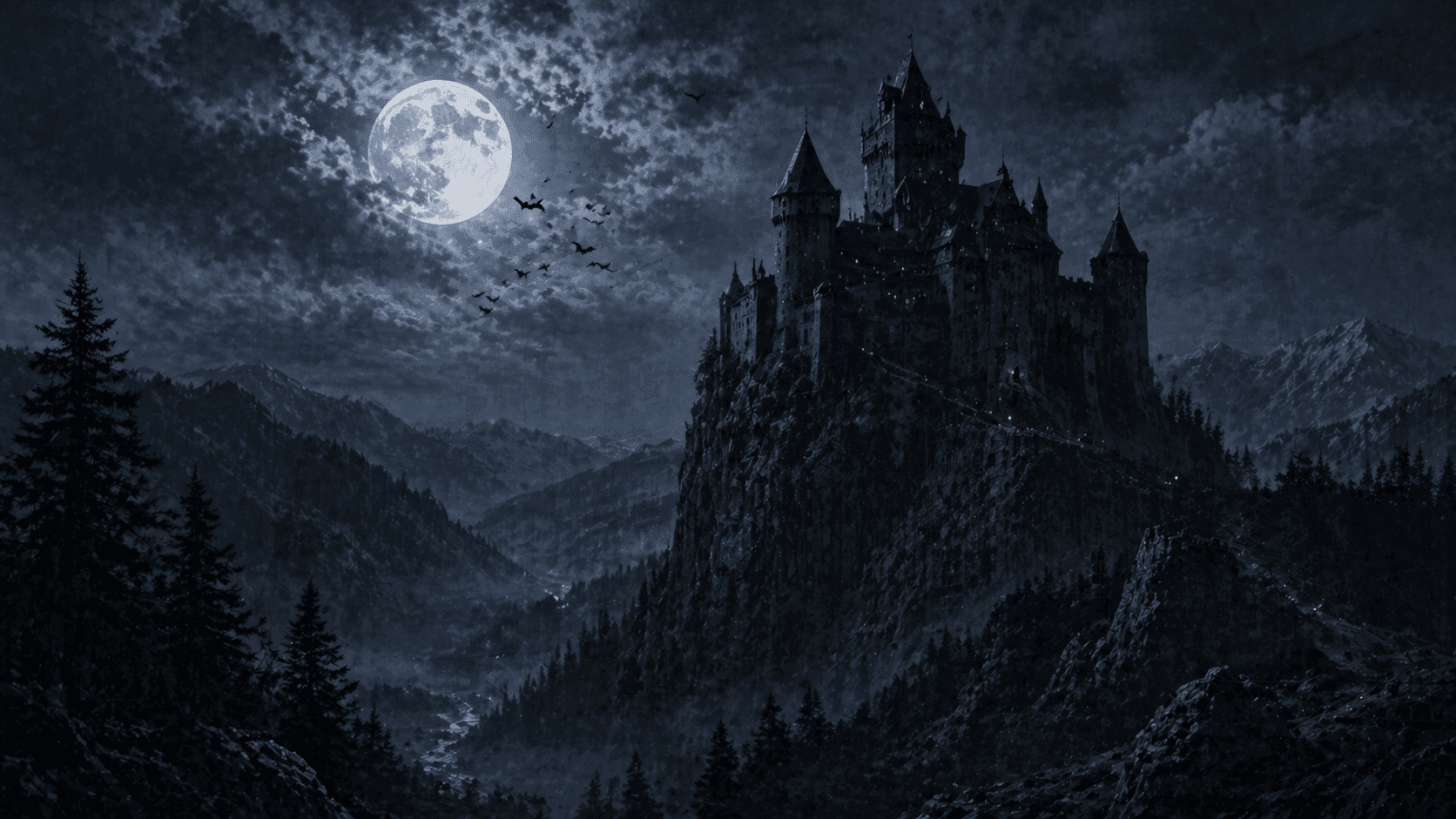
On May 26, 1897, Archibald Constable and Company of London published Dracula by Bram Stoker — a novel seven years in the making, constructed from notebooks filled with research into Transylvanian folklore, vampire mythology, and the history of a fifteenth-century Wallachian prince named Vlad III, whose reputation for impalement had given him the epithet "the Impaler" and whose surname, Dracul, Stoker borrowed for his fictional count. The novel was written in the form of diaries, letters, newspaper clippings, and a ship's log, a documentary structure that Stoker used to create the illusion that its events had actually been reported and experienced by real people. Count Dracula himself — ancient, elegant, lethal, capable of transformation, sustained by the blood of the living, undone only by specific ritual means — was assembled from multiple sources and antecedents but arrived on the page as something new: a monster of genuine sophistication and psychological complexity.
Stoker died in 1912 having earned very little from the novel — it sold modestly in his lifetime, was well-reviewed but not celebrated as a work of major literature, and was not yet the cultural colossus it would become. What transformed Dracula's fortunes was not a revised literary assessment but the stage and screen adaptations that began appearing in the 1920s — most decisively F.W. Murnau's 1922 unauthorized film Nosferatu and Tod Browning's 1931 Hollywood adaptation with Bela Lugosi, whose performance fixed the visual template of the vampire so completely that it remains, a century later, the reference point from which every subsequent interpretation departs. The vampire as a cultural figure — the aristocratic predator who drains the life of those in his power, who lives forever at the cost of others' mortality, who is simultaneously monstrous and seductive — has proven endlessly adaptable as a metaphor. Every decade finds new things to say through the vampire's mouth and new anxieties for the vampire's bite to represent. It all traces back to a Dublin-born theater manager who spent seven years researching folklore in his spare time and produced, almost despite himself, one of the most durable fictional creations in the history of English literature.