May 25: The Summer That Built a Nation, A Galaxy Far, Far Away Arrives, A Name the World Said Out Loud
Some dates arrive carrying the full weight of what a society is attempting to become. May 25 has borne that weight three times, in three very different ways: a group of delegates gathered in Philadelphia to draft the document that would define the aspirations of a new republic; a science fiction film opened in thirty-two theaters and proposed, in the language of myth, an idea of heroism and justice that resonated with millions who had been waiting to hear it; and a man named George Floyd died on a Minneapolis street with his name on his lips and a knee on his neck, and the video of his death traveled to every corner of the world and started a conversation that would not be contained. Each of these events, in its own way, was about the same thing: the distance between what America says it believes and what it has actually been willing to do.
Philadelphia, the Summer of 1787
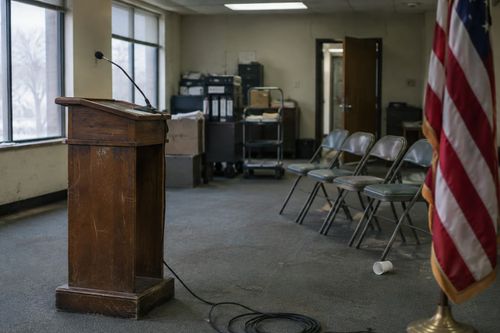
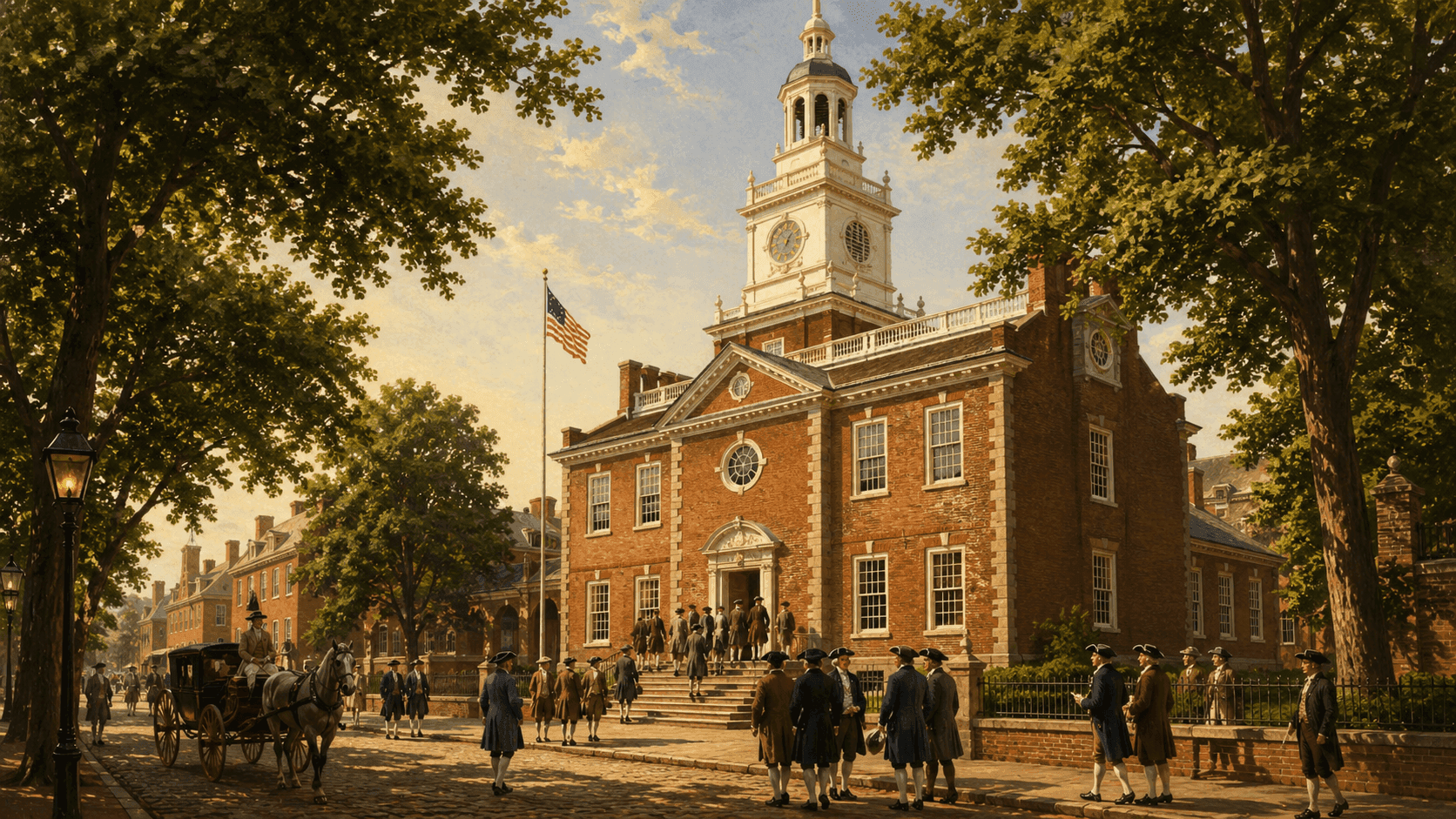
On May 25, 1787, enough delegates had arrived in Philadelphia to constitute a quorum, and the Constitutional Convention formally opened at the Pennsylvania State House — the building where the Declaration of Independence had been signed eleven years earlier. Fifty-five men would eventually participate in the convention, representing twelve of the thirteen states (Rhode Island declined to send delegates, fearing that a stronger central government would threaten its commercial interests). They had been called to revise the Articles of Confederation, which had proven inadequate to the task of governing a republic — unable to levy taxes, regulate commerce, or compel the states to honor their obligations. Within days of the convention's opening, the delegates had agreed to scrap the Articles entirely and begin again. They would meet through the Philadelphia summer, in secret, with the windows nailed shut to prevent eavesdropping, debating questions of representation, sovereignty, and the balance of power between federal authority and the states that had never been satisfactorily resolved.
The document they produced — signed on September 17, 1787, and ratified by the required nine states in 1788 — established the framework of American government that remains in effect today: the separation of powers among executive, legislative, and judicial branches; the bicameral legislature whose design resolved the conflict between large and small states; the Bill of Rights that followed in 1791 to address the objections of those who feared the new government's authority. The Constitution also, in the three-fifths compromise and the protection of the slave trade until 1808, embedded the institution of slavery into the fundamental law of a republic whose founding documents declared all men equal — a contradiction that James Madison and his colleagues chose not to resolve, and that the country would spend the next seventy-eight years approaching at increasing cost before the Civil War forced the reckoning. The summer of 1787 produced the best and most durable framework for self-governance the modern world has seen. It also deferred the question of who that governance was for — and left the answer to be argued, sometimes peacefully and sometimes not, for generations to follow.
A Long Time Ago
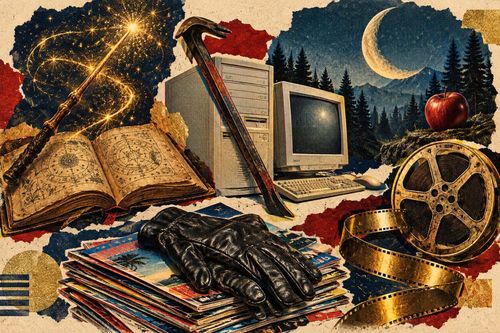
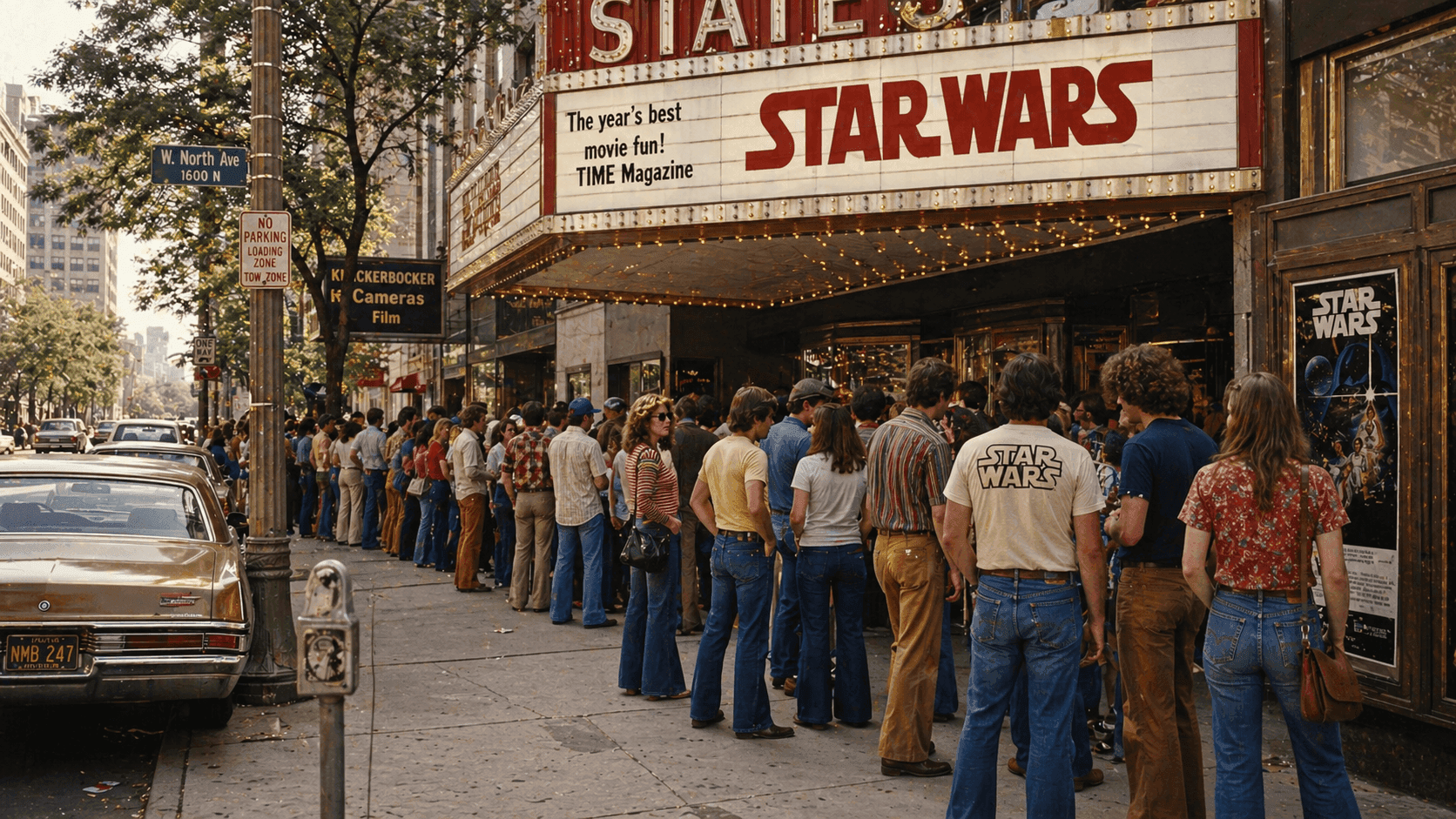
On May 25, 1977, Star Wars — written and directed by George Lucas, distributed with considerable reluctance by 20th Century Fox, and dismissed by many in Hollywood as an expensive folly — opened in thirty-two theaters across the United States and within days had lines stretching around city blocks. The film had been turned down by Universal and United Artists before Fox agreed to produce it, with a budget that ballooned from $8 million to $11 million and a production that was beset by technical failures, studio skepticism, and a director who was reportedly in such poor health during filming that he could barely communicate with his cast. The special effects, created by Lucas's newly formed company Industrial Light & Magic, required the invention of new filmmaking technologies to produce. The editors who put the film together worked on it until the last possible moment before its release date. Lucas himself did not believe it would succeed.
What audiences found when they sat down in those thirty-two theaters on May 25, 1977, was something that had not quite existed in cinema before — a space opera that borrowed from samurai films and World War II movies and the hero mythology that Joseph Campbell had described in The Hero with a Thousand Faces, and that delivered it all with a visual spectacle and emotional directness that bypassed critical sophistication entirely and hit something more fundamental. Star Wars earned $775 million in its initial release and became the highest-grossing film in history at the time, a record it held until E.T. in 1982. It changed the economics of Hollywood — the summer blockbuster model, the merchandising tie-in, the franchise sequel — in ways that the industry is still living with. It also produced something rarer and less quantifiable: a mythology that millions of people around the world adopted as a shared language for talking about courage, sacrifice, and the choice between the light and the dark. Thirty-two theaters. Every screen in the world, eventually.
Say His Name
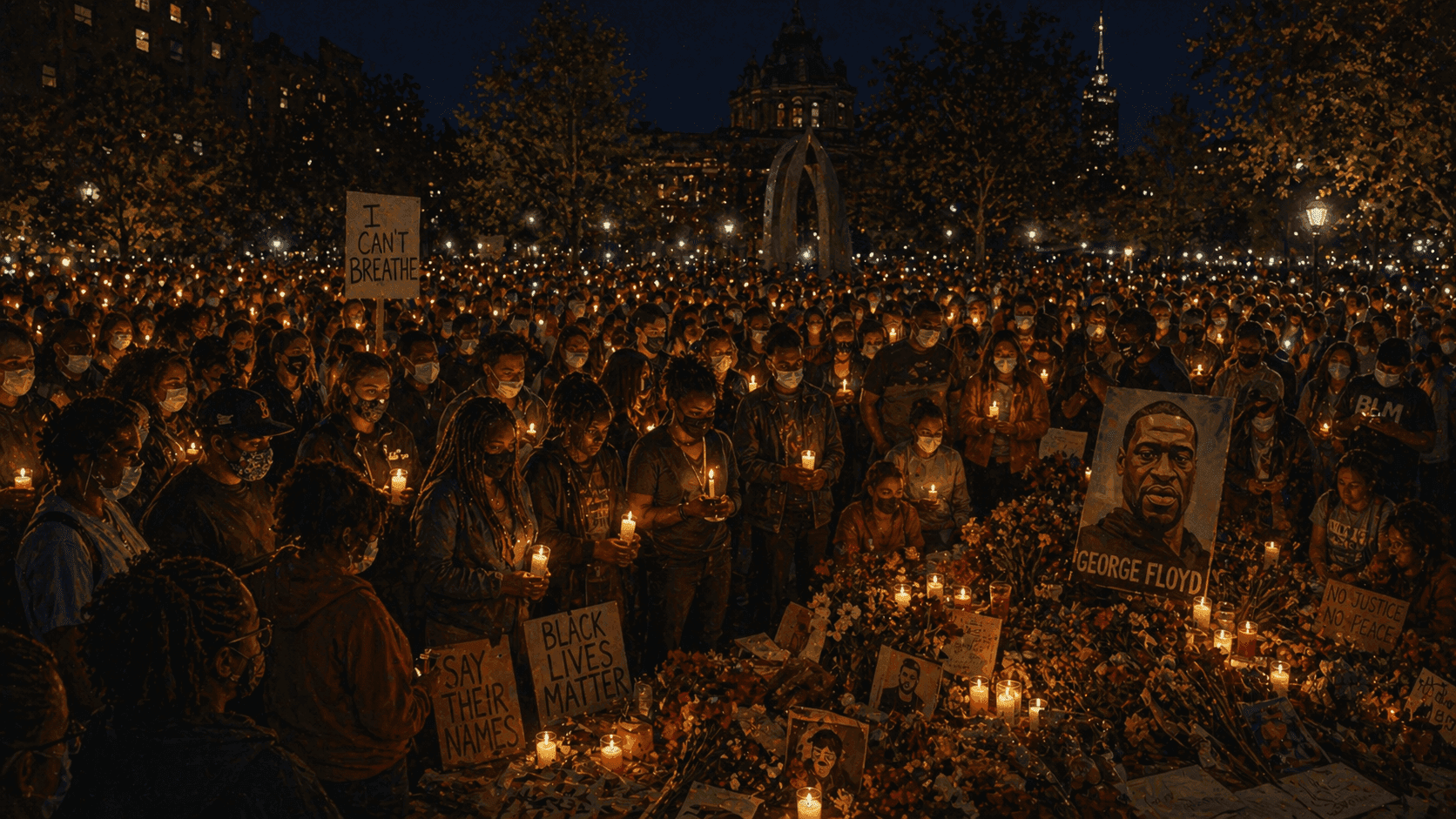
On May 25, 2020, George Floyd — a forty-six-year-old Black man from Houston, Texas, who had moved to Minneapolis — was arrested outside a convenience store on suspicion of using a counterfeit twenty-dollar bill. During the arrest, Officer Derek Chauvin of the Minneapolis Police Department placed his knee on Floyd's neck and held it there for nine minutes and twenty-nine seconds while Floyd lost consciousness and died. Floyd said "I can't breathe" more than twenty times during the restraint. Bystanders, including a seventeen-year-old named Darnella Frazier who recorded the encounter on her phone, pleaded with the officers to check his pulse. Floyd was pronounced dead at a local hospital. The Hennepin County medical examiner ruled his death a homicide, citing the subdual, restraint, and neck compression as the cause of death. Darnella Frazier's video was shared around the world within hours.
What followed was an eruption of grief and protest on a scale the United States had not seen since the civil rights demonstrations of the 1960s. Within days, demonstrations had spread to all fifty states and to more than sixty countries — protests that carried Floyd's name alongside those of Breonna Taylor, Ahmaud Arbery, and the long list of Black Americans who had died in encounters with police and whose cases had not produced the same level of visible accountability. Derek Chauvin was convicted of second-degree murder, third-degree murder, and second-degree manslaughter in April 2021 and sentenced to twenty-two and a half years in prison — one of the most consequential convictions of a police officer in American history. Darnella Frazier received a special citation from the Pulitzer Prize Board in 2021 for her filming of the encounter, the board noting that her video "spurred protests against police brutality around the world." George Floyd's name has been spoken in legislatures, courtrooms, classrooms, and streets on every continent. He was a human being who bought cigarettes and was killed for a twenty-dollar bill, and the world decided — not unanimously, and not without bitter argument, but in numbers large enough to matter — that this could not stand without a reckoning.