May 22: Mount Vernon's Final Guest, A Thousand Wagons West, Nixon in Moscow
America in three of its most recognizable postures: mourning a founder, moving west, and negotiating at the table it would rather not need. May 22 offers one story of ending, one of beginning, and one of the careful middle ground that two nuclear-armed superpowers had to find or perish. Martha Washington's death at Mount Vernon in 1802 closed the chapter that had opened with the revolution; a thousand wagons rolling out of Missouri in 1843 wrote the chapter that the Louisiana Purchase had made possible; and Richard Nixon's arrival in Moscow in 1972 attempted something the Cold War had rarely managed — a conversation that reduced the temperature. Three very American ways of moving through history, on three very different May 22s.
The Lady of Mount Vernon
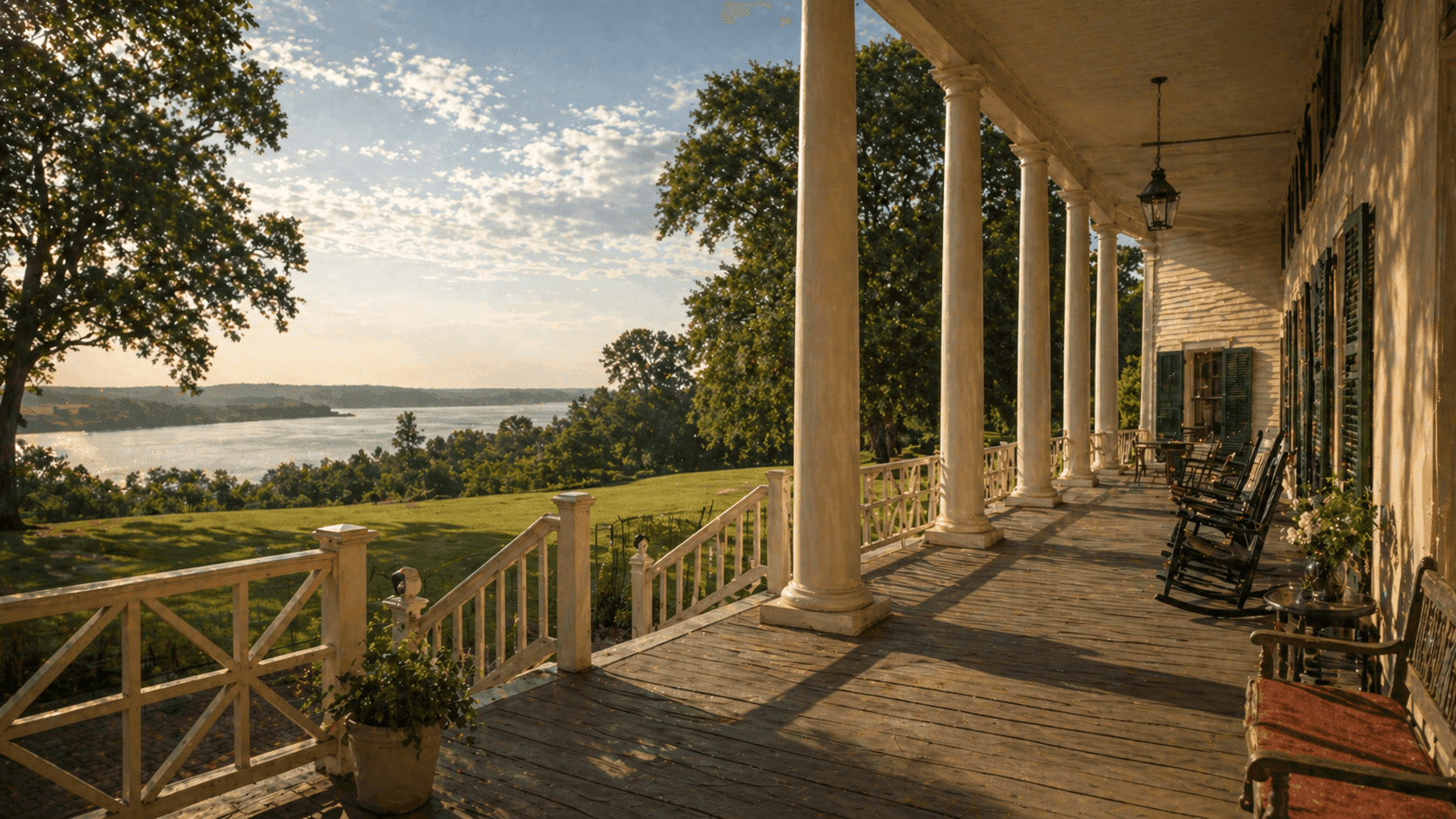
On May 22, 1802, Martha Washington died at Mount Vernon, Virginia, at the age of seventy, having survived her husband George by just over two years. She had been born Martha Dandridge in 1731, married the wealthy planter Daniel Parke Custis in 1750, been widowed with two surviving children in 1757, and married George Washington in 1759 — a union that would carry her through the Revolutionary War, eight years in the presidency, and the long, public retirement at Mount Vernon that followed. Her role as the first First Lady was one she did not choose in any conventional sense — she had been a planter's widow who married a Virginian officer and found herself, over the following decades, presiding over the social life of a republic still figuring out what it was. She spent the winters of the Revolutionary War in the field with her husband at Valley Forge and Morristown and other encampments, organizing what comfort was available for the soldiers and sustaining the morale of their general. She called the years at the wartime camps the dark times, and she did not exaggerate.
As First Lady — a title not yet in use during her lifetime, when she was called "Lady Washington" — Martha set the social protocols of the new executive branch through the weekly levees and formal dinners she organized in Philadelphia and New York, balancing the republican simplicity that the new nation's democratic ideals demanded against the ceremonial dignity that a government seeking international credibility required. She found the life of the presidency confining and the public scrutiny it brought unwelcome; she preferred Mount Vernon, where she spent the long years of George's retirement surrounded by family and the operations of an estate that she managed with considerable practical competence. George died in December 1799. Martha spent the following two years declining to sleep in the bedroom they had shared, moving to a small room upstairs, and giving away his possessions to friends who called. She died on May 22, 1802, of a "severe fever" — typhoid, most likely — surrounded by her grandchildren. With her death, the last direct tie to the founding generation's domestic life was severed.
The Great Emigration
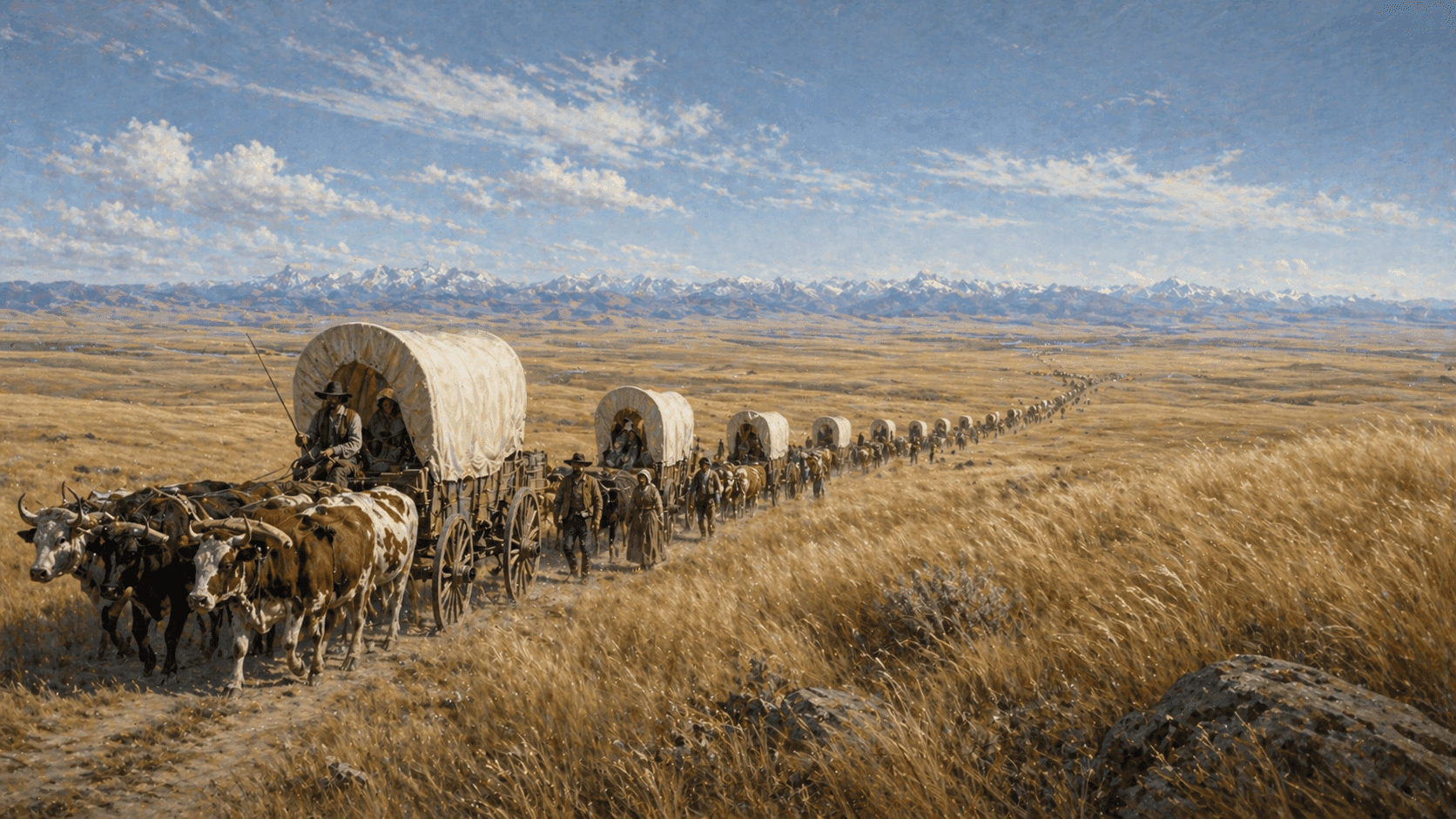
On May 22, 1843, a wagon train of approximately one thousand settlers — an unprecedented number for a single organized overland migration — departed from Elm Grove, Missouri, at the start of what became known as the Great Emigration, the largest movement of American settlers along the Oregon Trail to that date. The journey they were beginning stretched approximately 2,000 miles across the Great Plains, through the Rocky Mountains via South Pass, and down the Columbia River drainage to the Willamette Valley in present-day Oregon — a route that the fur trader and explorer Nathaniel Wyeth and the missionary Marcus Whitman had pioneered, and that John C. Frémont's recent survey reports had made seem, if not easy, at least possible. The emigrants traveled in covered wagons pulled by oxen, carrying everything they intended to build new lives with. They were farmers, merchants, craftsmen, and their families — people for whom the land in Missouri and Ohio and Indiana had been used up or closed off, and who believed, with the particular American faith in the promise of western space, that something better waited beyond the next range of mountains.
The 1843 Great Emigration was not the first wagon train to travel the Oregon Trail, but its scale made it a turning point — proof that the route was viable for large organized parties with families and livestock, not just the small bands of trappers and missionaries who had preceded them. The success of the 1843 migration inspired the larger emigrations that followed in subsequent years, building the Oregon Trail into the most heavily traveled overland route in American history and eventually carrying an estimated 400,000 people west before the transcontinental railroad made wagon travel obsolete. It also accelerated the processes that made Oregon's eventual incorporation into the United States possible and that led, with the inevitability that large-scale settlement always carries, to the displacement of the Indigenous nations of the Columbia Plateau and the Pacific Northwest who had lived in that landscape for millennia. The thousand wagons that rolled west from Elm Grove on May 22, 1843 carried with them everything the story of American westward expansion contains: courage, necessity, determination, and the costs that others paid for the land those qualities were aimed at claiming.
The Moscow Summit
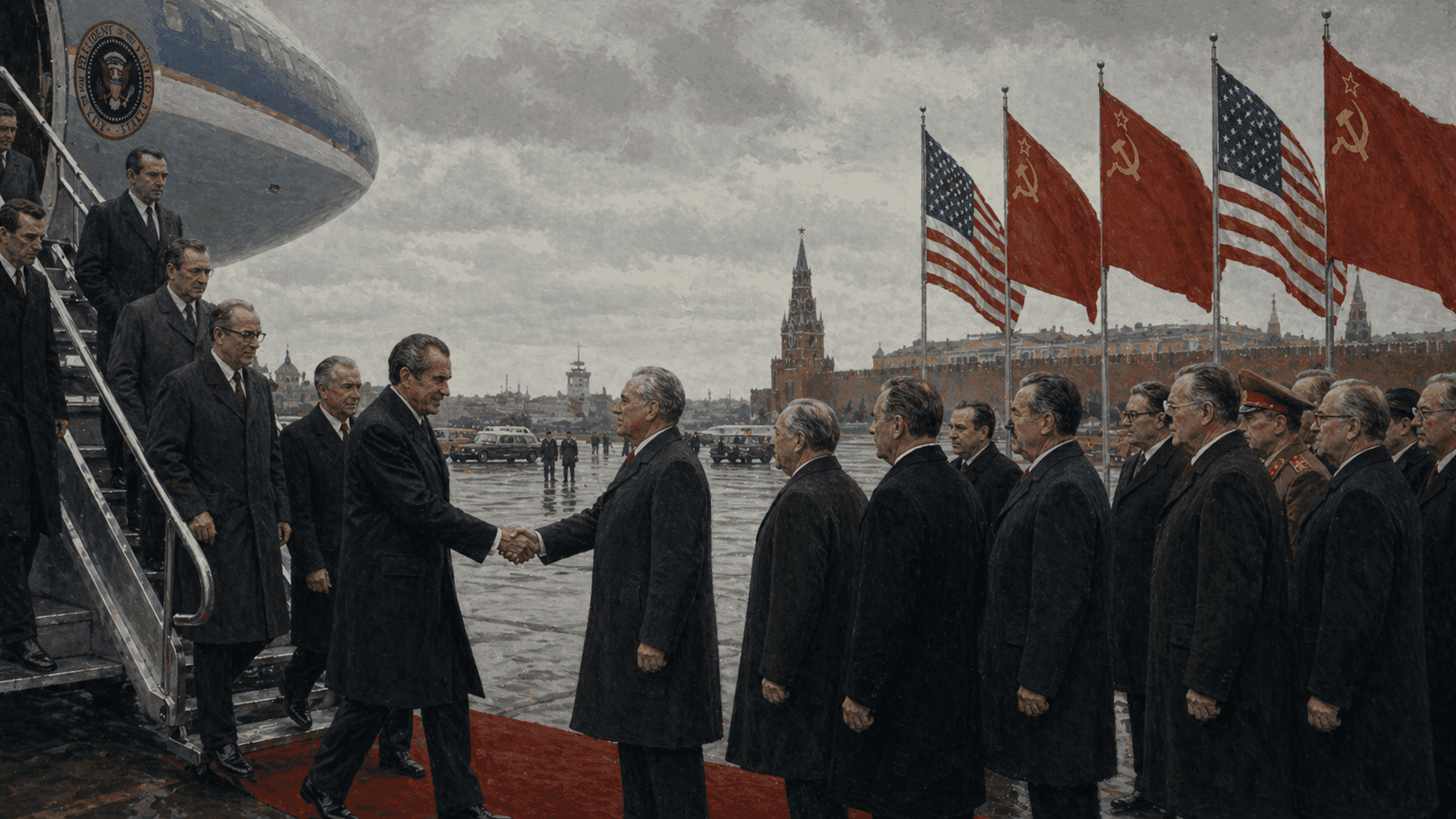
On May 22, 1972, Richard Nixon arrived in Moscow for a summit meeting with Soviet General Secretary Leonid Brezhnev — the first visit by an American president to the Soviet Union since Franklin Roosevelt's meeting with Stalin at Yalta in 1945, and a journey made doubly remarkable by the fact that Nixon had spent most of his political career as one of the most aggressive anti-communist voices in American public life. The visit was the centerpiece of the foreign policy of détente — a French term for the easing of strained relations — that Nixon and his National Security Advisor Henry Kissinger had been pursuing since 1969 through back-channel diplomacy, the opening to China two months earlier, and a sustained effort to persuade Moscow that the United States was willing to negotiate rather than simply confront. The Moscow summit produced the Strategic Arms Limitation Treaty (SALT I), the first major agreement between the superpowers to cap the growth of their nuclear arsenals, and the Anti-Ballistic Missile Treaty, which limited the development of missile defense systems.
The Moscow summit was, by any measure, one of the most significant diplomatic achievements of the Cold War era — and one of the great ironies of Nixon's presidency, which would be destroyed the following year by the Watergate scandal that had already begun before Air Force One landed in Moscow. The man whose career had been built on anti-communist credentials had proved more willing than his predecessors to engage with the Soviet leadership as a practical adversary rather than an existential enemy, and the agreements he brought back from Moscow represented a genuine reduction in the risk of nuclear war. Détente did not end the Cold War — that would require another two decades and the implosion of the Soviet system itself — but it created the conditions in which both superpowers could step back from the perpetual brinkmanship of the previous quarter century and negotiate the terms of their competition. Nixon arrived in Moscow on May 22, 1972, as an anti-communist making common cause with communists, a pragmatist operating in the space between ideology and survival. History has found more room for that kind of contradiction than the man himself seemed to know.