May 20: The Man Who Changed the World He Didn't Find, The Pants That Conquered the Planet, Four Hundred Springfields
History has a particular fondness for the unintended consequence — the discovery that was never meant to be made, the utilitarian object that became a universal symbol, the television show that set out to mock suburban mediocrity and ended up charting the culture of an era. May 20 offers three of those stories: a navigator who went to his grave believing he had reached Asia, whose actual achievement in reaching the Americas was transformative and catastrophic in measures he never lived to comprehend; two businessmen who patented a pair of reinforced trousers for miners and gave the world its most democratic garment; and an animated family from Springfield who spent four hundred episodes finding new ways to say that America was funny and human and sometimes terrible and still, somehow, worth the attention. Three accidental icons, and the date that connects them.
The Admiral of the Ocean Sea
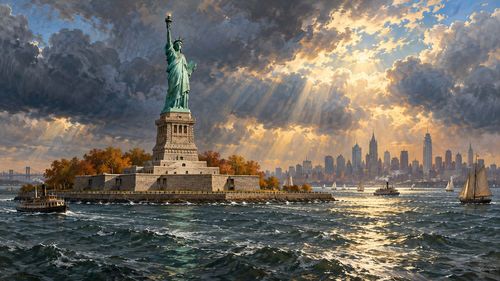
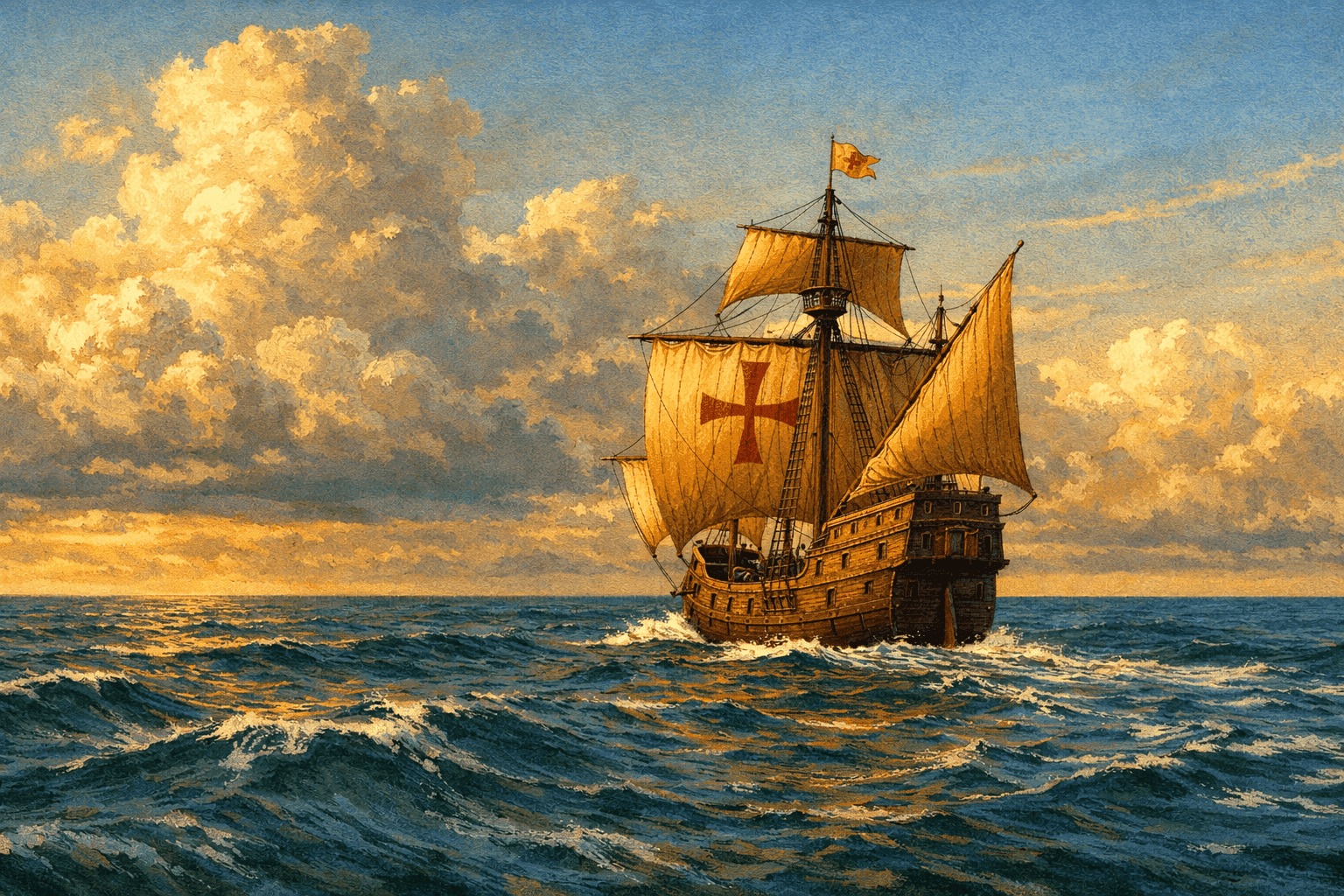
On May 20, 1506, Christopher Columbus died in Valladolid, Spain, at approximately fifty-four years of age, having made four voyages to the Caribbean and the coasts of Central and South America and having never, to his own satisfaction, abandoned the conviction that he had reached the outer islands of Asia. The man who receives credit for opening the Americas to European contact did not know that is what he had done — he died believing, or at least insisting, that he had accomplished a different thing. He had received the titles Admiral of the Ocean Sea and Governor of the Indies from the Spanish Crown in 1492, terms that had become something of an embarrassment as the geographic reality of what he had found became clearer to everyone else. By the time of his death he had been stripped of his governorship following reports of brutal treatment of both Indigenous populations and Spanish colonists under his administration in Hispaniola, and he died in relative obscurity in a Valladolid boarding house, still petitioning the Crown to restore his titles and privileges.
The legacy he left is among the most genuinely contested in world history, because it is simultaneously immense and devastating. His 1492 voyage inaugurated a period of sustained contact between the hemispheres that transformed global ecology, economy, and demography in ways that were still unfolding centuries later. It also initiated the European colonization of the Americas, which brought with it the destruction of Indigenous civilizations through disease, forced labor, and deliberate violence on a scale that historians estimate cost somewhere between 50 and 90 million Indigenous lives within a century of first contact. Columbus himself was not merely a passive agent of this process — his governance of Hispaniola was characterized by the enslavement and brutal punishment of the island's Taíno population, and his own journals record the calculation with which he assessed their vulnerability and usefulness. The question of how to hold both the navigational achievement and its human consequences together in a single honest assessment has not been settled, and probably cannot be. He is not a figure who resolves neatly, and history should not pretend that he does.
Rivets
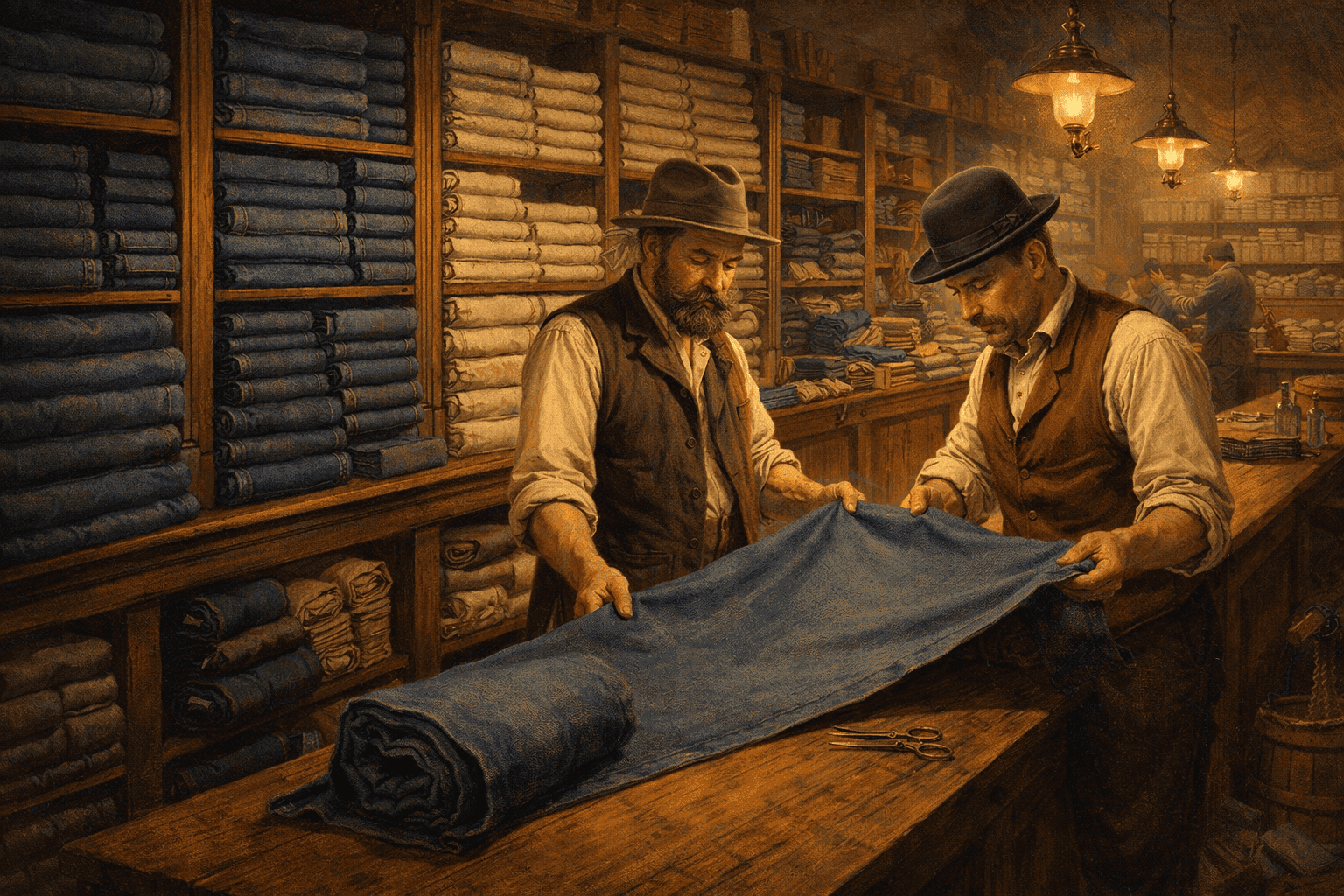
On May 20, 1873, Levi Strauss — a Bavarian immigrant dry goods merchant operating in San Francisco — and Jacob Davis — a Latvian immigrant tailor working in Reno, Nevada — received United States Patent No. 139,121 for an "Improvement in Fastening Pocket-Openings," which described the use of metal rivets to reinforce the stress points of denim work pants. Davis had developed the technique in 1871 after a customer complained that his trousers kept tearing at the pocket corners, and had written to Strauss — from whom he bought his fabric — proposing to patent the idea together because he lacked the $68 filing fee. Strauss agreed, the patent was granted, and the two men began manufacturing what they called "waist overalls" — heavy denim trousers designed for the California gold miners, railroad workers, and laborers whose work destroyed conventional clothing in months. The garment was practical, cheap, and nearly indestructible. It was also, improbably, destined to become the most widely worn piece of clothing in human history.
The blue jean's journey from the gold fields of California to the wardrobes of virtually every culture on earth is one of the stranger stories in the history of fashion. The garment spent its first several decades as strictly workwear, associated with manual labor and the American West. Its crossover into mainstream American culture began in the 1930s, when Western films made cowboys fashionable and dude ranches introduced Eastern tourists to the pleasures of denim. World War II American servicemen and women brought jeans to Europe. James Dean and Marlon Brando wore them on screen in the 1950s and turned them into the uniform of youthful rebellion. The 1960s countercultural movements adopted them as anti-fashion. Designer jeans in the 1970s and 1980s moved them upmarket. By the end of the twentieth century, jeans were worn by heads of state and schoolchildren, by fashion models and construction workers, on every continent and in every income bracket. The patent Levi Strauss and Jacob Davis received on May 20, 1873 — for a pair of reinforced work trousers — is the legal origin document of a garment that the world has never stopped wearing.
D'oh
On May 20, 2007, The Simpsons aired its 400th episode — "You Kent Always Say What You Want," a typically self-referential installment in which Kent Brockman drops an expletive on live television and the resulting controversy satirizes the media's relationship with censorship — and added another milestone to a record of longevity that remains, even now, almost incomprehensible. The show had premiered on December 17, 1989, as a spinoff of Matt Groening's sketches on The Tracey Ullman Show, and had within its first few seasons produced some of the most celebrated episodes in American television history. By the time it reached its 400th installment it had been on the air for eighteen years, won more than thirty Emmy Awards, and been declared by Time magazine the greatest television series of the twentieth century. It has continued since, passing 750 episodes and showing no signs of conclusion.
What The Simpsons accomplished in its first decade — and what the 400th episode milestone invited viewers to look back on — was a wholesale reimagination of what an animated television comedy could do. The show's Springfield was simultaneously a specific American place and a universal one, its characters drawn with enough psychological consistency to sustain genuine emotional storytelling alongside the absurdist comedy. Homer's stupidity was never purely a joke; it was a device for examining the gap between aspiration and reality that defines middle-class American life. Lisa's intelligence was never purely admirable; it was a source of genuine loneliness and alienation that the show treated with unusual seriousness. The family's love for one another, reset each episode regardless of what had happened, became both a running joke and the show's emotional core — the thing that kept thirty-six years of audiences returning to a yellow-skinned family in a fictional town to find something they recognized. D'oh, as Homer might say. Four hundred episodes. Still going.