May 16: A Wedding That Ended in Revolution, The Night the Oscars Were Born, Barbara Walters Takes Her Final Bow
The most consequential beginnings rarely announce themselves as such. On May 16 across three centuries, the world staged three ceremonies — a royal wedding, a private dinner in Hollywood, and a television farewell — each of which seemed, in the moment, to be about something specific and contained. The marriage of a French dauphin to an Austrian archduchess was a diplomatic arrangement between dynasties; no one in Versailles on May 16, 1770 was celebrating the launch of a story that would end at the guillotine. The dinner at the Hollywood Roosevelt Hotel was a modest industry occasion, fifteen minutes long; no one imagined that it was founding an institution that would dominate the cultural conversation for the next century. And the woman who signed off from daily television in 2014 was closing a career, not opening a debate — though the debate about who she was and what she built is one that journalism is still having. Three ceremonies, three complicated legacies, and the same persistent reminder that what something becomes is never quite what it looked like when it started.
Versailles, and What Came After
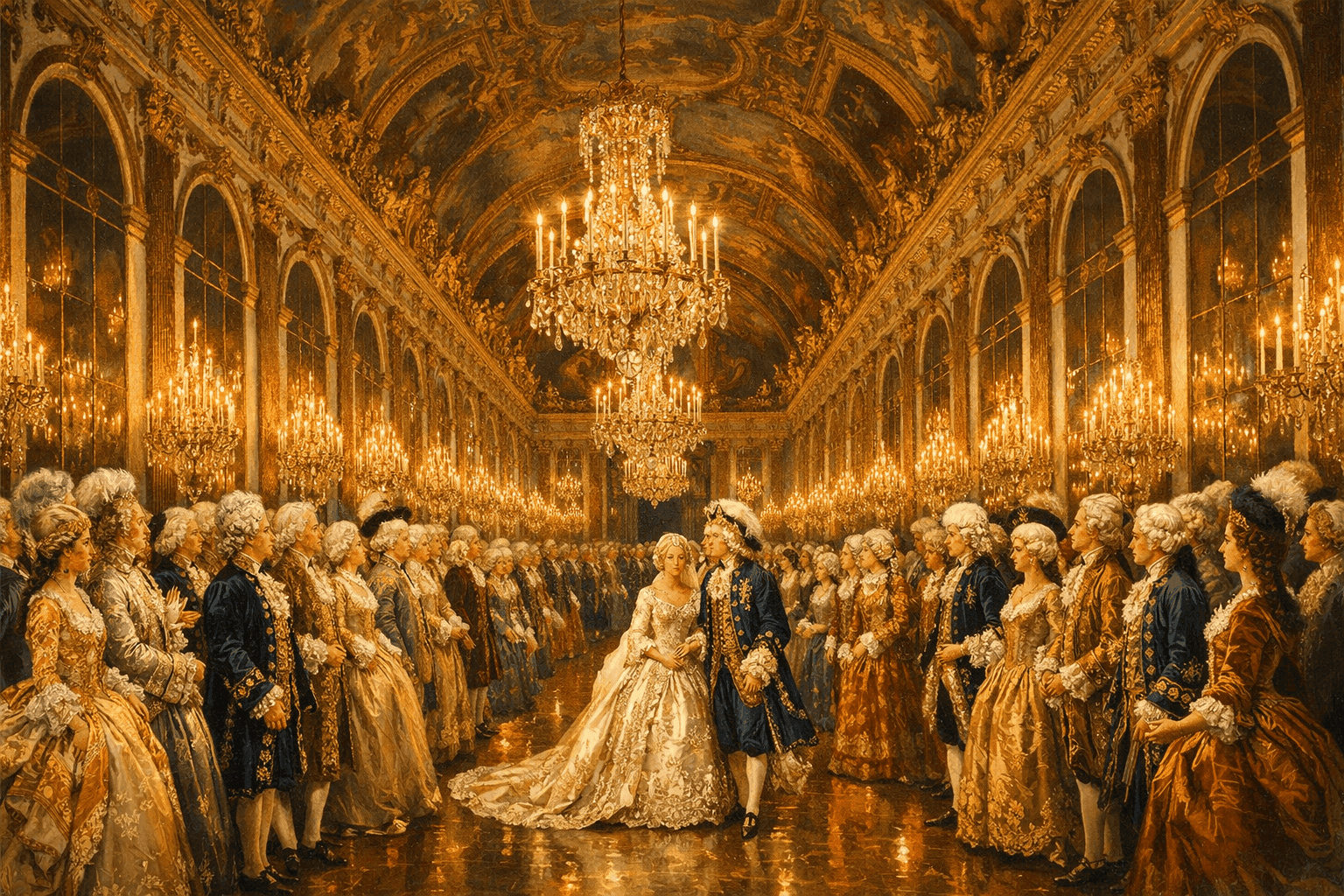
On May 16, 1770, at the Palace of Versailles, fourteen-year-old Marie Antoinette — born Maria Antonia Josepha Johanna, the youngest daughter of Holy Roman Empress Maria Theresa of Austria — married fifteen-year-old Louis-Auguste, the Dauphin of France and heir to the Bourbon throne. The marriage had been negotiated over years as the cornerstone of the Diplomatic Revolution of 1756, which had reversed a century of Franco-Austrian rivalry and aligned the two great Catholic powers against Britain and Prussia. Marie Antoinette had traveled from Vienna to Versailles through a formal handover ceremony on a small island in the Rhine, where she was stripped of all her Austrian clothes and possessions and reclothed entirely in French garments — an elaborate symbolic act of national transfer. She arrived at Versailles speaking little French and knowing almost nothing of the court whose queen she would one day become.
The nineteen years between the wedding at Versailles and Marie Antoinette's imprisonment in 1789 are one of history's great tragic arcs. She became queen at nineteen when Louis XVI ascended the throne in 1774, and she spent the decade that followed navigating a court culture of almost incomprehensible formality and intrigue while accumulating a public reputation — exaggerated but not entirely fabricated — for extravagance and political indifference. The pamphlets that targeted her were vicious and frequently obscene; the nickname "Madame Deficit" captured the public's fury at royal spending during a period of genuine financial crisis. When the Revolution came in 1789, she became its defining symbol of excess — a role that simplified and distorted a woman of genuine complexity. She was guillotined on October 16, 1793, at the age of thirty-seven. The wedding on May 16, 1770, that had been meant to secure the Franco-Austrian alliance ended, two decades later, in the execution of the bride by the people of the nation that had received her.
Fifteen Minutes in Hollywood
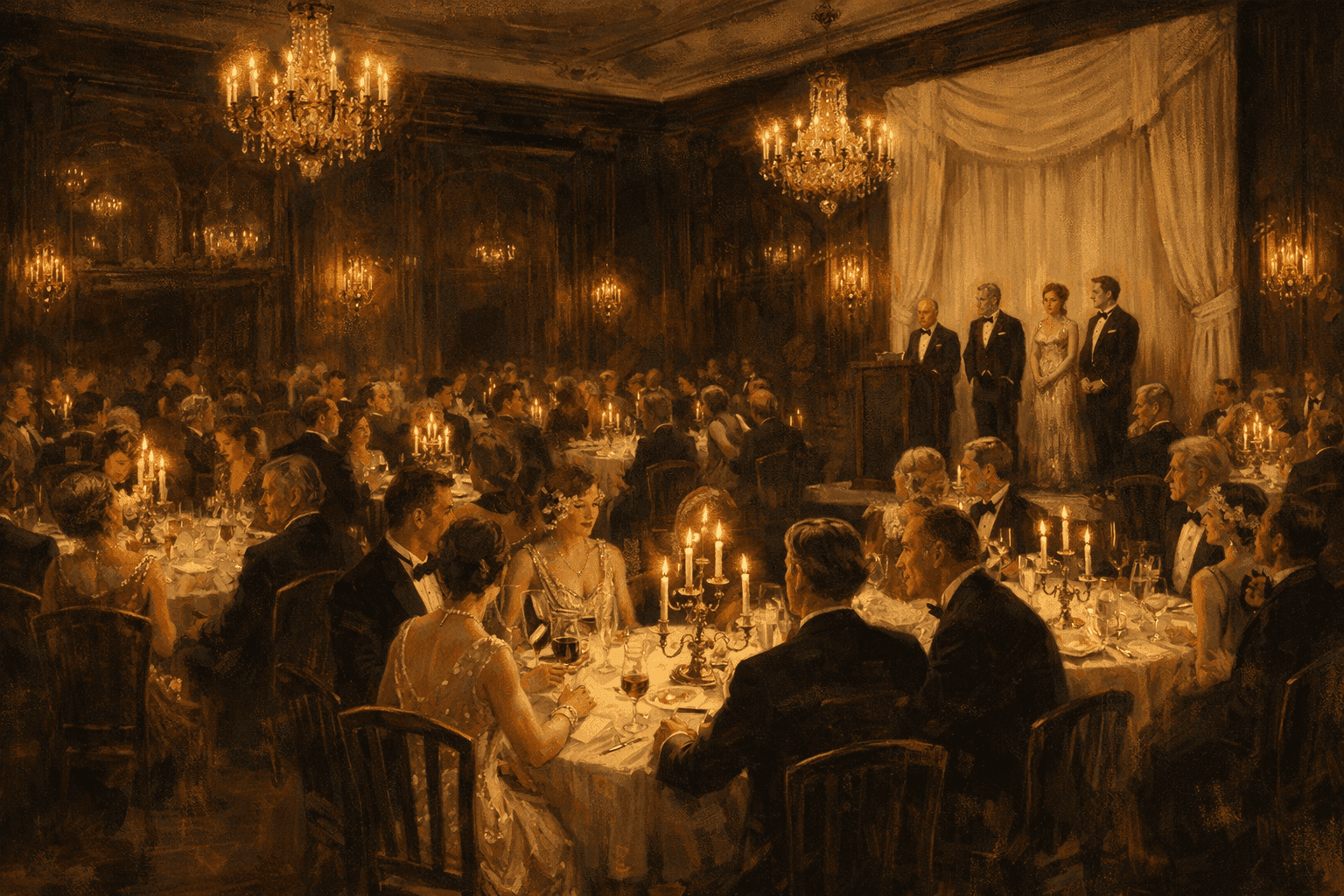
On May 16, 1929, fewer than three hundred people gathered for a private dinner at the Hollywood Roosevelt Hotel and attended the first Academy Awards ceremony — an event that lasted fifteen minutes and attracted almost no press coverage at the time. The awards had been created by the Academy of Motion Picture Arts and Sciences, founded in 1927, as a means of recognizing artistic excellence in the film industry and, not incidentally, of improving the industry's public image during a period of studio consolidation and labor conflict. The winners had been announced three months earlier; the ceremony itself was an afterthought rather than a dramatic reveal. Emil Jannings, who had to leave the country before the event, received his Best Actor award early and took it home. Wings, a World War I aviation epic, won Best Picture. The whole affair was over before the dessert course.
From that modest dinner, one of the most watched and most culturally resonant annual events in the world. The Academy Awards grew in ambition and audience throughout the 1930s as radio began broadcasting them, in the 1940s as film culture became synonymous with American popular culture, and in the 1950s as television brought the ceremony into living rooms across the country. By the late twentieth century, Oscar night was drawing global audiences of hundreds of millions — a number incomprehensible to the three hundred people who ate dinner together in Hollywood in 1929 and spent fifteen minutes giving out statuettes. The ceremony has been used to celebrate films of genuine artistic merit, to ignore them, to make political statements, to avoid them, and to generate controversies that outlast any individual winner. It has been the occasion of some of the most memorable moments in the history of live television. Its authority as a measure of cinematic excellence is permanently contested and permanently renewed. None of that was visible in the Roosevelt Hotel ballroom on May 16, 1929. It was just a dinner.
The Last Interview
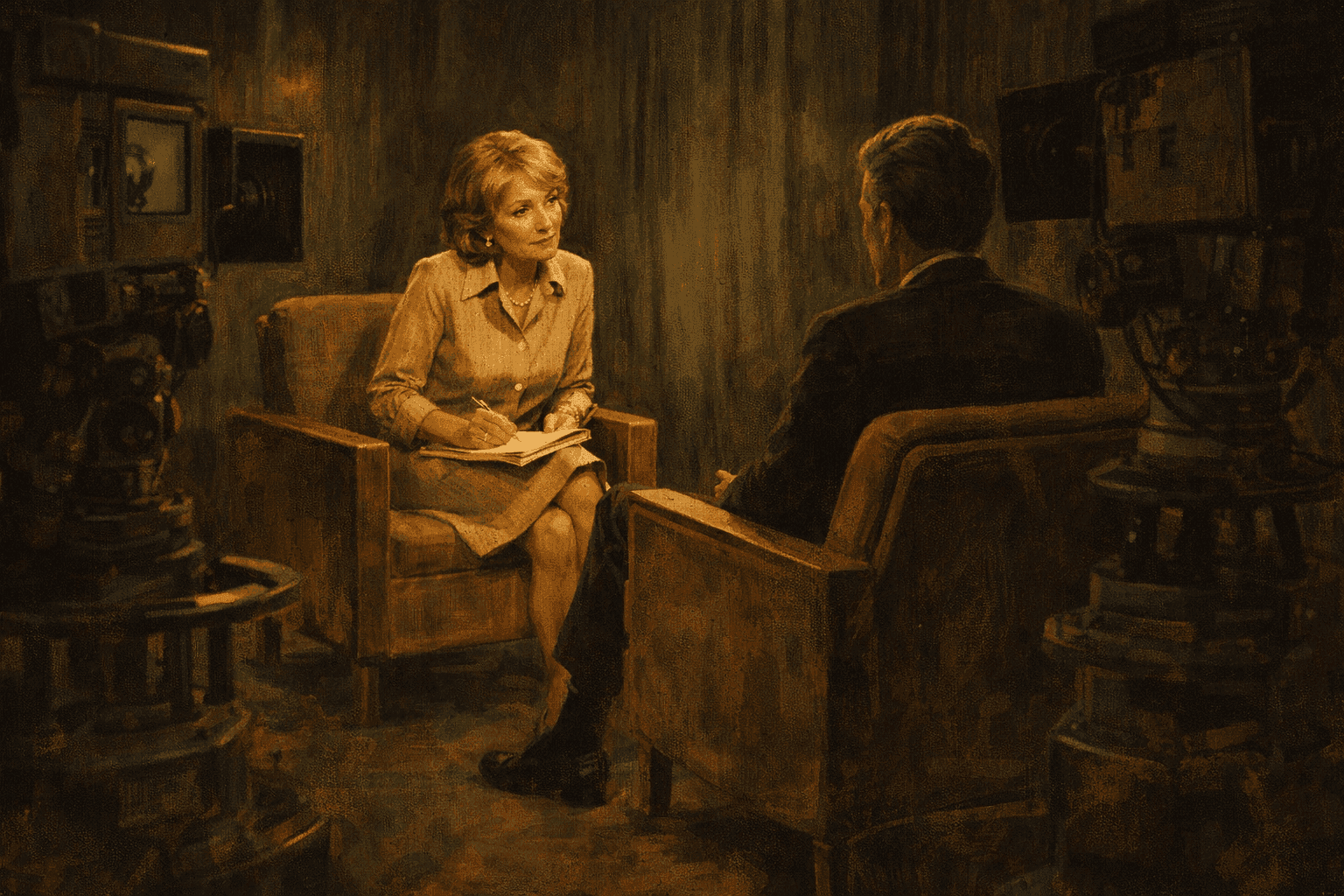
On May 16, 2014, Barbara Walters made her final regular appearance on The View, the daytime talk show she had co-created in 1997, bringing to a close a television career that had spanned more than five decades and redefined what a woman could do in broadcast journalism. Walters had entered the industry in the early 1960s, when women in network television news were expected to handle feature segments — cooking, fashion, human interest — and leave the hard news to the men. She pushed, persistently and strategically, into the space the industry had reserved for others: co-hosting NBC's Today show from 1974, becoming the first woman to co-anchor a network evening news broadcast when ABC hired her in 1976 for an unprecedented million-dollar annual salary that the press received with a mixture of admiration and mockery, and eventually building a franchise of celebrity and political interviews that made her, for a generation of television viewers, the name you associated with the most revealing conversations on television.
Her interview subjects over five decades constituted a roster of the century's most significant figures: Anwar Sadat and Menachem Begin together in 1977; Fidel Castro; Vladimir Putin; every American president from Richard Nixon to Barack Obama. She developed a reputation for asking the questions that other interviewers avoided — about personal lives, private grief, and the inner experience of public people — and for creating conditions in which subjects said things they had not planned to say. The technique was sometimes criticized as sensationalistic; it was also, undeniably, effective. Her retirement in 2014 prompted an outpouring of tributes that acknowledged, with the clarity that hindsight provides, how thoroughly she had changed the landscape of broadcast journalism — not just by being the first woman in the roles she occupied, but by performing them in ways that expanded what those roles were understood to be. She died in December 2022 at the age of ninety-three. The television she helped build is still broadcasting, still shaped by the terms she helped define.