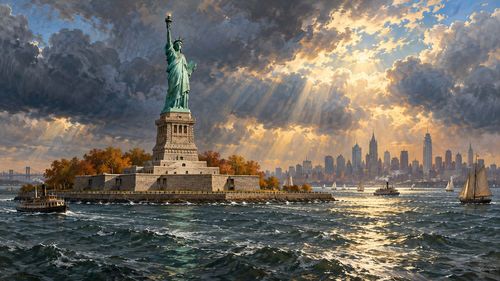
May 15: The First World War, Born to Break Barriers, The Home Front Asks Its Share
May 15 is a date that understands scale — the scale of a war that reached from the English Channel to the Philippines, the scale of a life that carried a Czech refugee from Communist Europe to the highest diplomatic office an American woman had ever held, and the smaller, more intimate scale of a gas pump with a ration sticker on it that asked an ordinary American driver to understand, in a very practical way, that the war across the ocean was also theirs. Each story is about the reach of large events into individual lives — and about what happens when individuals, given the chance to matter in a moment larger than themselves, rise to meet it.
The War That Covered the Earth
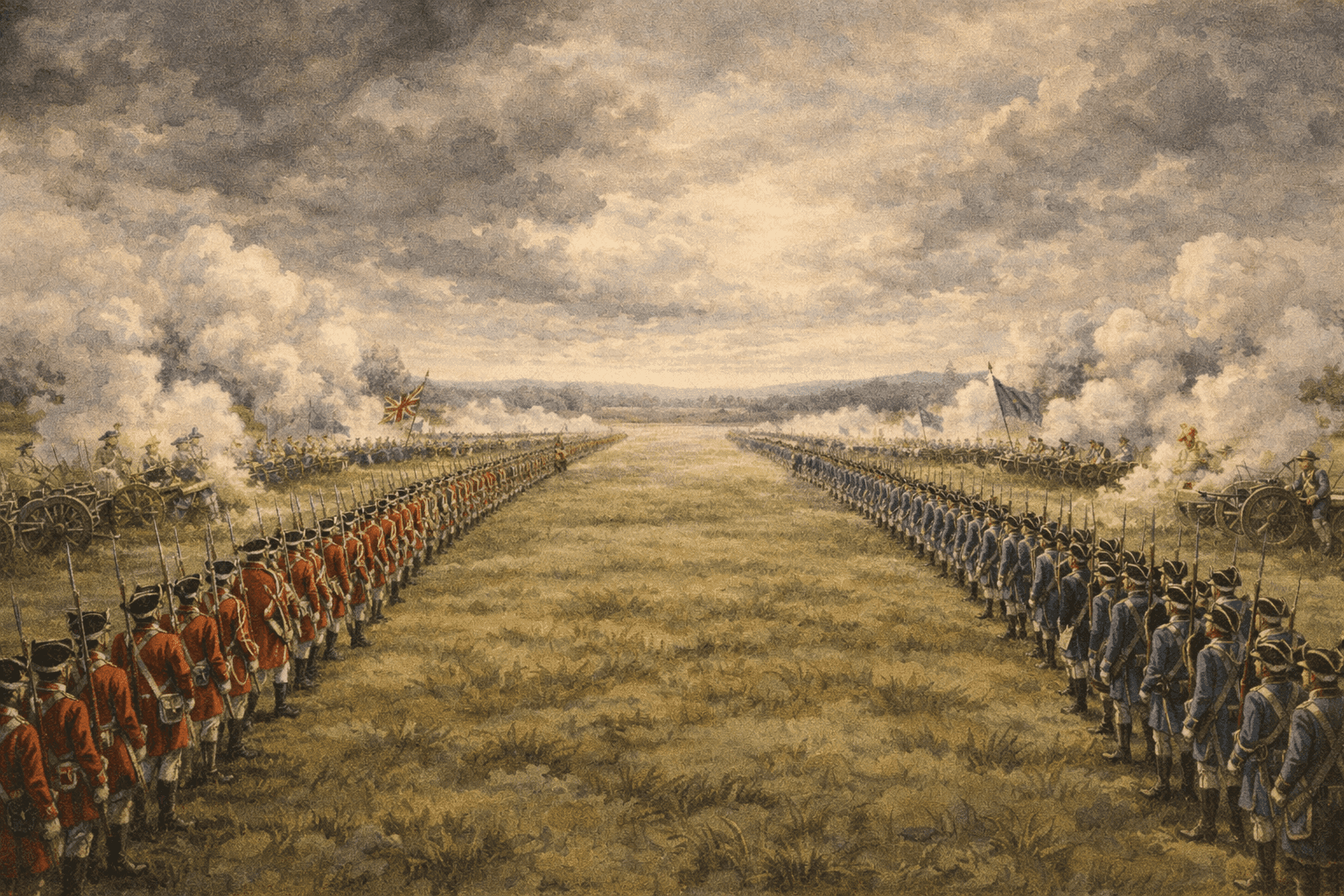
On May 15, 1756, Britain formally declared war on France, providing the official beginning of what historians would come to call the Seven Years' War — though the fighting had already been underway for two years in North America, where British and French colonial forces and their respective Indigenous allies had been clashing along the frontier in a conflict the colonists called the French and Indian War. The formal declaration transformed a set of regional disputes into a global conflict of extraordinary scope: before it was over, the war would be fought in Europe, North America, the Caribbean, West Africa, India, and the Philippines — involving not just Britain and France but Prussia, Austria, Russia, Spain, Portugal, Sweden, and the Iroquois Confederacy, among others. Winston Churchill, with characteristic flair, later called it the first world war — a designation that has gained currency among historians who note that no previous conflict had simultaneously engaged belligerents on so many continents.
The Treaty of Paris that ended the war in 1763 produced a geopolitical reshuffling of staggering consequence. Britain emerged as the dominant colonial power in North America, acquiring Canada from France and Florida from Spain, and established its supremacy in India — laying the foundation for the British Empire that would come to govern a quarter of the world's population by the nineteenth century. France was effectively expelled from the North American mainland. The American colonies, which had fought alongside British regulars and learned something about their own military capacity in the process, found themselves in 1763 in a very different relationship with their imperial parent — and twelve years later, in a revolution. The Seven Years' War is not a conflict that most Americans learn about in detail, but the world it produced — the Anglophone dominance of North America, the decline of French imperial ambition, the rise of Britain as the preeminent global power — is the world from which the United States emerged.
Prague to Foggy Bottom
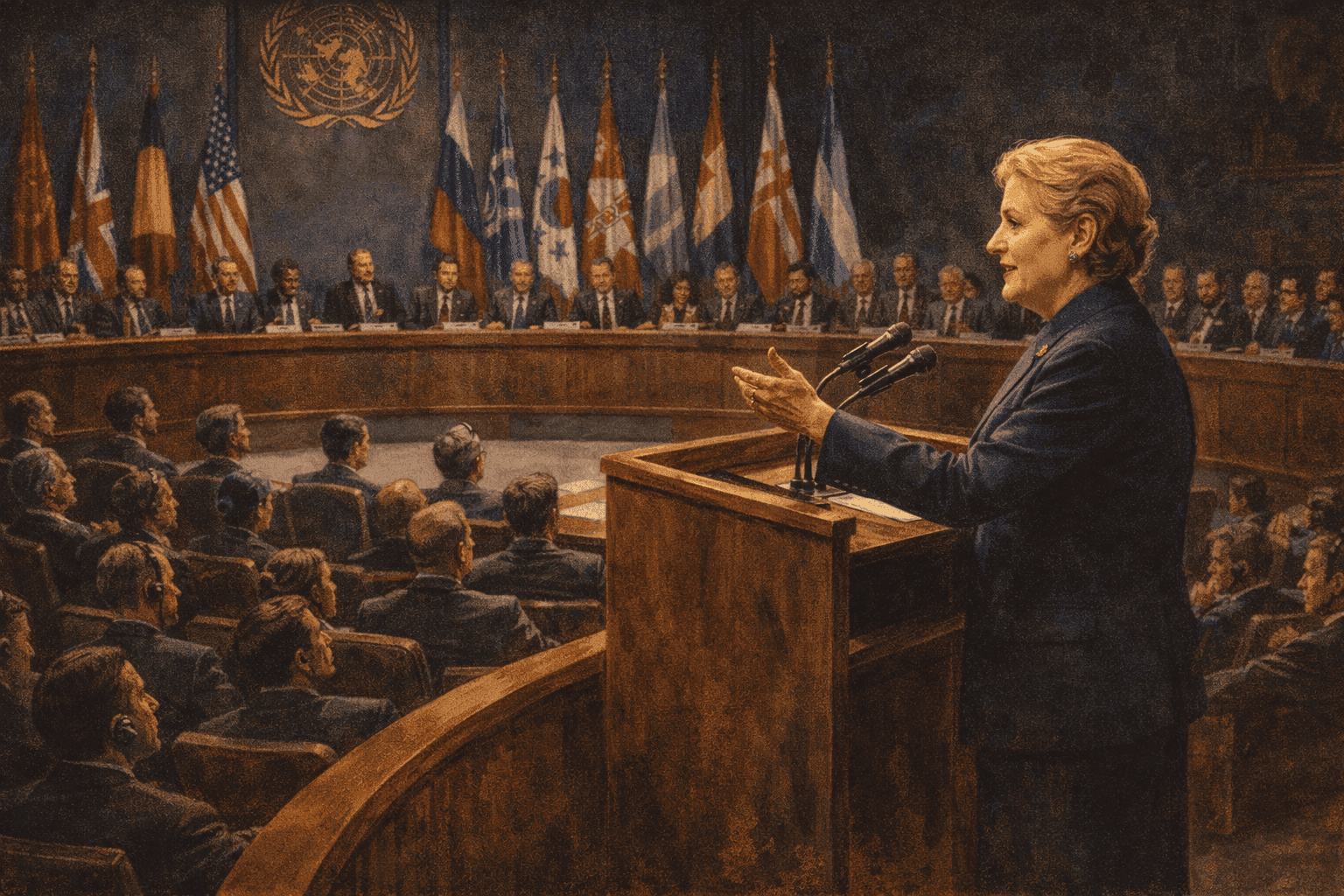
On May 15, 1937, Marie Jana Körbelová was born in Prague, Czechoslovakia, the daughter of a Czech diplomat whose distinguished career would be interrupted, first by the Nazi occupation and then by the Communist coup of 1948 — prompting the family to flee to the West and eventually settle in the United States, where the girl who had been born in Prague and grown up in England would become Madeleine Albright. She studied, married, raised three daughters, earned a doctorate from Columbia University, and built an academic and policy career that brought her, in 1993, to the position of U.S. Ambassador to the United Nations. In 1997, President Bill Clinton nominated her as Secretary of State — making her the first woman ever to hold that office and, at the time, the highest-ranking woman in the history of the United States government. The Senate confirmed her 99-0.
Albright's tenure as Secretary of State from 1997 to 2001 coincided with some of the most complex international challenges of the post-Cold War era: the NATO intervention in Kosovo, the expansion of the alliance to include former Eastern Bloc nations, the negotiations surrounding the Israeli-Palestinian conflict, and the management of relationships with a Russia and China whose trajectories were still uncertain. She was a forceful advocate for American engagement in the world and for the protection of civilians in conflict — her response to the Rwandan genocide, which she acknowledged the United States had failed to prevent during her time at the UN, was among the defining moral experiences of her career and informed her subsequent thinking about the obligations of powerful states toward civilian populations. She was awarded the Presidential Medal of Freedom in 2012. She died in March 2022. The path from a refugee family fleeing Communism in 1948 to the office of Secretary of State is not one that announces itself in advance — but the woman who walked it made it look, in retrospect, like the only direction she was ever headed.
A Book of Ration Stamps
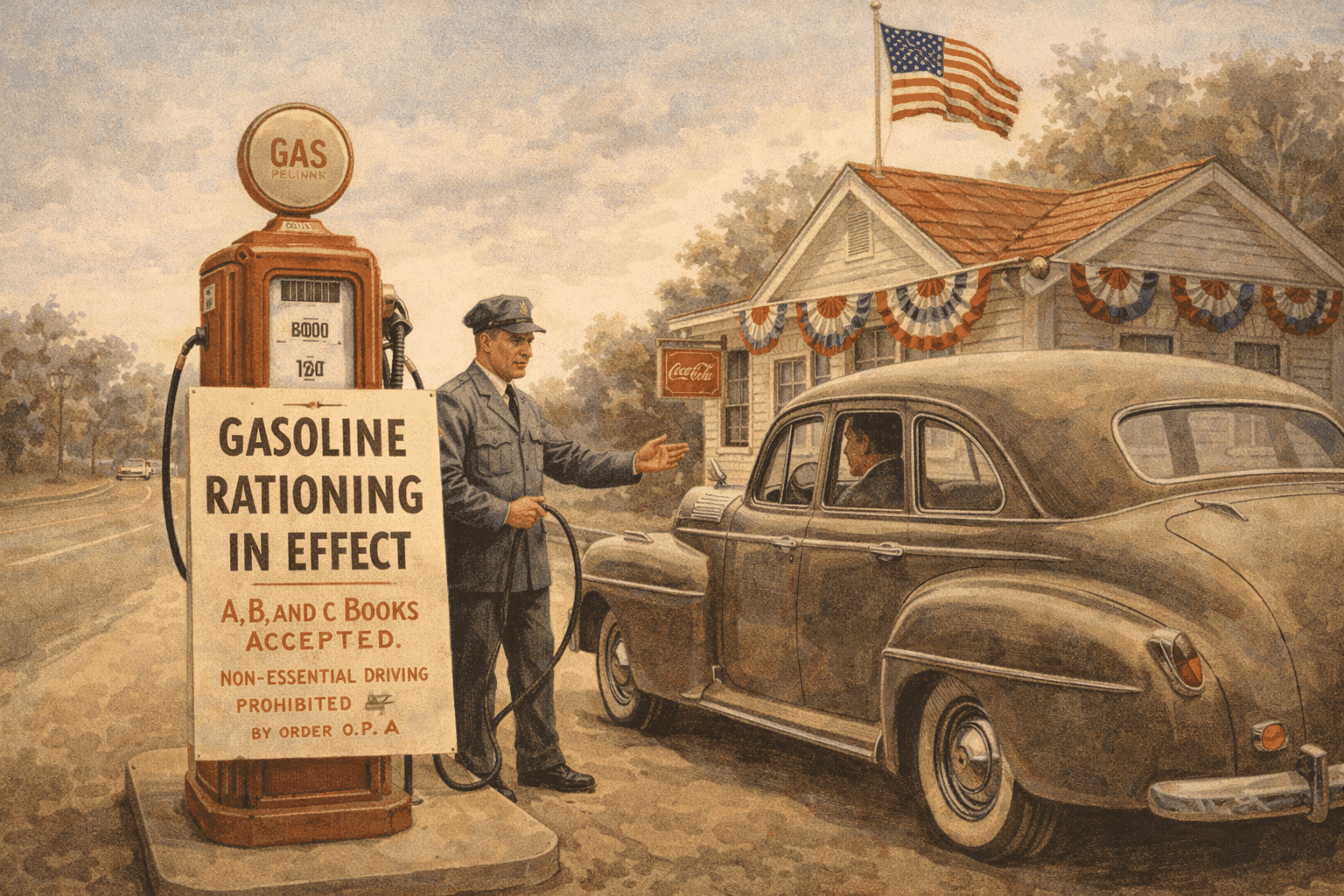
On May 15, 1942, gasoline rationing went into effect in seventeen Eastern states, beginning a home front mobilization that would eventually extend across the country and encompass not just fuel but sugar, meat, butter, canned goods, shoes, and rubber — nearly every commodity whose production and distribution had been redirected toward the war effort. The rationing system required American civilians to register with local ration boards, receive ration books filled with stamps, and surrender the appropriate number of stamps alongside payment whenever they purchased restricted goods. Motorists were classified by necessity: Class A drivers, who used their cars for personal convenience, received the smallest fuel allotment — initially three gallons per week, later reduced to two. Essential workers, farmers, and those with documented needs received more. The system was not universally embraced; a black market in ration stamps emerged, and compliance was uneven. But the broad acceptance of rationing by the American public was nonetheless remarkable.
The home front mobilization of World War II represents one of the most complete redirections of a civilian economy in American history. The federal government's War Production Board converted automobile factories to tank and aircraft production, redirected steel and aluminum from consumer goods to military hardware, and coordinated the output of an economy that — only three years after the depths of the Great Depression — was now being asked to out-produce the industrial capacity of Germany and Japan simultaneously. The rationing that began with gasoline on May 15, 1942, was the demand-side complement to that supply-side transformation: an ask directed not at factories but at individuals, at the woman who adjusted her recipe when butter was scarce and the family that combined errands into a single weekly drive to preserve their fuel stamps. The war was won by soldiers; it was sustained by the accumulated small sacrifices of people who accepted, without being drafted, that the war was also theirs to fight.