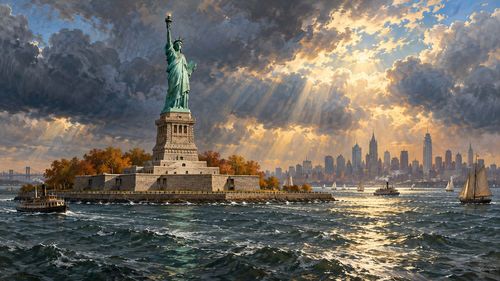
May 14: The Experiment That Ended Smallpox, Into the Unknown West, The Chairman Checks Out
Some days in history belong to the explorers — not necessarily the ones with maps and compasses, though those are here too, but the ones who push past the boundary of what is known into what might be. On May 14, three very different acts of exploration left permanent marks: a country physician in Gloucestershire tested a hunch about cowpox and smallpox on a garden boy and launched the science of vaccination; an expedition carrying the ambitions of a young republic set out from St. Louis up the Missouri River and into a continent that most Americans had never seen; and a man whose voice had shaped the American century for five decades departed it, leaving behind a catalog of recordings that anyone with a reason to feel something could find a use for. Three explorers — of disease, of geography, and of the territory between a lyric and a listener's heart.
The Boy in the Garden
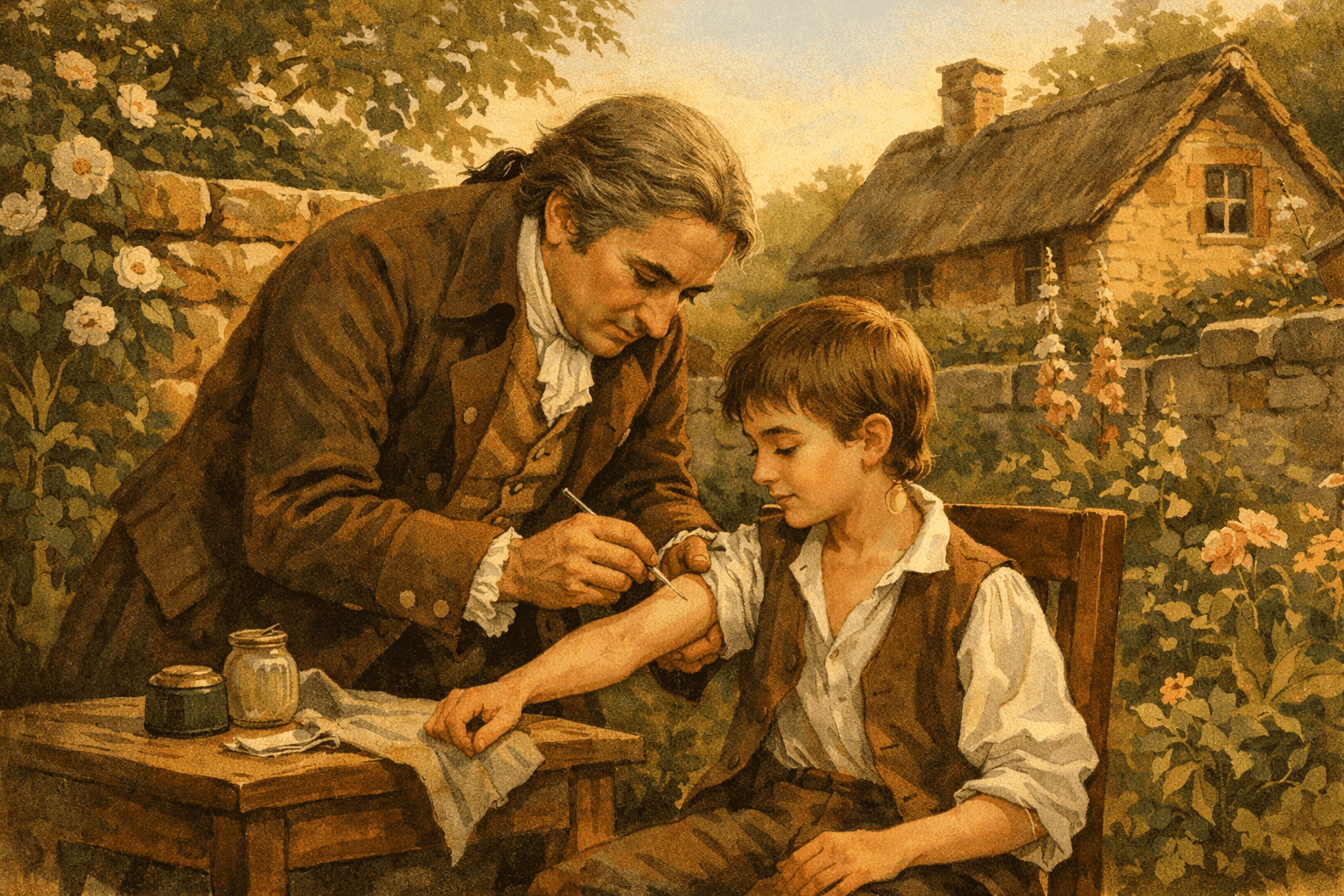
On May 14, 1796, Edward Jenner — a country physician practicing in Berkeley, Gloucestershire — took material from a cowpox pustule on the hand of a milkmaid named Sarah Nelmes and inoculated it into two small cuts on the arm of James Phipps, the eight-year-old son of his gardener. Phipps developed a mild fever and some local irritation, recovered within days, and was then deliberately exposed to smallpox. He did not develop the disease. Jenner repeated the test and the result held. The logic behind the experiment had been suggested to him by rural folklore — milkmaids who contracted cowpox, a mild bovine disease, were widely observed to be immune to smallpox, one of the most lethal infectious diseases in human history. Jenner's contribution was to test the observation systematically, document the results, and understand what they implied: that the human immune system could be educated, in advance, to resist a disease it had not yet encountered.
The word "vaccination" comes from vacca, the Latin for cow — a tribute to the animal whose disease Jenner had pressed into the service of human survival. The principle he established on May 14, 1796, in a garden in Gloucestershire, is the same principle that underlies every vaccine ever developed: expose the immune system to a controlled version of a threat so that it learns to recognize and defeat the real thing. Smallpox itself was declared eradicated by the World Health Organization in 1980 — the first and, as of this writing, only human infectious disease to be driven to extinction — a public health achievement made possible directly by the vaccination campaigns that Jenner's experiment initiated. In the intervening 184 years between Jenner's garden and the WHO's declaration, an estimated 300 million people died of smallpox. That number would have been incomparably larger without the eight-year-old boy who sat still while a country doctor made two small cuts in his arm and changed the history of medicine.
The Corps of Discovery
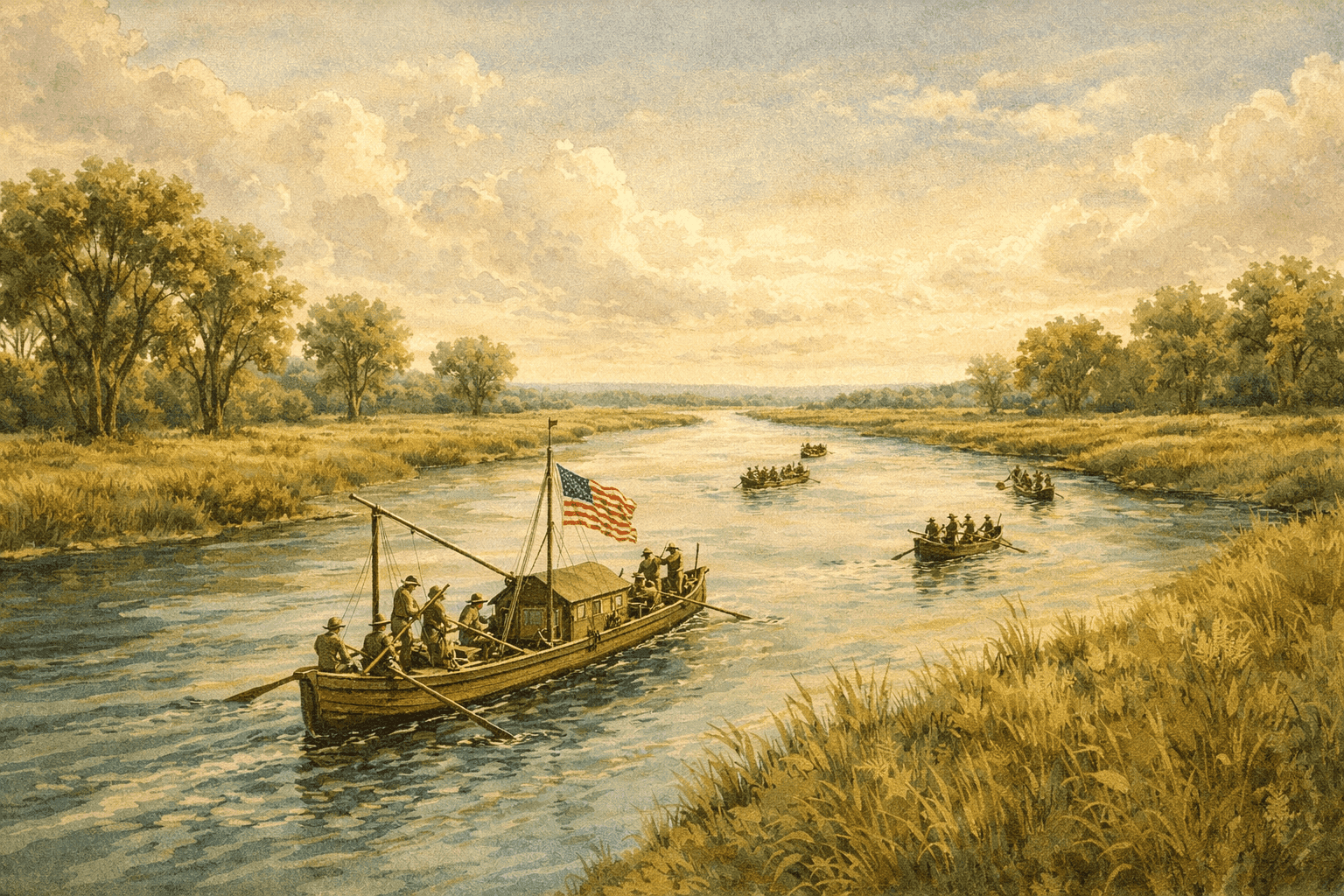
On May 14, 1804, the Corps of Discovery — a party of approximately forty-five men under the command of Captain Meriwether Lewis and Second Lieutenant William Clark — departed Camp Dubois near St. Louis and began moving up the Missouri River into a continent that the United States had purchased from France the previous year but had almost no practical knowledge of. Thomas Jefferson's instructions to Lewis were extraordinarily comprehensive: map the river systems, catalog the flora and fauna, document the Indigenous nations encountered, find a practical route to the Pacific, and assert American presence in a territory that Britain, Spain, and Russia all had competing interests in. Lewis had spent months in Washington preparing — studying botany, medicine, astronomy, and celestial navigation — and had recruited Clark, his old army colleague, as co-commander of the expedition. The men they assembled were soldiers, woodsmen, and hunters; the route they were about to travel had never been mapped by European or American hands.
The journey lasted two years, four months, and ten days. The Corps crossed the Great Plains, traversed the Rocky Mountains with the crucial assistance of the Shoshone guide Sacagawea, descended the Columbia River, and reached the Pacific coast in November 1805 before returning to St. Louis in September 1806. They documented more than 170 plant species and 122 animal species previously unknown to science, produced the first detailed maps of the American interior, and established diplomatic contact with dozens of Indigenous nations — contact that was, in many cases, the first step in the displacement and dispossession that followed American settlement. The expedition's journals, published in 1814, gave Americans their first detailed picture of the continent they claimed, and the route Lewis and Clark traveled became the template for the westward expansion that would, over the next half century, fill the territory the Louisiana Purchase had acquired. The two captains set out from St. Louis on May 14, 1804, with no certainty that they would return. They did, bearing a map that changed everything.
The Voice
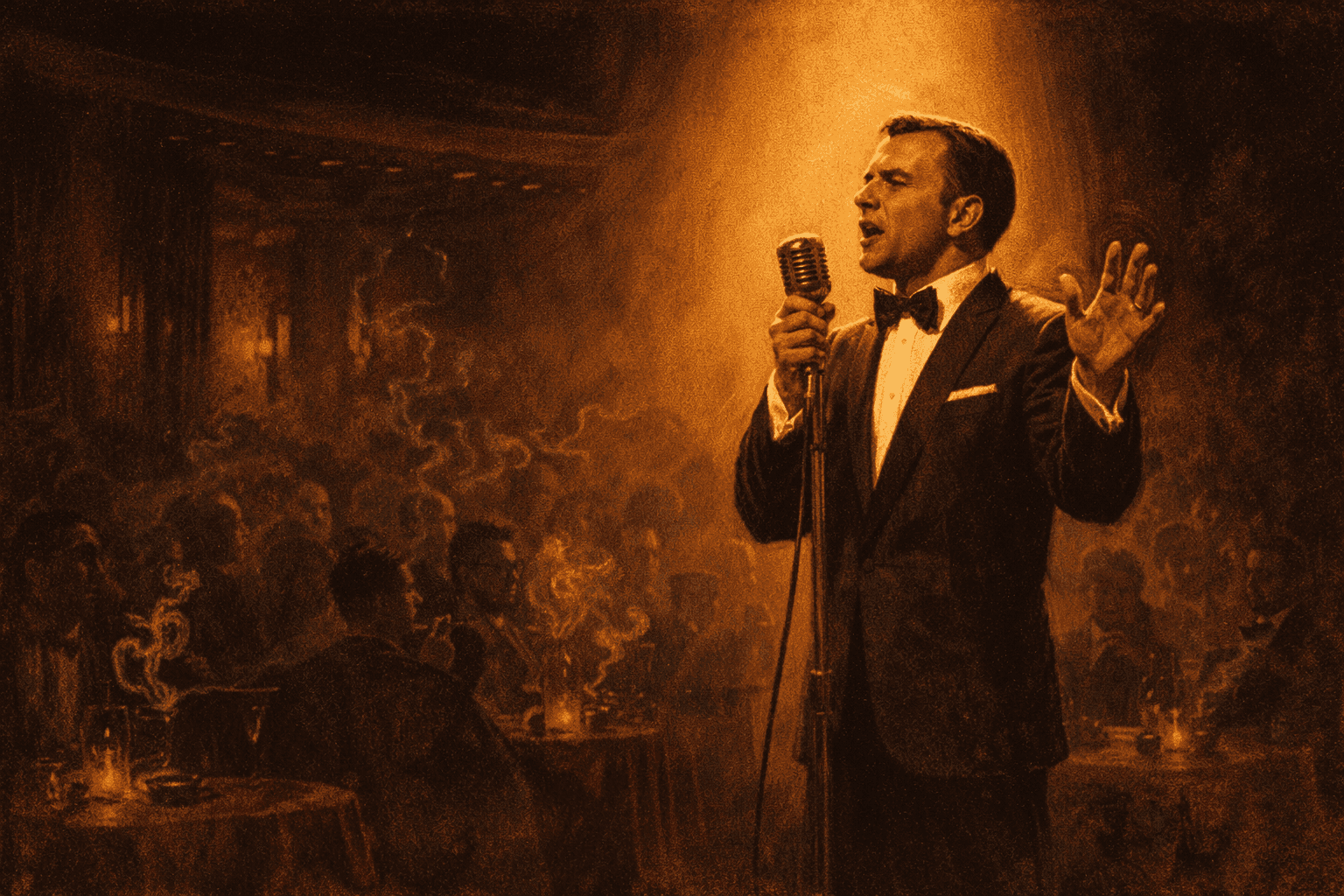
On May 14, 1998, Frank Sinatra died of a heart attack at Cedars-Sinai Medical Center in Los Angeles, at the age of eighty-two. He had been born Francis Albert Sinatra in Hoboken, New Jersey, in December 1915, the son of Italian immigrants, and had spent the intervening decades becoming one of the most recognizable and most debated figures in American entertainment. His career had three distinct peaks: the bobby-soxer era of the early 1940s, when he was the first pop star in the modern sense — mobbed by screaming teenagers, the object of a mass adulation that prefigured everything that came after; the creative renaissance of the mid-1950s, when a period of professional decline and personal crisis was reversed by a comeback that produced his finest work, including the albums In the Wee Small Hours, Songs for Swingin' Lovers!, and Come Fly with Me; and the Rat Pack years of the early 1960s, when he was simultaneously a nightclub entertainer, a film star, and a political operator whose friendship with John F. Kennedy briefly made Las Vegas the center of American cultural gravity.
What set Sinatra apart from his contemporaries — and from most of those who came after — was the combination of technical mastery and emotional transparency that his recordings achieve. He understood phrasing with a musician's precision, working the spaces between notes and the shapes of vowels with an intentionality that his arranger Nelson Riddle and conductor Gordon Jenkins helped him translate into some of the most finely crafted recordings in the history of popular song. And yet the technique never sounded like technique — it sounded like feeling, like a man telling you something he actually meant. Arranger Billy May once said that Sinatra made you believe everything he sang, which is the complete description of the gift. He won four Grammy Awards, an Academy Award, and the Presidential Medal of Freedom. He had mob connections, complicated politics, and a personal life that generated scandal for decades. He was, in the full and contradictory sense, a human being — and the recordings he left behind are the record of that humanity translated into music that has not aged a day.