May 13: A War for the Map, Nixon in the Crosshairs, The Pope and the Gunman
Power announces itself in different ways on different days. On May 13, across three separate centuries, it arrived as a congressional declaration that sent armies across the Rio Grande to take what American expansionists had already decided was theirs; as a mob in Caracas that surrounded a vice president's motorcade and told the hemisphere's most powerful nation, through shattered glass and clenched fists, exactly what it thought of its Cold War conduct; and as four gunshots in St. Peter's Square that struck a pope before the eyes of thousands and set in motion one of the most extraordinary acts of personal forgiveness the modern world has witnessed. Each story is, at its core, about the collision between what power claims and what the world refuses to simply accept.
Manifest Destiny's Bill Comes Due
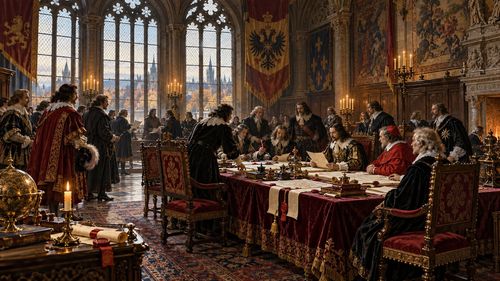
On May 13, 1846, the United States Congress declared war on Mexico, formalizing a conflict that President James K. Polk had been engineering for months. The immediate pretext was a skirmish in the disputed territory between the Rio Grande and the Nueces River, where Polk had provocatively stationed American troops on ground that Mexico considered its own — and where Mexican forces had attacked them in late April, killing eleven Americans. "American blood has been shed on American soil," Polk told Congress, in a phrase that critics at the time, including a freshman Illinois congressman named Abraham Lincoln, challenged as a deliberate misrepresentation of where the bloodshed had actually occurred. Congress voted for war anyway, 174 to 14 in the House, overwhelmingly in the Senate. The real aim was territorial: California, New Mexico, and the vast lands between — a quarter of Mexico's national territory — that American expansionists had been eyeing for years under the banner of Manifest Destiny.
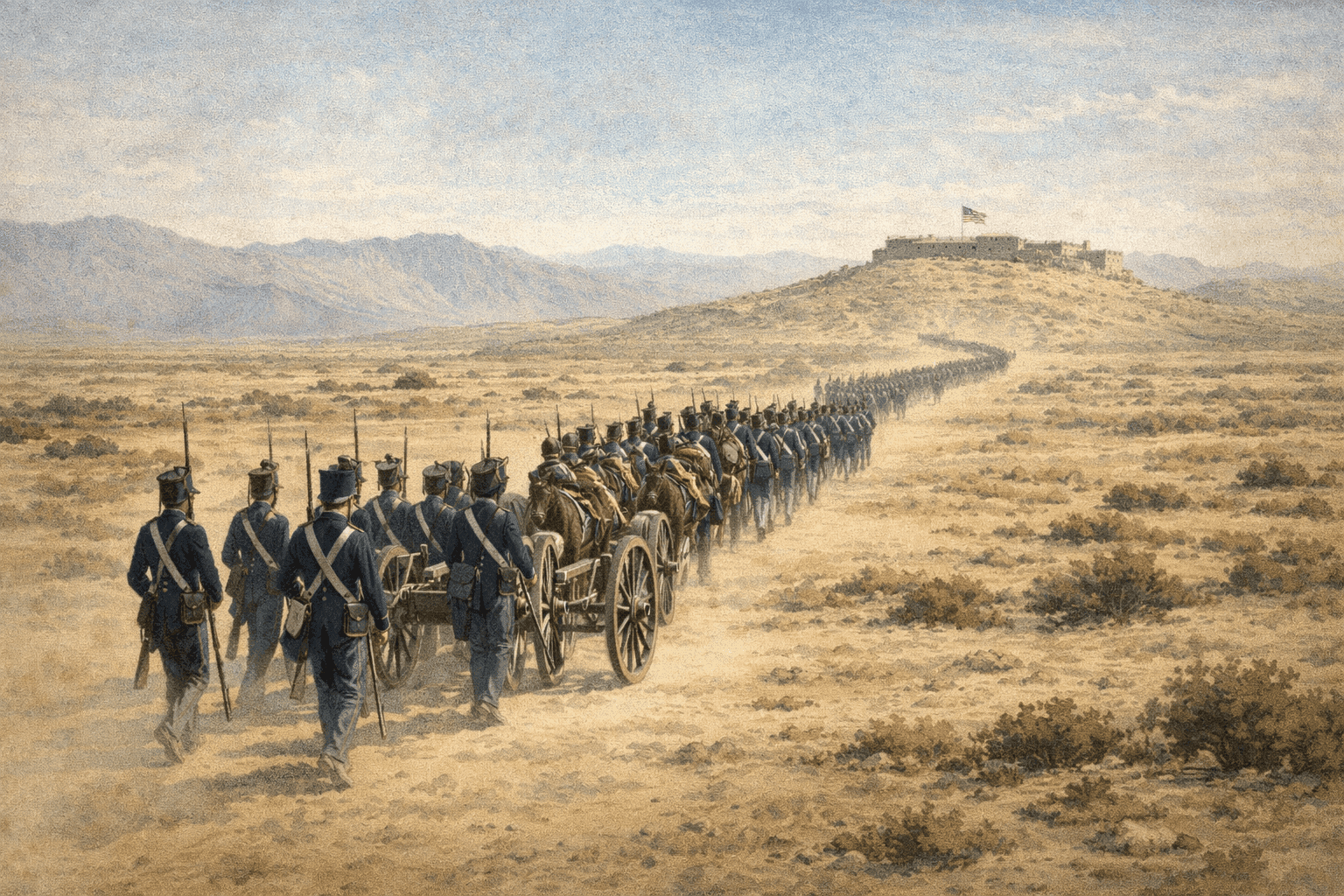
The war lasted two years. American forces under Generals Zachary Taylor and Winfield Scott invaded northern Mexico and eventually marched to Mexico City itself, capturing the capital in September 1847. The Treaty of Guadalupe Hidalgo, signed in February 1848, transferred to the United States what is now California, Nevada, Utah, most of Arizona and New Mexico, and portions of Colorado and Wyoming — roughly 525,000 square miles — in exchange for $15 million and the assumption of $3.25 million in claims American citizens held against Mexico. The United States got the Pacific coast and the land connection to its western territories. Mexico lost nearly half of its national territory. Ulysses S. Grant, who served in the war as a young officer, later called it "one of the most unjust wars ever waged by a stronger against a weaker nation." The map that resulted from it is the map of the American Southwest that exists today. The war that produced it has never been as central to American historical memory as its consequences deserve.
Caracas, 1958
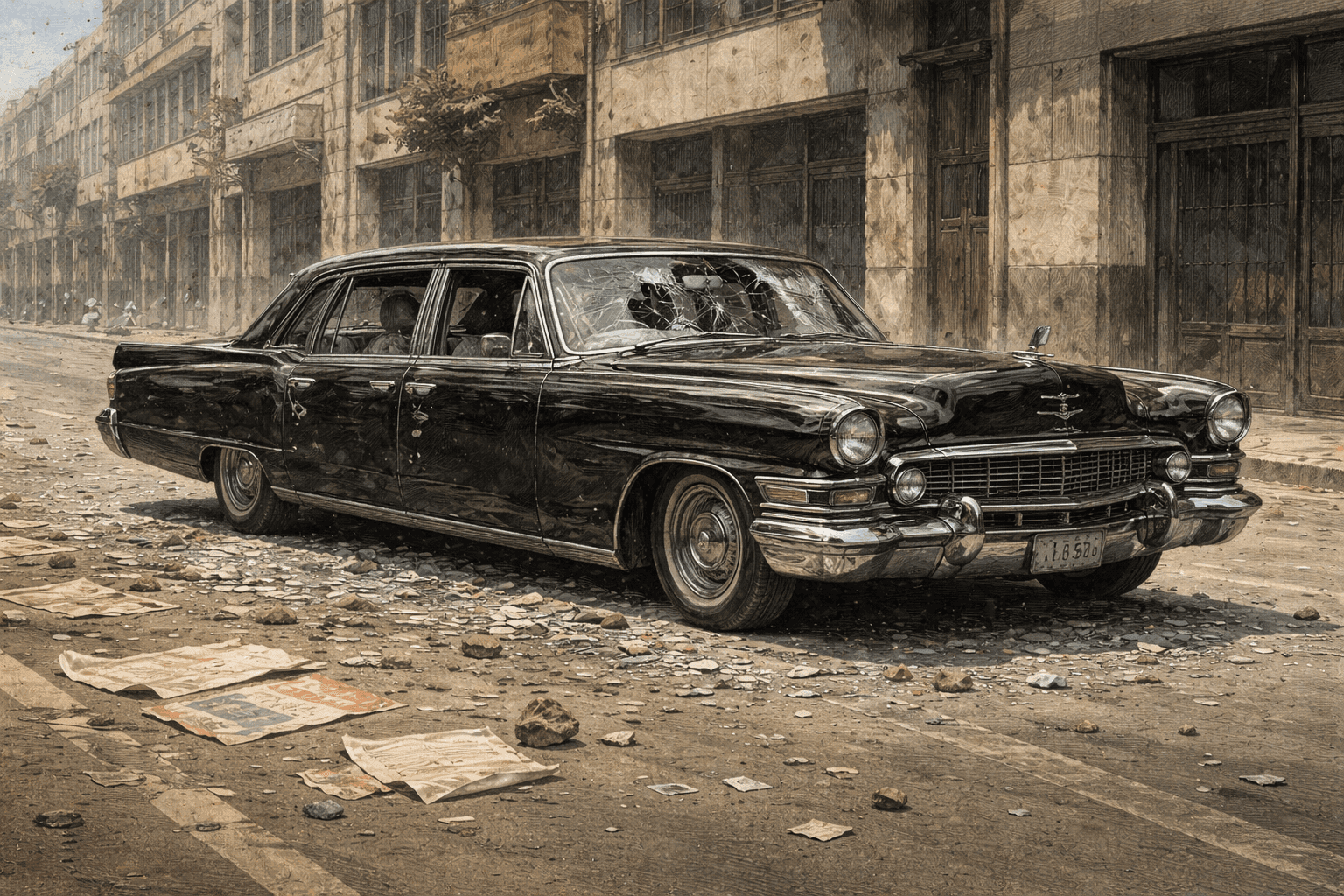
On May 13, 1958, Vice President Richard Nixon's motorcade was surrounded and attacked by a hostile crowd in Caracas, Venezuela, during what had been planned as a goodwill tour of Latin America. The violence — which included protesters spitting on Nixon's car, smashing its windows with pipes and rocks, and rocking the vehicle in an apparent attempt to overturn it — was the culmination of weeks of anti-American demonstrations that had greeted Nixon at stops across the continent. In Peru, students had pelted him with eggs and rocks. In other capitals, protestors had burned American flags. Venezuela, which had just emerged from a decade of right-wing military dictatorship supported by the United States, was particularly volatile; the crowds that surrounded Nixon's motorcade included participants who, by the accounts of American Secret Service agents present, came close to causing serious harm before Venezuelan military vehicles managed to clear a path. Nixon was shaken but physically uninjured.
The Caracas incident was a foreign policy embarrassment and something more: a vivid, televised illustration of the gap between America's self-image as a benevolent hemispheric leader and the reality of its conduct in Latin America. The Eisenhower administration had supported authoritarian governments across the region in the name of anti-communism, backed the 1954 CIA-orchestrated coup that overthrew Guatemala's elected government, and maintained close relationships with dictators whose brutality toward their own populations generated exactly the resentments that the Caracas crowds expressed. The episode prompted the Eisenhower administration to undertake a reassessment of its Latin American policy and contributed to the broader debate that eventually led, under Kennedy, to the Alliance for Progress — an attempt to address the economic and political conditions that produced anti-American sentiment, at least in part. Nixon wrote about the experience in his 1962 memoir Six Crises, treating it as a test of personal courage under pressure. The Latin Americans who threw the stones had their own account of what the crisis was about.
I Forgive You
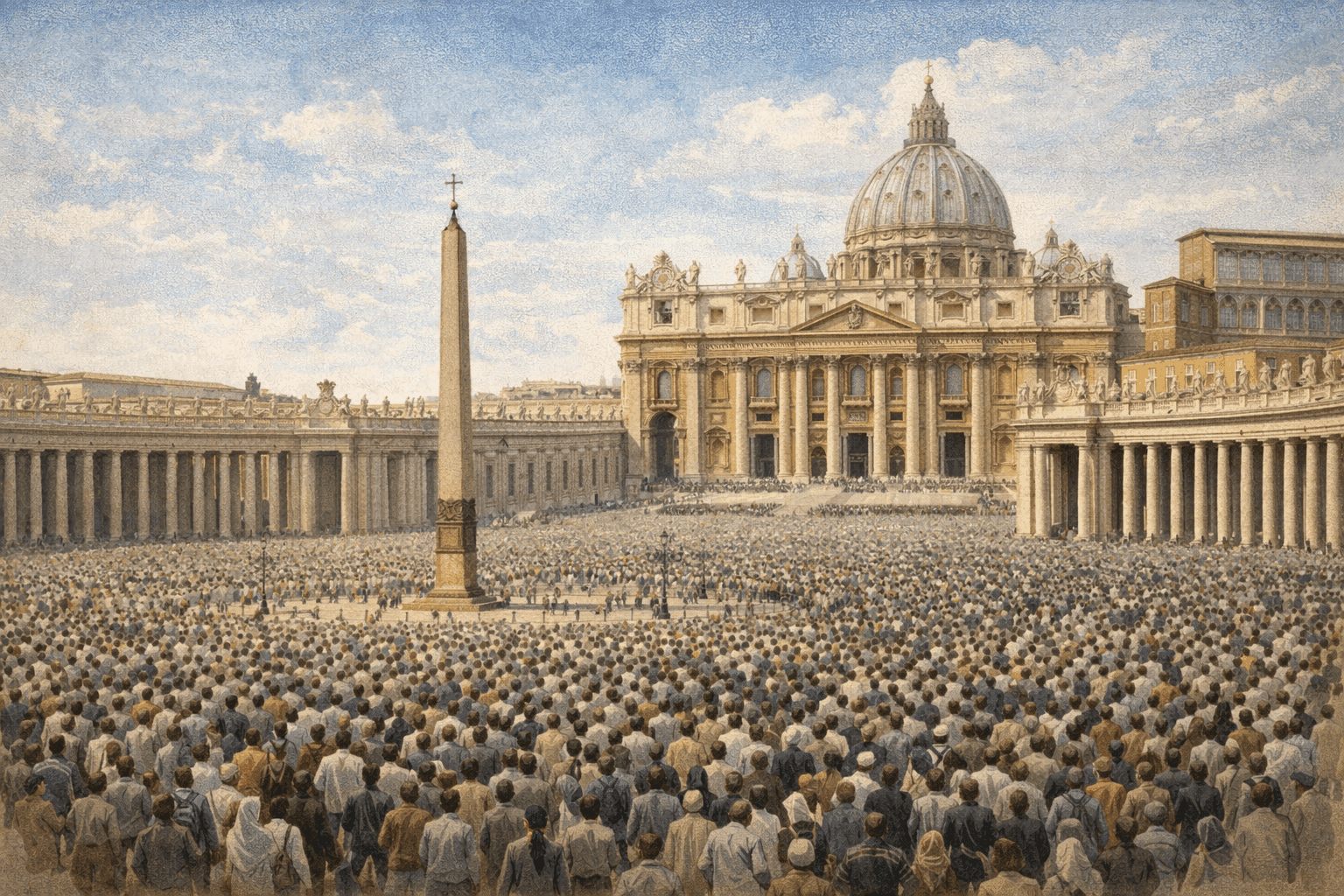
On May 13, 1981 — the feast day of Our Lady of Fátima, a coincidence that John Paul II would later regard as deeply significant — the pope was standing in his open vehicle in St. Peter's Square, greeting the crowd of thousands gathered for his weekly general audience, when a twenty-three-year-old Turkish gunman named Mehmet Ali Ağca fired four shots at him from a distance of approximately fifteen feet. Two bullets struck the pope — one passing through his abdomen and the other wounding his hand and arm — and he collapsed into the arms of his secretary, Monsignor Stanisław Dziwisz, who held him as the car rushed to Gemelli Hospital. John Paul II lost nearly three-quarters of his blood volume before surgeons stabilized him in nearly six hours of surgery. He survived, though the bullet that passed through his abdomen narrowly missed his aorta, and the attending surgeon later said that had it struck a centimeter differently, the pope would have died in the square.
Ağca was captured immediately and eventually sentenced to life imprisonment in Italy. He had been a member of a Turkish ultranationalist group and had previously been convicted of murder in Turkey, from which he had escaped. The question of who, if anyone, had directed the assassination attempt — Italian investigators pursued a theory of Soviet and Bulgarian intelligence involvement that was never conclusively proven — has never been fully resolved. What John Paul II did with the experience, however, was unambiguous. On December 27, 1983, he visited Ağca in his Rome prison cell, spoke with him privately for twenty minutes, and publicly forgave him — a gesture that Ağca himself described as bewildering and that the watching world found either deeply moving or deeply strange, depending on their relationship to the theology behind it. The pope attributed his survival to divine intervention through Our Lady of Fátima and donated the bullet removed from his body to the Fátima shrine in Portugal. He went on to lead the Catholic Church for twenty-four more years. The forgiveness he extended in that prison cell has outlasted the geopolitical theories about who sent the gunman.