May 12: The Crime That Shook a Nation, The Race That Ended Forever, The Song They Wouldn't Let Him Sing
May 12 is a date that asks us to sit with difficult things — the discovery that confirms what everyone feared, the crash that ends something beloved and leaves fourteen people dead, and the walk offstage that a twenty-one-year-old musician took when a television network told him what he was and was not allowed to say. These are not stories that resolve neatly. They carry within them the specific weight of loss — of a child, of a tradition, of a song that was never performed on national television — and the harder work of understanding what each loss meant and what it changed. On this date, history delivered its verdicts without softening them.
The Lindbergh Baby
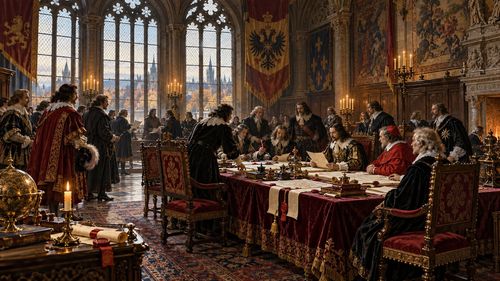
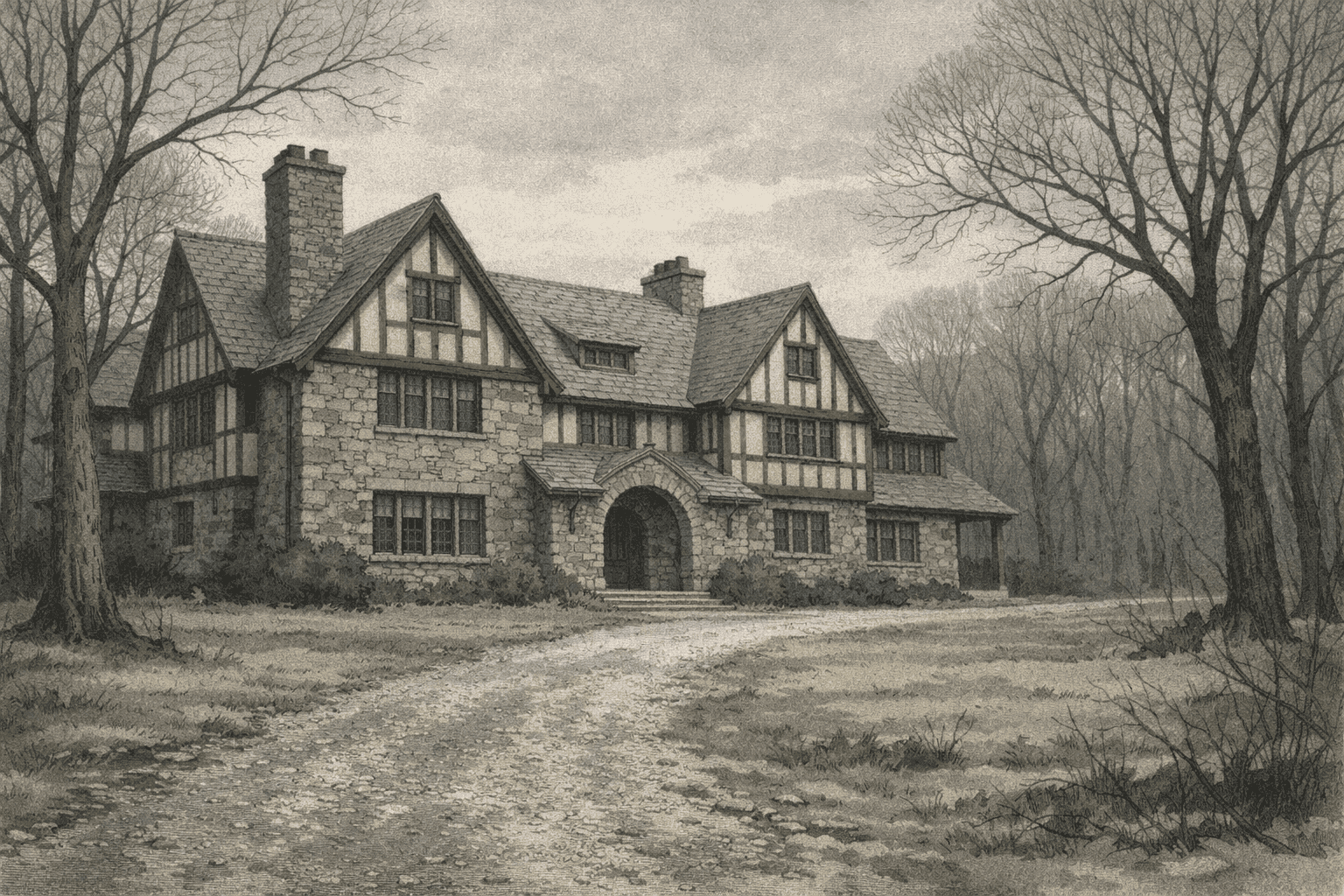
On May 12, 1932, a truck driver named William Allen discovered the partial remains of a small child in a shallow grave in a wooded area near Hopewell, New Jersey — just four and a half miles from the Lindbergh estate where twenty-month-old Charles Augustus Lindbergh Jr. had been taken from his crib on the night of March 1. The discovery ended seventy-two days of frantic investigation, false leads, ransom negotiations, and public hope that had gripped not just the United States but much of the world. Charles Lindbergh Sr., whose 1927 solo transatlantic flight had made him the most celebrated American of his generation, had already paid $50,000 in ransom through a go-between to a figure who signed his notes with an interlocking circle-and-hole symbol. The child had been dead, investigators determined, since the night of the kidnapping — killed, it appeared, by a blow to the head, possibly during the abduction itself. The money had been paid for a boy who was already gone.
The investigation that followed was one of the most intensive in American history. In 1934, a German immigrant carpenter named Bruno Richard Hauptmann was arrested after spending some of the ransom gold certificates — bills whose serial numbers had been recorded. He was tried in what the press called "the trial of the century," convicted of murder, and executed in 1936. He maintained his innocence to the end, and the case has generated more than eighty years of forensic re-examination, alternative theories, and persistent doubt — though the consensus of historians and criminologists has generally held the conviction to be sound. The Lindbergh kidnapping's legacy extended beyond the case itself: the federal kidnapping statute — the Lindbergh Law — was passed in 1932 and made kidnapping across state lines a federal crime punishable by death, transforming how the United States treated abduction as a criminal matter. None of that gave the Lindberghs back what they lost on March 1, or what was confirmed on May 12.
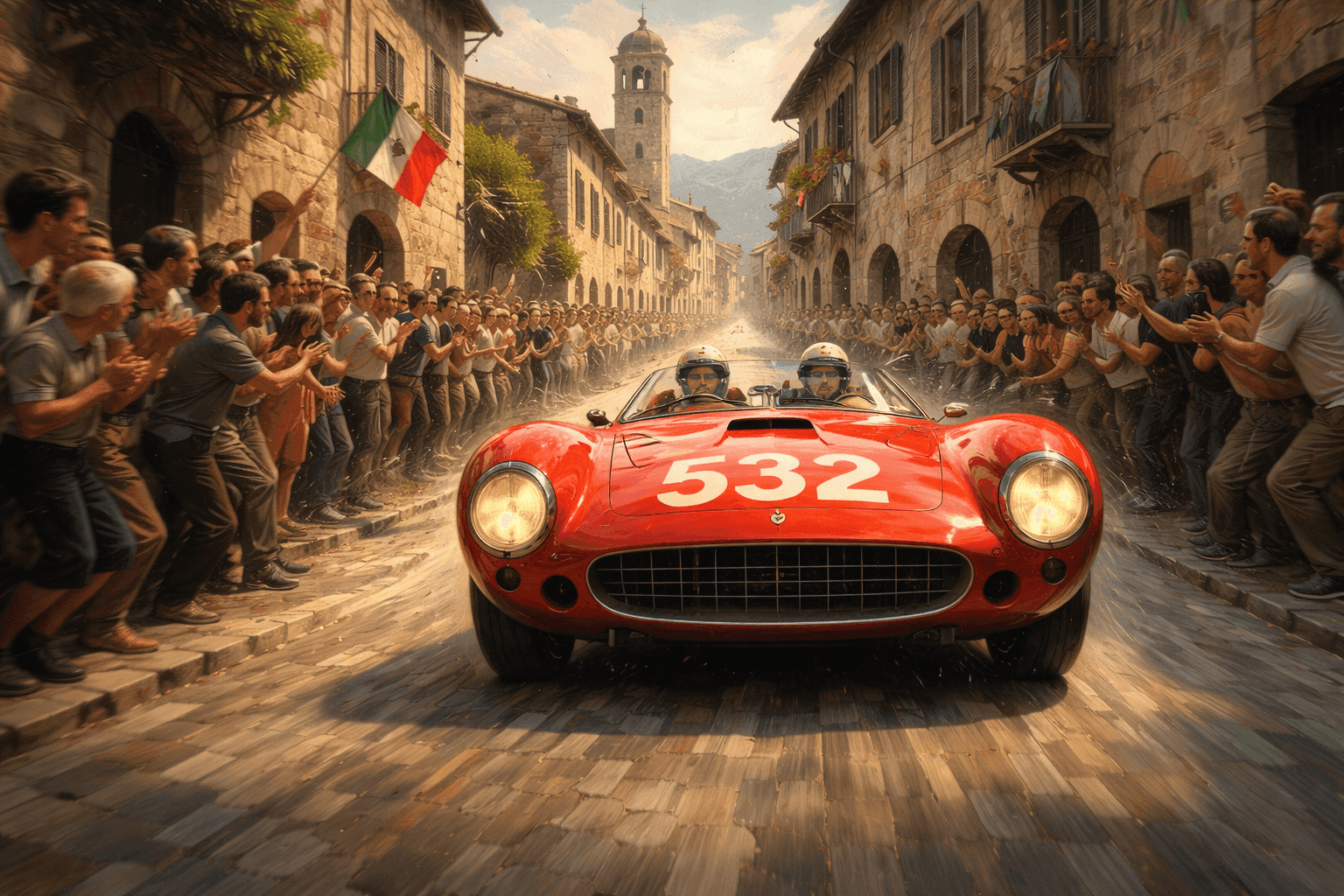
The Last Mille Miglia
On May 12, 1957, during the running of the Mille Miglia — the legendary Italian open-road race that had been held annually since 1927, covering approximately a thousand miles of public roads through the Italian countryside from Brescia to Rome and back — a Ferrari 335 Sport driven by the Marquis Alfonso de Portago suffered a tire failure at high speed near the village of Guidizzolo, in the province of Mantua. The car left the road and plunged into a group of spectators who had gathered, as they always did along the Mille Miglia route, with no barrier between them and the cars traveling at racing speeds. De Portago and his American co-driver Edmund Nelson were killed. Eleven spectators died, among them five children. The crash was not the first fatality in the race's history — the Mille Miglia had always been dangerous, and deaths among both competitors and bystanders had occurred before — but it was the one that could not be absorbed.
The Italian government banned the race following the 1957 crash. Enzo Ferrari faced criminal charges of manslaughter and culpable negligence — charges that were eventually dismissed — and the scrutiny of the disaster forced a fundamental reckoning with the premise that had sustained open-road racing since its origins: that public roads could be made safe enough, for a few hours, to serve as a racing circuit. They could not. The Mille Miglia as a competitive event never ran again. In its place, beginning in 1977, an annual commemorative event called the Mille Miglia Storica has been held — a parade of vintage cars following the historic route at legal speeds, celebrating the race's glory while acknowledging the cost at which that glory had come. The victims of the 1957 crash are not often named in the celebrations. They should be remembered alongside the trophies.
Not for Broadcast
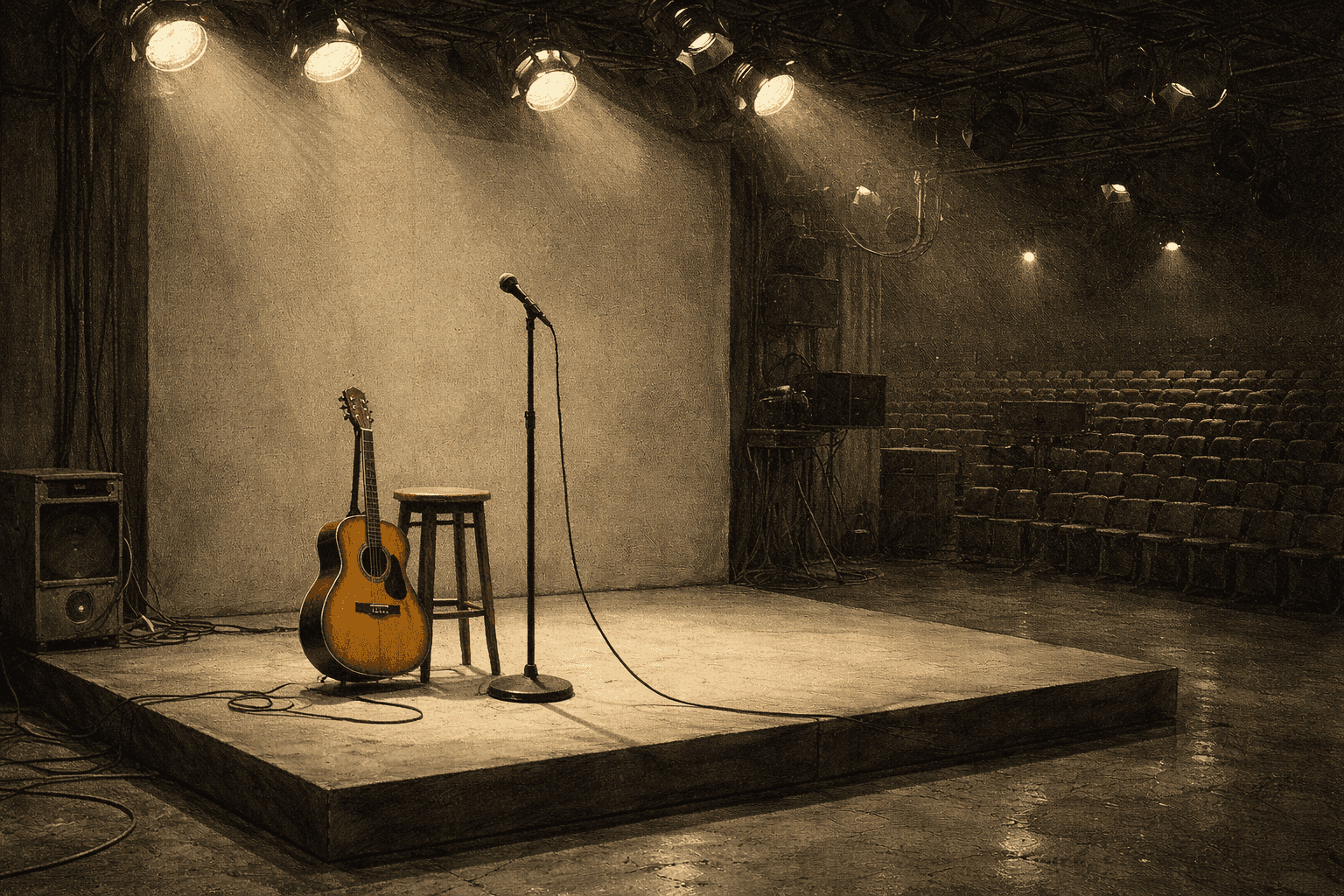
On May 12, 1963, twenty-one-year-old Bob Dylan arrived at the CBS television studio in New York City for a scheduled appearance on The Ed Sullivan Show — then the most watched variety program in America and a platform that had launched or confirmed the careers of nearly every major performer of the postwar era. Dylan intended to perform "Talkin' John Birch Paranoid Blues," a sardonic talking-blues composition that lampooned the far-right John Birch Society and, by extension, the anti-communist paranoia that had defined the McCarthy era and its aftermath. CBS program standards executives reviewed the song before the broadcast and told Dylan he could not perform it — the network was concerned about potential defamation liability from the John Birch Society. They offered him the opportunity to perform a different song. Dylan declined, packed up his guitar, and walked out of the building.
The walkout made news, and the song — which Dylan had already recorded for his second album, The Freewheelin' Bob Dylan, before Columbia Records also withdrew it from that release under similar concerns — became one of the more famous unperformed songs in American music history. The irony was not subtle: a song about irrational censorship had been censored, which made its point more effectively than any television performance could have. Dylan was, in May 1963, still at the beginning of his career — his debut album had been released only a year earlier — but the Sullivan walkout established something about the way he would operate for the rest of it: that the song came first, that compromise on content was not available, and that any platform willing to air him only on its own terms was a platform he could do without. He went on to become the most celebrated songwriter of his generation and, in 2016, the first musician to receive the Nobel Prize in Literature. The song they wouldn't let him sing was eventually released on the bootleg market and is widely available today. It is very funny. It was never broadcast on The Ed Sullivan Show.