May 10: The Golden Spike, Churchill Takes the Wheel, A Partial Reckoning in Beijing
Leadership arrives in different forms on different May 10s: in the driving of a ceremonial spike into Utah ground, completing a railroad that stitched a continent into a nation; in the appointment of a sixty-five-year-old politician who had been warning of exactly this catastrophe for years and was finally being handed the tools to address it; and in the quiet release of 211 prisoners by a government that had imprisoned thousands, offering a gesture calibrated to satisfy international critics without acknowledging what it had done. Three kinds of historical action — monumental, defiant, and grudging — each one telling its own story about what leadership looks like when the stakes are highest, and what accountability looks like when a government would rather not provide it.
Where the Rails Met
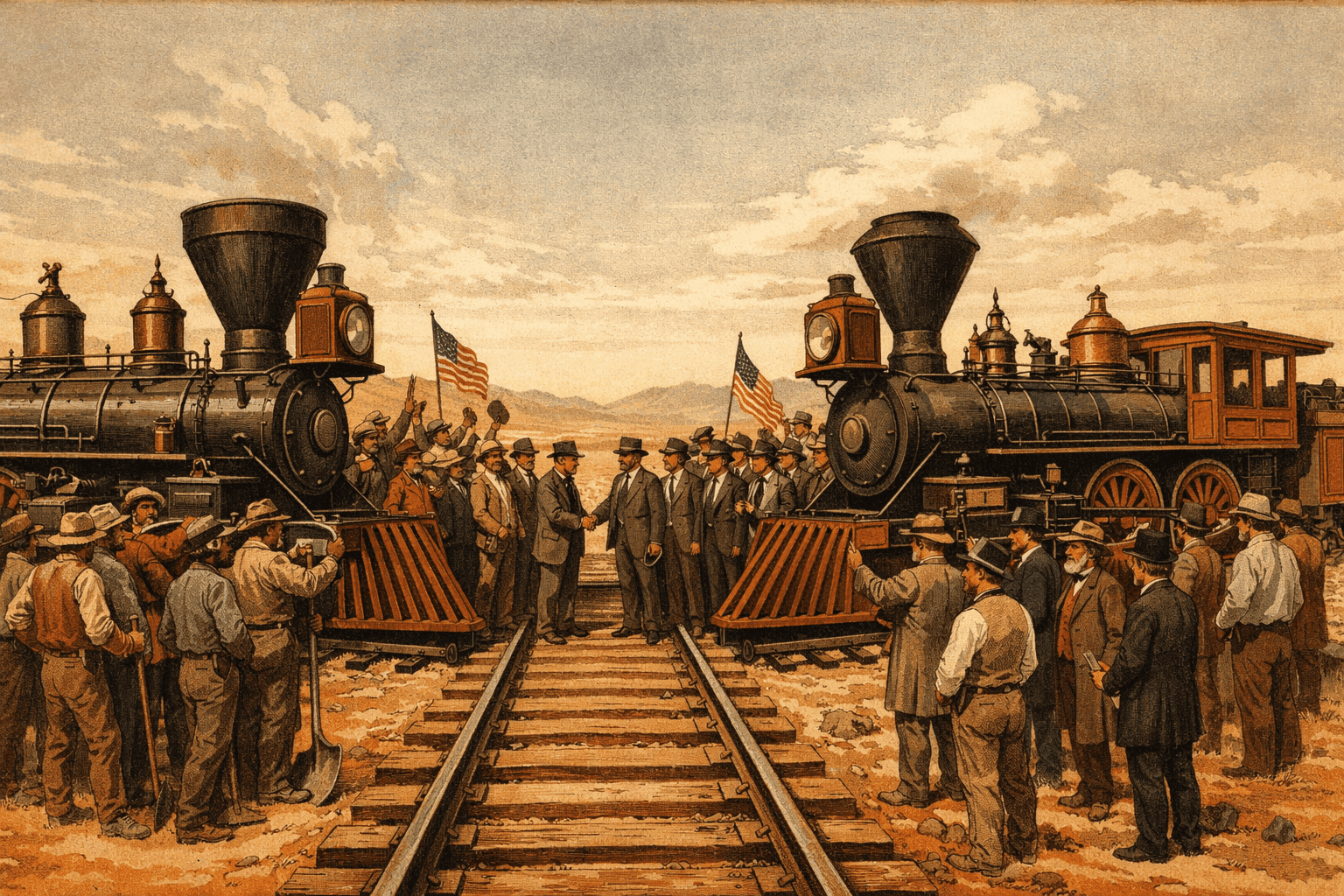
On May 10, 1869, at Promontory Summit in the Utah Territory, the last spike was driven into the last tie connecting the Central Pacific Railroad, building east from Sacramento, with the Union Pacific Railroad, building west from Council Bluffs, Iowa — completing the first transcontinental railroad in American history. The ceremonial spike was gold; it was connected by telegraph wire to the transcontinental line so that the blow of a hammer would transmit the signal to both coasts simultaneously. When the signal arrived, church bells rang in San Francisco, a hundred-gun salute was fired in New York, and crowds gathered around telegraph offices in cities across the country to receive news of an achievement that had taken six years, approximately twenty thousand laborers, and a degree of engineering ambition that most people had considered reckless when the project began. The workforce that built it was overwhelmingly Chinese on the western side and Irish immigrant on the eastern, men who had driven stakes through mountain granite and desert alkali for wages and working conditions that were meager even by the standards of the time.
The transcontinental railroad transformed the United States with a speed and completeness that few individual achievements in American history have matched. Travel time from New York to San Francisco dropped from six months by wagon or ship to approximately seven days by rail. Goods, mail, and people moved across the continent at a scale and velocity that made the pre-railroad economy look almost medieval by comparison. The railroad opened the Great Plains and the West to settlement — with consequences for the Indigenous nations already living there that were catastrophic and deliberate, as the government used the railroad as an instrument of dispossession and as a supply line for the military campaigns that accompanied it. The golden spike ceremony at Promontory Summit is a story of extraordinary national accomplishment that cannot be told honestly without also telling the story of the labor that built it and the communities that were destroyed to make the route possible. Both things happened. Both belong in the record.
Blood, Toil, Tears, and Sweat
On May 10, 1940, as German forces launched their invasion of France, Belgium, and the Netherlands in a sweeping offensive that would overwhelm Western Allied defenses in six weeks, Winston Churchill was summoned to Buckingham Palace and asked by King George VI to form a government. Neville Chamberlain had resigned that morning, his policy of appeasement in ruins following the failed Norwegian campaign. Churchill, at sixty-five, had spent the previous decade in the political wilderness — a backbencher widely regarded as an alarmist for his warnings about German rearmament and the dangers of accommodation with Hitler. He had been right about everything, had been largely ignored, and was now being given the job of dealing with the consequences of that ignoring. He accepted.
Three days later, in his first address to the House of Commons as Prime Minister, Churchill offered his new government nothing but "blood, toil, tears, and sweat" — and defined the war's aim as victory, however long and hard the road. It was the beginning of a rhetorical and strategic partnership between Churchill and the British people that would sustain the country through the fall of France, the evacuation at Dunkirk, the Battle of Britain, the Blitz, and the years of grinding attritional warfare before American entry shifted the balance. Churchill was not a perfect war leader — his strategic judgments were sometimes disastrous, his imperial attitudes belonged to an earlier century, and the Bengal famine of 1943 stands as a permanent stain on his record. But the particular quality he possessed in May 1940 — the refusal to consider negotiated surrender at the moment when it seemed like the only rational option — was the quality the moment required. He had been warning that this would come. Now it had come, and he was, finally, the one who had to face it.
211
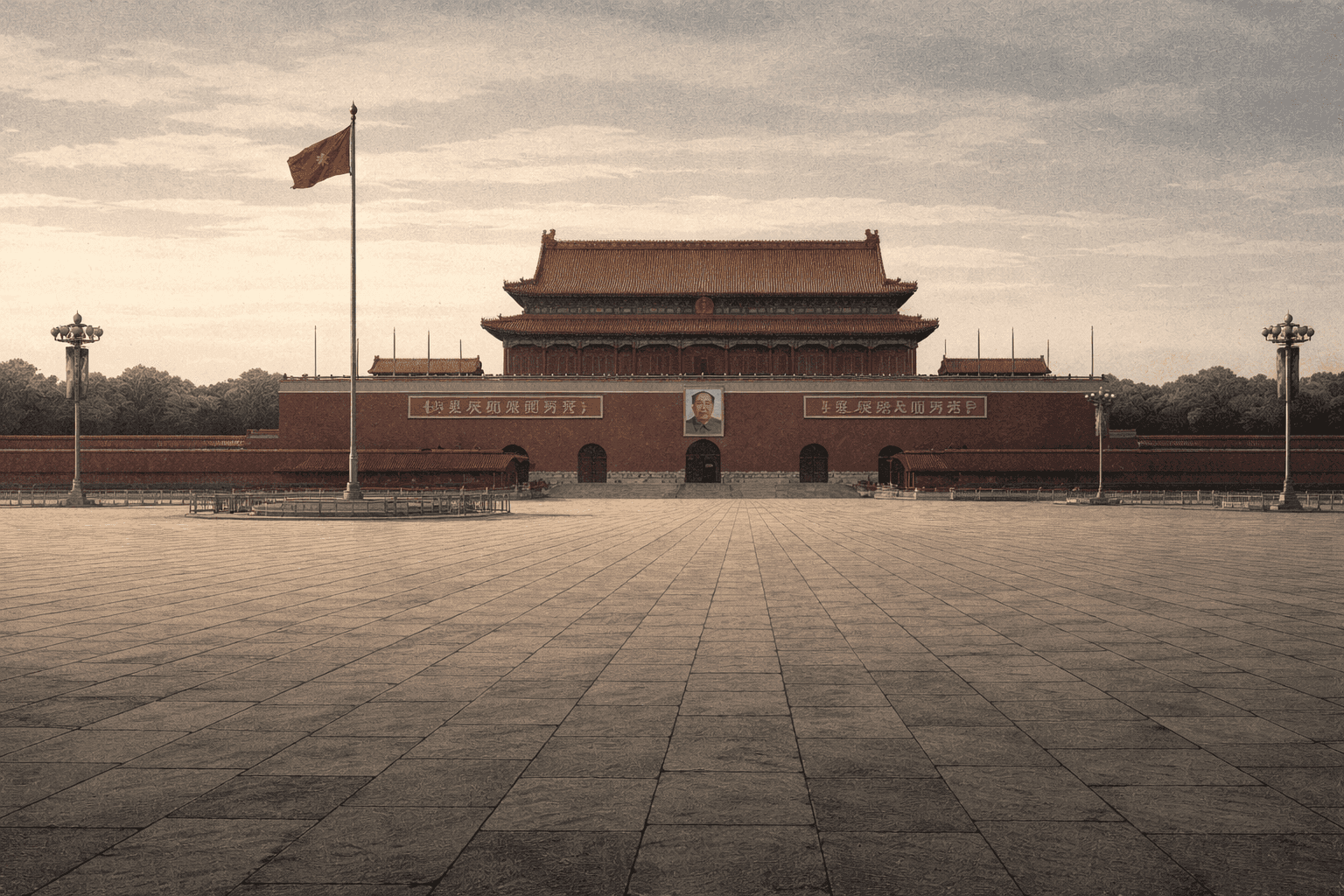
On May 10, 1990, the Chinese government released 211 people who had been detained following the pro-democracy protests in Tiananmen Square in June 1989 — a crackdown in which the People's Liberation Army had deployed tanks and live ammunition against unarmed demonstrators in Beijing, killing an unknown number of people that the Chinese government has never acknowledged. Estimates from human rights organizations and foreign governments range from several hundred to several thousand dead. Thousands more were arrested in the weeks following the June 3–4 crackdown; the trials and sentences that followed were conducted largely in secret. The May 10 release of 211 prisoners was presented by the Chinese government as evidence of its commitment to the rule of law and as a response to international pressure. It was received by human rights organizations and foreign governments as exactly what it was: a minimum gesture designed to relieve diplomatic pressure without conceding anything of substance.
The fuller reckoning that the May 10 release was meant to substitute for has never arrived. China has never acknowledged the death toll, released a comprehensive list of those detained, or permitted independent investigation of the crackdown. The photograph of the lone figure facing a column of tanks in Chang'an Avenue — Tank Man, taken on June 5, 1989 — became one of the most reproduced images in the history of photojournalism and one of the most censored in China, where it remains inaccessible on domestic internet platforms to this day. The students and workers who gathered in Tiananmen Square in the spring of 1989 were asking for accountability, transparency, and a meaningful role in the governance of their country. The government that imprisoned them in June 1989 and released 211 of them in May 1990 answered those questions with the same instrument it had used since: the careful management of information and the slow erosion of memory. The square itself was cleaned and reopened. The conversation the protesters had started was not.