March 9: Iran's Revolutionary Dynasty
Just after midnight Tehran time on March 8, 2026 — eight days after the assassination of his father and while U.S. and Israeli bombs continued to fall on Iranian cities — the Assembly of Experts announced, by what it described as a "decisive vote," that Mojtaba Khamenei had been appointed the third Supreme Leader of the Islamic Republic of Iran. He is 56 years old. He is a mid-ranking cleric who has never held elected office, never given a public sermon, and whose voice most Iranians have never heard. He is also the son of the man he replaces — a fact that carries enormous historical weight in a republic whose founding ideology was built, explicitly, in opposition to dynastic rule.
The Revolution That Became a Dynasty
The Islamic Republic was born in 1979 in explicit rejection of the Pahlavi monarchy — a dynasty in which power passed by blood from father to son. Ayatollah Ruhollah Khomeini, the revolution's architect, built a theocratic system designed to vest ultimate authority in clerical wisdom, not hereditary lineage. When Khomeini died in June 1989, the Assembly of Experts selected Ali Khamenei as his successor not because of his family ties but through a process of clerical deliberation — and even then, the law had to be amended because Khamenei lacked the senior religious rank of Grand Ayatollah. Now, 37 years later, his son has inherited the position under circumstances that senior members of the Assembly itself described as having an "unnatural" atmosphere — a rushed, partially online process driven, according to multiple Iranian sources, by intense pressure from the Islamic Revolutionary Guard Corps, whose commanders reportedly made "repeated contacts" with Assembly members to secure Mojtaba's appointment. Ali Khamenei, according to sources close to the Assembly, had himself opposed the idea of his son's succession, reportedly fearing it would restore precisely the dynastic structure the revolution overthrew.
The new supreme leader steps into a position of extraordinary peril. The country is at war, its internet blacked out, more than a thousand of its citizens killed in ten days of strikes, its Strait of Hormuz closure rippling through global energy markets. Israel has already threatened to target whoever was appointed, and the Israel Defense Forces' Farsi-language social media account issued explicit warnings to Assembly members before the vote. Trump told ABC News on Sunday that the new supreme leader would need Washington's approval to last — "If he doesn't get approval from us, he's not going to last long." Russia's Vladimir Putin pledged "unwavering" support; China called for the new leader to be protected from targeting. The selection was broadly read, by analysts across the political spectrum, as an act of defiance: Iran's establishment signaling that it would not be decapitated into submission, that the Islamic Republic intended to survive, and that it would do so under a figure even more closely tied to the hardline IRGC than his father had been in his final years.
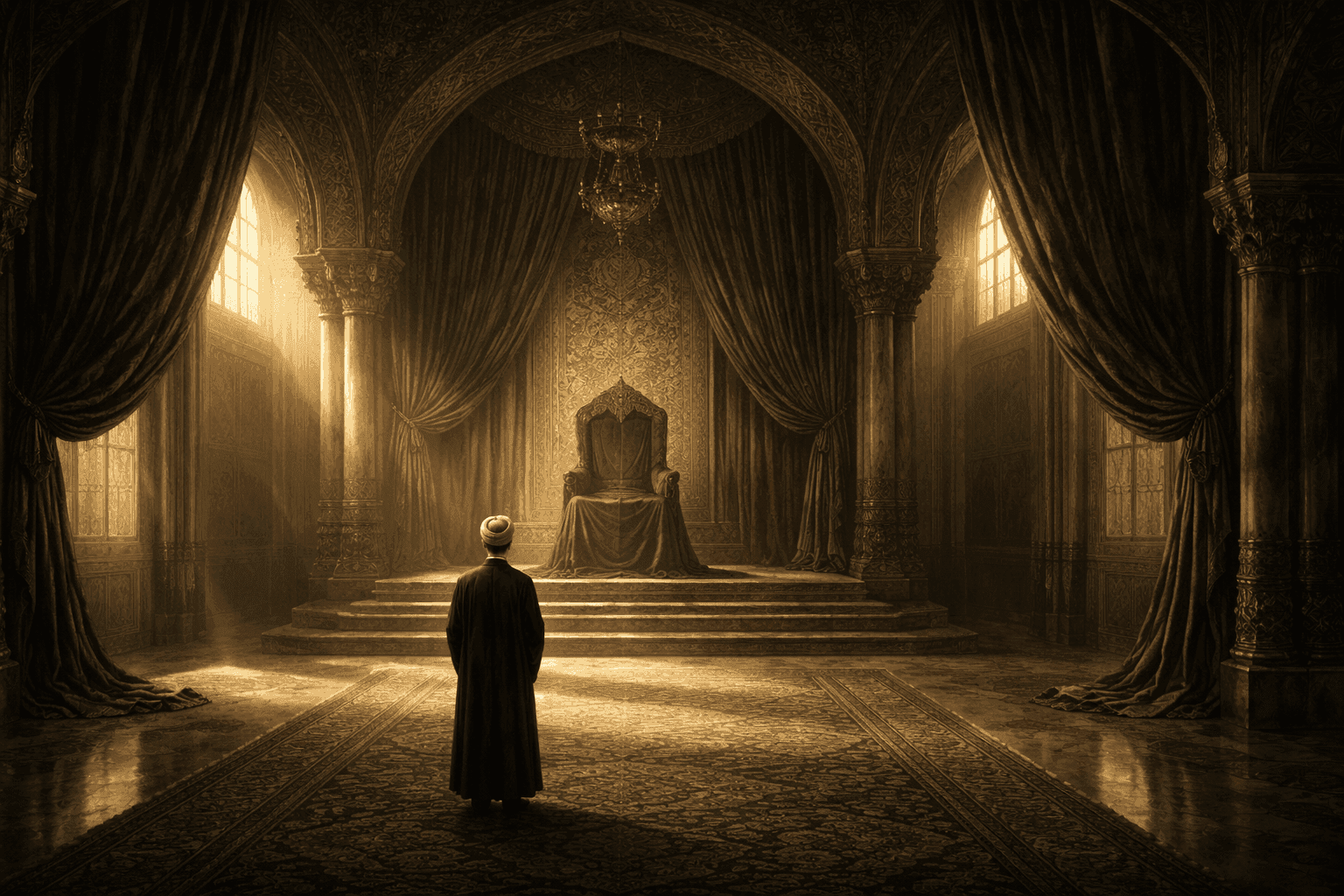
Historians of political succession will recognize in this moment a pattern as old as power itself: in a crisis, institutions under pressure tend to consolidate rather than reform, choosing continuity and known loyalties over risk and renewal. The French Revolution eventually produced Napoleon. The Russian Revolution eventually produced Stalin. Revolutions, in their moments of greatest external threat, have a long record of reaching for the familiar — even when the familiar contradicts everything the revolution said it stood for. Whether Mojtaba Khamenei consolidates his authority, falls to the ongoing military campaign targeting Iranian leadership, or presides over a transformation none of today's observers can predict, one historical fact is already fixed: on March 8, 2026, the Islamic Republic of Iran — founded in defiance of a dynasty — became one.