March 9: Captives Freed, A Doll Debuts, A Rapper Dies
March 9 has witnessed three moments that capture different facets of American culture. A Supreme Court decision affirmed that enslaved Africans who seized their freedom by force had the right to do so, striking a rare blow against the institution of slavery. A plastic doll reimagined childhood play by presenting an adult woman with infinite identities and possibilities. And a rapper whose storytelling captured the complexities of street life was murdered at 24, joining the tragic list of hip-hop artists killed at the peak of their influence. Together, these events remind us that American culture is shaped by struggles for justice, by the stories we tell children about who they can become, and by the artists who give voice to communities too often unheard.
Give Us Free
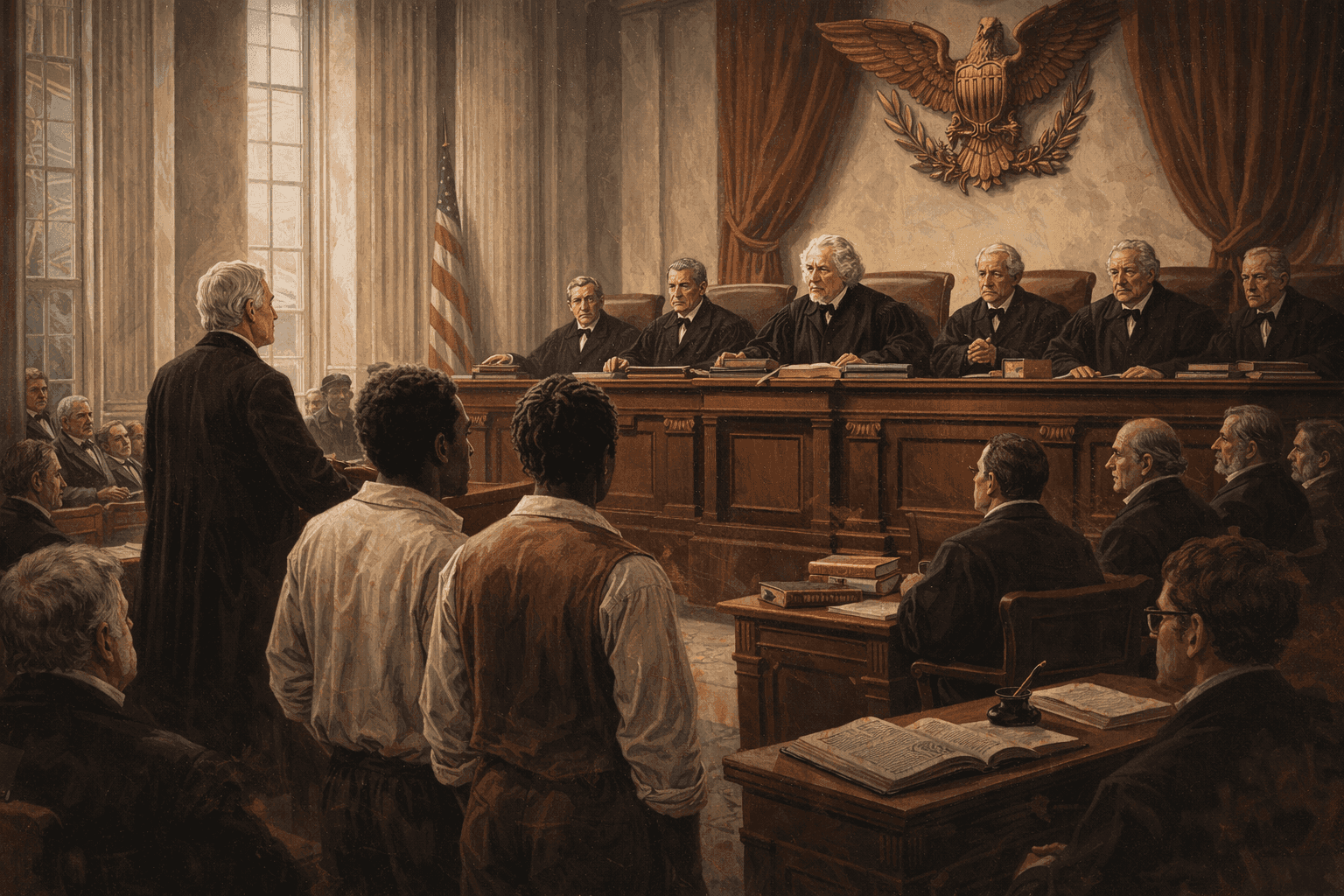
On March 9, 1841, the Supreme Court delivered its decision in United States v. The Amistad, ruling that 53 Africans who had seized control of the slave ship Amistad in 1839 were free and could return to Africa. The captives, led by Sengbe Pieh (known as Cinqué), had been kidnapped from Sierra Leone and illegally sold into slavery, violating both international treaties and Spanish law. When the Amistad arrived in U.S. waters after the revolt, the captives were arrested and faced potential return to slavery in Cuba. Their case became an international cause célèbre, defended before the Supreme Court by former President John Quincy Adams, then 73 years old.
Adams argued for eight hours that the Africans had been kidnapped, that they had committed no crime in seizing their freedom, and that natural law superseded property claims built on illegality. Justice Joseph Story, writing for the majority, agreed: the captives were "kidnapped Africans, who by the laws of Spain itself were entitled to their freedom." The decision was narrow—it didn't challenge slavery's legality within the United States—but it affirmed that people had the right to resist illegal enslavement. The ruling energized abolitionists while enraging Southern slaveholders who saw it as dangerous precedent. The Amistad captives returned to Africa in 1842, though many found their homelands devastated by the slave trade they had briefly escaped. The case demonstrated that even in an era when slavery was constitutionally protected, the moral argument for freedom could sometimes prevail in court, if only in exceptional circumstances.
The Doll That Changed Everything
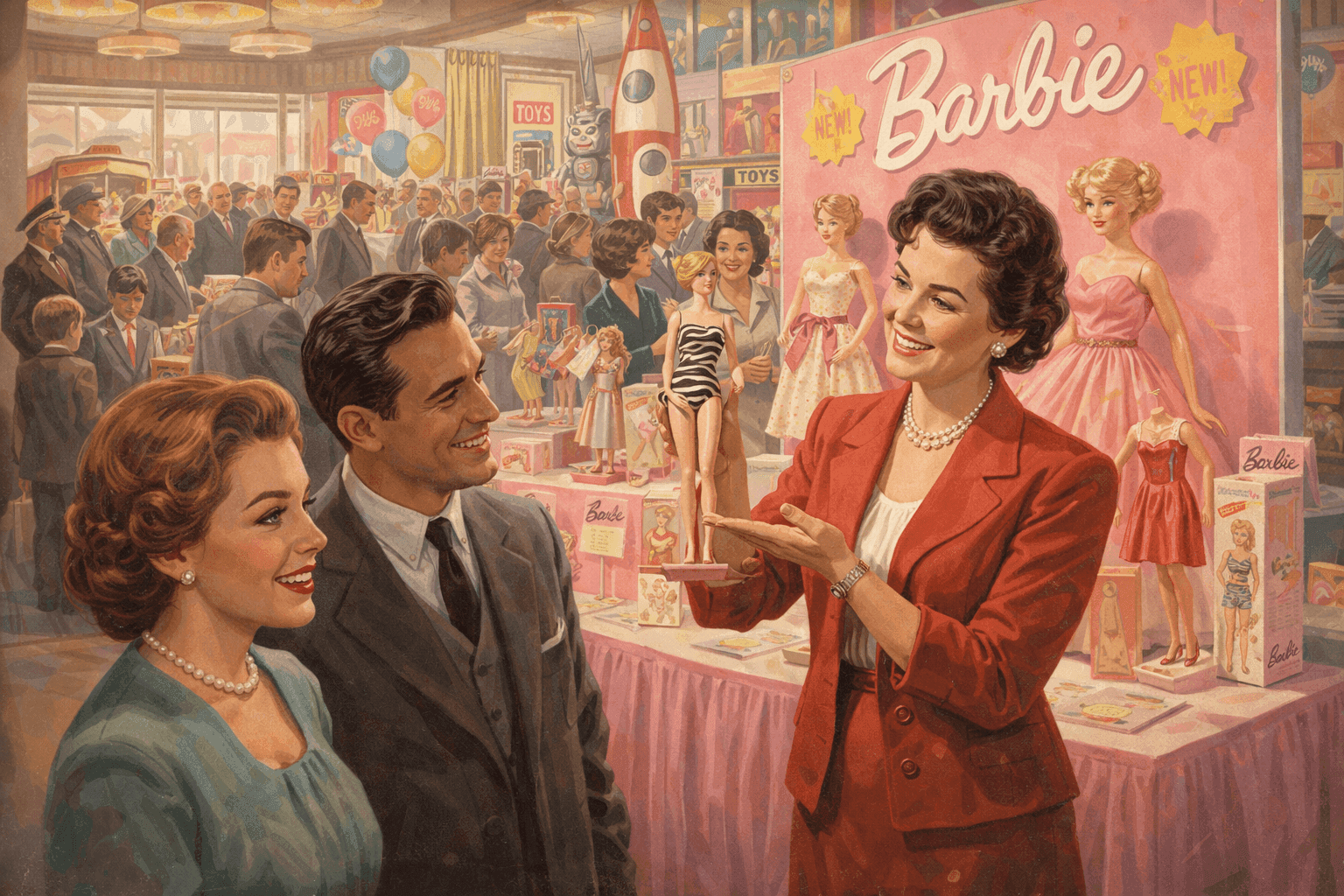
One hundred eighteen years later, on March 9, 1959, Ruth Handler introduced Barbie at the American International Toy Fair in New York. Named after Handler's daughter Barbara, the doll broke from toy industry convention in radical ways. While most dolls were babies that taught girls to nurture, Barbie was an adult woman—complete with breasts, a tiny waist, and an extensive wardrobe. Handler had observed her daughter playing with paper dolls of adult women and imagined possibilities, creating a three-dimensional doll that could be anything: fashion model, career woman, astronaut, doctor, or president. The first Barbie wore a black-and-white striped swimsuit and came in both blonde and brunette versions.
Barbie became a cultural phenomenon and a lightning rod for criticism. She represented aspiration and imagination—girls could envision adult lives beyond motherhood. But she also embodied impossible beauty standards, with proportions that would be physically unattainable for actual humans. Over decades, Mattel responded to criticism by diversifying: Barbies of different races, body types, and abilities, Barbies with realistic careers from computer engineer to presidential candidate. More than a billion Barbies have been sold worldwide; she's been a cultural ambassador, a feminist icon, and a symbol of corporate conformity, sometimes all simultaneously. Barbie's legacy is complex—she expanded what girls could imagine for themselves while also constraining those visions within narrow aesthetic ideals. But Handler's insight was profound: children don't just play with toys; they practice futures. Barbie gave girls permission to imagine themselves as adults with agency, even if the doll's proportions suggested those possibilities came with conditions.
It Was All a Dream
On March 9, 1997, thirty-eight years after Barbie's debut, Christopher Wallace—known as The Notorious B.I.G., or Biggie Smalls—was killed in a drive-by shooting in Los Angeles. He was 24 years old. Biggie had arrived at the Soul Train Music Awards after-party around 12:30 a.m., left shortly after, and was stopped at a red light when a Chevrolet Impala pulled alongside his SUV and an occupant fired four shots. One struck Biggie's heart; he was pronounced dead at Cedars-Sinai Medical Center less than an hour later. His murder came six months after the killing of Tupac Shakur in Las Vegas, and both deaths remain officially unsolved despite countless investigations and theories.
Biggie's death robbed hip-hop of one of its greatest storytellers. Growing up in Brooklyn's Bedford-Stuyvesant neighborhood, he transformed street life's contradictions—ambition and desperation, violence and community, hustling and dreaming—into narratives with cinematic detail and effortless flow. His debut album Ready to Die (1994) and posthumous Life After Death (1997) showcased his ability to move from menacing street tales to introspective vulnerability to party anthems, often within the same album. Lines like "It was all a dream / I used to read Word Up! magazine" captured upward mobility's complexities with autobiographical specificity. His murder, likely connected to the East Coast-West Coast rivalry that consumed hip-hop in the mid-90s, demonstrated the genre's darkest truth: that the authenticity audiences demanded came with real danger, that the streets rappers described could reach back and claim them. Biggie's legacy endures through his music and influence, but his death at 24 remains a tragedy—a voice silenced just as it was reaching its full power.