March 7: A Voice Carries, A Bridge Runs Red, A Telescope Searches
March 7 has witnessed humanity pushing beyond its limitations. An inventor found a way to transmit the human voice across wires, collapsing distance and transforming communication forever. Activists marched across a bridge demanding rights that should have been theirs by birth, meeting violence that would shock the nation into action. And a telescope launched toward the stars to answer the ancient question of whether we are alone in the universe. Each moment reflects the same impulse: to reach beyond what is toward what could be, whether that means connecting distant voices, securing denied rights, or discovering distant worlds.
Mr. Watson, Come Here
On March 7, 1876, Alexander Graham Bell received U.S. Patent No. 174,465 for "the method of, and apparatus for, transmitting vocal or other sounds telegraphically." Three days later, Bell would famously speak the first words transmitted by telephone—"Mr. Watson, come here, I want to see you"—to his assistant in the next room. The telephone emerged from intense competition; Elisha Gray filed a patent caveat for a similar device the same day Bell filed his application, leading to decades of legal battles. But Bell's patent held, and his invention would transform human civilization more profoundly than perhaps any single device in history.
The telephone collapsed distance in a way the telegraph never could. Telegraph transmitted codes that required trained operators; the telephone transmitted the human voice itself—with all its nuance, emotion, and immediacy. Within decades, telephone lines crisscrossed continents. By the mid-20th century, you could pick up a device in New York and speak to someone in London as if they were in the next room. The telephone enabled real-time coordination of business, government, and personal life on scales previously impossible. It transformed courtship, emergency response, journalism, and warfare. Bell's invention didn't just transmit sound; it fundamentally altered human relationships by making distance irrelevant to connection. Today, billions carry descendants of Bell's telephone in their pockets, using them for everything except, ironically, making phone calls. But the principle remains: Bell gave humanity the ability to be present to each other regardless of physical separation.

Bloody Sunday
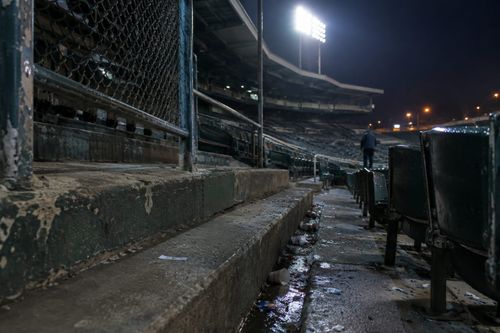
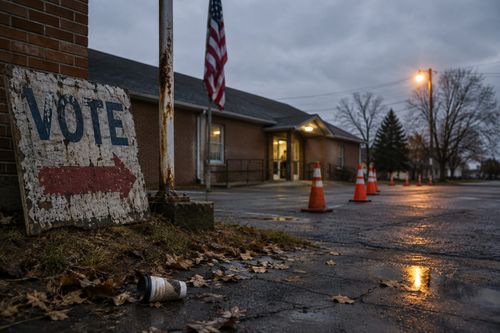
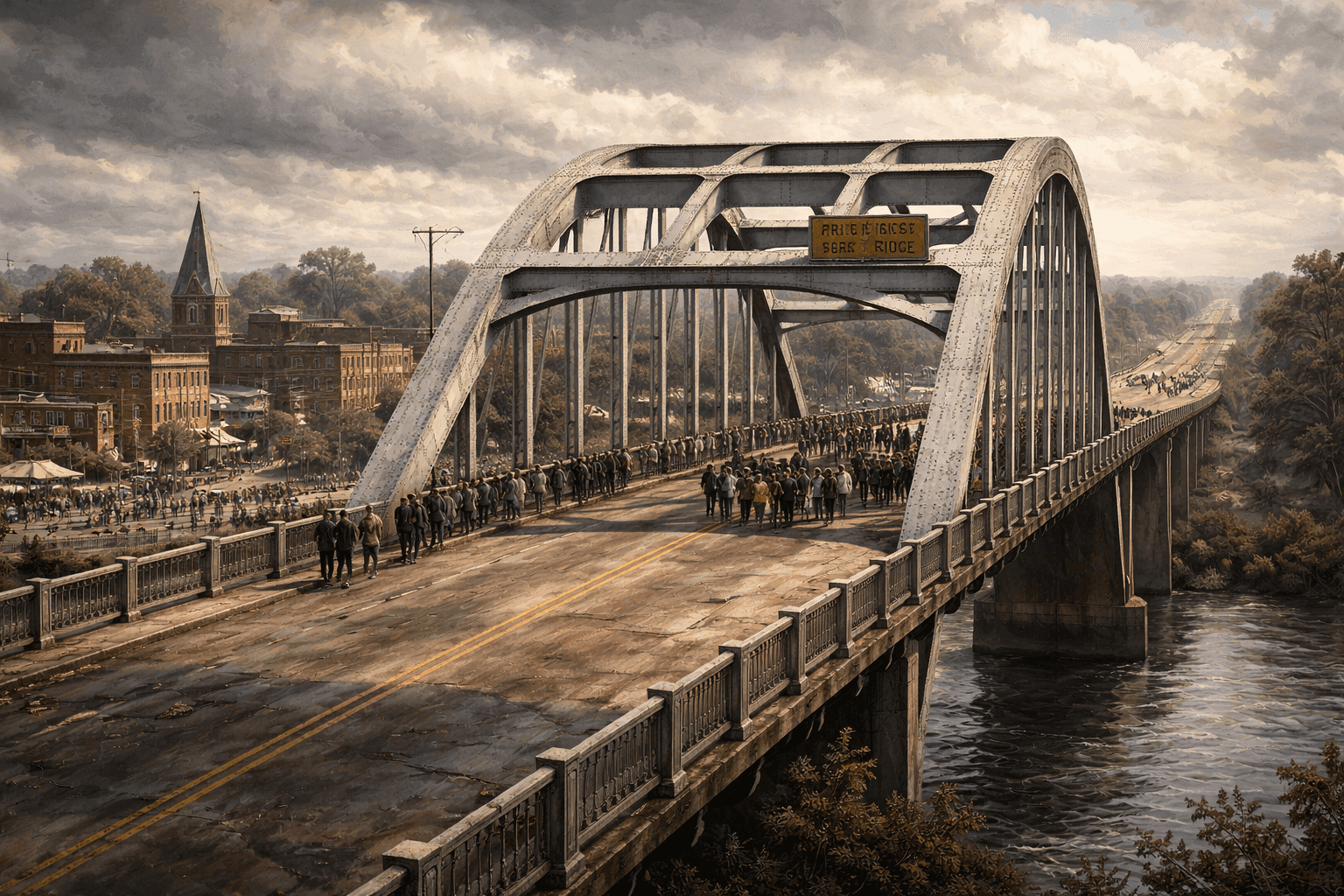
Eighty-nine years after Bell's patent, on March 7, 1965, approximately 600 civil rights marchers set out from Selma, Alabama, heading toward the state capital of Montgomery to demand voting rights. Led by John Lewis and Hosea Williams, they made it only six blocks before reaching the Edmund Pettus Bridge spanning the Alabama River. On the other side waited Alabama state troopers and a sheriff's mounted posse. As marchers crossed the bridge's apex, Major John Cloud gave them two minutes to disperse. They kept walking. What followed was captured on television cameras and broadcast into American living rooms that evening: troopers in gas masks advancing with billy clubs and tear gas, mounted officers charging into the crowd, peaceful marchers beaten bloody on the bridge.
John Lewis's skull was fractured. Dozens were hospitalized. The violence shocked the nation and galvanized support for voting rights legislation. President Lyndon Johnson, watching the footage, understood that the moral clarity of the moment demanded federal action. Within days, he addressed Congress with the movement's words: "We shall overcome." Five months later, he signed the Voting Rights Act of 1965, prohibiting racial discrimination in voting and authorizing federal oversight of elections in states with histories of discrimination. Bloody Sunday demonstrated the power of nonviolent direct action to expose injustice and force change. The marchers didn't fight back; they simply kept walking into violence, knowing cameras were watching. Their courage and the brutality they endured made denial impossible. Two weeks later, protected by federal troops, marchers successfully completed the journey from Selma to Montgomery. The bridge that ran red with their blood became hallowed ground in the long march toward justice.
Are We Alone?
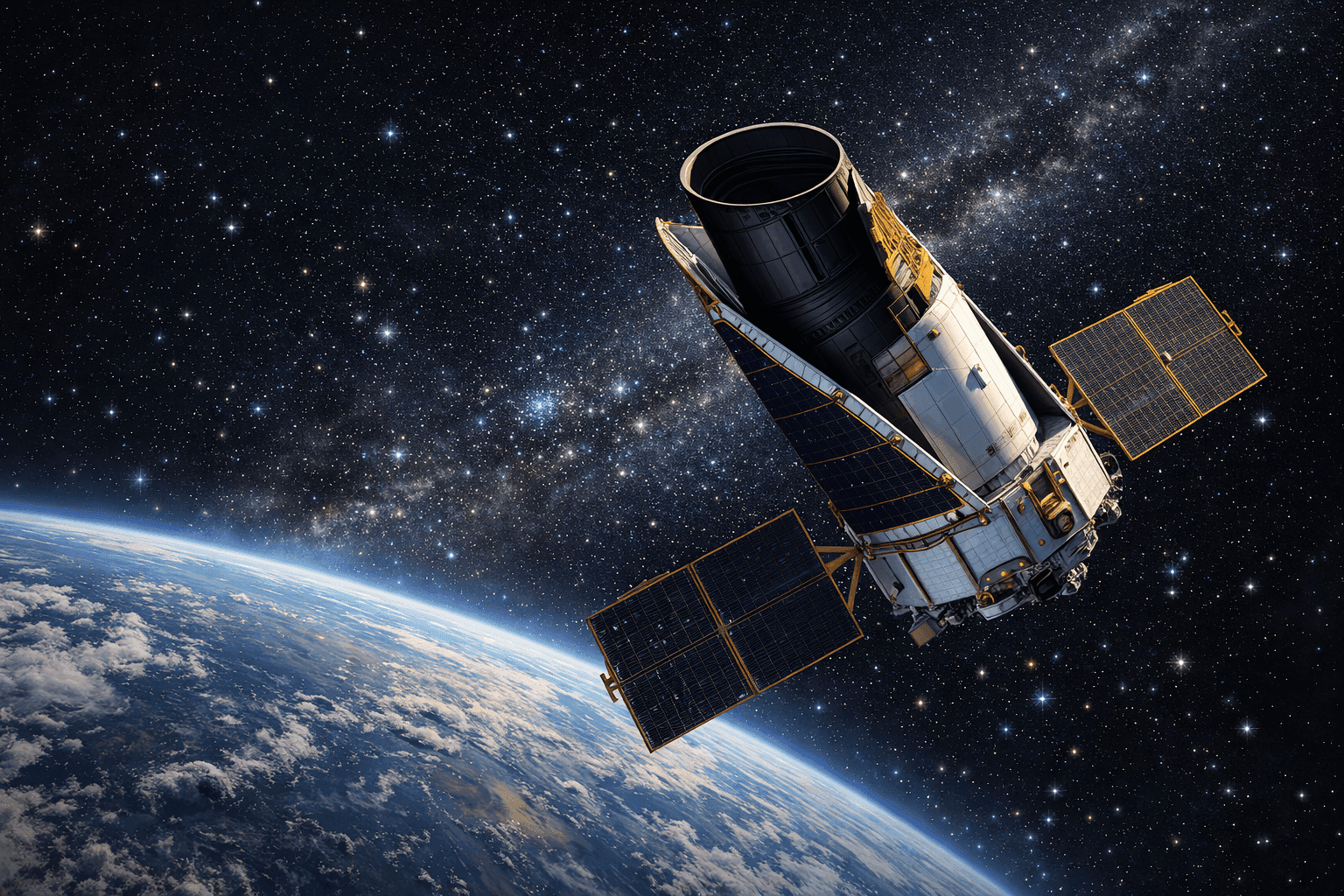
On March 7, 2009, forty-four years after Bloody Sunday, NASA launched the Kepler Space Telescope from Cape Canaveral on a mission to answer one of humanity's oldest questions: Are there other worlds like Earth? Named after Johannes Kepler, the 17th-century astronomer who discovered that planets orbit in ellipses, the spacecraft carried a telescope designed to stare continuously at a single patch of sky containing over 150,000 stars. Kepler's method was elegantly simple: watch for the tiny dimming that occurs when a planet passes in front of its star—like detecting a flea crossing a headlight from miles away.
Over nine years, Kepler revolutionized our understanding of planets beyond our solar system. It discovered over 2,600 confirmed exoplanets and identified thousands more candidates. The telescope revealed that planets are common—perhaps more numerous than stars—and that solar systems come in wild variety. Some planets orbit their stars in days, others in centuries. Some are gas giants orbiting closer to their stars than Mercury orbits our sun. Others are rocky worlds in the "habitable zone" where liquid water could exist. Kepler didn't find definitive proof of life elsewhere, but it demonstrated that Earth-like planets are surprisingly common. In doing so, it transformed the search for extraterrestrial life from speculation into systematic science. The telescope that launched on March 7 expanded human vision beyond our solar system, revealing a universe teeming with worlds—and suggesting that somewhere out there, perhaps, someone is looking back.