March 6: When War Comes to Wall Street
For the first three days after the U.S. and Israel launched strikes on Iran, Wall Street held its nerve. Markets had anticipated the conflict, the thinking went. Geopolitical crises historically resolve without lasting damage to corporate earnings. Buy the dip. By Thursday, March 5, that calculus had broken down. The Dow Jones Industrial Average plunged more than 1,100 points during the session before closing down 785 points — wiping out every gain it had made in 2026. West Texas Intermediate crude oil surged more than 8% in a single day to over $81 per barrel, its largest one-day gain since May 2020. Oil prices have now risen more than 20% in a single week. Qatar's energy minister warned publicly that the conflict could force Persian Gulf nations to halt energy exports entirely, pushing oil toward $150 a barrel. The stock market, which had spent years learning to shrug off distant crises, is learning that this one may not be distant enough.
Oil, War, and the Market's Long Memory
The relationship between Middle East conflict and financial market panic has a long and instructive history. In October 1973, the Arab oil embargo imposed after the Yom Kippur War sent crude prices up 300% in a matter of months, triggering the worst stock market crash since the Great Depression — the Dow fell nearly 45% between January 1973 and December 1974. In August 1990, Iraq's invasion of Kuwait caused oil to double overnight; the S&P 500 fell 20% in the months that followed before recovering as the Gulf War ended quickly and decisively. Each of those episodes taught investors a lesson that markets have tried, with varying success, to internalize: the initial shock is rarely the worst of it, and everything depends on how long the disruption lasts. Thursday's sell-off reflects that same anxious calculation playing out in real time. Caterpillar fell 4.4%. GE Aerospace dropped 3.5%. Airlines — facing jet fuel costs that have surged alongside crude — saw shares decline across the sector. The national average gasoline price hit $3.25 per gallon, up 27 cents from a week ago. Diesel reached $4.16 per gallon, its highest since 2023. Wells Fargo analysts issued a warning that a sustained closure of the Strait of Hormuz and oil above $100 per barrel could push the S&P 500 down to 6,000 — a decline of nearly 13% from recent levels.
What makes the current moment historically unusual is the simultaneity of its pressures. The Strait of Hormuz, through which roughly one-fifth of the world's oil normally flows, remains effectively closed — over 200 vessels anchored and waiting. The Houthis have simultaneously resumed attacks in the Red Sea, closing the second major artery of global energy trade and forcing container ships to reroute around Africa's Cape of Good Hope, adding weeks and significant cost to global supply chains. Iran's internet blackout has now exceeded 100 hours. More than 1,000 people have been killed inside Iran since the strikes began. Six American service members have been killed. The Federal Reserve, already navigating a delicate path between inflation and growth, now faces the prospect of an oil-driven price surge that could force it to delay interest rate cuts — a sharp reversal from earlier 2026 expectations of a summer pivot. Strategists at Carson Group note that, historically, the S&P 500 has averaged a 3.4% gain in the six months following major geopolitical events. The question that Thursday's sell-off is really asking is whether this time is different.
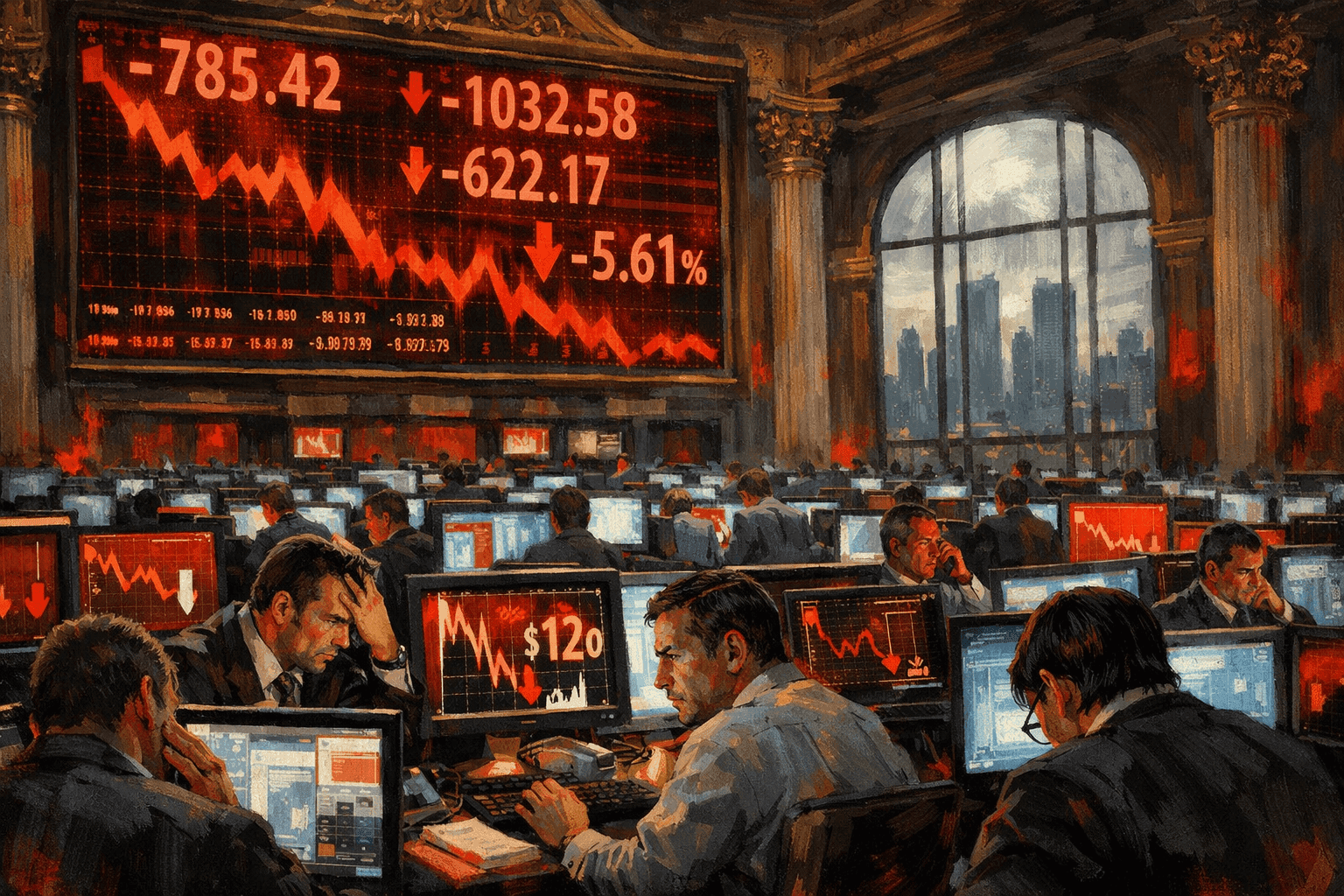
Market historians will note that what is happening this week is not without precedent — but the precedents are the ones that left lasting marks. The 1973 oil shock reshaped the American economy for a decade, giving the world "stagflation" as a new and unwelcome economic vocabulary word. The 1990 Gulf War shock was brief, because the war was brief. The variable that markets are pricing today — frantically, imperfectly, and with enormous uncertainty — is duration. A conflict resolved in weeks looks like a blip on a long-term chart. A conflict that drags on for months, keeps the Strait of Hormuz closed, and pushes oil past $100 per barrel is something else entirely: a supply shock with the potential to alter the trajectory of the global economy in ways that no central bank, no matter how skilled, can fully offset. Wall Street has seen wars before. What it is trying to calculate now, in the red flicker of trading screens, is which kind of war this one turns out to be.