March 5: The Chokepoint That Could Shake the World
At its narrowest, the Strait of Hormuz is just 21 miles wide — a sliver of water between the Iranian coastline and the shores of Oman and the UAE that is, mile for mile, the most economically consequential stretch of ocean on Earth. On a normal day, roughly 20 million barrels of oil pass through it, representing approximately one-fifth of the world's entire daily petroleum consumption. Today, on the sixth day of the U.S.-Israel war on Iran, it is effectively closed. More than 200 tankers, cargo vessels, and liquefied natural gas carriers sit anchored in the Persian Gulf, unable or unwilling to move. A container ship was attacked and disabled while attempting transit Wednesday. Iran's Revolutionary Guard has broadcast warnings on maritime radio frequencies that any vessel attempting passage does so at its own peril. The world's largest shipping firms — Maersk, Hapag-Lloyd, CMA CGM — have suspended all transits until further notice.
The Strait That Has Always Mattered
The Strait of Hormuz has been a strategic prize since antiquity. Ancient Persian and Arab traders understood its value as the gateway between the Gulf and the wider ocean. The Portuguese seized it in the 16th century to dominate Eastern trade routes. The British built a regional empire in part by controlling access to it. In the modern era, its significance has only grown: the discovery of vast Gulf oil reserves in the 20th century transformed this narrow passage into the jugular vein of the global economy. During the Iran-Iraq War of the 1980s, the so-called "Tanker War" saw both sides attacking oil vessels in the Gulf, and the United States ultimately deployed its Navy to escort reflagged Kuwaiti tankers through the strait — a mission called Operation Earnest Will, the largest naval convoy operation since World War II. Iran has threatened to close the strait before — most recently during nuclear negotiations in 2012 and again during the 2019 Gulf tensions — but has never fully carried through. What is happening now is without modern precedent: a near-total halt in traffic driven by active military attacks on vessels and credible threats of more.
The economic tremors are already spreading far beyond the Gulf. Brent crude oil prices, which stood near $70 per barrel before February 28, have surged past $80 and analysts warn of $100 or higher if the closure persists. Asian markets have seen record selloffs; South Korea, Japan, and China — which together account for nearly 70 percent of all oil transiting the strait — face the sharpest energy supply shock in decades. The Houthi movement in Yemen has simultaneously resumed attacks in the Red Sea, effectively closing the other major maritime artery connecting Asia to Europe, forcing cargo ships to reroute around Africa's Cape of Good Hope — adding weeks to transit times and dramatically increasing costs. Meanwhile, on the ground in Iran, over 1,000 people have been confirmed killed since the conflict began, the country's internet has been blacked out for more than 100 hours, and Iran's leadership scrambles to choose a successor to Supreme Leader Khamenei while striking back at targets across nine countries. President Trump has pledged U.S. Navy escorts for tankers if needed, but as of today the strait remains, in practical terms, shut.
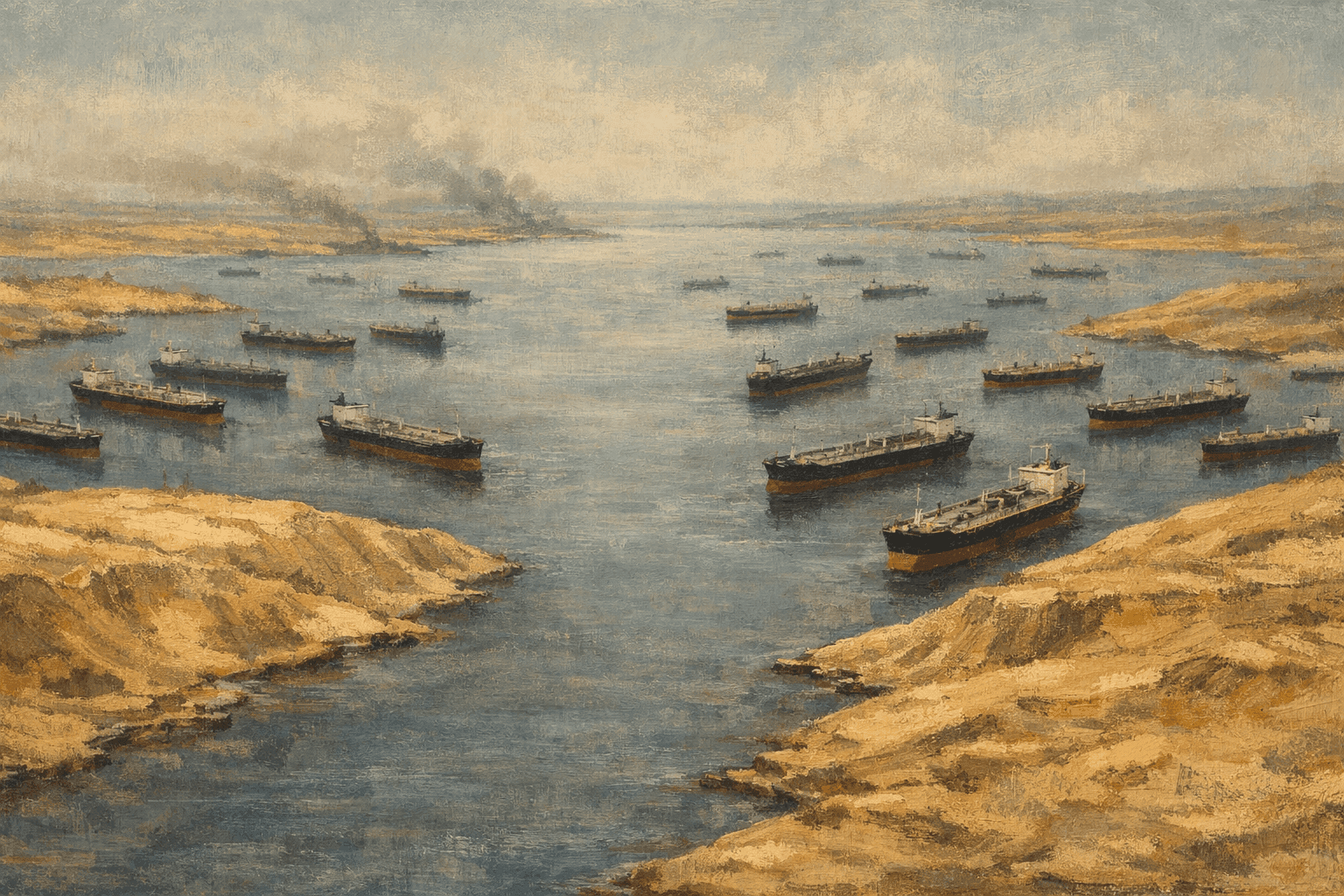
Historians studying chokepoints — the narrow passages of land or sea whose control has decided the fate of empires — will find in the Strait of Hormuz crisis of 2026 a case study unlike any before it. Never in the modern era has the world's single most important energy corridor been closed by active military conflict while the dominant global superpower simultaneously waged the war causing the closure. The interconnectedness of the 21st century global economy means that what happens in a 21-mile-wide passage between Iran and Oman does not stay there — it ripples into fuel prices in Chicago, factory costs in Seoul, inflation calculations in Frankfurt, and grocery bills across the developing world. This is the history being written today, in real time, in waters that the ancient world already understood were too important to ignore.