March 4: A Constitution Lives, A President Promises, A Story Triumphs
March 4 has witnessed three distinct expressions of human determination to endure and prevail. A fragile constitution transformed from parchment into living government, a president faced national despair with unshakeable optimism, and a writer captured the eternal struggle between man and nature in spare, powerful prose. Each moment reflects a fundamental truth: that resilience—whether of institutions, leaders, or art—requires both strength and flexibility, the courage to face overwhelming odds and the wisdom to know that dignity lies not in victory but in the struggle itself.
We the People Takes Effect
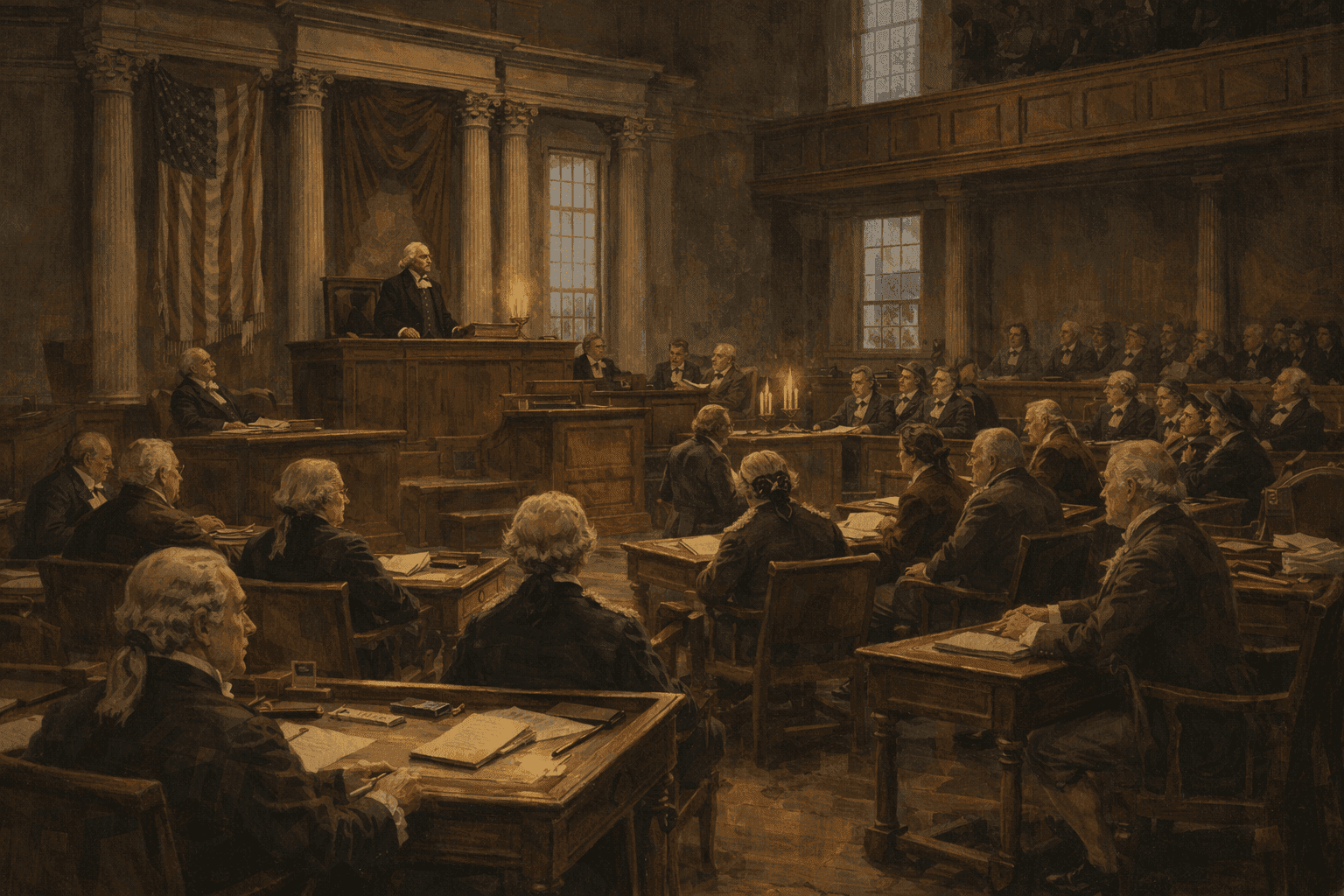
On March 4, 1789, the first Congress convened under the newly ratified Constitution, transforming a theoretical framework into a functioning government. The date was supposed to be the official start of the new government, though in practice it took weeks for enough members to arrive in New York City to form a quorum. The Articles of Confederation, which had governed since 1781, officially ceased to exist, replaced by a document that created a stronger central government while attempting to preserve state sovereignty and individual liberty. The Constitution's framers had gambled that they could balance these competing demands—and that first congressional session would test whether their elaborate system of checks and balances could actually work.
The Constitution's activation represented a leap of faith. No one knew if this experiment in federal republicanism could survive, if the states would truly subordinate themselves to national authority, or if the delicate compromises that had enabled ratification would hold under the pressures of governance. That first Congress faced immediate challenges: establishing executive departments, creating a federal court system, raising revenue, and addressing demands for a Bill of Rights. The fact that the Constitution not only survived but adapted and endured speaks to both its structural flexibility and the determination of those early leaders to make it work. March 4 remained Inauguration Day for 144 years, until the 20th Amendment moved it to January 20. But this first March 4 was the beginning—when "We the People" stopped being an aspiration and became a government.
The Only Thing to Fear
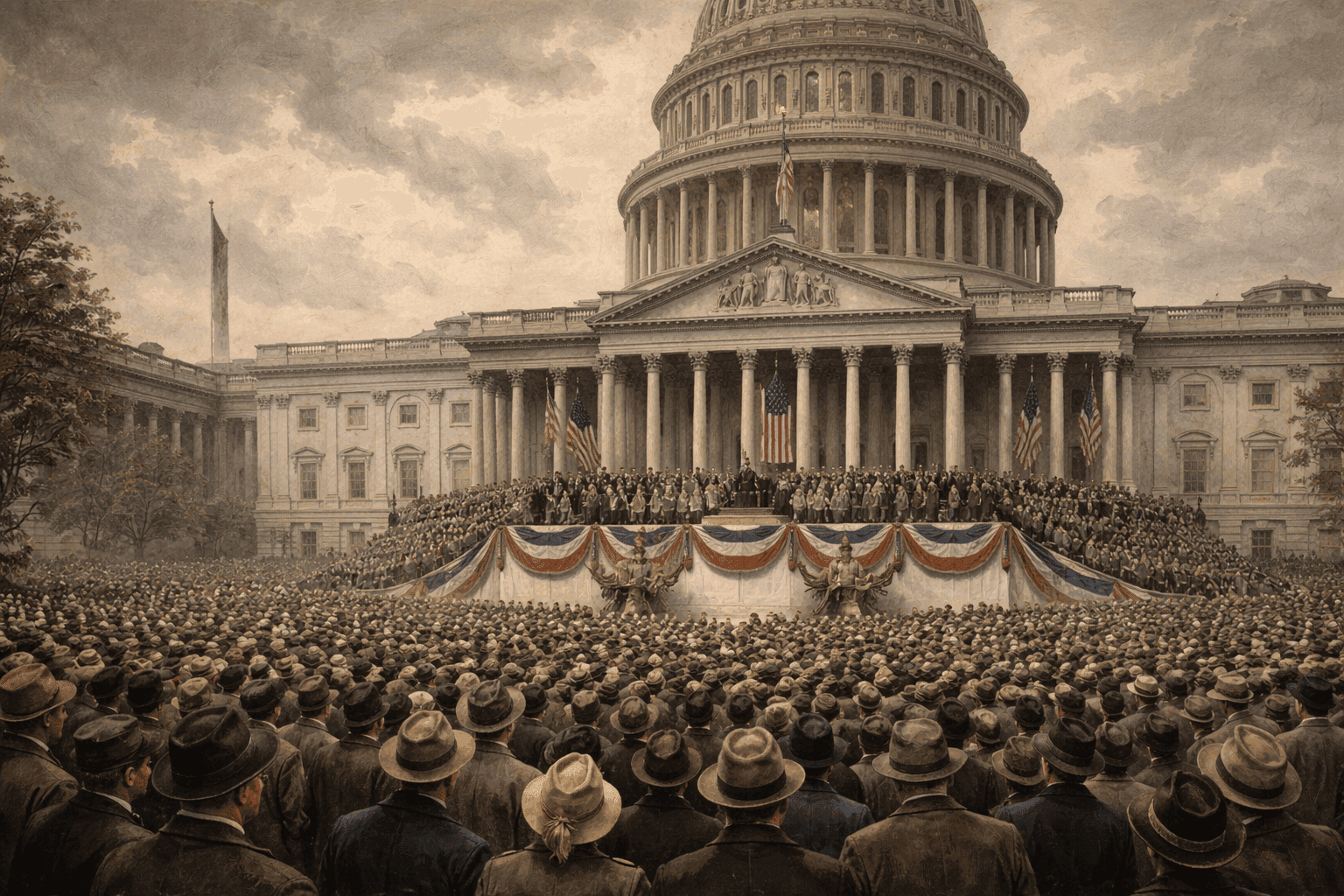
One hundred forty-four years later, on March 4, 1933, Franklin Delano Roosevelt took the oath of office as the 32nd president, facing a nation in economic collapse. One in four Americans was unemployed. Banks were failing. Farms were being foreclosed. The previous president, Herbert Hoover, had seemed paralyzed by the crisis. Roosevelt, by contrast, projected confidence from his first words: "The only thing we have to fear is fear itself—nameless, unreasoning, unjustified terror which paralyzes needed efforts to convert retreat into advance." It was a message the country desperately needed to hear, delivered by a man who had overcome polio to lead his nation through its darkest economic hour.
Roosevelt's first hundred days unleashed a flurry of legislation that fundamentally redefined the federal government's role in American life. The New Deal created jobs programs, banking regulations, social insurance, labor protections, and a social safety net that would endure for generations. Critics called it socialism; supporters called it salvation. Roosevelt himself called it pragmatism—trying different approaches until something worked. He would be elected to an unprecedented four terms, leading America through both the Depression and World War II before his death in office in 1945. His inaugural address on that cold March day in 1933 did more than promise action; it restored something intangible but essential—hope. Roosevelt understood that economic recovery required psychological recovery first, that a nation paralyzed by fear needed someone who refused to be afraid.
Man Against the Sea
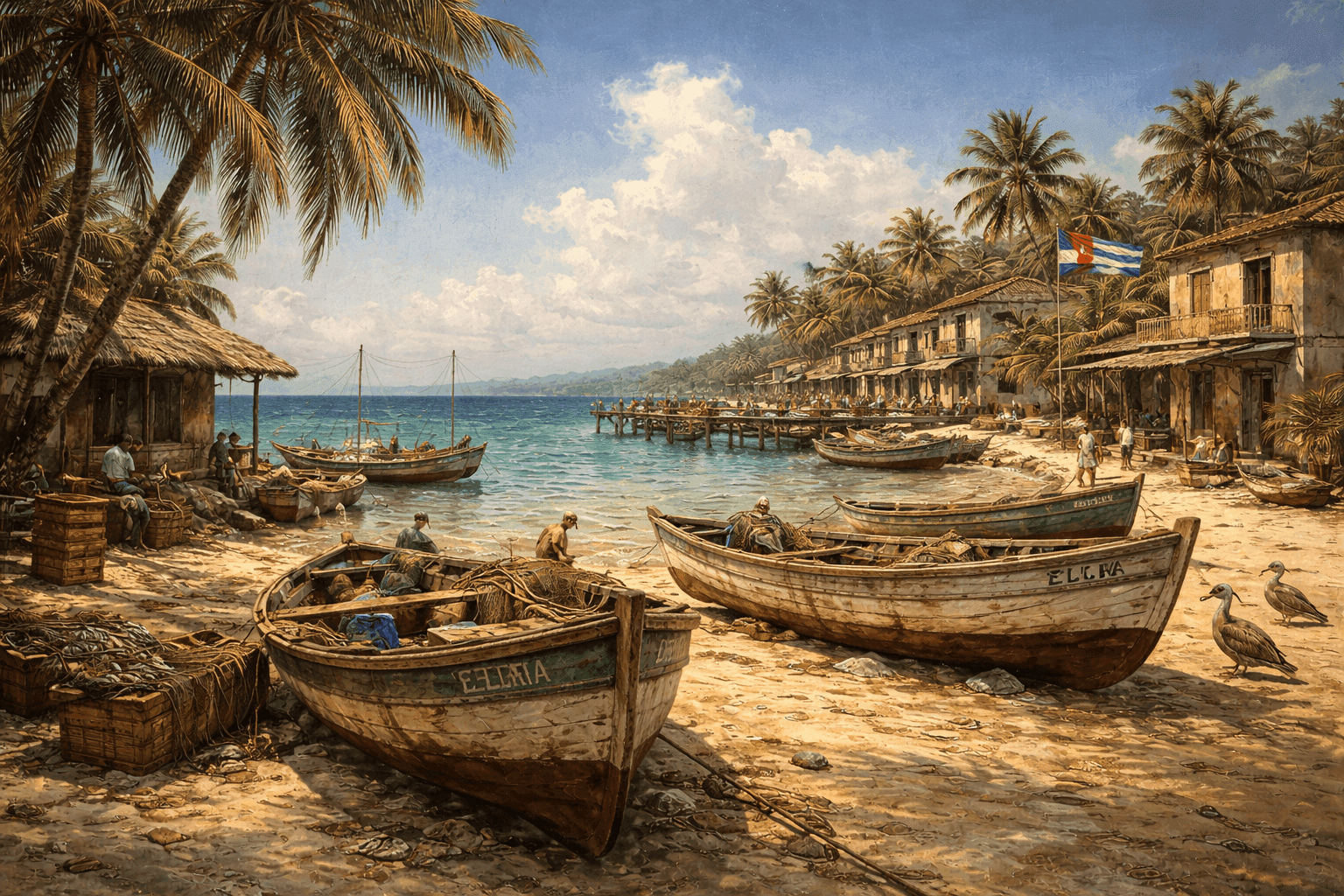
On March 4, 1952, nineteen years after Roosevelt's inauguration, Ernest Hemingway completed The Old Man and the Sea, a deceptively simple novella that would become his most celebrated work. The story follows Santiago, an aging Cuban fisherman who hasn't caught a fish in 84 days, as he hooks an enormous marlin and struggles for three days to bring it in. The fish is larger than his boat. Santiago respects the creature he's trying to kill, speaking to it as an equal: "Fish, I love you and respect you very much. But I will kill you dead before this day ends." When sharks devour the marlin on the journey home, Santiago arrives with nothing but a skeleton—victory and defeat intertwined.
Hemingway wrote the novella in just eight weeks at his home in Cuba, channeling decades of experience with the sea and his characteristic spare prose style into a meditation on courage, endurance, and grace under pressure. Santiago loses his prize but maintains his dignity; he is beaten but not destroyed. "A man can be destroyed but not defeated," Hemingway wrote, expressing a philosophy that applied equally to his aging fisherman and to the author himself, who was struggling with his own physical decline. The Old Man and the Sea earned Hemingway the Pulitzer Prize in 1953 and contributed to his Nobel Prize in Literature the following year. The novella's power lies in its universality—Santiago's struggle is everyone's struggle, the eternal human effort to prove worth in the face of indifferent nature and inevitable decline. Like the Constitution that endured and Roosevelt who persevered, Santiago demonstrates that resilience isn't about winning; it's about refusing to surrender.