March 2: A World Transformed Overnight
In the predawn hours of February 28, 2026, a coordinated U.S.-Israeli military operation — codenamed Operation Roaring Lion by Israel and Operation Epic Fury by the Pentagon — struck dozens of targets across Iran simultaneously. By morning, Iranian state media confirmed what officials in Washington and Jerusalem had already announced: Ayatollah Ali Khamenei, who had led the Islamic Republic for 37 years as its Supreme Leader, was dead. In a single night, the geopolitical architecture of the Middle East — built on assumptions about deterrence, proxy conflict, and the inviolability of sovereign leadership — was shattered.
A Pivot Point Decades in the Making
The strikes did not arrive without context. The road to February 28 ran through decades of confrontation: the 1979 Islamic Revolution that installed the theocratic government Khamenei would come to lead; the Iran-Iraq War of the 1980s; the decades of proxy conflict waged through Hezbollah, Hamas, and militias across Iraq and Syria; the repeated crises over Iran's nuclear program; and, most recently, the twelve-day Israel-Iran war of June 2025 and the violent suppression of mass protests inside Iran in January 2026, which the Islamic Revolutionary Guard Corps conducted against its own civilians. The strikes targeted not only Khamenei but a gathering of Iran's senior defense and security leadership — killing the army chief of staff, the defense minister, the head of the Revolutionary Guard, and a senior national security adviser in a single operation. Some 200 Israeli fighter jets participated in what the Israeli military described as the largest military flyover in its history, while U.S. Navy ships fired precision Tomahawk missiles at hundreds of targets, including Iran's ballistic missile infrastructure and nuclear facilities.
Iran's response was swift and broad. Within hours of the strikes, Tehran launched waves of ballistic missiles and drones at Israel and at U.S. military installations across the Persian Gulf — hitting targets in Bahrain, Kuwait, Qatar, Saudi Arabia, the UAE, and Jordan. International airports in Dubai and Abu Dhabi were struck. The port of Jebel Ali, one of the world's busiest, caught fire from aerial debris. In Israel, an Iranian ballistic missile killed at least six people in the city of Beit Shemesh. Three American service members were killed in the attacks on U.S. bases — the first confirmed U.S. combat deaths of the conflict. Iran declared forty days of national mourning for Khamenei and vowed further retaliation. Iran's internet connectivity collapsed to roughly four percent of normal levels as the government imposed a near-total blackout. In St. Peter's Square, Pope Leo XIV — the Catholic Church's first American pope — called on all parties to halt what he described as a "spiral of violence" before it became "an irreparable chasm."
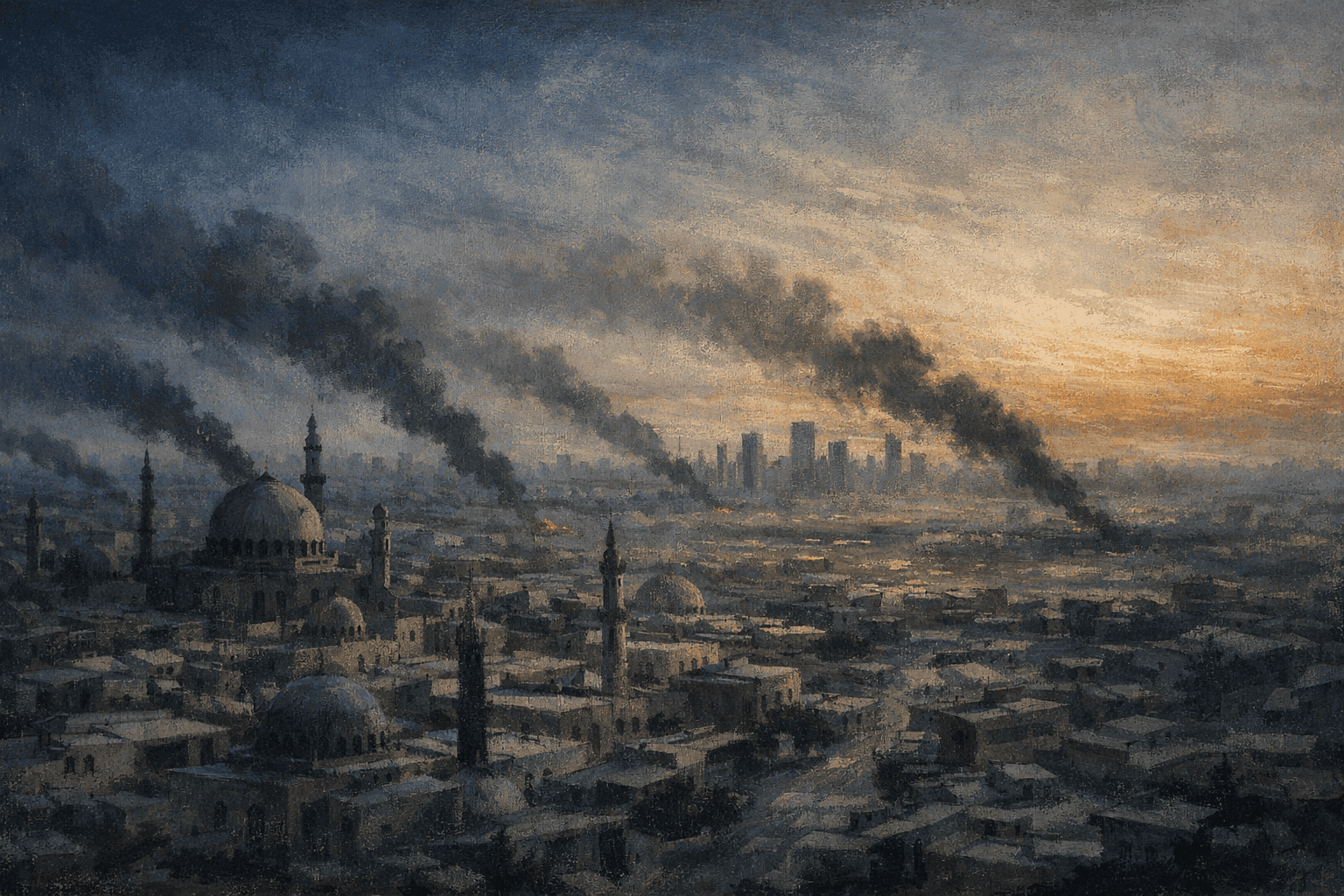
Historians will debate the decisions that led to this moment for generations. The death of a head of state in a military operation is among the rarest and most consequential events in international affairs — a category that includes the assassination of Archduke Franz Ferdinand in 1914, the killing of Admiral Yamamoto in 1943, and the U.S. strike that killed Osama bin Laden in 2011. Each reshaped the world that followed it in ways that were impossible to fully predict in the immediate aftermath. What is already clear, as of March 2, 2026, is that the rules and assumptions governing the Middle East for nearly half a century have been fundamentally disrupted. Iran faces a leadership vacuum with no publicly named successor to Khamenei, a government under military assault, and a population that has spent weeks in open protest against its own rulers. The region — and the world — is waiting to see what comes next.