November 9: The Wall Falls, a Nation Freed, a Mystery Ends
November 9: The Wall Falls, a Nation Freed, a Mystery Ends
Three November 9ths defined by endings — of a wall that divided a continent, of a colonial relationship that had run its course, and of a terror in the London fog that stopped as inexplicably as it had begun
Endings arrive in different ways. Some come as crowds surging toward a checkpoint, hammers raised, concrete giving way to the chisels of people who had waited twenty-eight years for this night. Some come in the formal language of treaties and declarations — a flag lowered, a handshake, a sovereignty transferred after decades of colonial administration. And some come in silence, with no explanation — a series of murders that had terrified a city for months, and then simply stopped, leaving behind only victims, theories, and one of history's most durable unsolved mysteries. November 9 holds all three kinds of ending: the jubilant, the dignified, and the unresolved.
Mauerfall
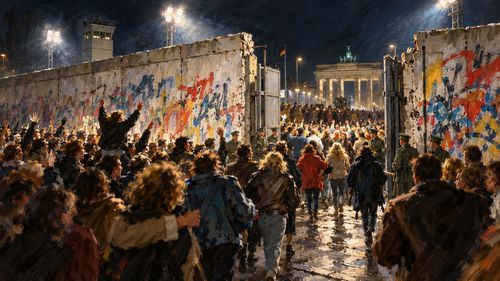
On the evening of November 9, 1989, an East German Communist Party spokesman named Günter Schabowski held a press conference in East Berlin and, in response to a question from an Italian reporter, announced that new regulations allowing East Germans to travel freely to the West would take effect — he shuffled his papers — "immediately, without delay." Schabowski had not been in the meeting where the policy was discussed and did not know it was supposed to take effect the following morning after proper processing procedures were established. He had been handed the information minutes before the press conference. His answer was broadcast live across both East and West German television, and within hours, crowds had gathered at every checkpoint along the Berlin Wall, demanding passage. The guards, with no orders and no guidance, eventually stood aside. The wall was open. People poured through.
The Berlin Wall had been built in August 1961 to stop the hemorrhage of East Germans — educated, skilled, and disillusioned — crossing to the West. In twenty-eight years it had killed an estimated 140 people attempting to cross it and had become the most potent physical symbol of the Iron Curtain, of the Cold War's division of Europe into two ideological blocs separated by wire and concrete and armed guards with orders to shoot. Its fall on November 9, 1989 was not a military defeat but a bureaucratic accident accelerated by the irresistible force of a population that had decided it was done. Within the year, Germany was reunified. Within two years, the Soviet Union had dissolved. The Cold War that the Wall had embodied for twenty-eight years ended, in practical terms, on the night a spokesman read from a piece of paper he didn't fully understand and changed the world.
The Berlin Wall on the night of November 9, 1989 — where twenty-eight years of division ended because a spokesman read from a piece of paper he hadn't been properly briefed on.
Kingdom of Cambodia
On November 9, 1953, Cambodia achieved full independence from France, completing a transition that King Norodom Sihanouk had pursued through a combination of diplomatic pressure, international appeals, and what he called his "Royal Crusade for Independence" — a personal campaign that included going abroad and refusing to return until France agreed to full sovereignty. France had administered Cambodia as a protectorate since 1863 and as part of French Indochina since 1887, a colonial relationship that had disrupted traditional Khmer governance while leaving the country's agricultural economy largely underdeveloped and its population largely excluded from political power. The independence that arrived on November 9, 1953 came as part of the broader wave of decolonization that was transforming Asia and Africa in the years following World War II.
The Cambodia that gained independence in 1953 faced an uncertain future. Sihanouk, who had maneuvered skillfully to achieve sovereignty, dominated the country's politics for the following two decades — navigating the Cold War's competing pressures with a neutralist policy that grew increasingly difficult to sustain as the Vietnam War intensified and American bombing campaigns targeted North Vietnamese supply routes through Cambodian territory. A 1970 coup removed Sihanouk while he was abroad. The civil war that followed drew Cambodia into the Vietnam conflict's vortex, and the Khmer Rouge — radical agrarian communists who would go on to commit one of the twentieth century's worst genocides — ultimately seized power in 1975. The independence that Cambodia gained on November 9, 1953 did not guarantee stability, peace, or the protection of its people from what came next. It guaranteed, at least, that what came next would be Cambodia's own reckoning to navigate.
The Cambodian landscape — a country whose independence on November 9, 1953 came after ninety years of French colonial rule, and whose future would prove as complicated as its path to sovereignty.
❦
Whitechapel, 1888
On November 9, 1888, Mary Jane Kelly was murdered in her room at 13 Miller's Court in Whitechapel, East London — the most brutal of the killings attributed to the unidentified murderer known as Jack the Ripper, and the last. Kelly, twenty-five years old and an Irish-born sex worker, was killed in the early hours of the morning in the only indoor murder attributed to the Ripper, which allowed the killer substantially more time than the street murders had permitted. The Metropolitan Police's investigation, already under strain from the four preceding killings that began in August 1888, intensified after Kelly's death — and then, without explanation, the murders stopped. No further killings were attributed to the same perpetrator. The case was never solved. The investigation was formally closed in 1892.
The five canonical Ripper victims — Mary Ann Nichols, Annie Chapman, Elizabeth Stride, Catherine Eddowes, and Mary Jane Kelly — were women living in extreme poverty in one of London's most destitute neighborhoods, surviving in conditions that the Victorian city's wealthier residents preferred not to think about. Their murders became a sensation, covered obsessively by a press that was simultaneously horrified and eager, and they have remained in public consciousness ever since — not primarily as the women they were, but as components of a mystery. More than a hundred suspects have been named over the following century and more, with theories ranging from the plausible to the baroque. The identity of Jack the Ripper has never been established to the satisfaction of any serious historical standard. What November 9, 1888 ended was not a case — it was a killing spree. The case, in the truest sense, never ended at all.
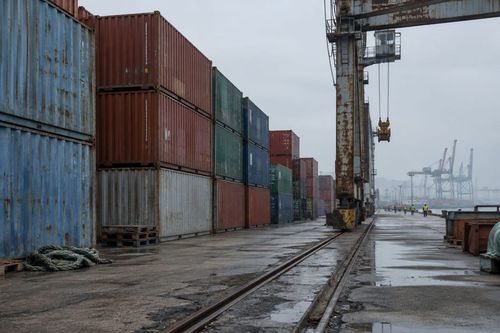
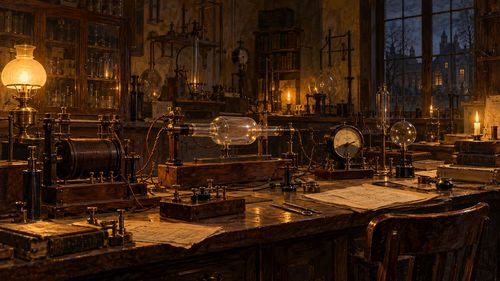
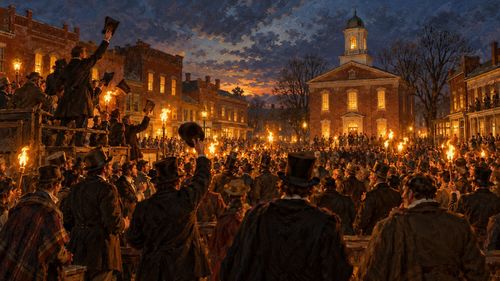
Whitechapel, East London in 1888 — where the murders attributed to Jack the Ripper ended on November 9, as inexplicably as they had begun, leaving behind victims, theories, and no answer.