March 1: A Nation Unified, A Park Protected, Peace Promoted
March 1 has witnessed three defining moments in how America conceived of its responsibilities—to its own unity, to the natural world, and to global community. From a fragile confederation of states finally agreeing to govern together, to a president declaring that some landscapes belong to all people for all time, to a Cold War leader who believed Americans could build peace through service rather than weapons, these events reflect evolving ideas about what a nation should protect and promote beyond its immediate interests.
Thirteen States Become One
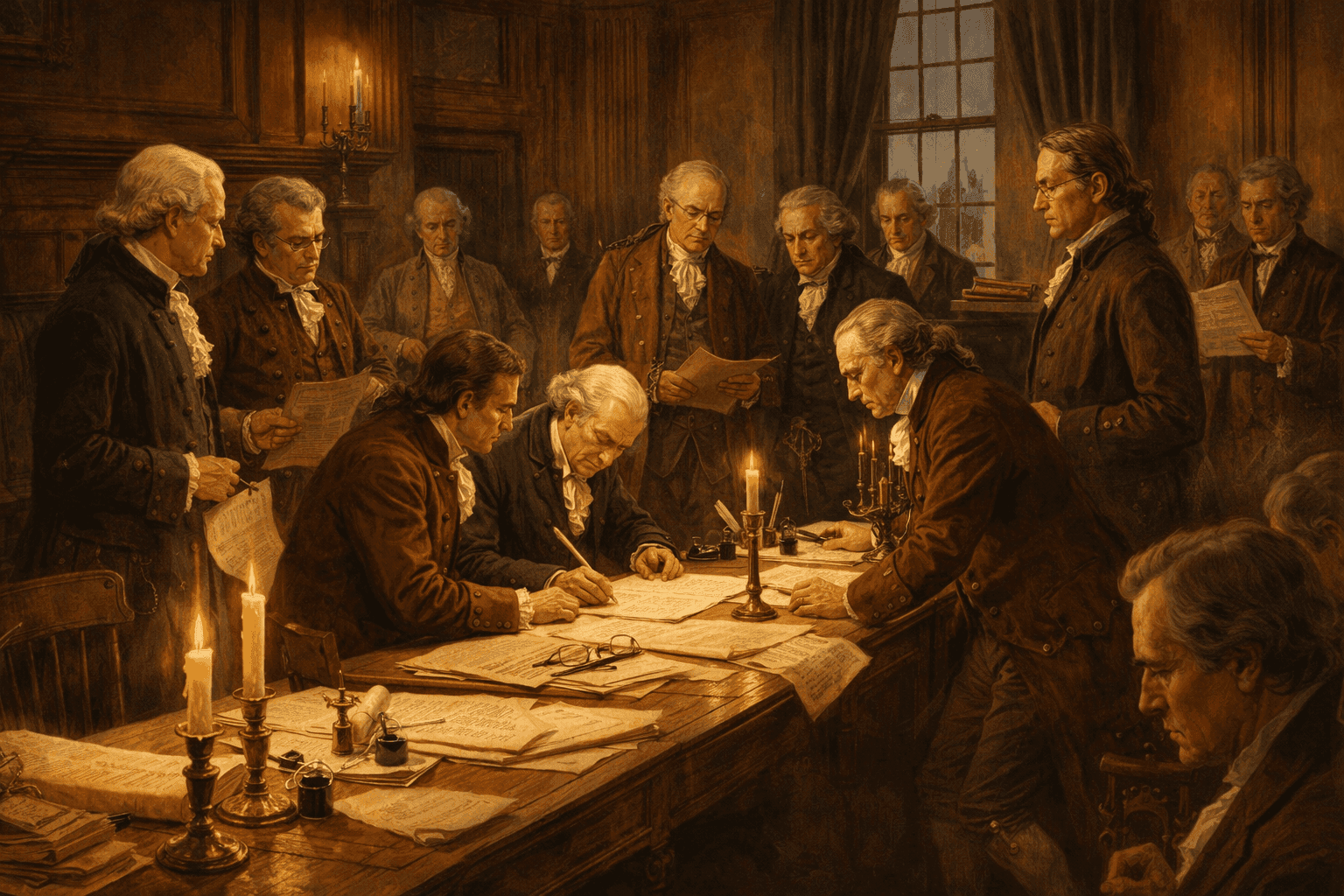
On March 1, 1781, Maryland became the thirteenth and final state to ratify the Articles of Confederation, formally creating the United States of America as a legal entity. The delay wasn't trivial—Congress had approved the Articles in 1777, but Maryland held out for nearly four years, refusing to join until states with western land claims agreed to cede those territories to the common government. Maryland's stubbornness reflected a fundamental tension: how could states be both sovereign and united? The Articles attempted to answer by creating what was essentially a "league of friendship" rather than a true national government.
The framework proved fatally weak almost immediately. Congress couldn't levy taxes, regulate commerce, or enforce its own laws. It couldn't even compel states to contribute their promised funds. Yet the Articles accomplished something crucial: they kept thirteen fractious states cooperating through the Revolution's final years and established precedents for congressional procedures, western expansion, and federal authority that would survive into the Constitution. The Articles' failure was instructive—it demonstrated that "united" required more than friendship; it demanded enforceable collective power. When delegates gathered in Philadelphia six years later to fix the system, they scrapped it entirely and started over. The Articles of Confederation died, but the idea they represented—that diverse states could form a unified nation—survived and strengthened.
Land Belonging to Everyone
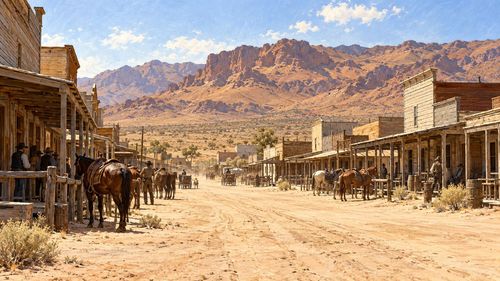
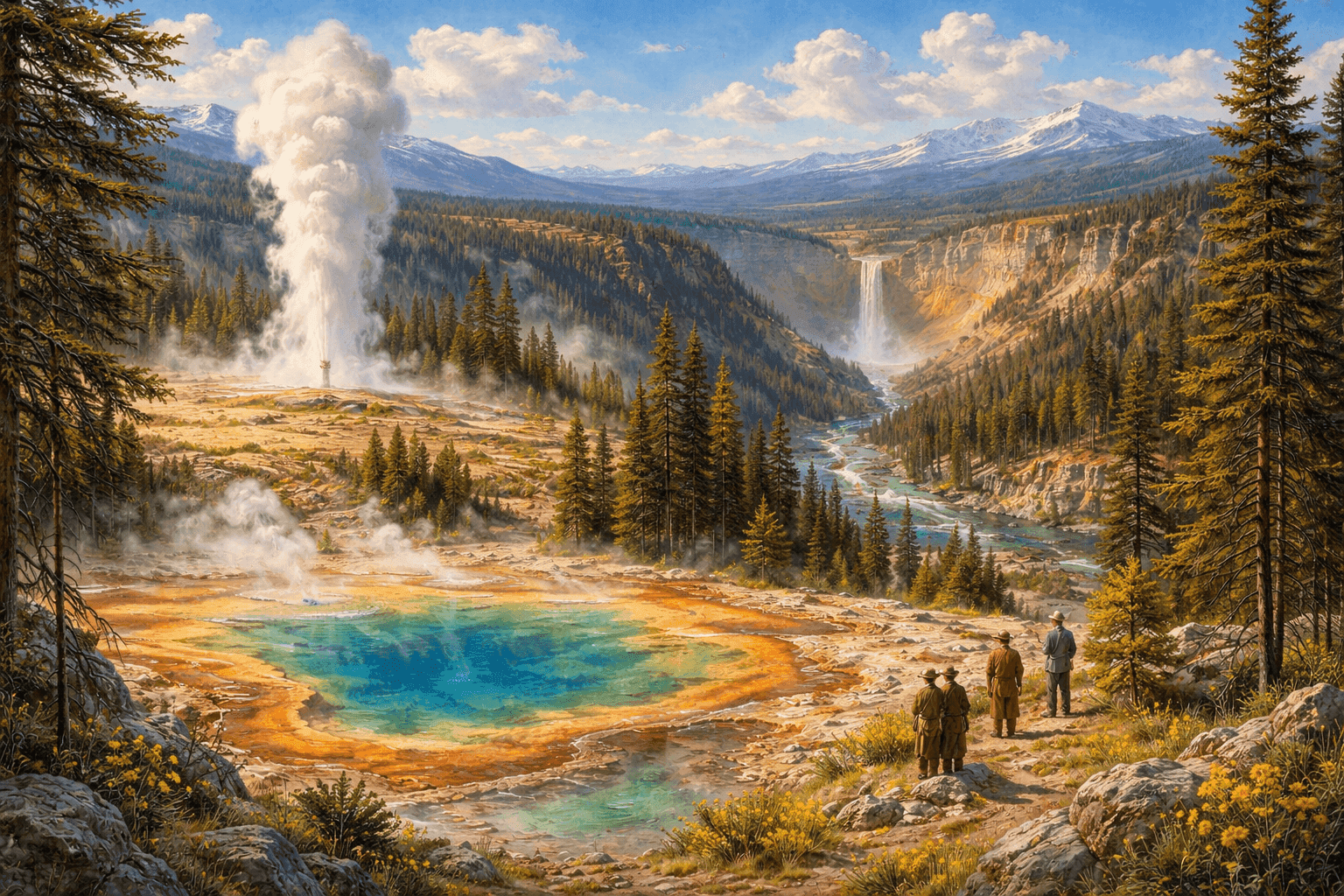
Ninety-one years later, on March 1, 1872, President Ulysses S. Grant signed legislation establishing Yellowstone as the world's first national park, setting aside two million acres of Wyoming, Montana, and Idaho "as a public park or pleasuring-ground for the benefit and enjoyment of the people." The concept was revolutionary: land withdrawn from private ownership or commercial exploitation and preserved in its natural state for public access. No nation had attempted such a thing before. The idea emerged partly from the paintings and photographs that Ferdinand Hayden's geological survey brought back from Yellowstone—images of geysers, hot springs, and dramatic canyons that seemed too magnificent to allow private interests to carve up and sell.
Yellowstone's establishment reflected a maturing environmental consciousness, though one still limited by its era. The park's creation displaced Native peoples who had lived in and traveled through the region for millennia, particularly the Shoshone, Bannock, and Crow. Early park management actively worked to remove Indigenous people and suppress their traditional practices. Yet despite these injustices, the national park idea represented a profound shift in human relationship with landscape. It declared that some places were valuable precisely because they remained wild, unimproved, and accessible to all rather than owned by the wealthy few. The model spread globally—today over 100 countries maintain national parks inspired by Yellowstone. Grant's signature created more than a park; it inaugurated a worldwide movement to preserve natural heritage for future generations.
Ambassadors of Goodwill
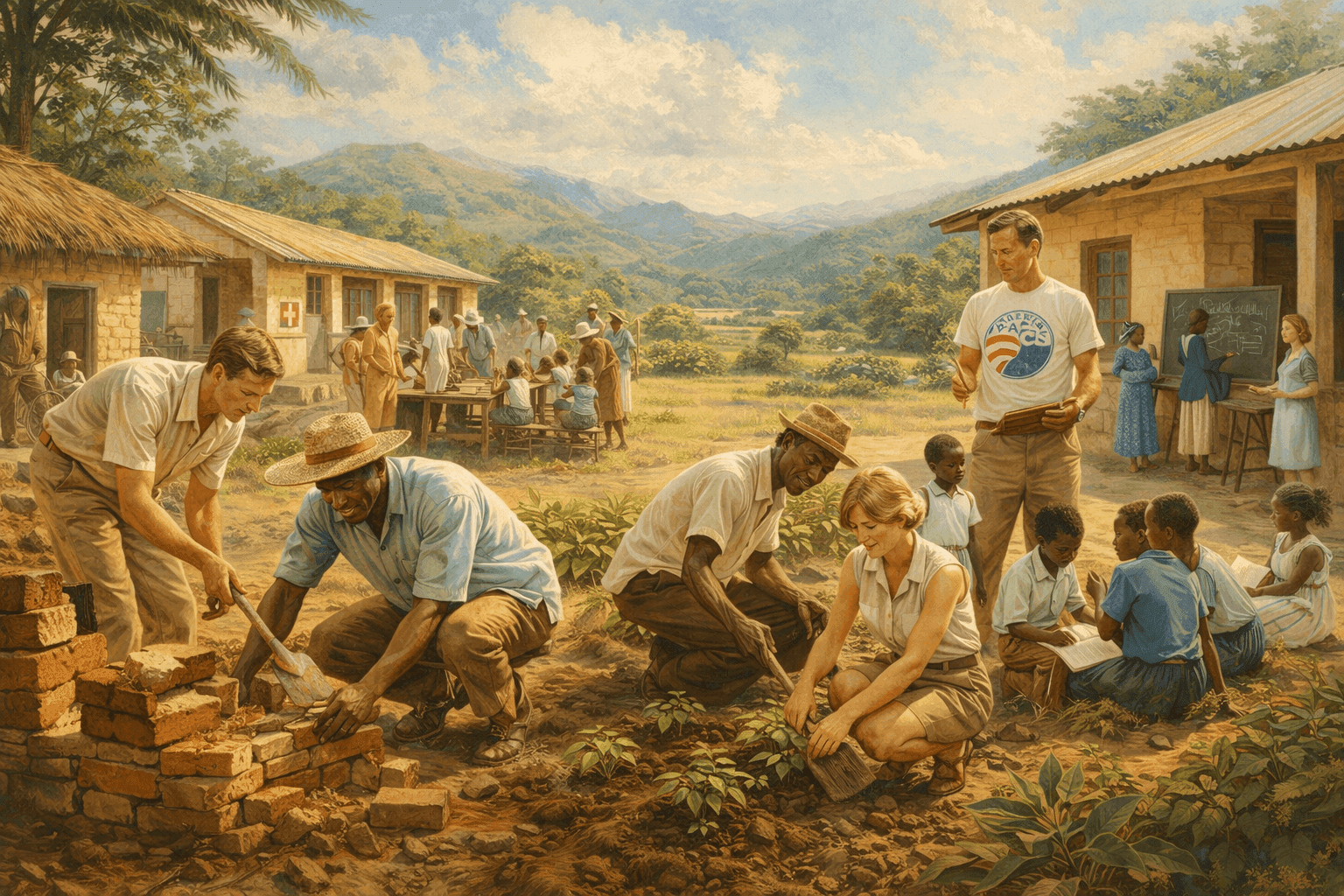
On March 1, 1961, eighty-nine years after Yellowstone's creation, President John F. Kennedy signed Executive Order 10924 establishing the Peace Corps. Kennedy had proposed the idea during his 1960 campaign, asking students at the University of Michigan if they would be willing to serve their country by living and working in developing nations. The response was enthusiastic. The Peace Corps offered an alternative to Cold War militarism: instead of containing communism through weapons and covert operations, America would win hearts and minds through teachers, agricultural advisors, and public health workers who would live alongside communities and share their skills.
The idealism was real, though complicated by Cold War politics and the uncomfortable dynamics of Americans arriving to "help" countries struggling with poverty that often stemmed from colonial exploitation. Yet the Peace Corps succeeded in ways Kennedy might not have anticipated. Over 240,000 volunteers have served in 142 countries, but the program's greatest impact may be on the volunteers themselves—Americans who returned home with deeper understanding of global complexity, foreign languages, and relationships that transcended national stereotypes. The Peace Corps embodied Kennedy's inaugural challenge to "ask not what your country can do for you—ask what you can do for your country," while expanding that country's definition to include the whole world. It suggested that national service could mean building schools in Ecuador or digging wells in Niger, and that America's security might depend as much on goodwill as on weapons.