On June 29, 1972, the U.S. Supreme Court delivered its decision in Furman v. Georgia, effectively striking down the death penalty across the United States. The Court ruled that the death penalty, as applied at the time, was arbitrary and capricious, violating both the Eighth and Fourteenth Amendments. This decision forced a nationwide halt to executions and reshaped how capital punishment would be used going forward.
A Flawed and Unequal System

The Furman case involved a man sentenced to death for killing a homeowner during a robbery gone wrong, but the Court used the opportunity to address broader issues. In a narrow 5–4 vote, the justices concluded that the death penalty was imposed in ways that were inconsistent, discriminatory, and often influenced by race or poverty.
This inconsistency meant that two people convicted of similar crimes could receive drastically different sentences—life for one, death for another. The ruling didn’t abolish capital punishment but demanded that states create fairer, more consistent sentencing guidelines.
National Fallout and State Responses
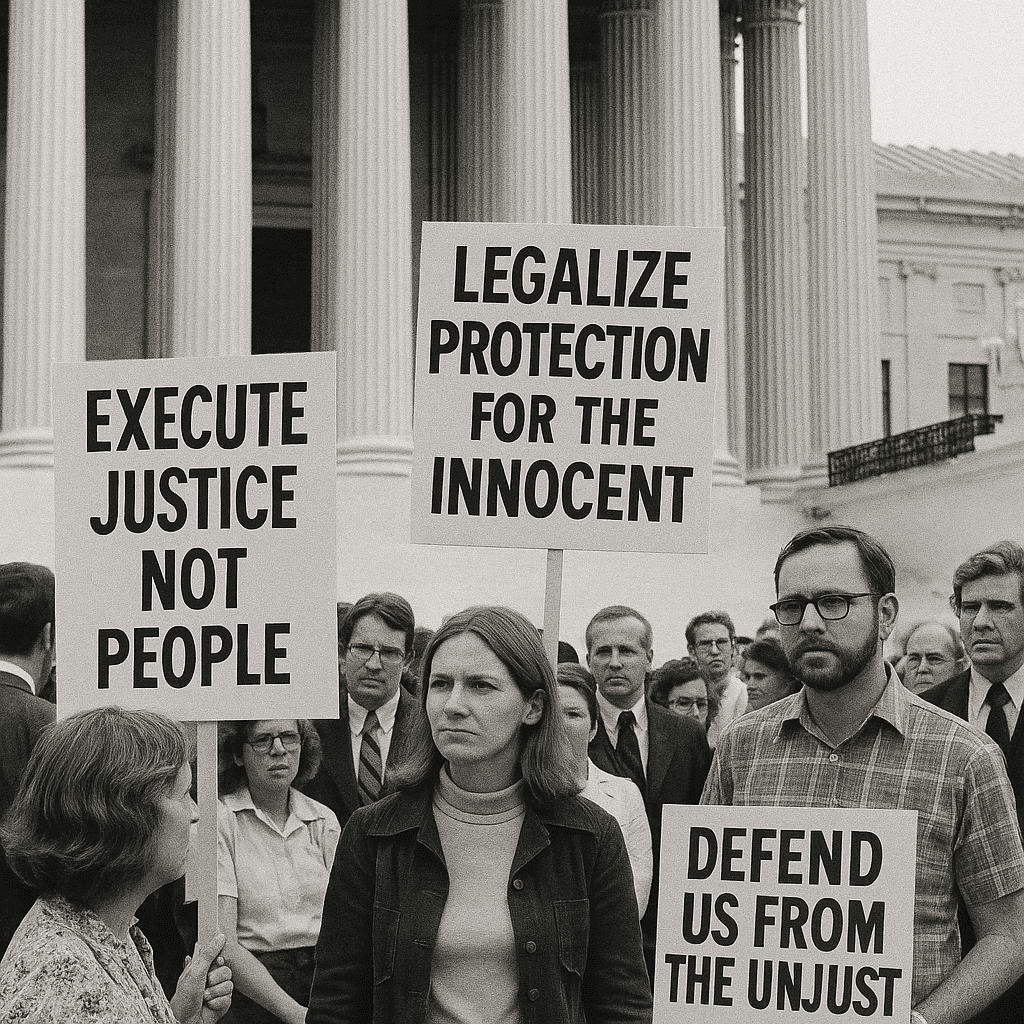
The impact was immediate: more than 600 death sentences were vacated, and executions were suspended across all states. Opponents of the death penalty hailed the decision as a victory for civil rights and due process.
Many state legislatures, however, were determined to reinstate the death penalty. In the years following Furman, over 30 states revised their laws to introduce mandatory sentencing or bifurcated trials, aiming to satisfy constitutional standards.
A Legacy of Reform and Controversy

By 1976, the Court upheld new death penalty statutes in Gregg v. Georgia, allowing executions to resume under stricter protocols. Yet Furman had permanently changed the legal landscape.
Today, Furman v. Georgia remains a critical touchstone in the national debate over capital punishment. It exposed the deep flaws in the system and continues to influence how states implement and evaluate the death penalty.