Helen Keller, an American icon of perseverance and advocacy, died on June 1, 1968, at the age of 87. Though left deaf and blind by illness at just 19 months old, Keller’s life would become a testament to the power of education, resilience, and activism. Guided by the devoted efforts of her teacher, Anne Sullivan, Keller emerged from isolation to become a renowned author, political activist, and global advocate for the disabled and disenfranchised. Her extraordinary achievements left a legacy that continues to impact social justice movements worldwide.
Breaking Barriers Through Education

Helen Keller’s early years were marked by frustration and silence until the arrival of Anne Sullivan, who became both mentor and friend. At the age of six, Keller began learning to communicate through finger spelling, a revolutionary method that unlocked her ability to interact with the world. She would go on to become the first deaf-blind person to earn a Bachelor of Arts degree, graduating from Radcliffe College in 1904. Her academic success shattered assumptions about the capabilities of people with disabilities and signaled a new era in inclusive education.
Keller’s thirst for knowledge extended beyond the classroom. She became proficient in multiple languages, authored several books, and delivered lectures around the world. Her intellectual pursuits were driven by a belief in the power of human potential, regardless of physical limitations. Through her accomplishments, Keller demonstrated that access to education and support could empower even those facing the most profound challenges.
A Voice for the Voiceless

Keller used her platform to become a tireless advocate for people with disabilities, often speaking out when society offered little support or understanding. For more than 40 years, she worked closely with the American Foundation for the Blind, helping to improve opportunities and resources for the visually impaired. Her efforts played a crucial role in shaping early disability rights policies and raising public awareness about accessibility.
Beyond disability advocacy, Keller was active in broader political causes. She campaigned for women's suffrage, labor rights, and racial equality, and was an early supporter of the NAACP. Her involvement with the Socialist Party of America underscored her deep commitment to social justice, even when her views were unpopular. Keller’s activism showed that inclusion and empathy must extend across all areas of society—a philosophy that remains vital today.
Inspiration That Transcends Generations
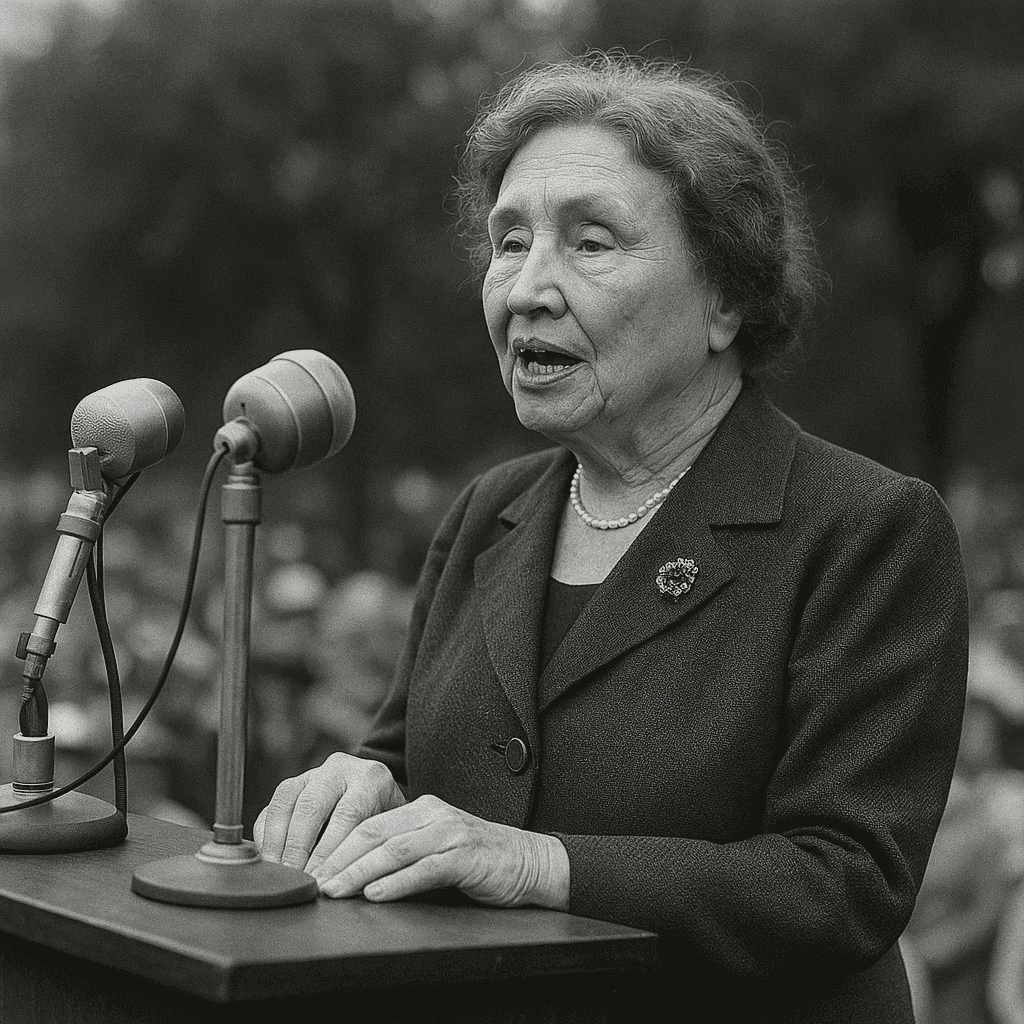
Helen Keller's death in 1968 marked the end of a life that redefined possibility. Yet her legacy lives on in institutions, movements, and individuals inspired by her story. From schools and libraries bearing her name to global human rights campaigns that echo her principles, Keller remains a symbol of what can be achieved through determination and compassion. Her autobiography, The Story of My Life, continues to educate and inspire readers around the world.
Today, Keller’s influence can be seen in the ongoing fight for disability rights and inclusive policies. Her example is invoked in classrooms, advocacy organizations, and leadership seminars as a model of courage and resilience. In an increasingly interconnected world, her belief in the dignity and potential of every human being offers timeless guidance. Keller proved that even in silence and darkness, one life can illuminate a path for millions.