On May 29, 2005, Danica Patrick made history by becoming the first woman to lead laps at the Indianapolis 500. In a sport long dominated by men, her performance sent shockwaves through the racing world and beyond. Patrick’s fourth-place finish, the highest by a woman at that time, wasn’t just a record—it was a cultural milestone that challenged assumptions and elevated the visibility of women in motorsports on a global scale.
A Breakthrough on Racing’s Biggest Stage

Patrick entered the 2005 Indy 500 as a rookie but quickly became one of the race’s most talked-about contenders. With a strong qualifying position in fourth place and the backing of a competitive team, she carried the hopes of both fans and critics eager to see how she would perform on racing’s most prestigious oval.
Over the course of the 200-lap race, Patrick overcame setbacks—including a spin and a stalled engine during a caution—and still managed to climb back to the front. Her determination culminated in her leading for 19 laps, a feat no other woman had ever achieved in the race’s history.
Captivating a Global Audience
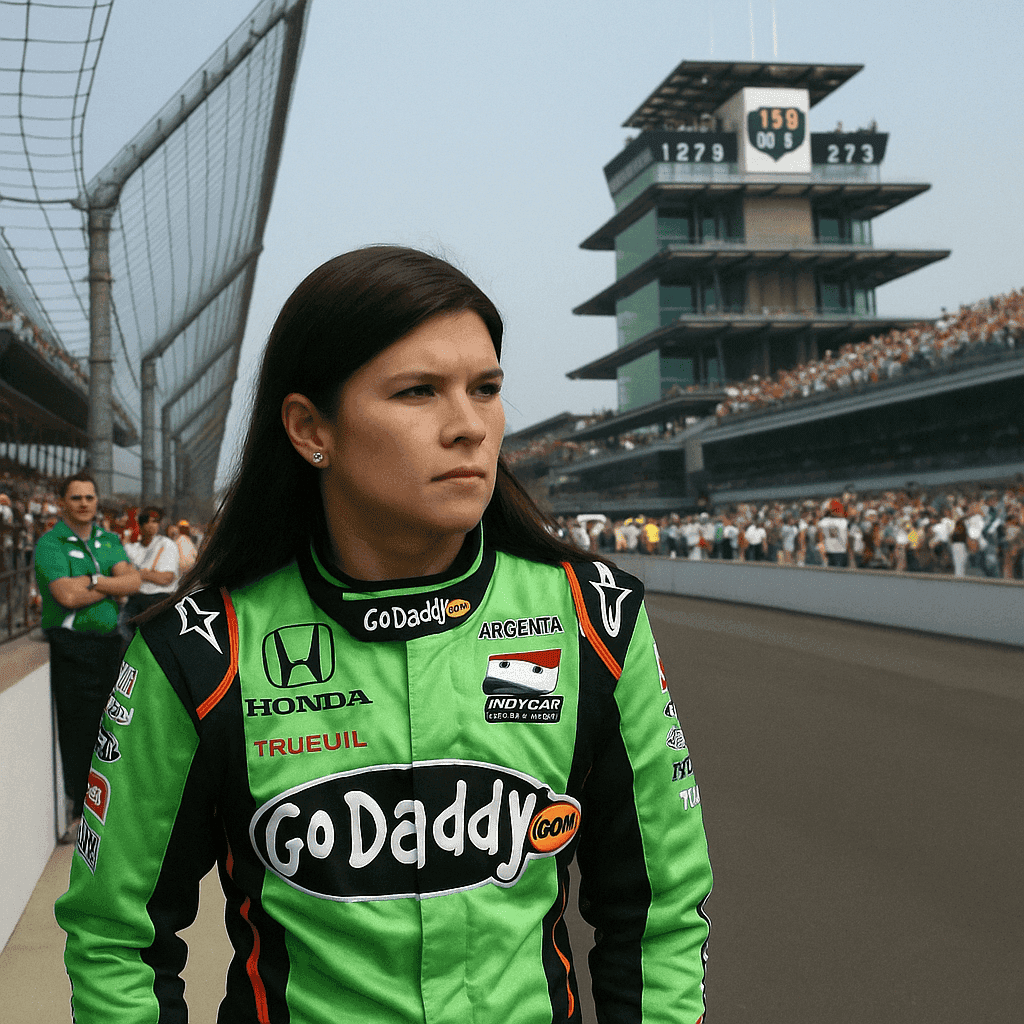
The moment Patrick took the lead ignited excitement not just among racing enthusiasts but also among casual viewers who had tuned in to witness history. Millions watched as she maintained her position at the front of the pack, battling seasoned veterans and defying the odds in a high-pressure environment.
Though she eventually had to conserve fuel and slipped back to fourth place, her performance was widely celebrated. Commentators hailed her poise, competitiveness, and tactical savvy, and the crowd responded with admiration, understanding that they had witnessed something unprecedented.
A Legacy Beyond the Checkered Flag

Patrick’s 2005 Indy 500 performance transcended the sport and helped redefine the image of what a successful race car driver could look like. She broke through the gender barrier not by winning the race, but by showing that she could lead it—with grit, skill, and grace under pressure.
Her impact extended far beyond that single event. Patrick became a symbol of progress, inspiring young girls to pursue their own racing dreams and encouraging institutions to re-evaluate the roles and representation of women in elite sports. Her legacy continues to resonate on and off the track.