February 28: A Church Founded, A Show Ends, A Helix Revealed
February 28 marks a day when communities gathered—around shared belief, around a television screen, and around a scientific revelation that would redefine humanity's understanding of itself. Whether seeking spiritual connection, collective catharsis, or the molecular blueprint of existence, these three moments remind us that humans are driven by a fundamental need to discover what binds us together, whether that binding force is faith, culture, or the twisted ladder of DNA itself.
The Method in the Movement
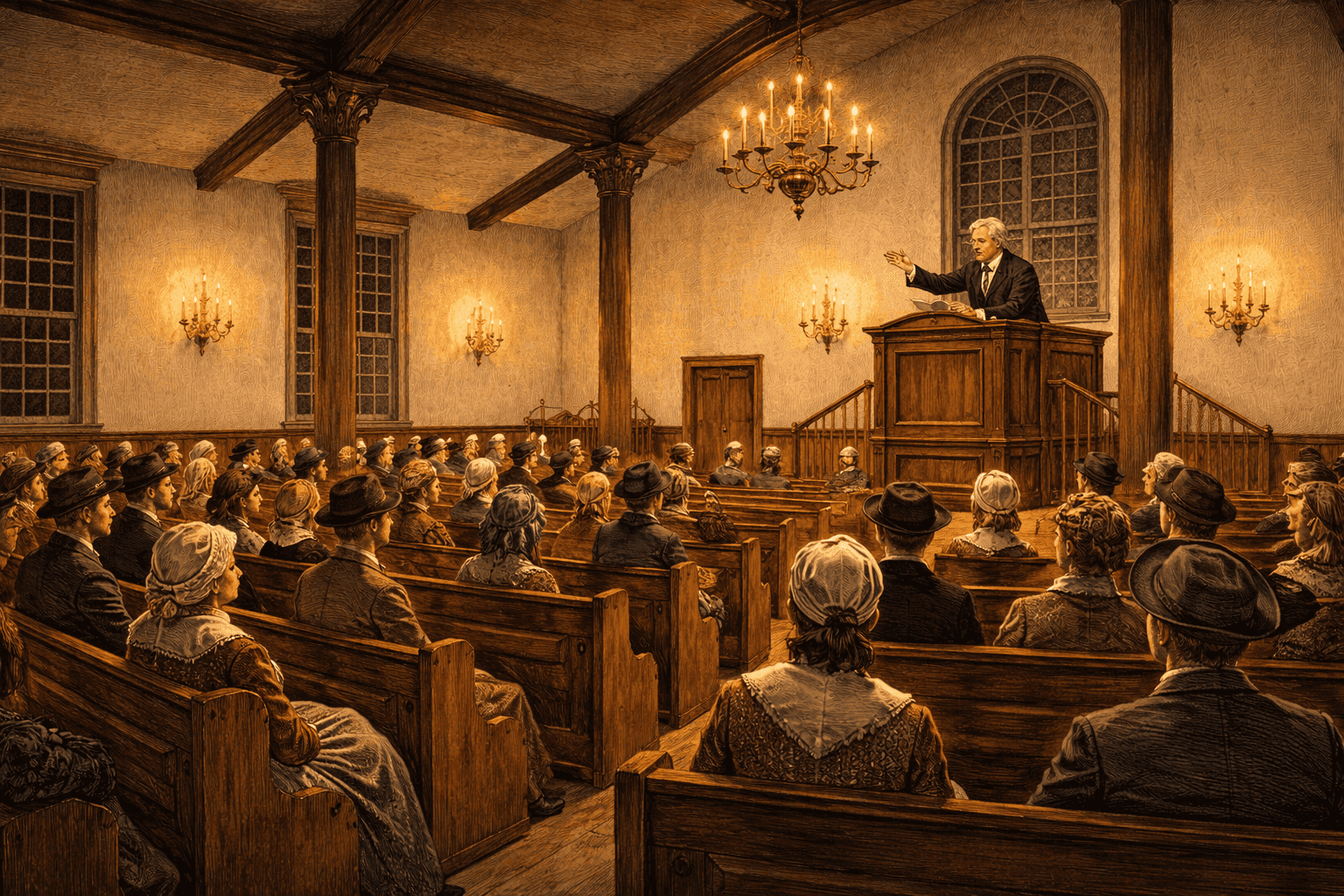
On February 28, 1784, John Wesley formally organized the Methodist Episcopal Church in America, establishing the denomination's first official presence in the newly independent United States. Wesley, an Anglican priest who had sparked a religious revival movement in England through open-air preaching and organized religious societies, recognized that American Methodism needed formal structure to survive and grow. He appointed Thomas Coke and Francis Asbury as superintendents (later called bishops) and sent them to organize American followers into a cohesive church with standardized practices and doctrines.
The timing was significant. America had just won independence from Britain, and religious denominations faced the challenge of reorganizing without state support or oversight. Wesley's Methodism offered something appealing to the new republic: an emphasis on personal religious experience, emotional worship, and systematic spiritual development accessible to common people rather than theological elites. The movement spread rapidly across the frontier through circuit-riding preachers who brought religion to isolated settlements. By the mid-19th century, Methodism had become America's largest Protestant denomination. Wesley's organizational genius—combining passionate revivalism with disciplined structure—created a religious movement perfectly suited to a young nation that valued both individual conviction and communal belonging.
Goodbye, Farewell and Amen
One hundred ninety-nine years later, on February 28, 1983, over 105 million Americans gathered around their television sets for a collective farewell. The final episode of M*A*S*H—"Goodbye, Farewell and Amen"—aired after eleven seasons, 256 episodes, and a cultural impact that transcended typical sitcom fare. The series, set in a Mobile Army Surgical Hospital during the Korean War, had evolved from irreverent comedy into something more profound: a meditation on war's absurdity, humanity's resilience, and friendship forged under impossible circumstances.
The finale's viewership remains staggering even in today's fragmented media landscape—77 percent of households watching television that night tuned in. The two-and-a-half-hour episode didn't shy from darkness: it dealt with post-traumatic stress, moral injury, and the painful process of saying goodbye to people you've survived hell alongside. Yet it also offered something Americans desperately needed in 1983—closure, catharsis, and affirmation that even in war's chaos, human decency endures. The show became more than entertainment; it was a weekly gathering place where a nation processed the Vietnam War's lingering trauma through the safer distance of Korea. When it ended, viewers didn't just lose a TV show—they lost a shared cultural touchstone in an era when such communal experiences were becoming increasingly rare.

The Twisted Ladder of Life
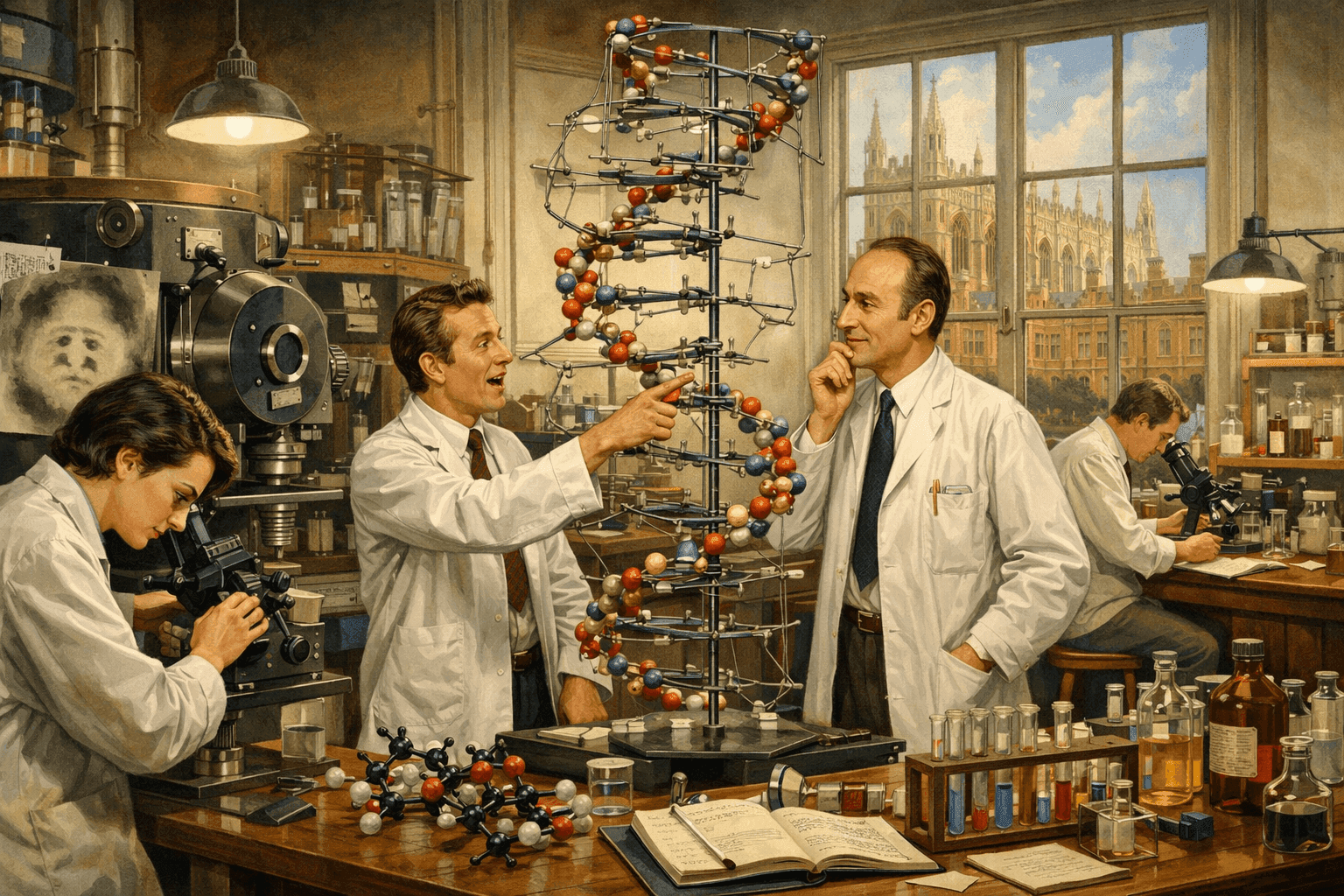
On February 28, 1953, thirty years before M*A*S*H's finale, two scientists burst into The Eagle pub in Cambridge, England, and announced they had discovered "the secret of life." James Watson and Francis Crick had just determined the double-helix structure of DNA—two intertwined strands forming a twisted ladder, with genetic information encoded in the sequence of base pairs that form the ladder's rungs. Their model explained how genetic material could be copied with precision and how information could be stored in a molecular structure, solving mysteries that had puzzled biologists for decades.
The discovery rested on crucial work by others, particularly Rosalind Franklin's X-ray crystallography images that revealed DNA's helical structure—though Franklin's essential contribution was inadequately acknowledged at the time. Watson and Crick's achievement was synthesizing disparate evidence into an elegant model that immediately explained how life could replicate itself and pass traits across generations. The implications cascaded outward: modern genetics, biotechnology, personalized medicine, forensic science, and our understanding of evolution all flow from that twisted ladder. The double helix became biology's Rosetta Stone, revealing that all life on Earth shares the same basic instruction manual, written in the same four-letter chemical alphabet. In discovering DNA's structure, Watson and Crick revealed the molecular thread connecting every living thing—a unity more fundamental than faith or culture, encoded in the very chemistry of existence.