February 26: A Canyon Protected, A Force Unleashed, A Tower Shaken
February 26 has witnessed humanity at its best and worst. A nation chose to protect one of Earth's most magnificent landscapes for perpetuity, a regime built a war machine that would bring devastation across a continent, and terrorists struck at the heart of American commerce in an attack that foreshadowed even greater tragedy. These three moments remind us that the same human impulses—to preserve, to build, to destroy—can lead to vastly different legacies.
The Chasm Time Carved
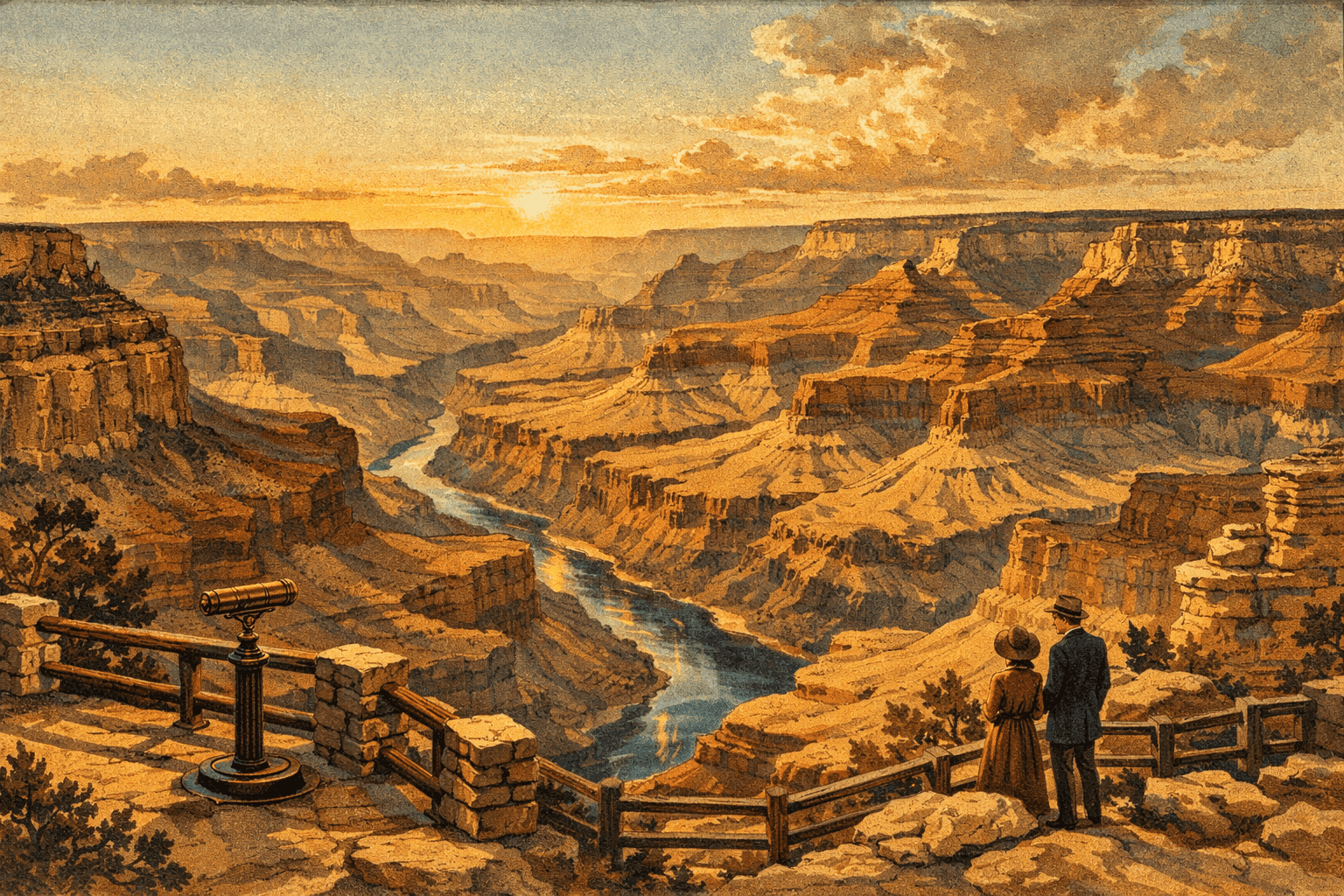
On February 26, 1919, President Woodrow Wilson signed legislation establishing Grand Canyon National Park, protecting 1,217 square miles of Arizona landscape that the Colorado River had spent six million years carving into stone. The canyon had been a national monument since Theodore Roosevelt designated it in 1908, but full national park status offered stronger protection against mining interests and commercial development. Standing at the rim, visitors gaze into geological history written in horizontal bands—two billion years of Earth's story laid bare in layered rock descending a mile to the river below.
The park's creation represented the maturation of American conservation philosophy. Earlier generations had viewed wilderness as an obstacle to overcome or a resource to exploit. By the early twentieth century, a different ethic emerged: some places were too magnificent, too scientifically valuable, too spiritually important to sacrifice for short-term gain. The Grand Canyon became a temple to this idea. Today it welcomes six million visitors annually, each confronting the humbling reality of deep time and the planet's capacity to create beauty on a scale that dwarfs human ambition. The park's establishment wasn't just about protecting scenery; it was about recognizing that some of Earth's wonders belong to everyone and to no one, preserved not for profit but for wonder itself.
The Wings of War
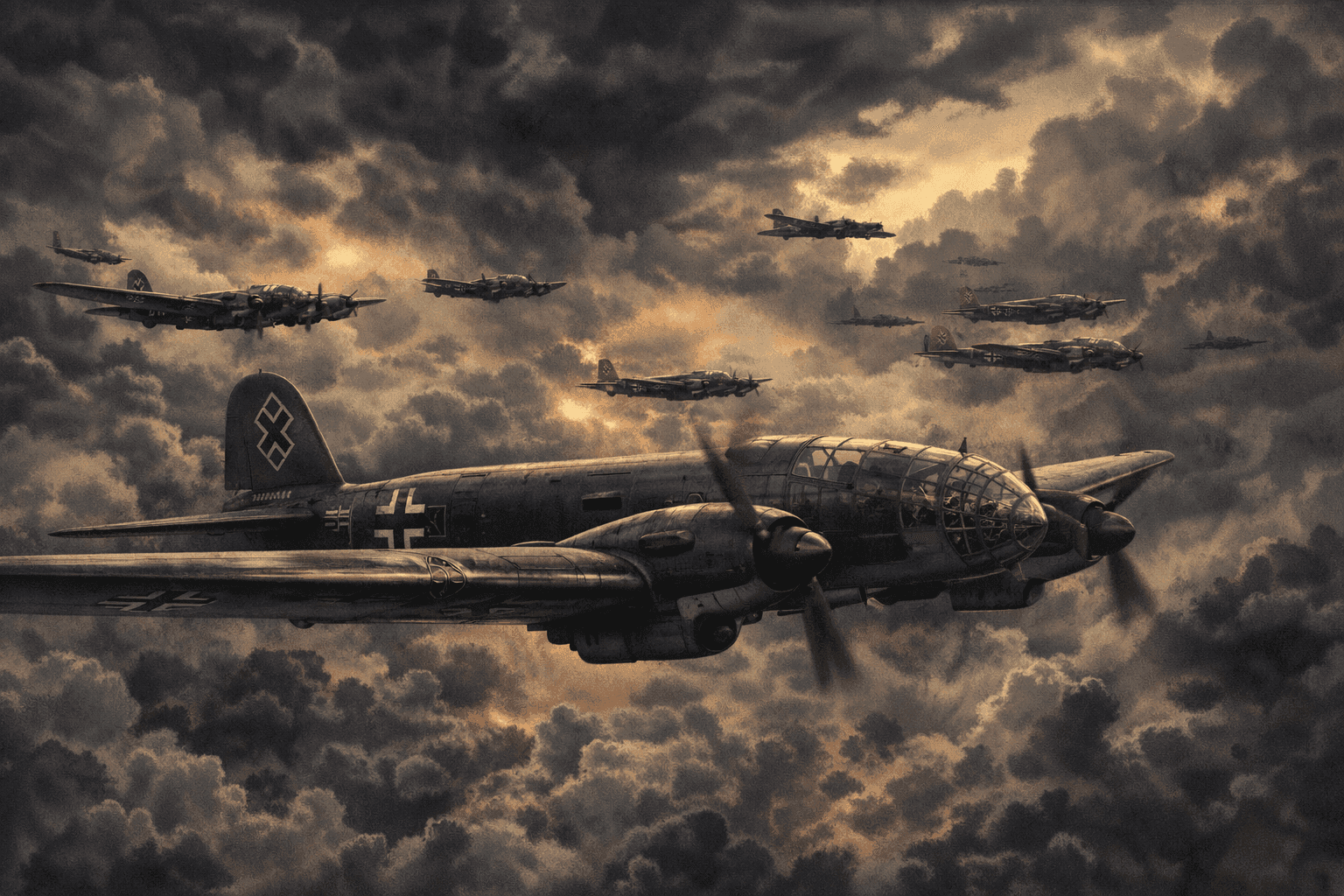
Sixteen years later, on February 26, 1935, Adolf Hitler publicly announced the creation of the Luftwaffe, Germany's new air force, in brazen violation of the Treaty of Versailles. The treaty that ended World War I had explicitly forbidden Germany from maintaining military aircraft, but Hitler had been secretly rebuilding German air power for years through training programs disguised as civilian flying clubs and aircraft manufacturing hidden as commercial production. The public announcement signaled that Germany would no longer pretend to honor restrictions imposed by the victorious Allies.
The Luftwaffe's unveiling was a calculated gamble. Hitler correctly predicted that Britain and France, still traumatized by World War I's carnage and focused on domestic economic troubles, would protest but not act. He was right. The Western powers condemned Germany's rearmament but did nothing to stop it. Within four years, the Luftwaffe would demonstrate its capabilities in the skies over Poland, then France, then Britain itself during the Blitz. The air force that Hitler revealed in 1935 would become one of history's most formidable military machines, instrumental in the early Nazi victories that nearly conquered Europe. Its creation marked a point of no return in the drift toward another world war—a moment when aggressive rearmament should have triggered immediate response but instead met only words of disapproval.
The First Strike
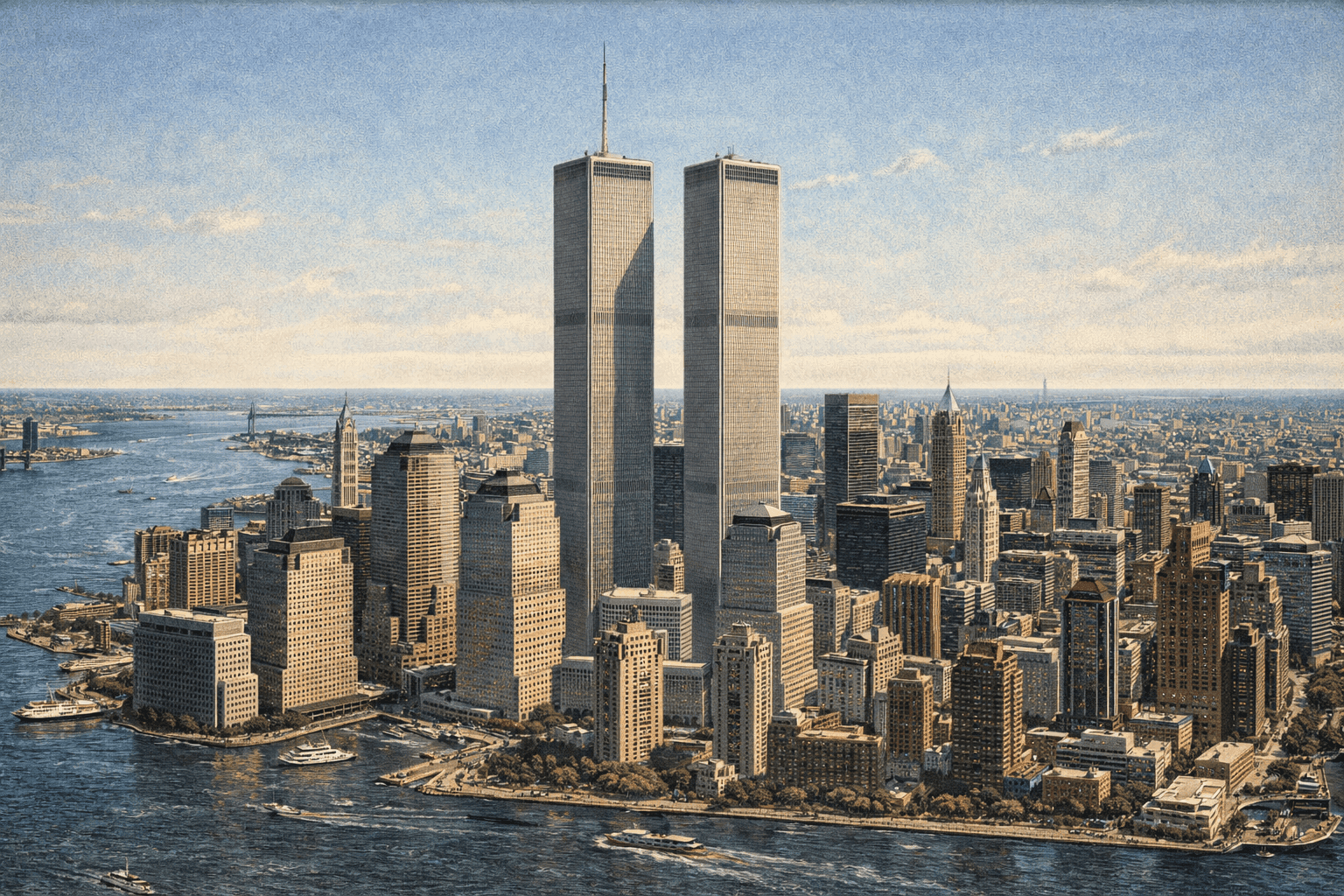
On February 26, 1993, at 12:17 p.m., a massive explosion ripped through the underground parking garage beneath the World Trade Center's North Tower. A rented Ryder truck packed with 1,200 pounds of explosives detonated on the B-2 level, creating a crater five stories deep and killing six people while injuring over a thousand. The terrorists, led by Ramzi Yousef, had intended to topple the North Tower into the South Tower, killing tens of thousands. The structure held, but the message was clear: America's symbols of economic power were vulnerable, and there were people willing to die to strike them.
The bombing shattered Americans' sense of domestic security. Terrorism had seemed like something that happened overseas—in Beirut, in Northern Ireland, in places far from home. Now it had arrived in lower Manhattan at lunchtime on a Friday. The FBI's investigation led to the arrest and conviction of the conspirators, but Yousef escaped to Pakistan and continued plotting. He was eventually captured and convicted, but the vulnerability he exposed remained. Eight years later, almost to the day, terrorists would return to the World Trade Center—this time with airplanes instead of a truck bomb—and succeed in bringing the towers down. The 1993 bombing, once seen as an isolated incident, revealed itself in hindsight as the opening salvo in a long conflict that would reshape American foreign policy, civil liberties, and national consciousness for decades to come.