February 25: Six Shots, One Senator, A Secret Speech
February 25 has witnessed three pivotal moments when the seemingly impossible became reality. An inventor's mechanical ingenuity created a weapon that would define an era, a former slave took a Senate seat that was supposed to remain forever closed to him, and a dictator's successor dared to speak truths that an entire empire had been built to suppress. Each story reveals how change arrives—sometimes through innovation, sometimes through barriers broken, and sometimes through the courage to say what everyone knows but no one will admit.
The Equalizer
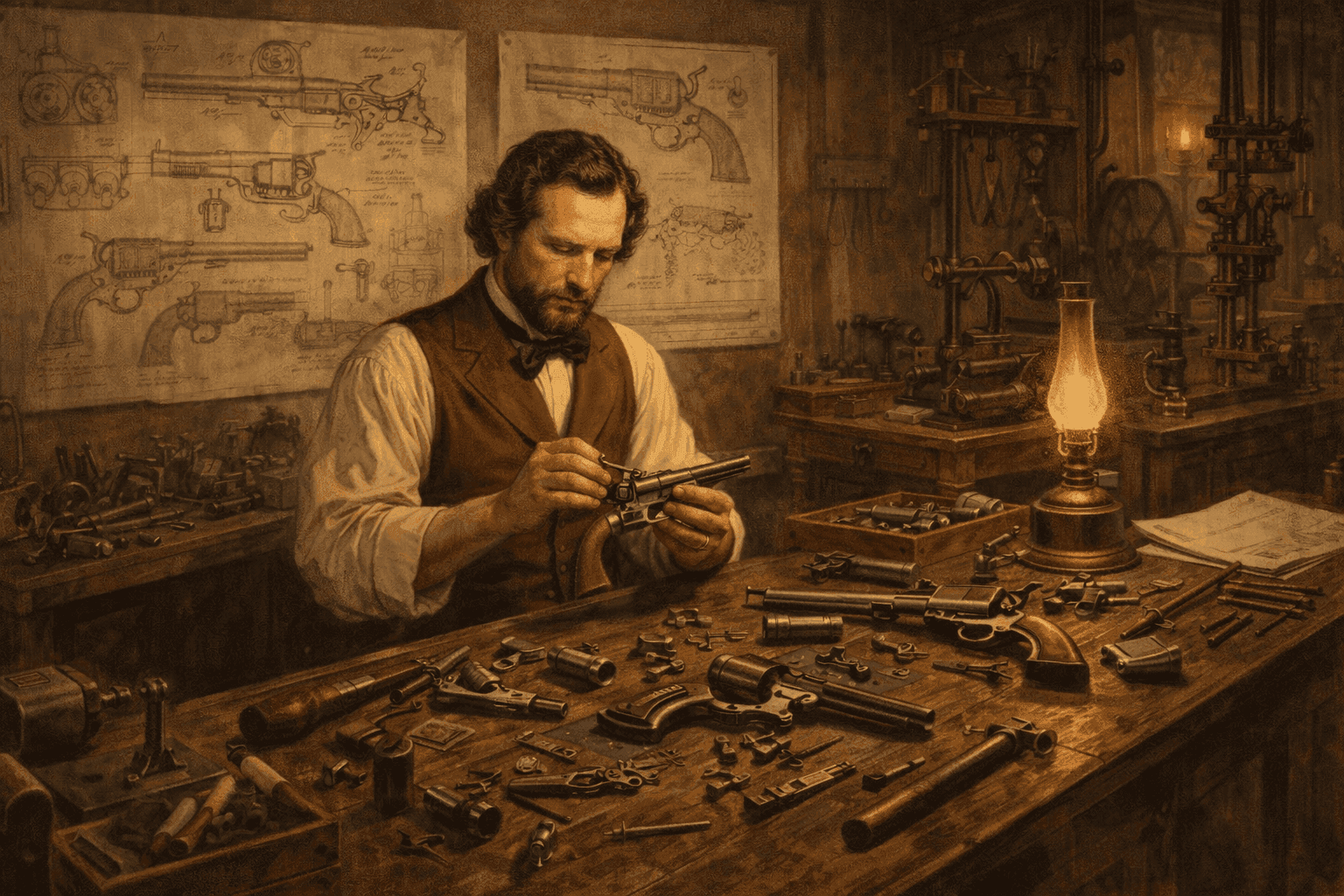
On February 25, 1836, Samuel Colt received U.S. Patent No. 138 for "a new and useful improvement in Fire-Arms." His revolving cylinder design allowed a shooter to fire multiple shots without reloading—a revolutionary advancement in an era when most firearms required laboriously loading a single shot at a time. Colt's weapon featured a rotating cylinder with multiple chambers, each pre-loaded with powder and ball. A single action cocked the hammer and rotated a fresh chamber into position. The result: six shots in rapid succession, a capability that would transform warfare, law enforcement, and the mythology of the American frontier.
Colt's timing was prescient—his patent came just days before the fall of the Alamo, and the Texas Revolution would prove an early proving ground for his designs. The revolver became legendary during westward expansion, where it was marketed with the slogan "God created men, Sam Colt made them equal." The weapon's cultural impact matched its mechanical innovation, becoming inseparable from American frontier mythology. Yet this "equalizing" power had darker dimensions: the Colt revolver proved equally effective in genocide against Native Americans, in the hands of outlaws and lawmen alike, and in countless acts of violence. Colt's genius lay in mechanical innovation; its consequences—for better and worse—would echo through American history in ways he never anticipated.
Breaking the Senate's Color Line
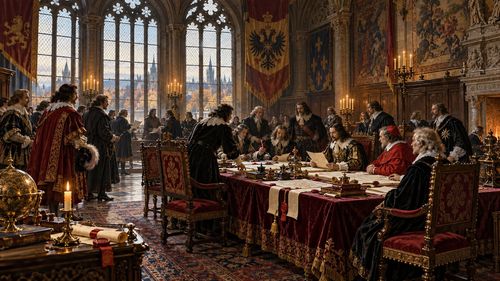
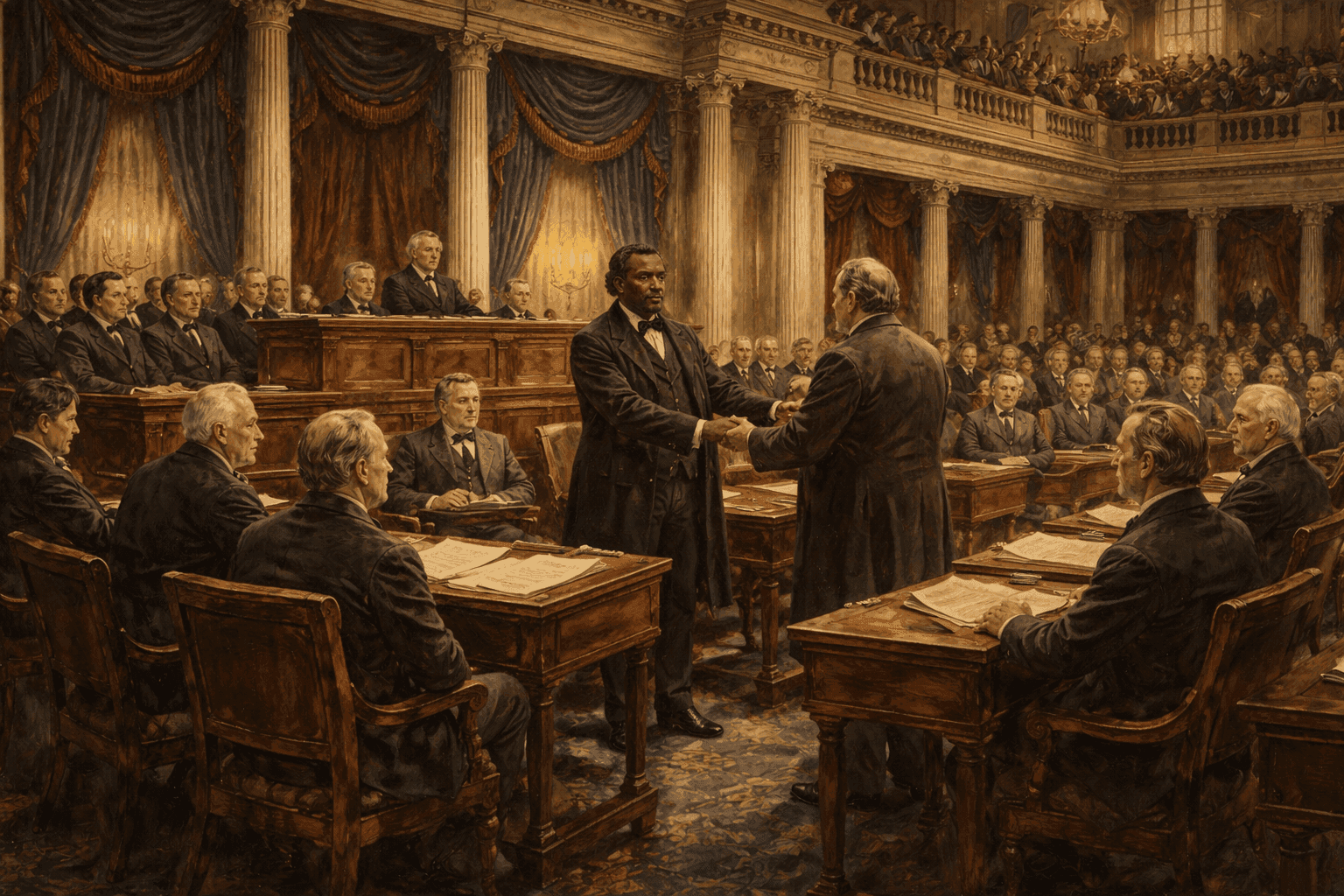
Thirty-four years later, on February 25, 1870, Hiram Rhodes Revels walked into the United States Senate chamber to take the Mississippi seat once held by Jefferson Davis, the former Confederate president. Born free in North Carolina in 1827, Revels had been a minister, educator, and recruiter of Black troops during the Civil War. Now he became the first African American to serve in Congress, entering a body where just five years earlier, the question of whether Black people were even citizens had been settled by war rather than debate.
Revels's arrival sparked fierce resistance. Democratic senators argued he couldn't serve because Black people hadn't been citizens for the required nine years—conveniently ignoring that this was only because they themselves had denied citizenship. After two days of debate, Republicans prevailed and Revels took his seat to applause from the gallery. He served just over a year, completing an unexpired term, during which he advocated for racial integration and civil rights with measured eloquence. His tenure was brief and his legislative impact limited, but the symbolism was undeniable: a formerly enslaved people now had representation in the nation's highest legislative body. Yet the triumph proved tragically temporary. Within a generation, the promise of Reconstruction collapsed, and no African American would serve in the Senate again until Edward Brooke's election nearly a century later in 1967.
The Tyrant's Crimes Revealed
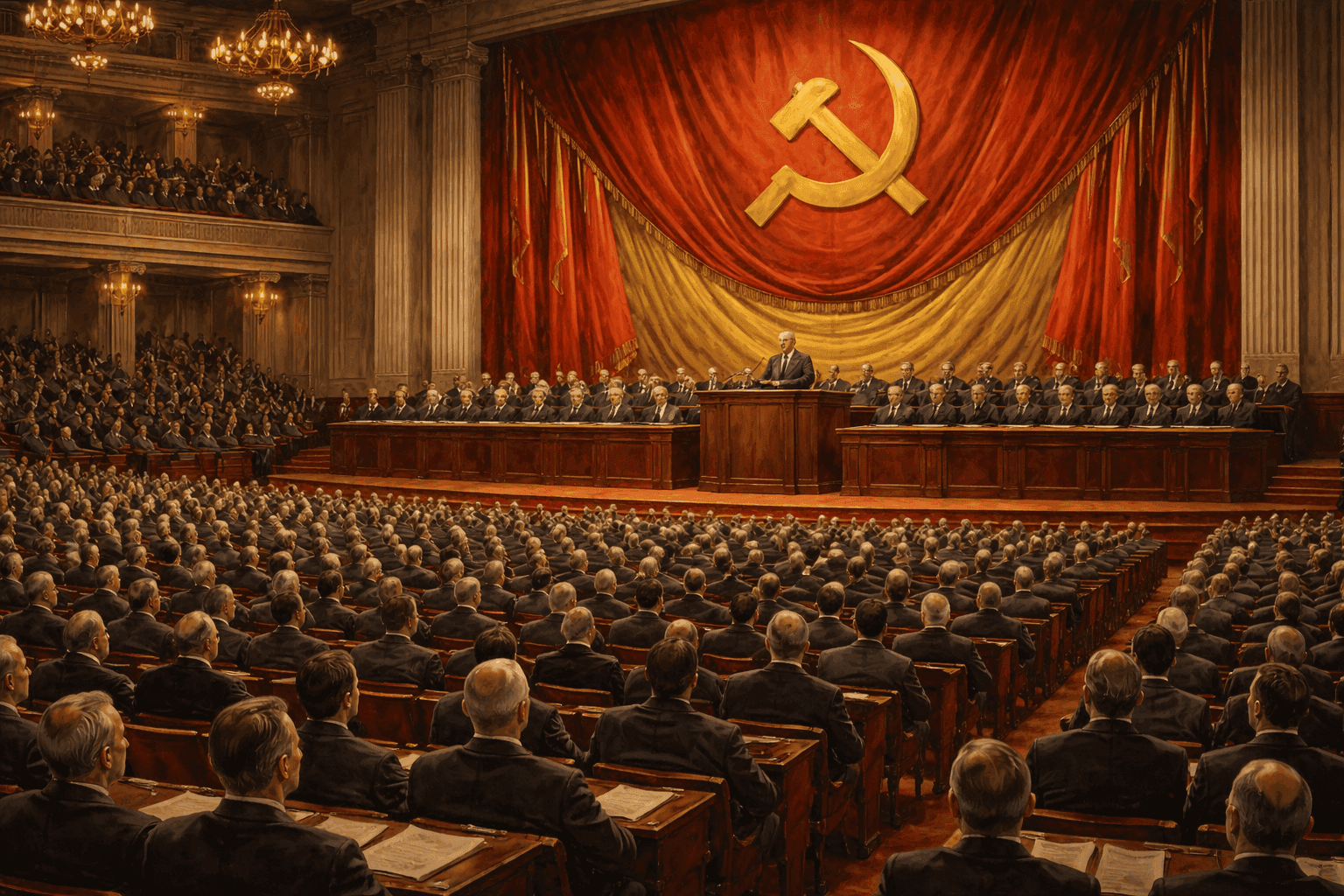
On February 25, 1956, in a closed session of the 20th Congress of the Communist Party of the Soviet Union, First Secretary Nikita Khrushchev rose to deliver what would become known as the "Secret Speech." For nearly four hours, he systematically demolished the cult of personality that had surrounded Joseph Stalin, who had died three years earlier. Khrushchev detailed Stalin's crimes: the fabricated purges, the torture of Party members, the deportation of entire ethnic groups, and the catastrophic military blunders covered up by propaganda. The speech was supposed to remain confidential, known only to Party delegates. It didn't stay secret for long.
The impact was seismic. Within weeks, the CIA obtained a copy and distributed it worldwide. Communist parties across the globe split between those defending Stalin and those embracing reform. In Poland and Hungary, the revelations fueled uprisings—Hungary's crushed by Soviet tanks that same year. Khrushchev's motivations were complex: partly genuine horror at Stalin's excesses, partly political maneuvering to consolidate his own power by distancing himself from his predecessor's crimes. The speech initiated "de-Stalinization," relaxing some of the terror that had gripped Soviet society, but the fundamental totalitarian structure remained. Still, once spoken, certain truths couldn't be unspoken. Khrushchev's admission that the emperor wore no clothes helped delegitimize the entire Soviet system, beginning a process of erosion that would culminate in the USSR's collapse thirty-five years later. Sometimes the most revolutionary act is simply telling the truth about what everyone already knows but fears to say.