February 24: The Court Speaks, A President Falls, A Princess Rises
February 24 has witnessed pivotal moments when the nature of authority itself was redefined. A Supreme Court decision that transformed the judiciary from advisory body to constitutional guardian, an impeachment that tested whether Congress could truly check a president's power, and a royal engagement that would reshape modern monarchy—each event reminds us that power is never static, but constantly negotiated between institutions, individuals, and the public that watches them.
The Power to Say No
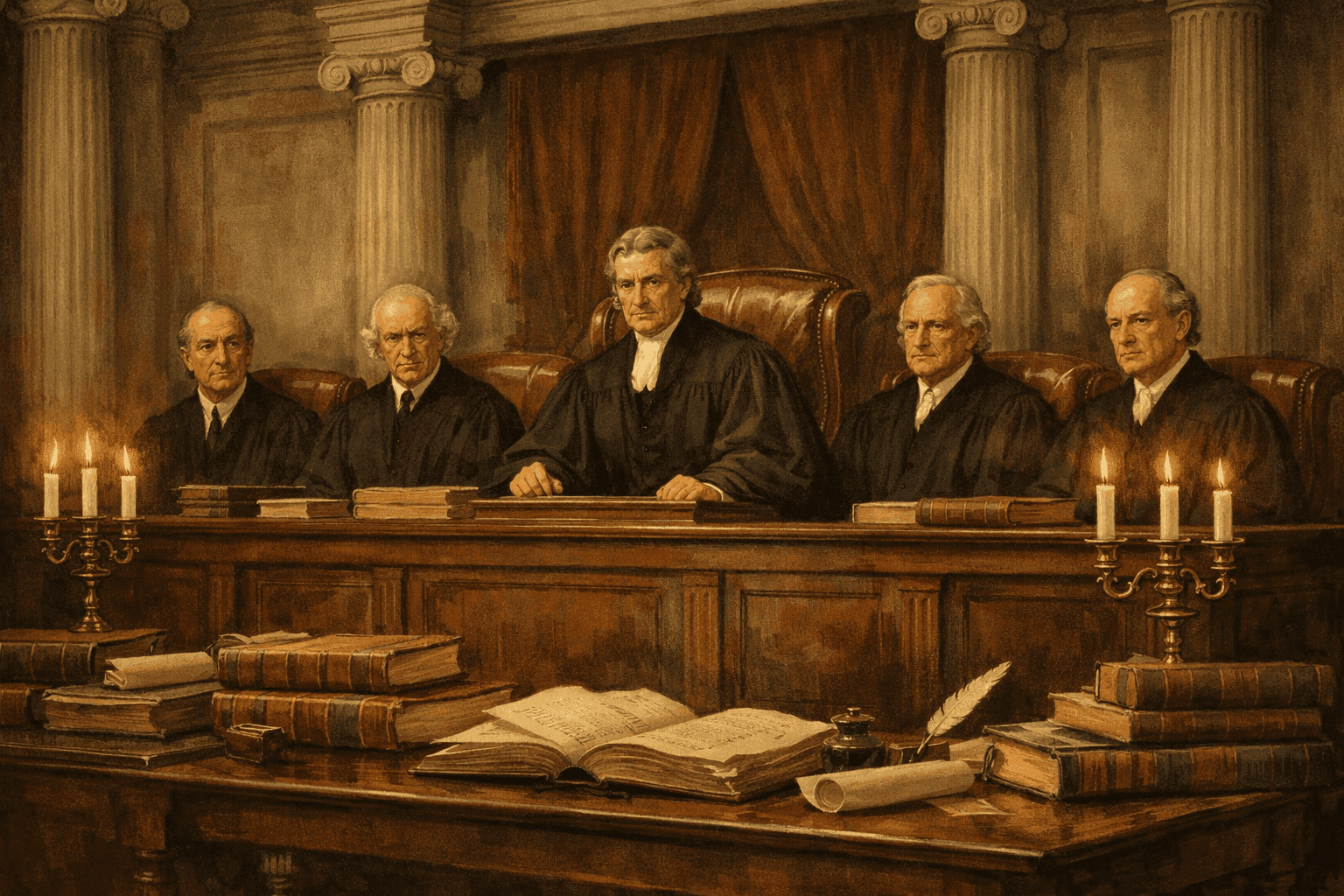
On February 24, 1803, Chief Justice John Marshall delivered the Supreme Court's opinion in Marbury v. Madison, a case that began with partisan politics and ended by fundamentally reshaping American government. William Marbury, appointed justice of the peace by outgoing President John Adams, sued when the new administration refused to deliver his commission. Marshall faced a dilemma: rule for Marbury and the Jefferson administration might simply ignore the Court, exposing its weakness; rule against him and validate executive overreach. Marshall found a third path that was nothing short of brilliant.
Marshall declared that while Marbury deserved his commission, the law allowing him to sue directly in the Supreme Court was itself unconstitutional—and therefore void. In doing so, Marshall established judicial review: the Supreme Court's authority to declare laws unconstitutional. The decision gave the Jefferson administration its immediate victory while claiming for the Court a power not explicitly mentioned in the Constitution. It was a masterstroke of judicial statesmanship. Marshall transformed the Supreme Court from the weakest branch of government—it had no enforcement power, no budget control—into the ultimate interpreter of constitutional meaning. Two centuries later, judicial review remains the foundation of American constitutional law, all from a case about an undelivered commission for a minor judgeship.
One Vote From Removal
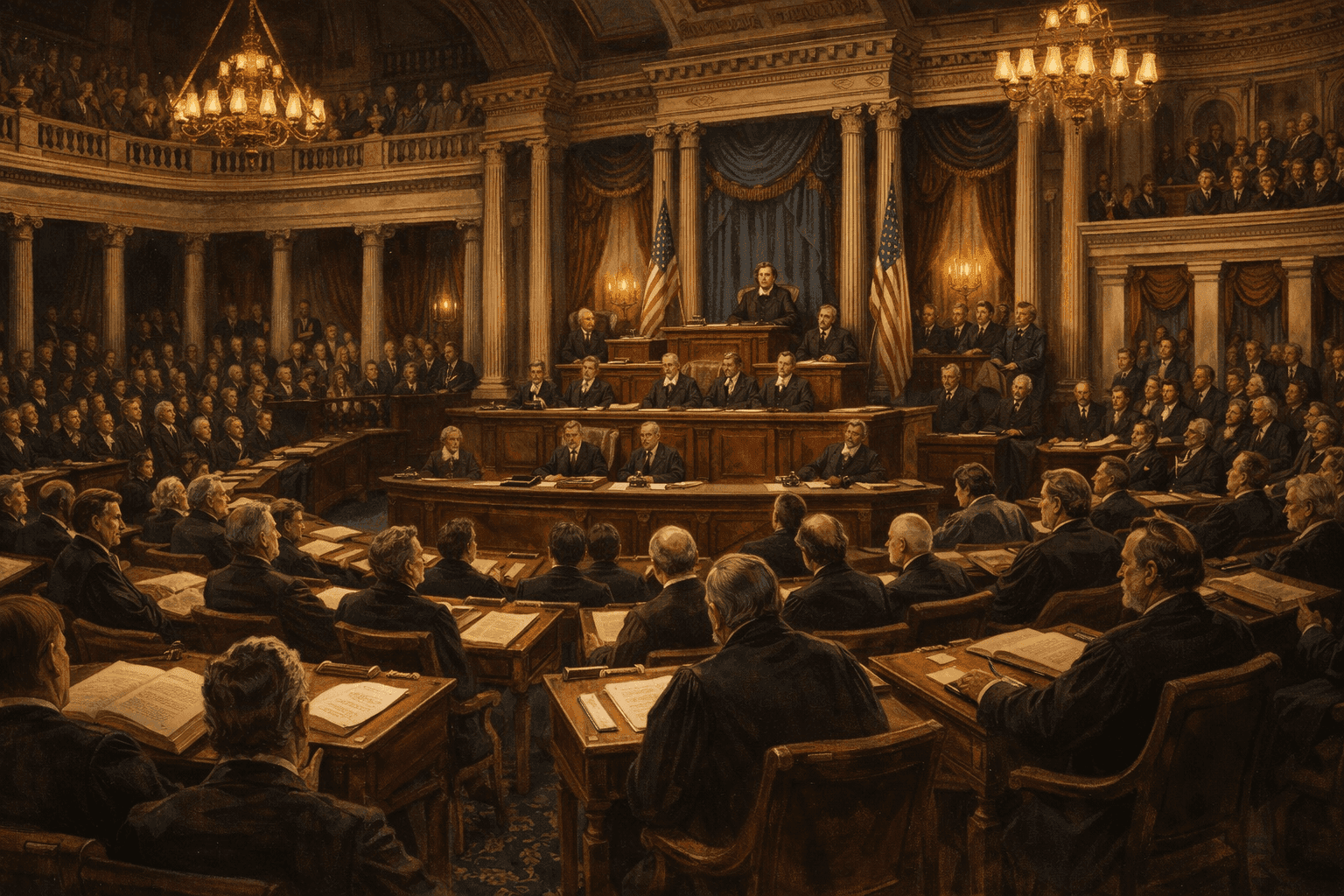
Sixty-five years later, on February 24, 1868, the House of Representatives voted 126 to 47 to impeach President Andrew Johnson, making him the first president to face this constitutional sanction. Johnson, a Southern Democrat who became president after Lincoln's assassination, had spent three years battling with the Republican Congress over Reconstruction. When Johnson fired Secretary of War Edwin Stanton in defiance of the Tenure of Office Act—a law designed specifically to protect Stanton—Republicans had their pretext. The impeachment articles charged Johnson with violating that law and bringing disgrace to the presidency.
The subsequent Senate trial became pure political theater. Johnson's defense argued that the Tenure of Office Act was itself unconstitutional (the Supreme Court would eventually agree), and that policy disagreements didn't constitute "high crimes and misdemeanors." The prosecution painted Johnson as a traitor to Reconstruction and an obstacle to justice for formerly enslaved people. When the Senate voted on May 16, Johnson survived removal by a single vote—35 guilty to 19 not guilty, one vote short of the required two-thirds. Seven Republican senators broke ranks, convinced that removing a president for political differences would dangerously weaken the presidency. Johnson served out his term powerless and embittered. The impeachment didn't remove him, but it established that Congress could credibly threaten a president with removal—a check that has shaped executive behavior ever since.
A Fairy Tale Begins
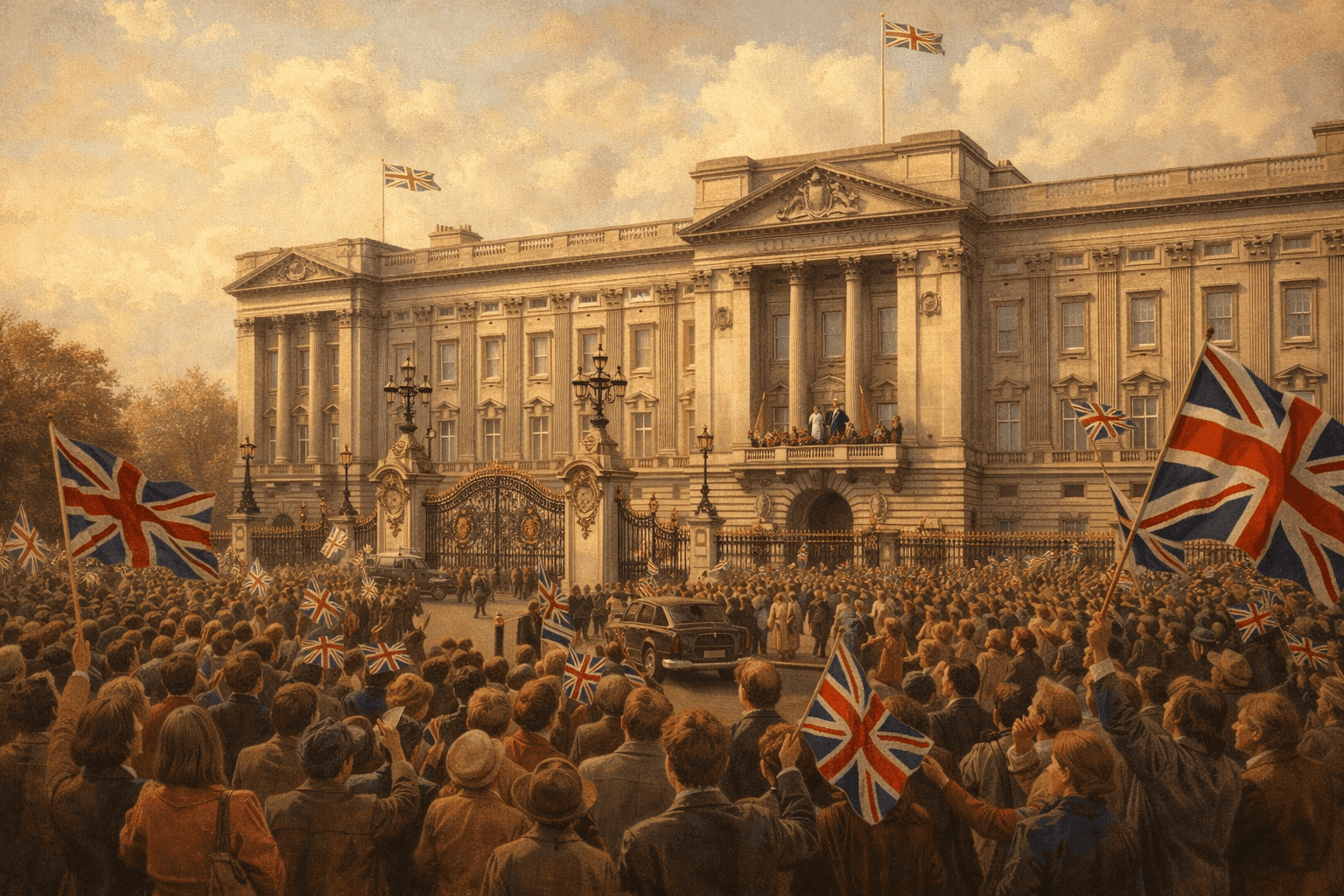
On February 24, 1981, Buckingham Palace announced the engagement of Charles, Prince of Wales, to Lady Diana Spencer, a nineteen-year-old kindergarten teacher. The news electrified Britain and captivated the world. Diana seemed perfect for the role: young, beautiful, aristocratic but not royal, and apparently unspoiled by celebrity. In their engagement interview, when asked if they were in love, Charles famously replied "whatever 'in love' means"—a phrase that seemed charming at the time but would later appear ominous. Diana simply said yes.
The wedding that July drew 750 million television viewers worldwide, the largest audience ever for a live broadcast at that time. Diana wore a fairytale dress with a 25-foot train, and for a moment, the British monarchy felt renewed and relevant. But the fairy tale had cracks from the start. Charles remained emotionally attached to Camilla Parker Bowles, Diana struggled with bulimia and the suffocating constraints of royal life, and the intense media scrutiny would only grow more invasive. The marriage would collapse publicly and painfully, ending in divorce in 1996. Diana's death in a Paris car crash in 1997 triggered an outpouring of grief that forced the monarchy to modernize its relationship with public emotion. The engagement announcement that seemed to promise a new golden age for royalty instead marked the beginning of its most turbulent transformation in modern times.