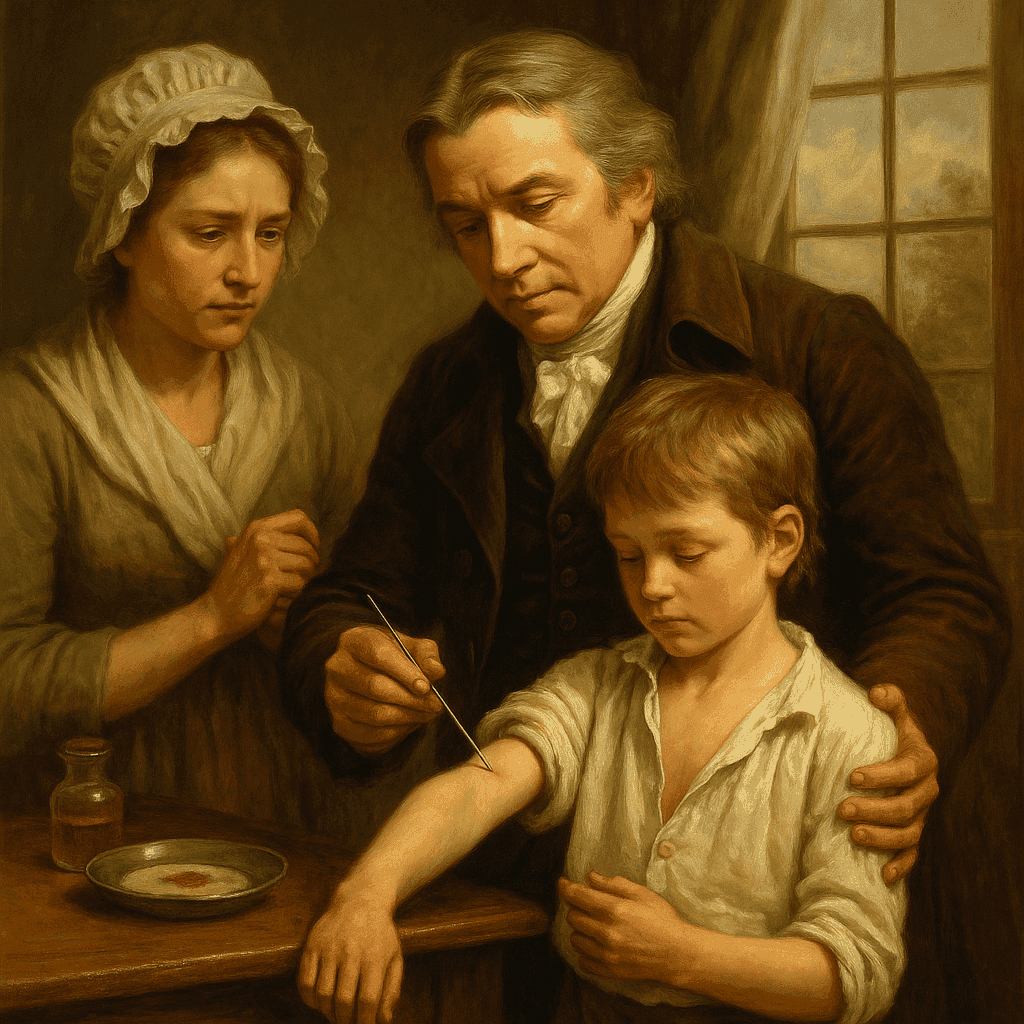
On May 14, 1796, English physician Edward Jenner conducted a groundbreaking medical experiment that would alter the course of human health forever. By inoculating an eight-year-old boy named James Phipps with material from cowpox sores, Jenner tested his theory that exposure to a less virulent disease could protect against the deadly smallpox virus. The success of this experiment marked the inception of vaccination and laid the foundation for modern immunology.
A Bold Hypothesis Takes Shape
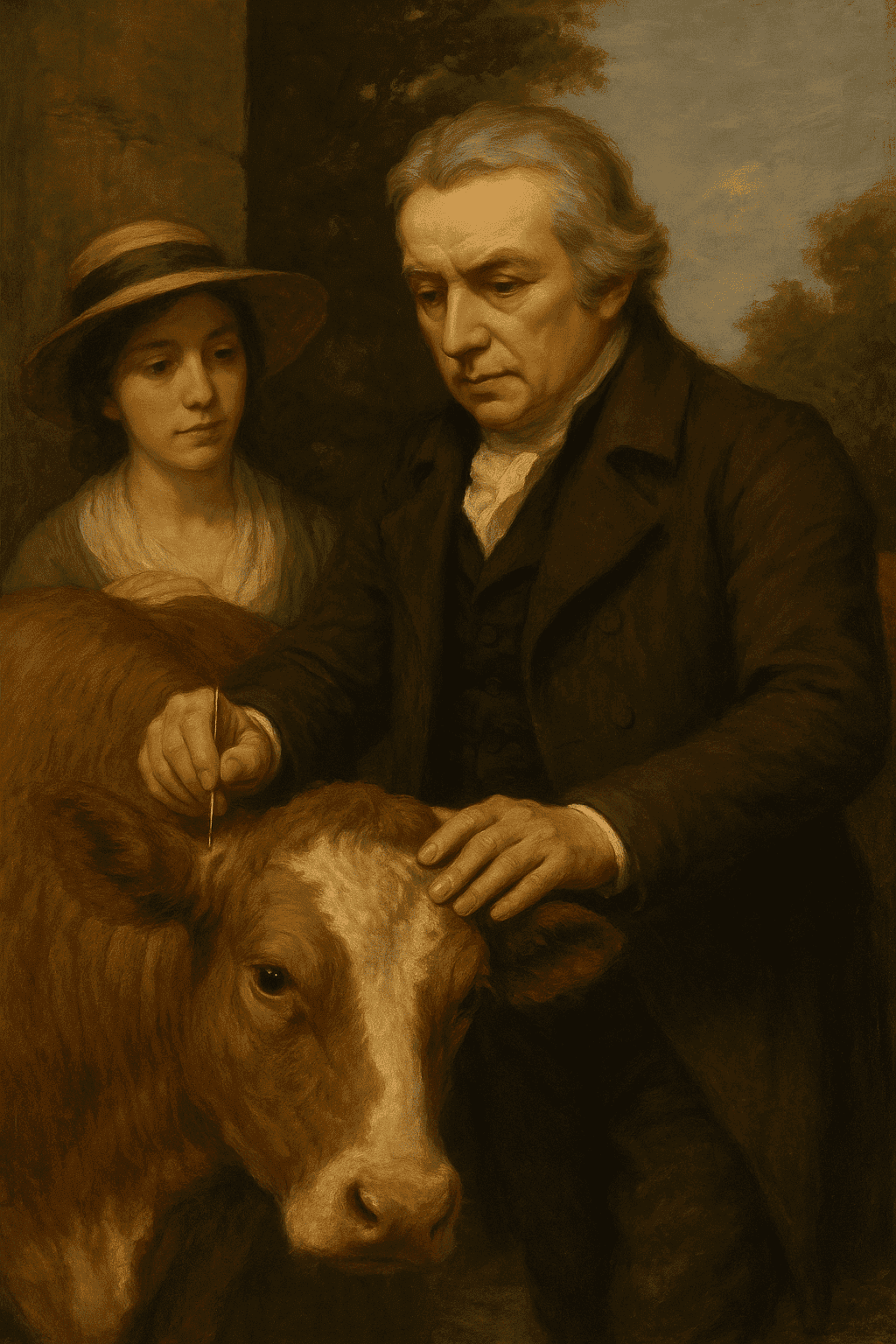
During the 18th century, smallpox was one of the most feared diseases in the world, claiming millions of lives and leaving countless survivors scarred or blind. Jenner, who practiced medicine in rural England, observed that milkmaids who contracted cowpox—a mild illness from cows—seemed immune to smallpox.
Curious and determined, Jenner hypothesized that exposure to cowpox could protect people from the far more dangerous smallpox virus. On May 14, 1796, he took material from cowpox lesions on a milkmaid named Sarah Nelmes and introduced it into cuts on James Phipps’s arm. The boy developed a mild case of cowpox but recovered quickly. Later, when Jenner exposed him to smallpox, James showed no symptoms—proving the protective effect of the cowpox infection.
A Revolutionary Medical Milestone
Jenner’s experiment was revolutionary. He coined the term “vaccine” from vacca, the Latin word for cow, and published his findings in 1798. Despite initial skepticism from parts of the medical establishment, his method gained widespread acceptance due to its efficacy and simplicity.
Over time, vaccination campaigns expanded globally, leading to a dramatic decline in smallpox cases. Nearly two centuries later, in 1980, the World Health Organization declared smallpox eradicated—the first disease in history to be eliminated through human effort, thanks in large part to Jenner’s discovery.
A Legacy That Transformed Public Health
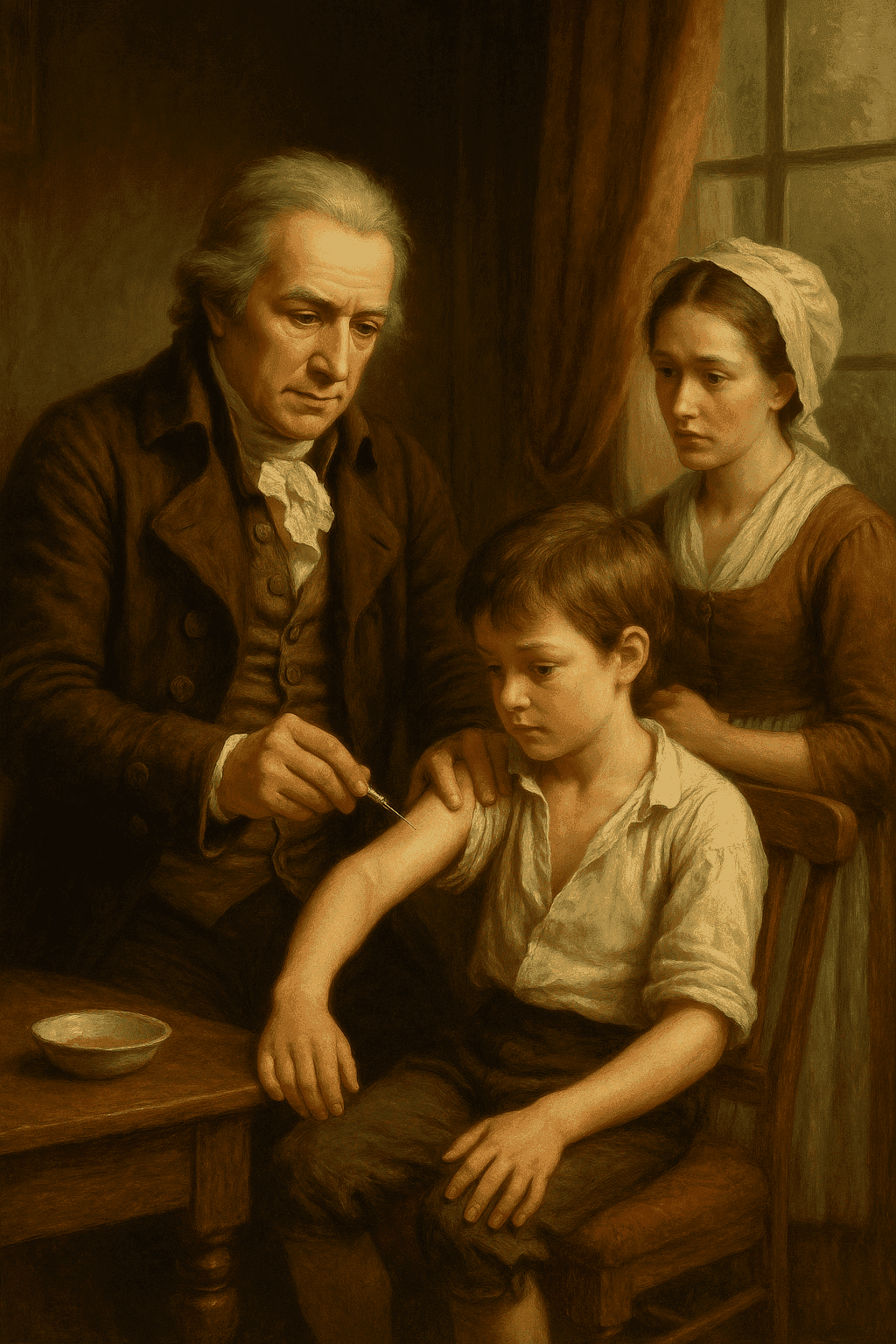
Edward Jenner’s work did more than conquer a single disease—it introduced a transformative concept in medicine: that prevention could be achieved through immunization. His innovation sparked the development of vaccines for other diseases, saving countless lives and becoming a cornerstone of public health.
May 14, 1796, is remembered as the day that launched the age of vaccination—a moment when scientific observation and courage came together to change the world. Jenner’s legacy lives on in every routine immunization, in every public health triumph over infectious disease, and in the enduring belief that science and compassion can protect humanity from even its most devastating threats.