December 27: Hagia Sophia's Glory, Darwin Sets Sail, and the IMF's Birth
December 27 marks three moments when human ambition manifested in stone, sailed toward discovery, and sought stability through institutions. On this day, an emperor unveiled a cathedral that would outlast his empire, a young naturalist embarked on a voyage that would transform how humanity understands itself, and war-weary nations created an organization to prevent economic catastrophe from breeding another conflict. These stories remind us that civilization advances through grand visions realized in architecture, through patient observation of the natural world, and through the painstaking work of building systems that serve the common good.
The Cathedral That Conquered Time
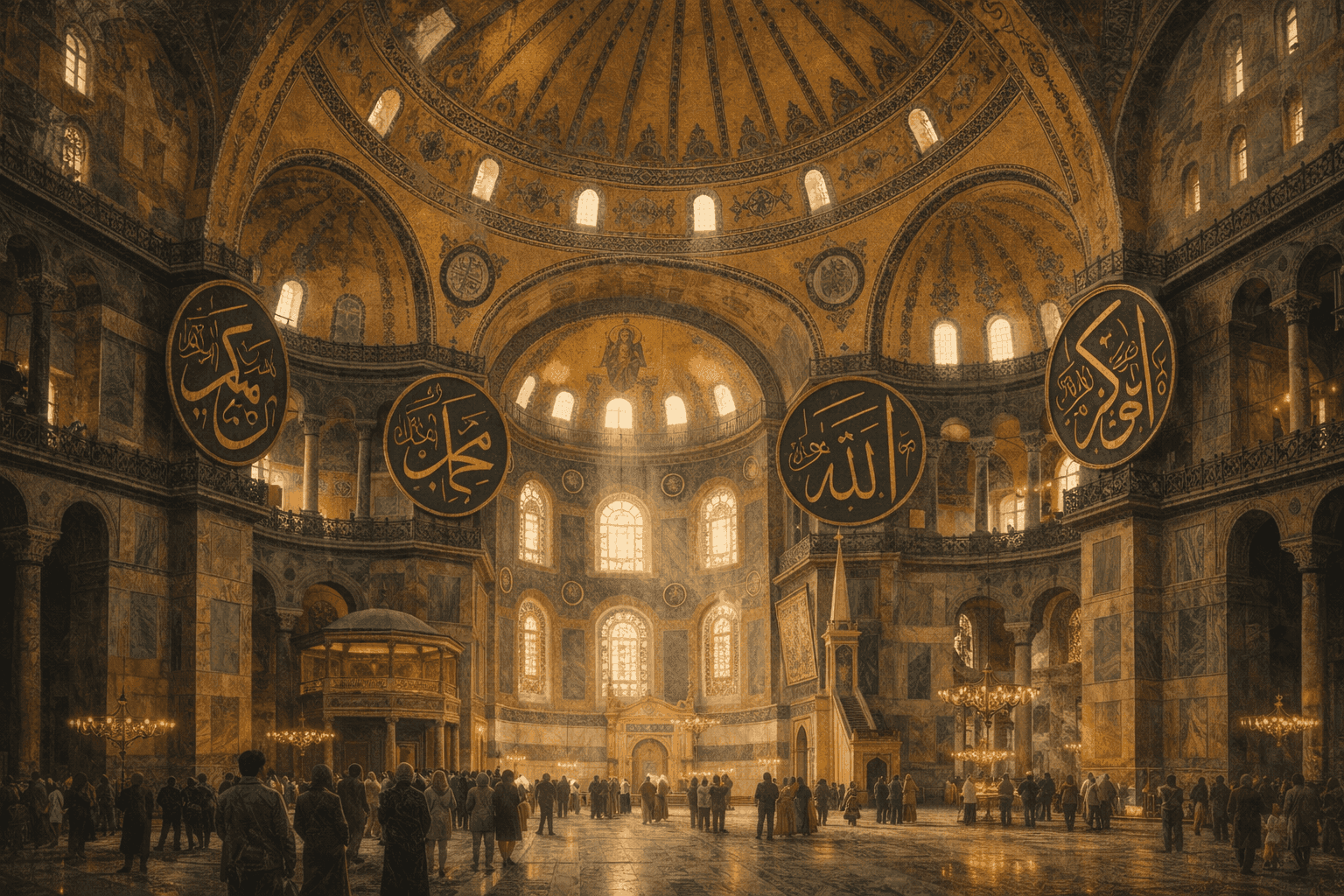
On December 27, 537, Emperor Justinian I entered the newly completed Hagia Sophia in Constantinople and reportedly exclaimed, "Solomon, I have surpassed thee!" The cathedral was a marvel—its massive dome, spanning 107 feet and rising 180 feet above the floor, seemed to float on light streaming through windows at its base. Justinian had commissioned the structure after riots destroyed the previous church, demanding that architects Anthemius of Tralles and Isidore of Miletus create something unprecedented. They succeeded spectacularly, pioneering engineering techniques that allowed the dome to hover impossibly above the vast interior space, creating what contemporaries described as heaven descending to earth.
For nearly a millennium, Hagia Sophia served as the Byzantine Empire's spiritual heart and Christianity's greatest cathedral. When Constantinople fell to the Ottomans in 1453, Sultan Mehmed II converted it into a mosque, adding minarets while preserving its Christian mosaics beneath plaster. In 1935, Turkey transformed it into a museum; in 2020, it became a mosque again. Each transformation reflects shifting powers and faiths, yet the structure endures—its dome still inspiring awe, its vast interior still capable of humbling visitors. Hagia Sophia demonstrates that great architecture transcends the purposes for which it was built, becoming a palimpsest where civilizations write their stories atop one another without erasing what came before. Justinian's cathedral has outlived the Byzantine Empire, the Ottoman Empire, and countless regimes, proving that sometimes humanity's finest achievements are those that survive us, adapting to new meanings while retaining their capacity to move the human heart. The building that claimed to surpass Solomon has instead become something greater: a monument to our shared ability to create beauty that outlasts ideology.
The Voyage That Changed Everything
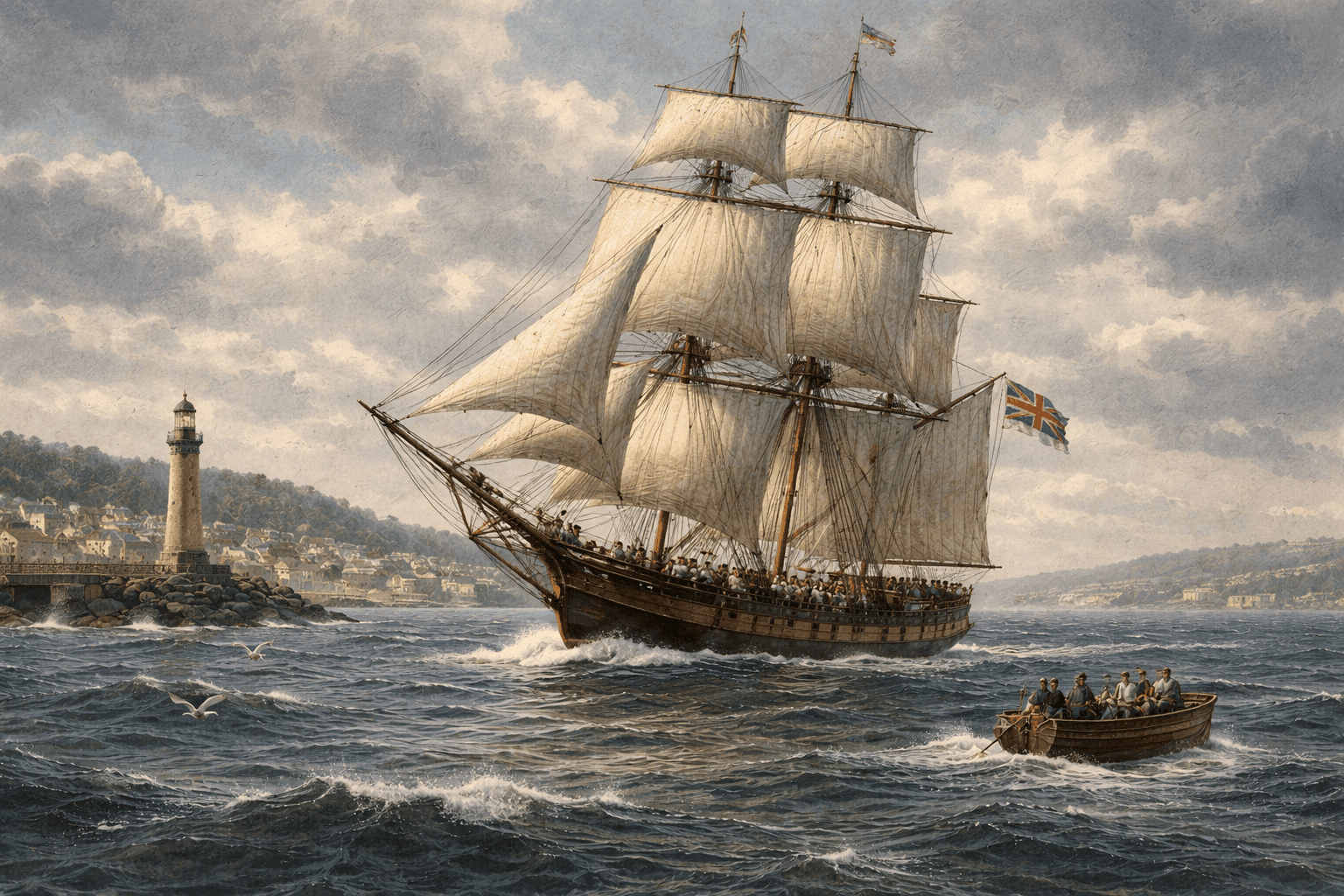
Thirteen centuries after Hagia Sophia's dedication, on December 27, 1831, a 22-year-old Charles Darwin boarded HMS Beagle in Plymouth, England, beginning a voyage that would fundamentally alter humanity's understanding of itself. Darwin joined the expedition as a gentleman companion to Captain Robert FitzRoy and an unpaid naturalist, brought along primarily to provide educated conversation during the lonely years at sea. He'd nearly missed the opportunity—FitzRoy initially rejected him because the shape of Darwin's nose supposedly revealed a lack of determination. Yet as the Beagle sailed from England, Darwin carried notebooks that would eventually contain observations revolutionizing biology, geology, and philosophy.
Over nearly five years, the Beagle surveyed South America's coast while Darwin collected specimens, studied geology, and observed variations in species across different environments. In the Galápagos Islands, he noted how finches on different islands had beaks adapted to local food sources—a clue that species weren't fixed but changed over time. The voyage's observations led eventually to On the Origin of Species (1859), which proposed that natural selection drives evolution, that all life shares common ancestry, and that Earth's species result from gradual change over immense time rather than divine creation. Darwin's theory faced fierce resistance—it challenged religious orthodoxy and humanity's self-image as creation's crown. Yet the evidence proved overwhelming. The voyage of the Beagle demonstrates that patient observation, careful documentation, and willingness to follow evidence wherever it leads can overturn millennia of assumptions. Darwin's journey reminds us that the most significant discoveries often come not from laboratories but from simply paying attention to the world around us—and having the courage to accept what we see, even when it contradicts everything we've been taught.
Building Order from Ashes
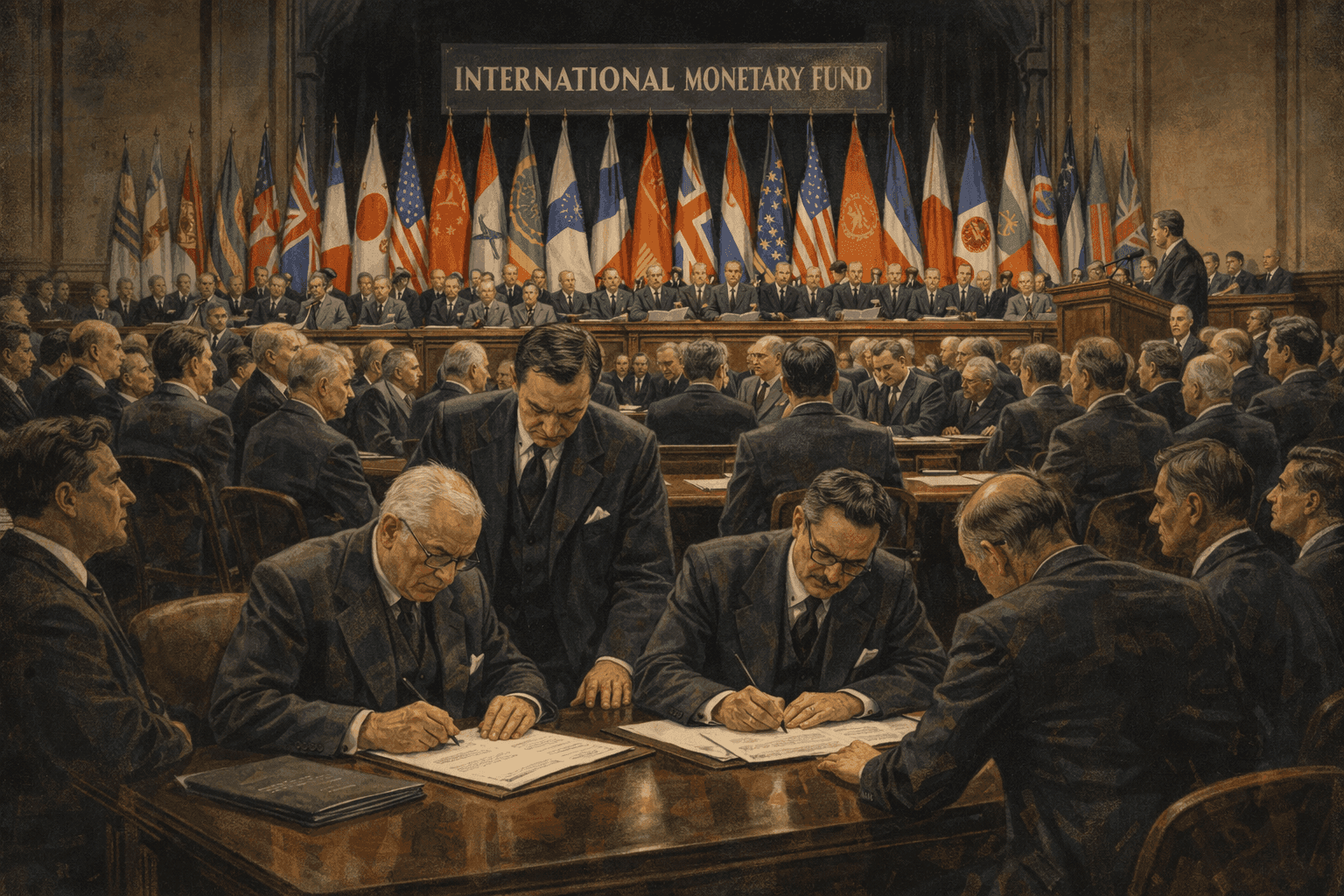
One hundred fourteen years after Darwin sailed, on December 27, 1945, the International Monetary Fund officially began operations, born from the conviction that economic chaos breeds political extremism and war. The IMF emerged from the 1944 Bretton Woods Conference, where delegates from 44 nations gathered in New Hampshire to design a new international financial system. The Great Depression had shown how economic collapse could spiral into nationalism, protectionism, and eventually fascism. World War II had demonstrated the cost. The IMF was conceived as a mechanism to prevent future catastrophes by promoting monetary cooperation, providing temporary financial assistance to countries facing balance of payments problems, and facilitating international trade through stable exchange rates.
The IMF represented something unprecedented: nations voluntarily surrendering some economic sovereignty to an international institution in exchange for collective stability. Critics argue it imposes harsh austerity and serves wealthy nations' interests; defenders counter it prevents economic crises from metastasizing into global catastrophes. The truth likely encompasses both—the IMF is neither salvation nor conspiracy but an imperfect human institution trying to manage global economic complexity. Over decades, it has evolved from managing fixed exchange rates to providing emergency loans during crises like the 2008 financial collapse and COVID-19 pandemic. December 27, 1945, marked recognition that modern economies are too interconnected for purely national solutions, that preventing economic disaster requires international cooperation, and that building institutions to manage complexity is as important as the architecture of Hagia Sophia or the discoveries of Darwin. The IMF reminds us that civilization requires not just grand buildings and scientific breakthroughs but also the painstaking work of creating systems that prevent catastrophe—unglamorous, controversial work that nonetheless helps maintain the stability allowing culture and knowledge to flourish.