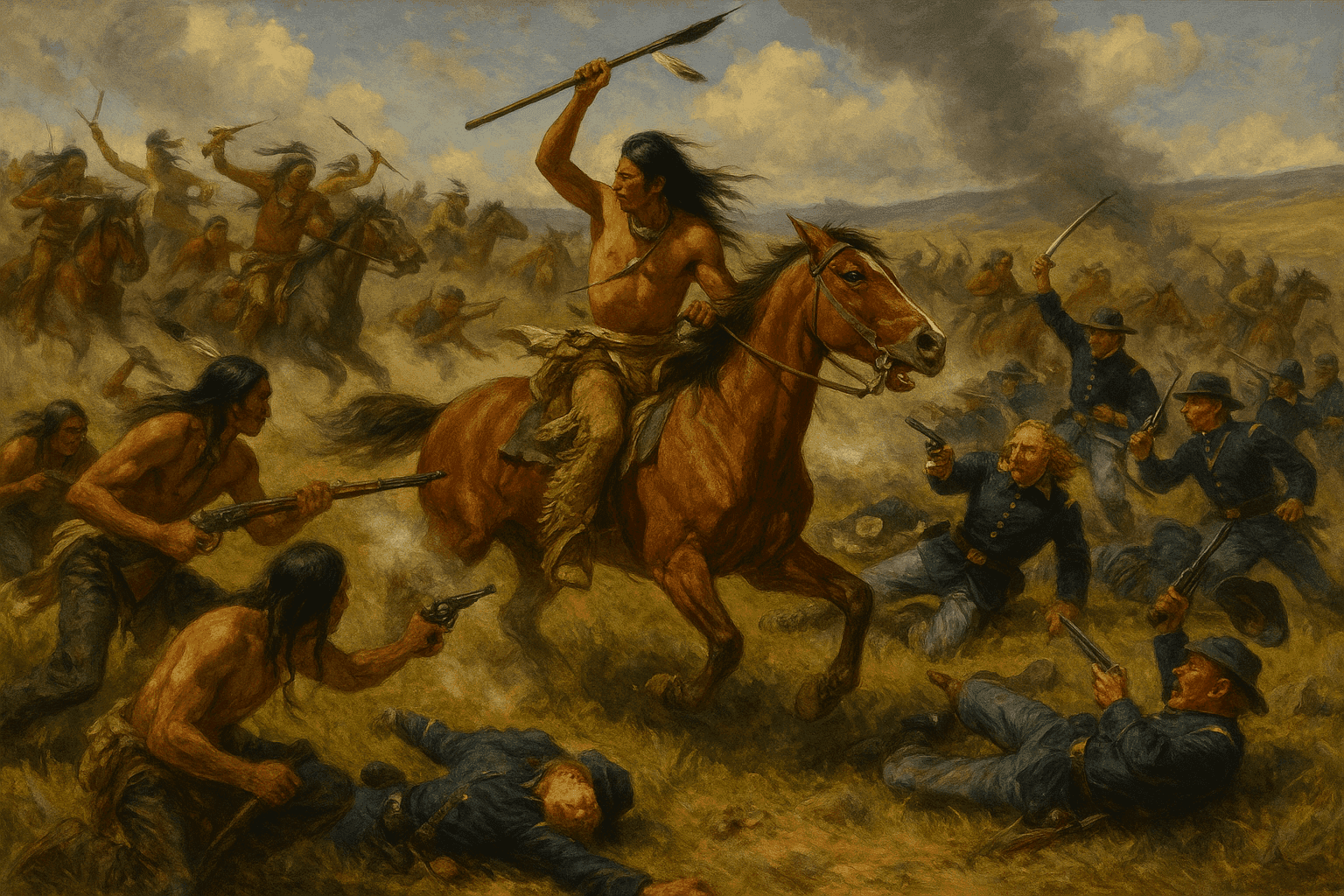
On June 25, 1876, one of the most infamous battles in American history unfolded near the Little Bighorn River in what is now Montana. The Battle of the Little Bighorn—also known as Custer’s Last Stand—was a major confrontation in the Great Sioux War of 1876, a conflict between the United States and Native American tribes defending their lands and way of life.
The battle became legendary for its dramatic outcome: the annihilation of Lieutenant Colonel George Armstrong Custer and over 200 soldiers of the 7th Cavalry by a much larger force of Lakota Sioux, Northern Cheyenne, and Arapaho warriors.
A Clash of Cultures and Sovereignties
Tensions had been building for years as settlers pushed westward into Native American territories, often violating treaties. The discovery of gold in the Black Hills, a region sacred to the Lakota, brought thousands of miners and triggered a government effort to force tribes onto reservations. Many Native leaders, including Sitting Bull and Crazy Horse, refused to comply.
The U.S. military launched a campaign to compel their surrender. Custer’s role in this campaign culminated in a fateful decision to divide his forces and attack what he believed to be a manageable encampment of Native warriors.
Overwhelmed and Outnumbered
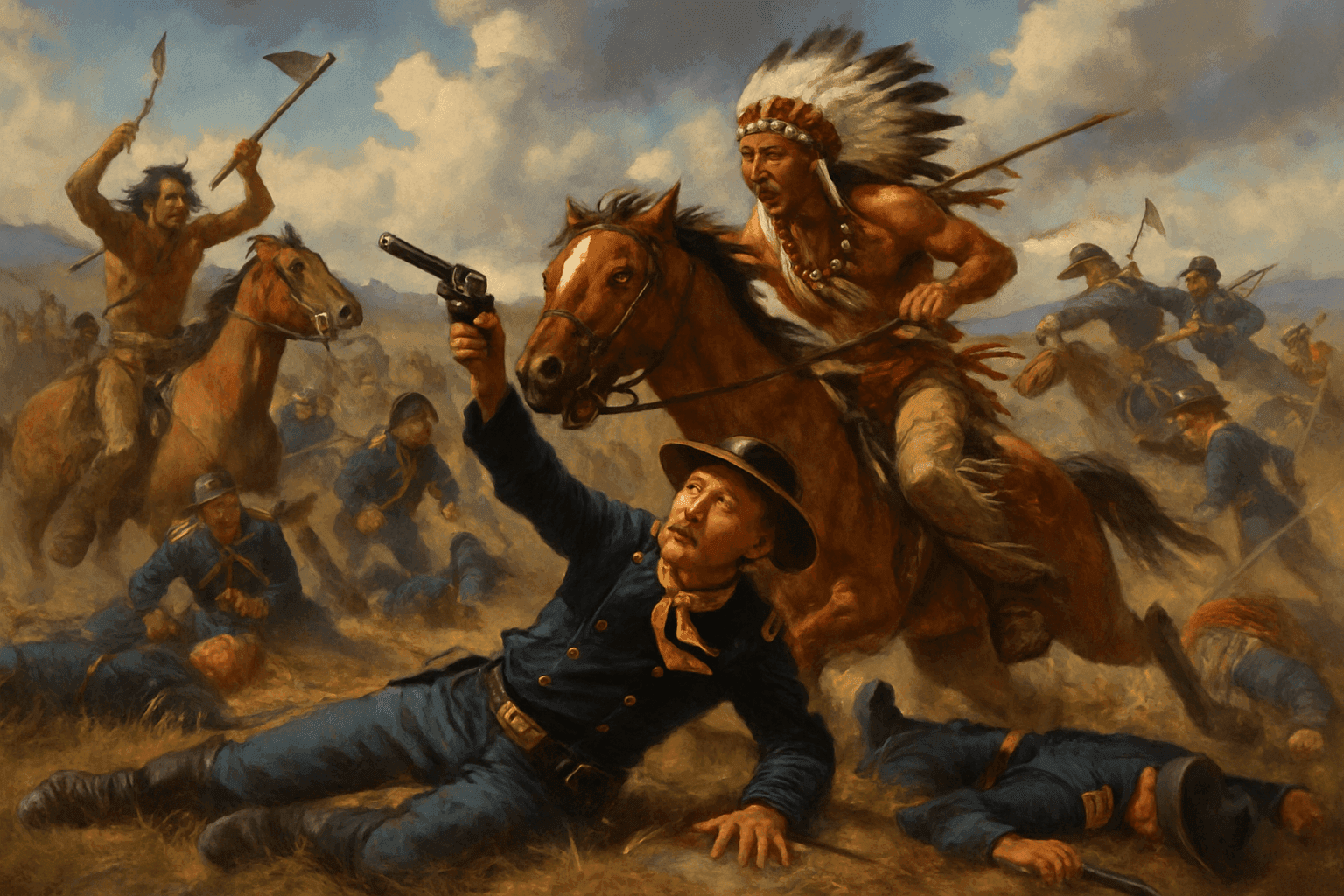
Custer's intelligence severely underestimated the strength of the Native American force, which numbered around 2,000 warriors. His detachment was quickly surrounded and outmaneuvered. In less than an hour, Custer and his men were killed in a fierce and chaotic struggle. The defeat stunned the American public and military alike.
While a tremendous tactical victory for the Native tribes, the battle's aftermath brought a swift and brutal federal response that ultimately forced many of the resisting tribes onto reservations.
Memory, Myth, and Meaning
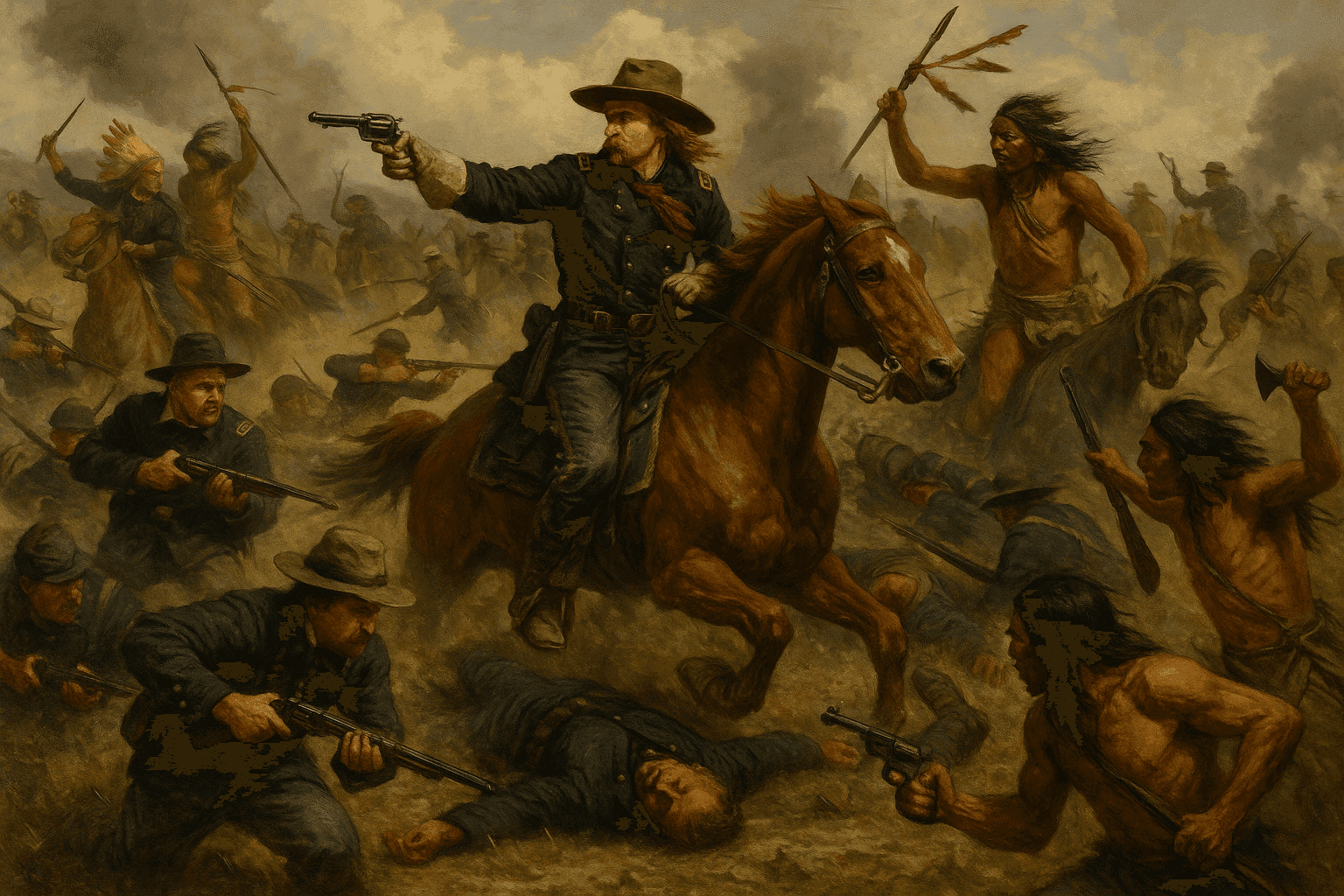
The Battle of the Little Bighorn became a symbol of both defiance and tragedy. For Native Americans, it remains a rare but powerful moment of victory against overwhelming odds. For many Americans of the time, it was portrayed as a heroic stand by Custer and his men, feeding into a mythologized narrative that shaped public memory for decades.
Today, the site of the battle is preserved as the Little Bighorn Battlefield National Monument, where visitors are encouraged to reflect on the complexity of the conflict, the cultures involved, and the human cost of expansion.