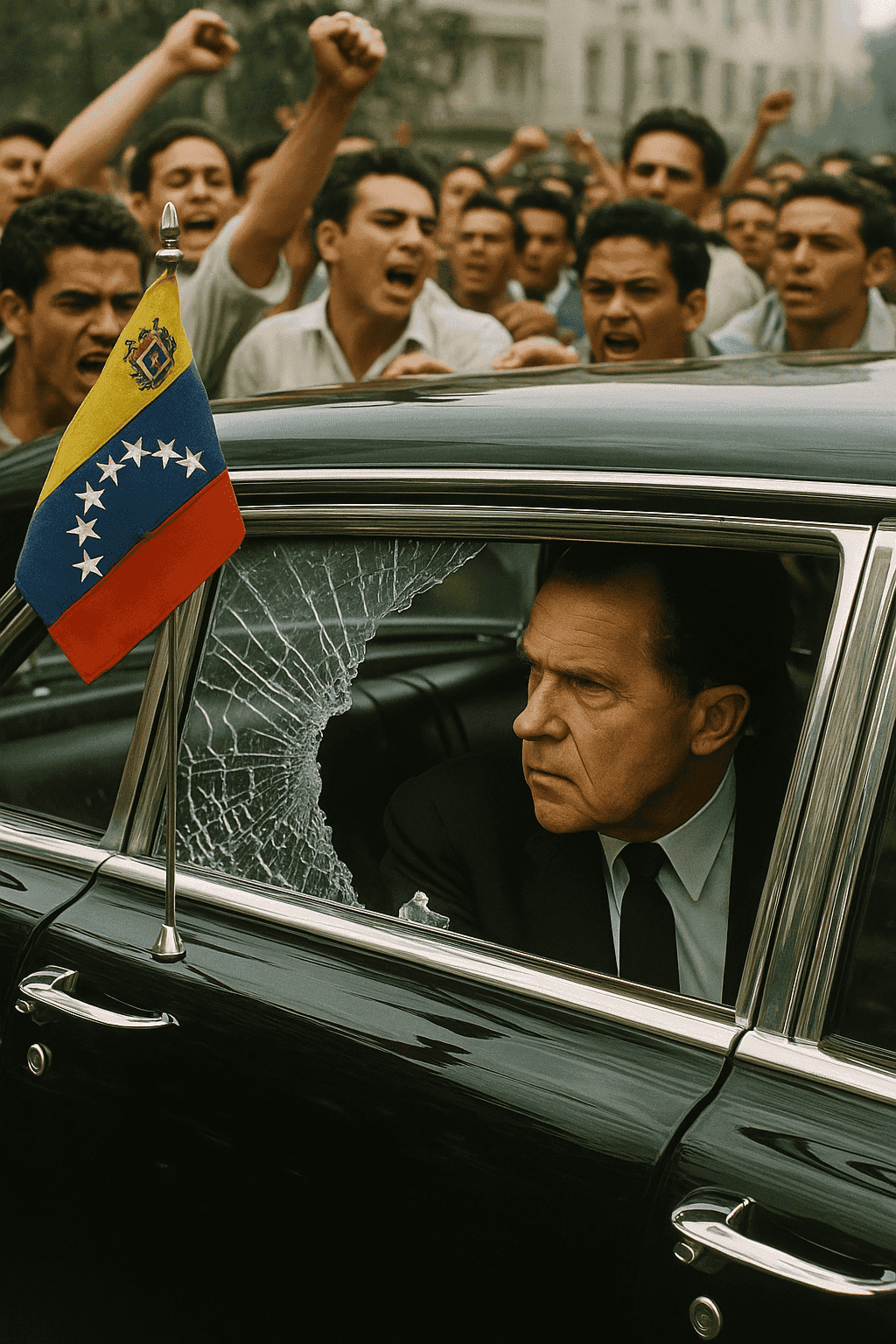
On May 13, 1958, Vice President Richard Nixon faced a terrifying assault by a hostile mob while visiting Caracas, Venezuela, as part of a goodwill tour through Latin America. What was meant to be a diplomatic mission quickly descended into chaos, with angry protesters surrounding Nixon’s motorcade, smashing windows, and physically threatening the vice president and his delegation. The incident shocked the American public and exposed the growing anti-U.S. sentiment simmering across Latin America during the Cold War.
Goodwill Tour Turns Violent
Nixon had embarked on a tour of South America to promote stronger ties between the United States and its southern neighbors. However, by the time he arrived in Venezuela, tensions were already high. Political unrest was widespread following the ousting of Venezuelan dictator Marcos Pérez Jiménez earlier that year. Many citizens viewed U.S. support for authoritarian regimes in Latin America as evidence of American imperialism, and Nixon’s visit became a lightning rod for protest.
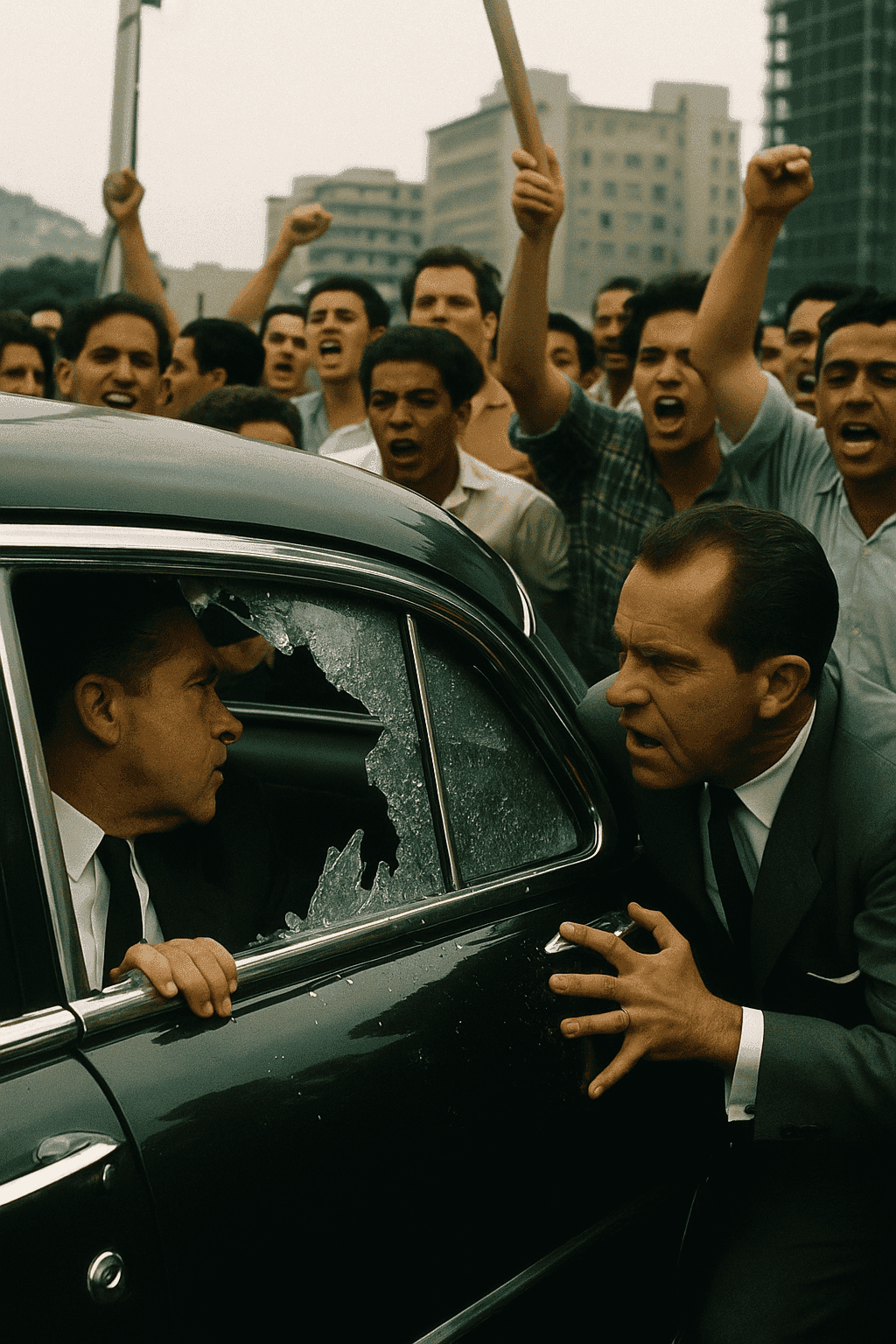
As Nixon’s motorcade made its way through Caracas, it was ambushed by a large and furious crowd. Protesters pounded on the cars, shattered windows, and surrounded the vehicles in a scene of near-riot. The situation became so dangerous that Secret Service agents prepared to draw their weapons. The Venezuelan military eventually intervened and escorted the vice president and his entourage to safety.
A Wake-Up Call for U.S. Foreign Policy
The attack was not only a personal threat to Nixon—it was a jarring reflection of widespread discontent with U.S. foreign policy in the region. The incident prompted President Dwight D. Eisenhower to send a naval task force to the Caribbean as a precaution, and it led many in Washington to rethink America’s approach to Latin America.
While Nixon emerged physically unscathed and maintained composure throughout the ordeal—earning praise back home—his experience in Caracas became a symbol of the deep mistrust between the U.S. and its neighbors to the south.
Legacy and Lessons
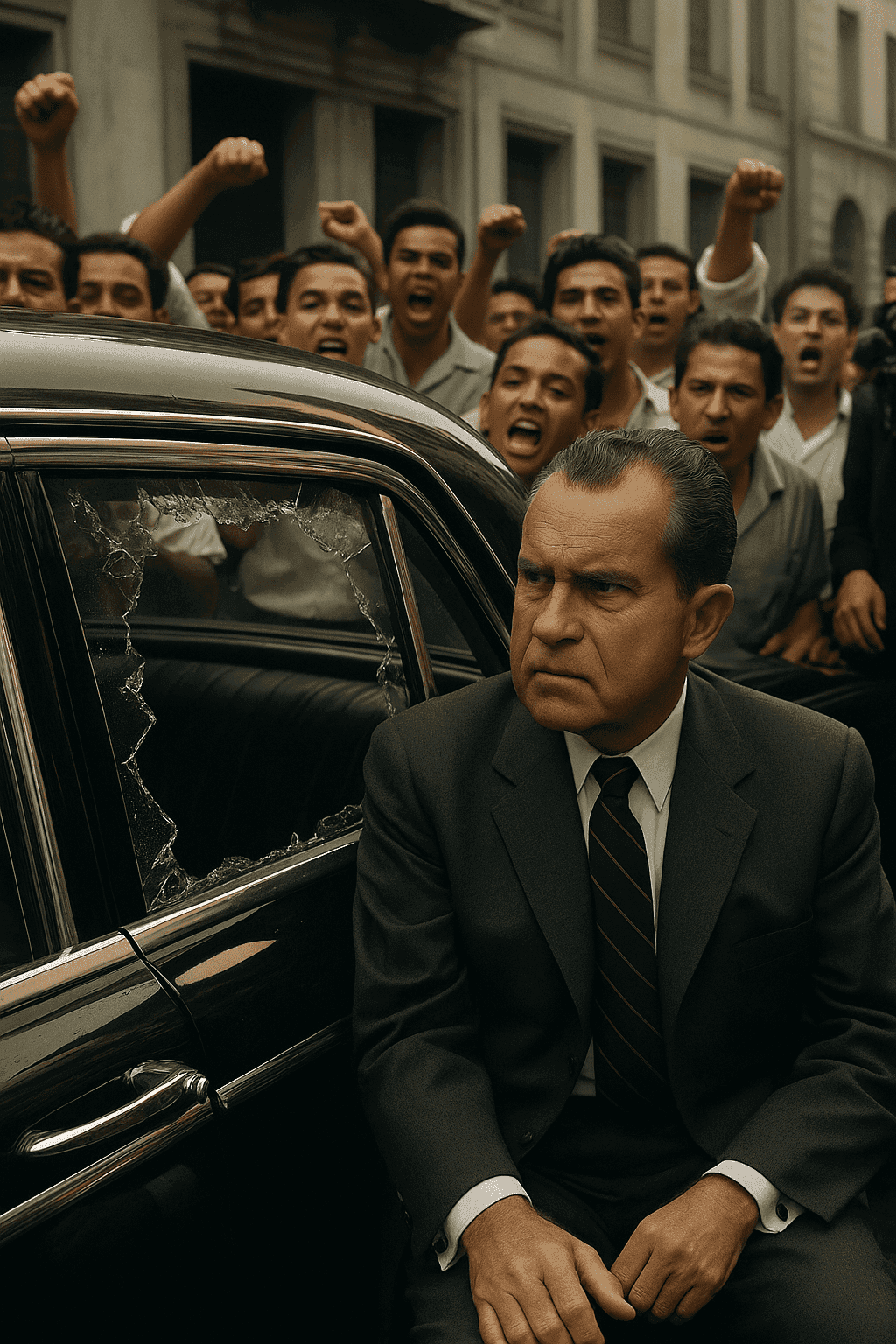
The Caracas incident had a lasting impact on Nixon, shaping his worldview and reinforcing his views on strong executive authority and international diplomacy. More broadly, it contributed to a reassessment of U.S. interventionism in Latin America and foreshadowed the region’s turbulent relationship with American influence during the Cold War.
May 13, 1958, stands as a vivid reminder of the perils of diplomacy in an era of ideological conflict. It underscored the importance of understanding regional grievances and the need for foreign policy rooted in mutual respect—not just power.