On June 22, 1944, in the midst of World War II, President Franklin D. Roosevelt signed into law the Servicemen’s Readjustment Act, more commonly known as the G.I. Bill. This groundbreaking legislation aimed to ease the transition from wartime service to civilian life for millions of returning veterans by offering a suite of benefits designed to support education, homeownership, and entrepreneurship.
The G.I. Bill would go on to become one of the most transformative pieces of legislation in American history, reshaping the social and economic fabric of the nation.
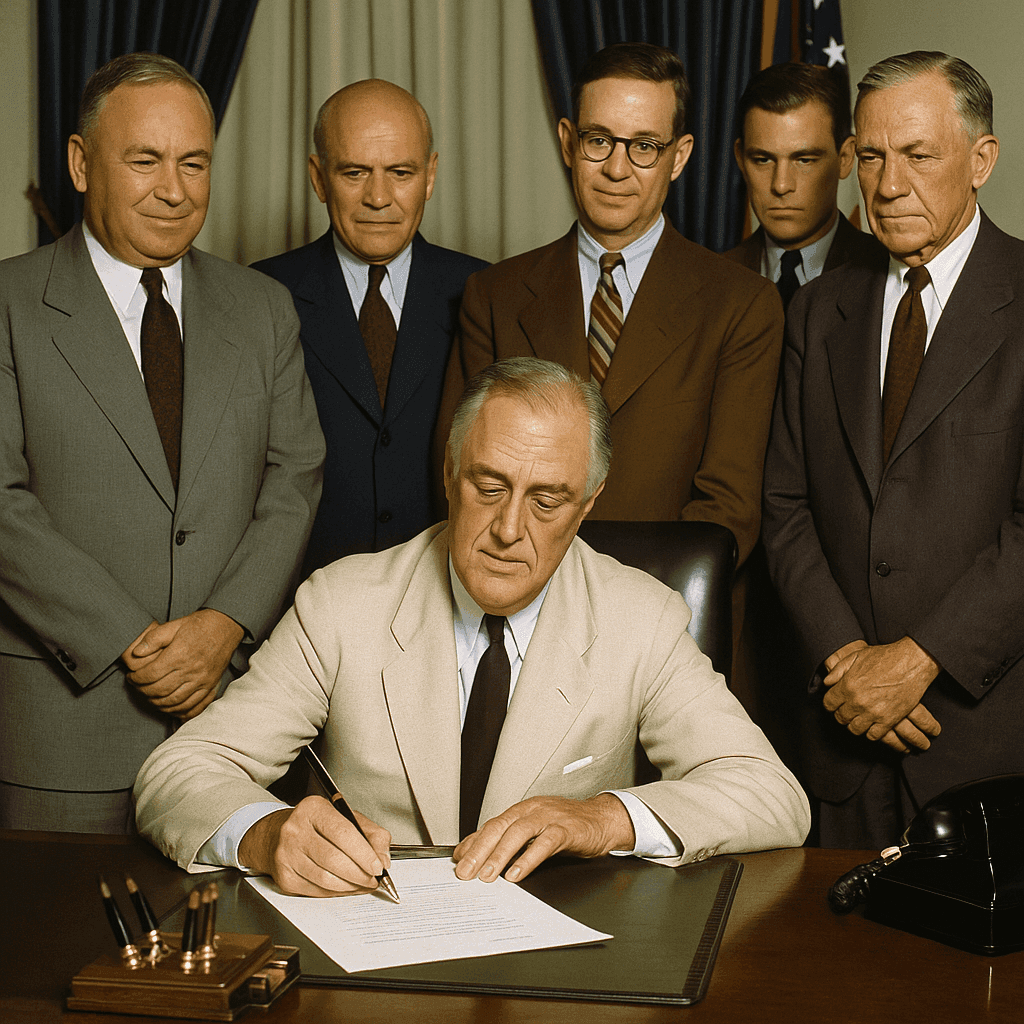
A Promise to Returning Veterans
At the heart of the G.I. Bill was a commitment to honor the service and sacrifice of World War II veterans by providing tangible support as they reintegrated into society. Benefits included tuition and living stipends for those pursuing high school, college, or vocational education; low-interest, federally backed home loans; and funding for small business ventures and farms.
For many veterans, the bill offered an unprecedented opportunity to achieve financial security, gain new skills, and access the American Dream in ways previously out of reach.

Education as a Catalyst for Change
Perhaps the most far-reaching aspect of the G.I. Bill was its dramatic expansion of access to higher education. Before 1944, college was a privilege reserved for the wealthy and elite. The G.I. Bill opened university doors to millions of veterans, transforming American campuses and setting a new standard for educational attainment.
By 1956, roughly 7.8 million veterans had taken advantage of the education benefits. This influx of educated workers helped fuel postwar innovation, industrial growth, and the rise of the modern American middle class.
A Model for Future Generations

While the original G.I. Bill expired in 1956, its legacy has lived on through subsequent iterations designed to support veterans of later conflicts. It also served as a model for broader discussions around public investment in education, housing, and economic opportunity.
Despite its many successes, the G.I. Bill’s benefits were not equitably distributed. Racial discrimination, especially in the South, often prevented Black veterans from fully accessing its advantages, revealing the persistent inequalities of the era. These disparities continue to be examined as part of the law’s complex legacy.