On this day in history, April 13, 1873, Colfax, Louisiana, became the site of one of the most harrowing episodes of racial violence in American history. Following a disputed gubernatorial election and rising tensions between white Democrats and Black Republicans, white supremacist paramilitary groups launched a brutal assault on African American freedmen who had taken a stand to protect their right to vote. The violence that erupted not only left scores of Black men dead but also exposed the fragile reality of Reconstruction-era progress and the lengths to which white supremacists would go to dismantle it.
The Roots of Racial Violence
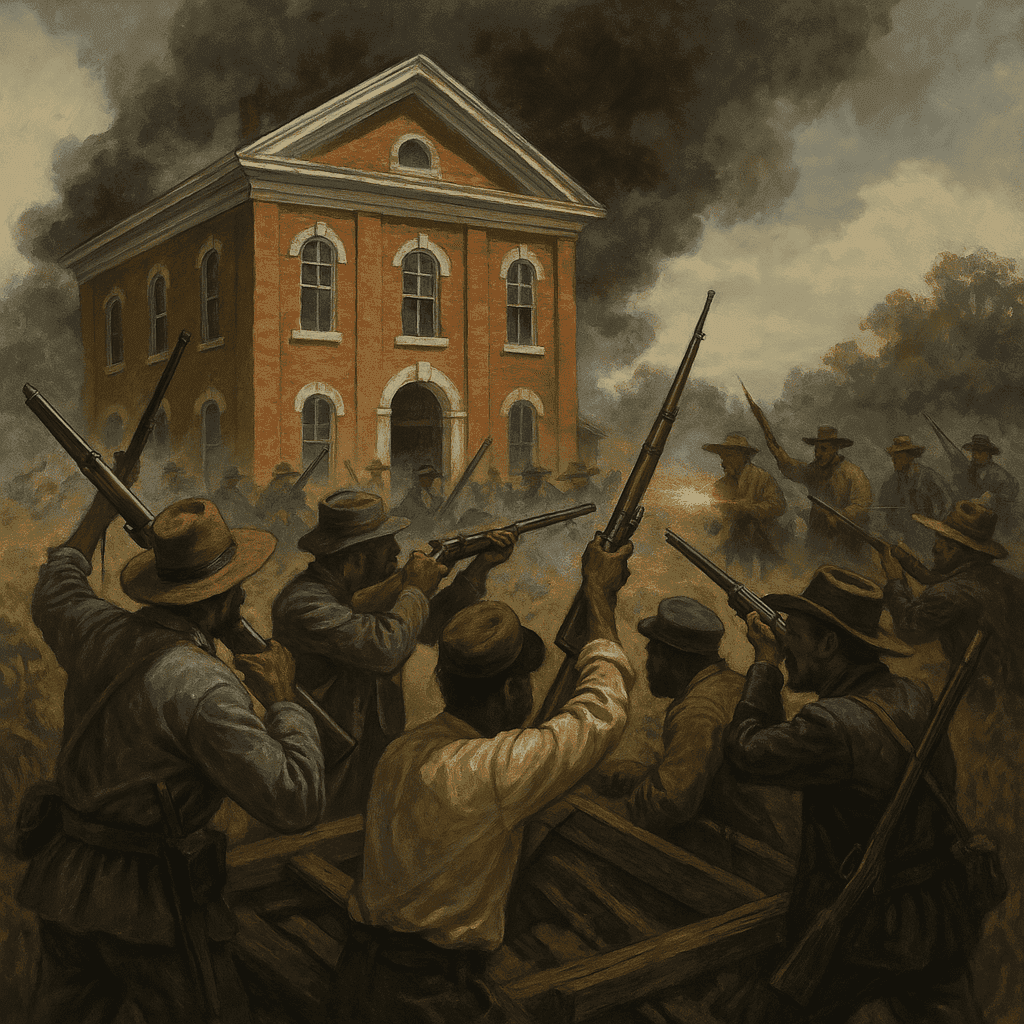
The massacre in Colfax was not a spontaneous outbreak but the culmination of deep-rooted racial animosity and political upheaval. After the Civil War, the federal government extended voting rights and citizenship to formerly enslaved African Americans, a transformative but highly contested shift in the South. In Louisiana, these changes provoked a backlash among white Democrats determined to restore white dominance. The 1872 Louisiana gubernatorial election ended in controversy. In the aftermath, Black citizens, aligned with the Republican Party, fortified the courthouse in Colfax to defend the elected officials and their right to self-govern.
White militias, many of them Confederate veterans, mobilized under the guise of restoring order. On Easter Sunday, April 13, their forces vastly outnumbered the Black defenders. Armed with rifles and cannons, they launched a coordinated attack. When the courthouse was set ablaze and its defenders surrendered, many were executed on the spot. Historians estimate that between 60 and 150 African American men were killed, making the Colfax Massacre one of the bloodiest single incidents of racial terror in U.S. history.
A Justice System Undermined
In the wake of the massacre, there was hope that justice would prevail. Federal authorities indicted several of the attackers under the Enforcement Acts, legislation designed to protect the civil rights of African Americans. However, when the case reached the U.S. Supreme Court in United States v. Cruikshank, the court ruled in 1876 that the federal government lacked the authority to prosecute individuals for civil rights violations unless it could be proven that state laws were involved. This decision severely weakened federal protections for African Americans and emboldened white supremacist groups across the South.
The Colfax Massacre became a grim symbol of the collapse of Reconstruction. Rather than ushering in accountability, the legal system’s failure to secure justice signaled to violent actors that their actions would go unpunished. The ruling in Cruikshank helped dismantle many of the Reconstruction reforms and laid the groundwork for the Jim Crow era that followed.
Echoes in the Present

The legacy of the Colfax Massacre still resonates today. Though it was long omitted from textbooks and historical narratives, recent scholarship and public remembrance efforts have brought renewed attention to this dark chapter. The massacre underscores the ongoing struggle for racial justice in the United States and the importance of protecting civil rights through both law and civic engagement.
Memorials and documentaries now highlight the bravery of the Black defenders and the violence they endured, offering a more truthful account of the nation’s past. In many ways, Colfax stands as a warning and a call — reminding us that democratic rights must be actively defended and that silence in the face of racial terror allows injustice to take root. The events of April 13, 1873, remain a vital part of American memory and a powerful lesson for our ongoing pursuit of equality.