On April 14, 1935, a monstrous wall of dust swept across the Great Plains, plunging the region into darkness and marking one of American history's most devastating environmental disasters. Known as “Black Sunday,” the storm symbolized the worst of the Dust Bowl era, when unsustainable farming practices, economic hardship, and prolonged drought combined to devastate the central United States. For those who lived through it, Black Sunday was not just a weather event but an apocalyptic moment that transformed lives, landscapes, and policy across the nation.
A Region in Crisis
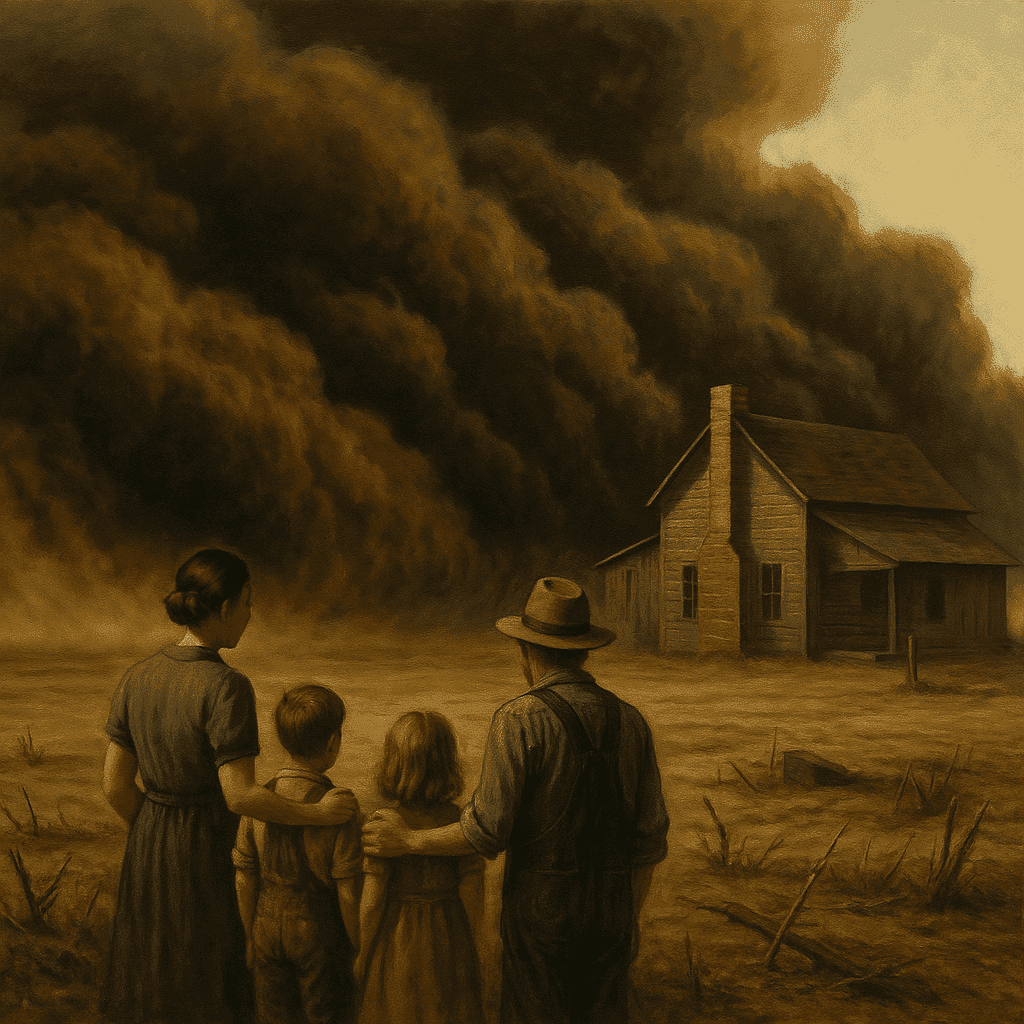
By the start of the 1930s, vast portions of the prairie had been converted into farmland as settlers plowed under native grasses to plant wheat and other crops. When drought conditions took hold, these exposed topsoils dried up and became vulnerable to high winds. Without the deep root systems of prairie grasses to anchor the soil, the land quite literally began to blow away. The conditions were ripe for catastrophe, and on April 14, 1935, it struck with terrifying force. The storm created a black wall of dust stretching hundreds of miles, reducing visibility to zero and sending both people and animals scrambling for cover.
The sheer intensity of the storm caught many by surprise. Witnesses described skies that turned pitch black in the middle of the day, as if night had suddenly fallen. Families huddled indoors, sealing windows and doors with wet towels and sheets in a desperate attempt to keep the choking dust out. Vehicles stalled on highways, livestock suffocated in the fields, and children were caught in the open with no shelter in sight. It was, as many survivors recalled, a day when it felt like the world might end.
Human Toll and Government Response
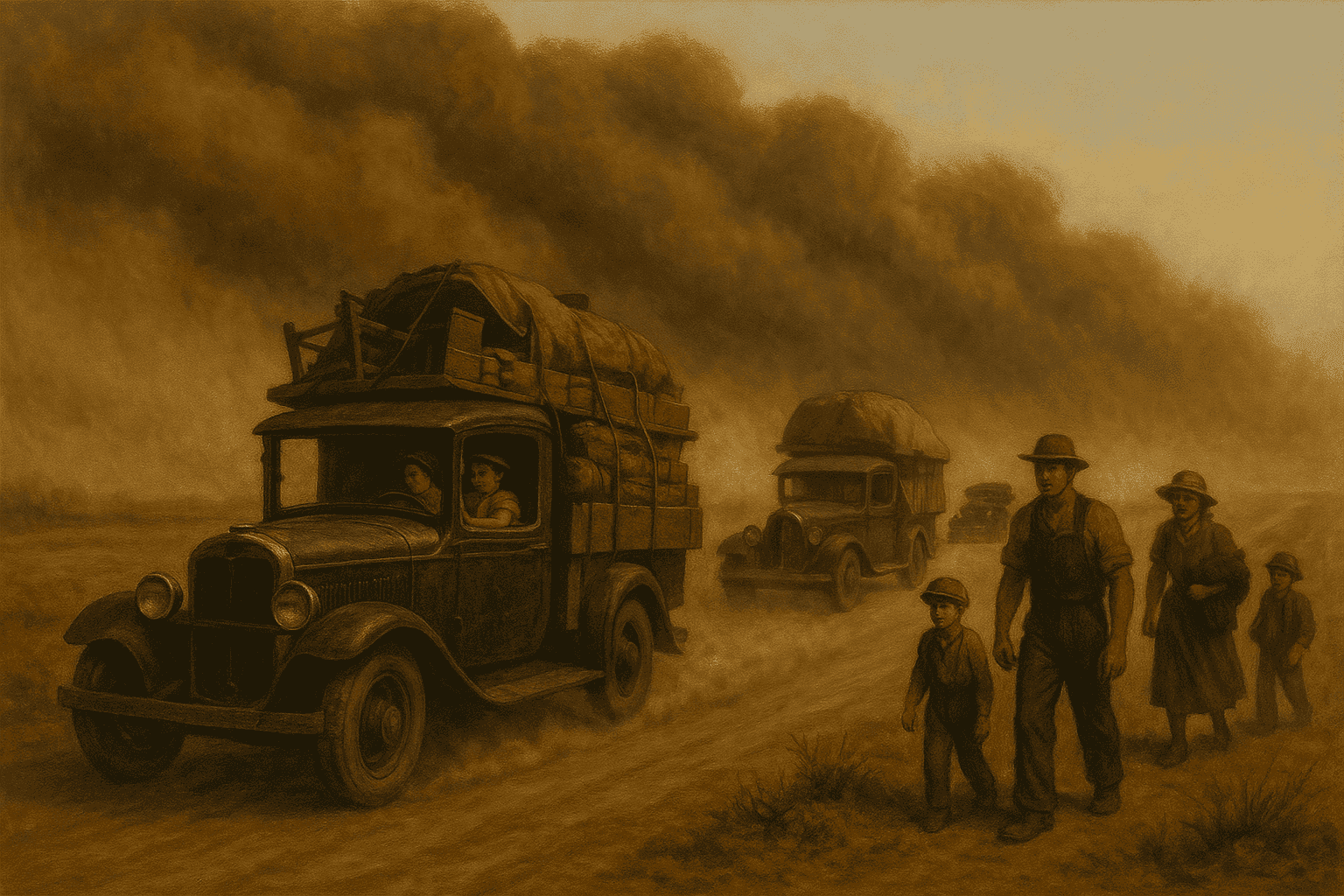
Black Sunday and the broader Dust Bowl crisis left tens of thousands of families destitute. Many were forced to abandon their farms, unable to grow crops or pay their debts. These environmental refugees—often referred to as “Okies,” regardless of their actual home state—migrated westward, particularly to California, in search of agricultural labor. Their journey was grueling, and upon arrival, many faced poor living conditions, low wages, and hostility from locals. Their plight became emblematic of the suffering caused not only by economic depression but also by ecological collapse.
Under President Franklin D. Roosevelt, the federal government launched a series of emergency programs aimed at relief and reform in response to the growing disaster. One of the most significant initiatives was the creation of the Soil Conservation Service in 1935. This agency introduced soil-preserving techniques such as contour plowing, crop rotation, and planting windbreaks. These methods helped stabilize the soil and prevent further erosion, laying the foundation for more sustainable agriculture in the decades to come.
The storm also spurred a shift in public understanding of environmental stewardship. For the first time, the government and the American people began to see conservation as a matter of national importance rather than individual concern. Farmers were given both the tools and the education to work with the land instead of against it, ushering in a new era of federal involvement in land management.
A Cautionary Tale with Lasting Lessons
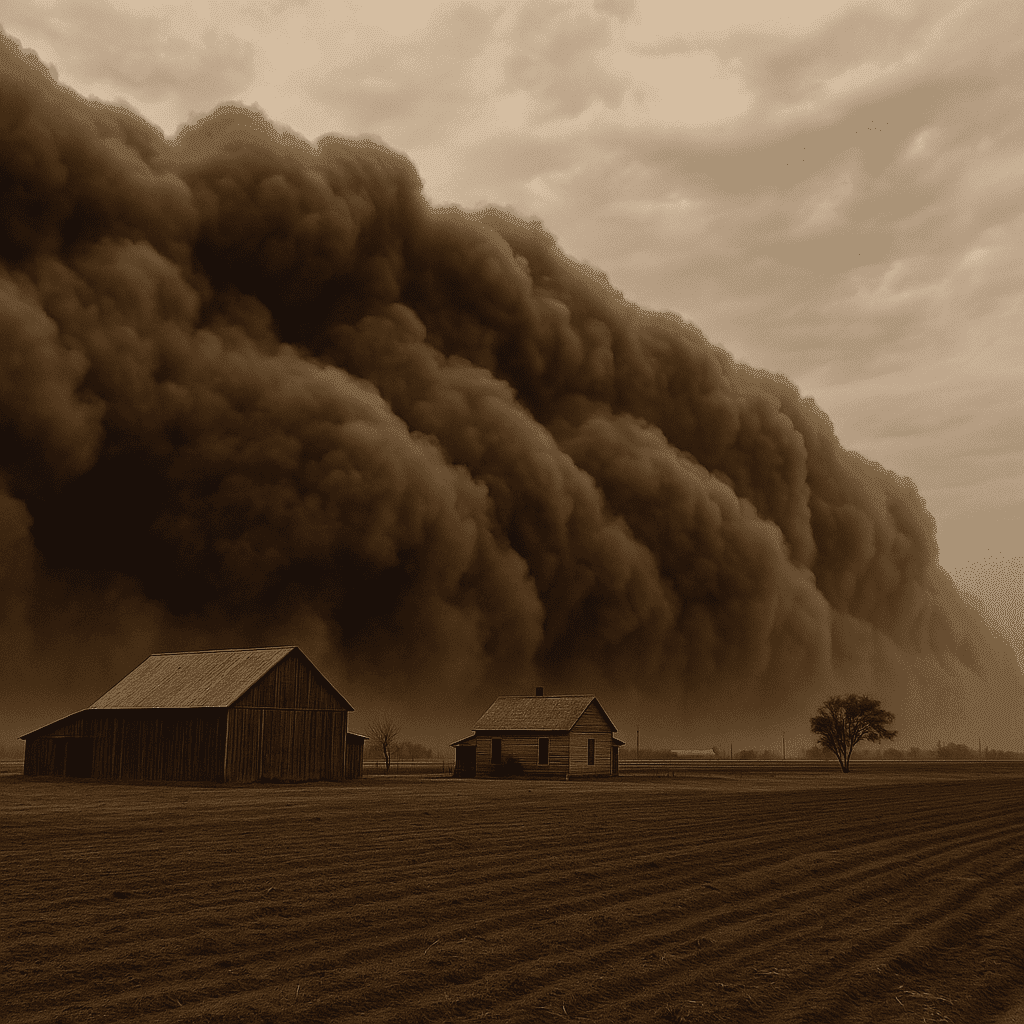
Though the Dust Bowl eventually faded with the return of regular rainfall and the adoption of improved farming techniques, its impact has never fully disappeared. The lessons of Black Sunday remain profoundly relevant in the face of modern environmental challenges, including climate change, deforestation, and industrial agriculture. The Dust Bowl taught that the misuse of natural resources when paired with economic vulnerability, can create long-lasting and wide-reaching disasters.
In many ways, Black Sunday was a wake-up call for a nation that had long believed in manifest destiny and limitless land. It exposed the illusion of control over nature and forced a reevaluation of humanity’s relationship with the environment. Today, historians, policymakers, and environmentalists still point to the Dust Bowl as a stark warning of what can happen when human ambition outpaces ecological wisdom.
As droughts and extreme weather events become more frequent in the 21st century, the story of Black Sunday serves as both a historical reference point and a call to action. Sustainable practices and thoughtful land use are not just idealistic goals—they are vital strategies for survival. The Great Plains have recovered in many ways, but the shadow of Black Sunday still lingers in the American memory.