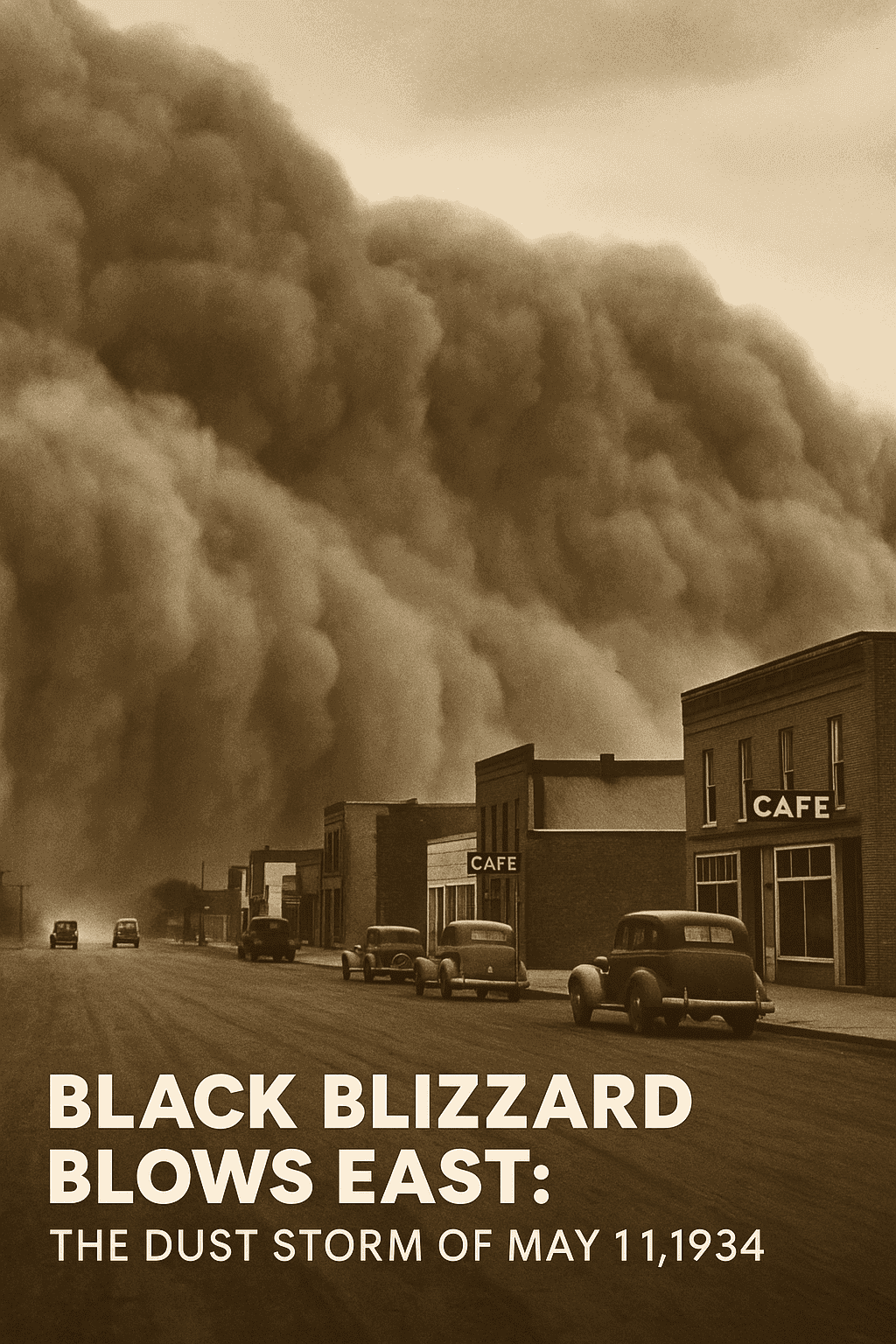
On May 11, 1934, a towering dust storm rose from the Great Plains and traveled thousands of miles eastward, darkening skies as far away as Washington, D.C., and New York City. It was one of the most dramatic events of the Dust Bowl era—a stark symbol of the ecological and human crisis gripping the central United States during the 1930s. Known as a “Black Blizzard,” this storm was part of a pattern of environmental devastation that reshaped the landscape, economy, and agricultural practices of the nation.
A Man-Made Ecological Disaster
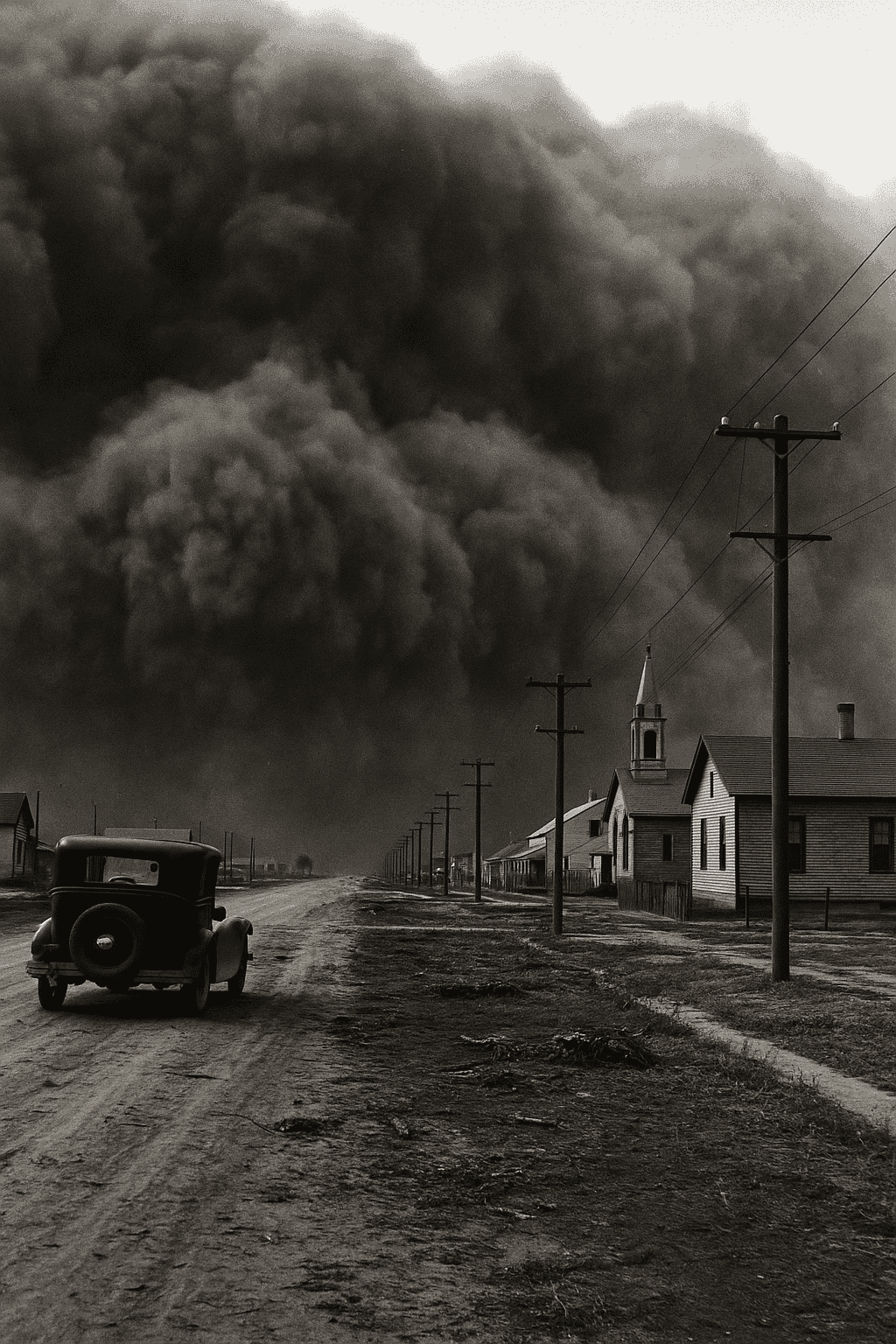
The Dust Bowl wasn’t caused by nature alone. In the decades leading up to the 1930s, settlers across the Great Plains had converted millions of acres of native prairie into farmland. The deep-rooted grasses that once held the soil in place were plowed under to make way for crops, leaving the land vulnerable. When a prolonged and severe drought struck in the early 1930s, the soil—dry, exposed, and unanchored—became dust.
High winds swept across the open fields, lifting the soil into the air and carrying it across vast distances. The storm on May 11, 1934, picked up an estimated 350 million tons of topsoil, blotting out the sun and coating buildings, cars, and lungs in fine silt. Even ships in the Atlantic Ocean reported dust settling on their decks.
Hardship and Exodus
For farmers and rural families across the Plains, the storm was one of many disasters in a relentless series. Crops failed year after year, livestock perished, and entire communities were buried under drifting soil. Dust storms infiltrated every corner of daily life—through window cracks, into food, and into people’s lungs, causing what became known as “dust pneumonia.”
With their livelihoods destroyed, hundreds of thousands of families were forced to abandon their homes. Many migrated west, especially to California, in search of work and survival. This migration, captured poignantly in literature like John Steinbeck’s The Grapes of Wrath, became one of the most significant internal movements in American history.
A Turning Point for Conservation
The catastrophic scale of the Dust Bowl prompted a profound shift in U.S. agricultural and environmental policy. In response, the federal government created the Soil Conservation Service in 1935 (now known as the Natural Resources Conservation Service). Its mission was to promote better farming practices, such as crop rotation, contour plowing, and the planting of windbreaks, to prevent future erosion.
Public education campaigns, government-funded work programs, and land rehabilitation projects helped mitigate the damage and laid the groundwork for a more sustainable relationship between agriculture and the environment.
A Lasting Lesson
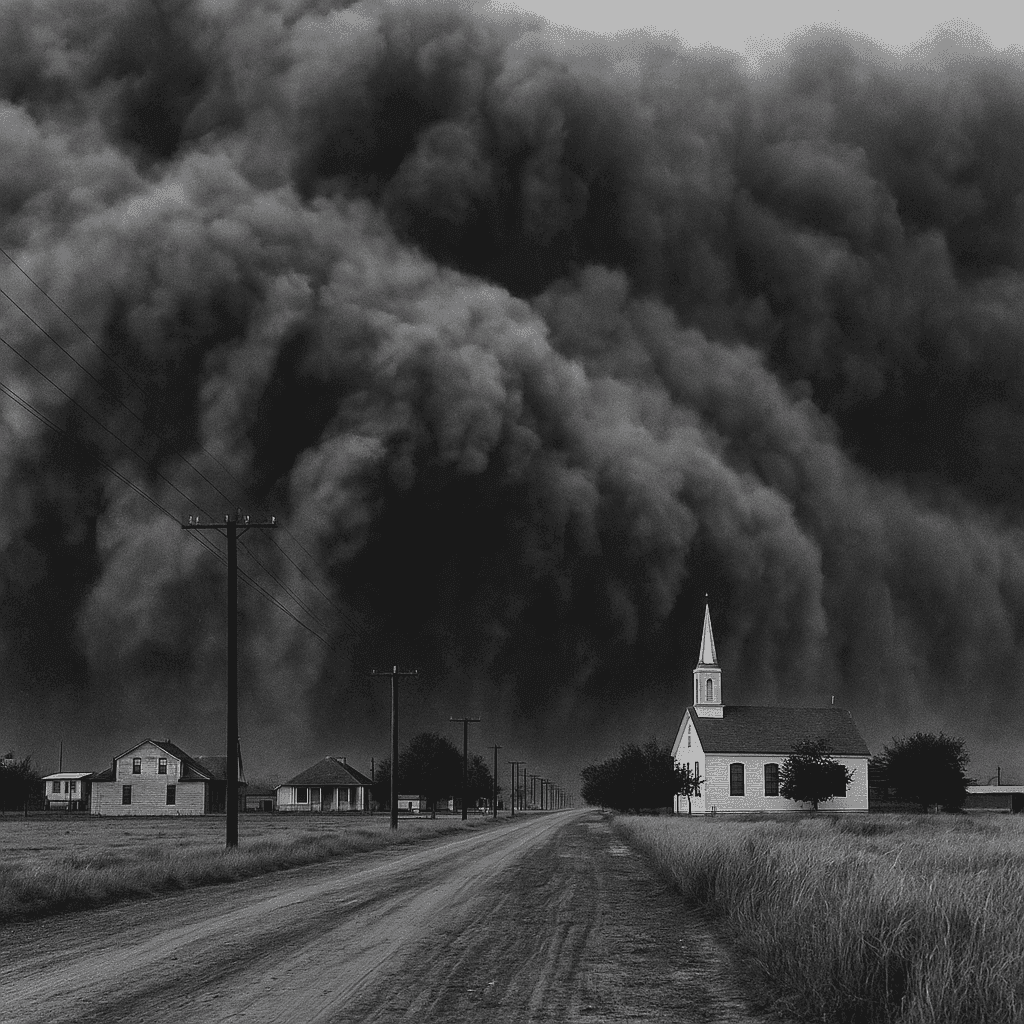
The dust storm of May 11, 1934, remains a powerful symbol of what can happen when environmental stewardship is ignored in the face of economic ambition. It demonstrated how human activity, when disconnected from ecological balance, can lead to disaster. But it also spurred action and reform, showing the potential for recovery and resilience.
Today, as concerns about climate change and land degradation grow, the lessons of the Dust Bowl era—and the towering cloud that swept across the continent on that spring day—are more relevant than ever.